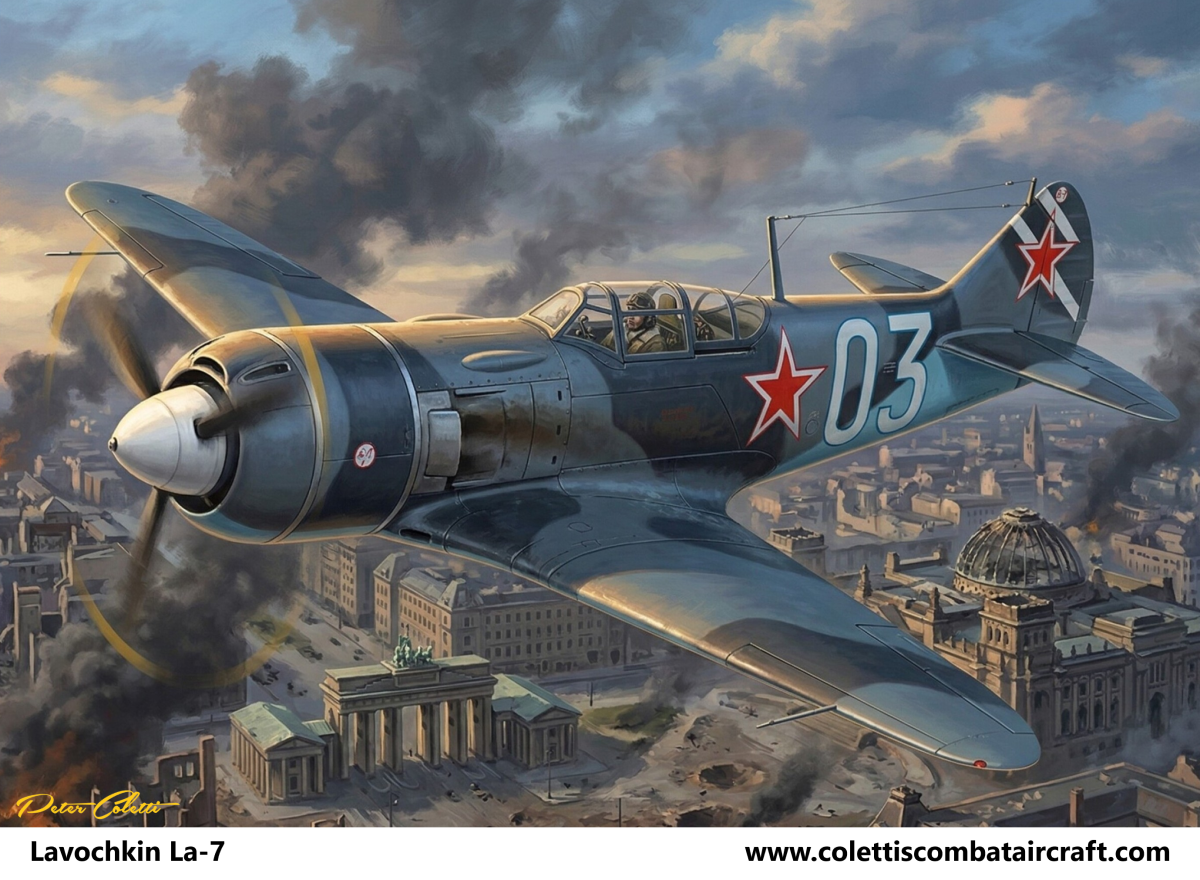
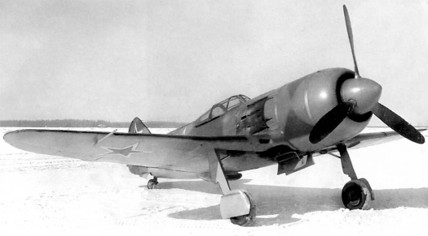
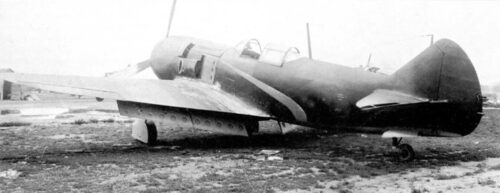
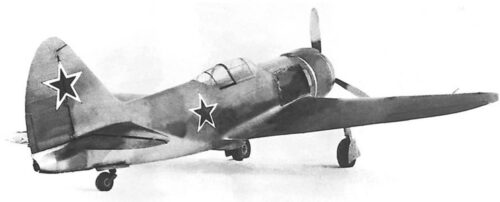
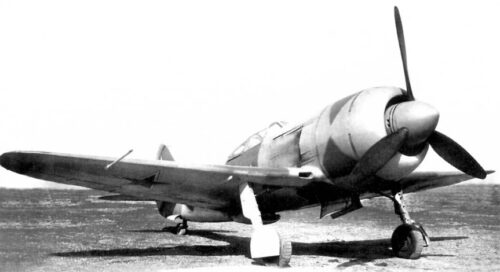
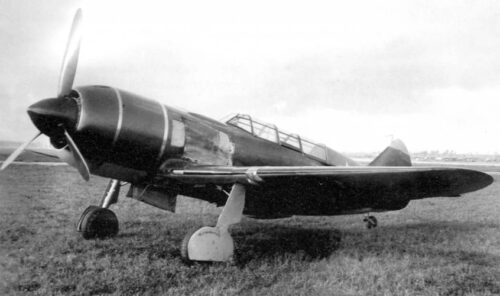
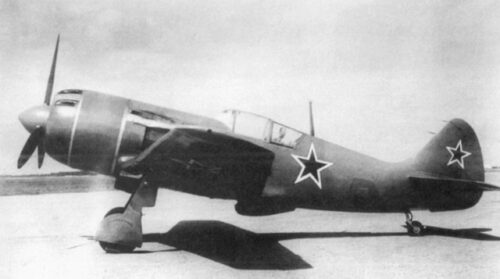
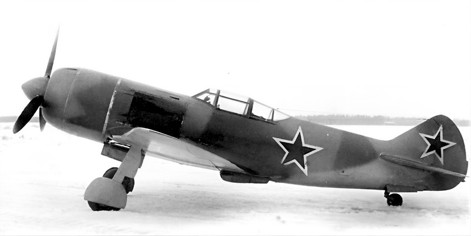
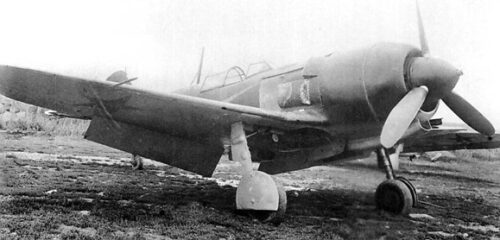
The La-7 was a refined evolution of the La-5, itself derived from the LaGG-3.
Designed by Semyon Lavochkin, it featured aerodynamic improvements and a more powerful Shvetsov ASh-82FN radial engine, boosting speed and manoeuvrability.
Combat Debut
Entering Soviet service in mid-1944, the La-7 quickly proved superior to most German piston-engine fighters.
It was deployed primarily on the Eastern Front, where it excelled in air superiority roles.
Ace of Aces
The aircraft gained fame through Ivan Nikitovich Kozhedub, the top Allied ace of WWII.
Flying the La-7, Kozhedub scored his final 17 victories in 1945, including downing a jet-powered Messerschmitt Me 262—an extraordinary feat for a propeller-driven fighter.
Performance & Armament
Armed with two or three 20 mm cannons and capable of speeds up to 661 km/h (411 mph), the La-7 was praised by pilots as equal or superior to German contemporaries like the Fw 190 and Bf 109.
Legacy
Though introduced late in the war, the La-7 made a significant impact.
It remained in Soviet service until 1947 and was briefly operated by the Czechoslovak Air Force.
Its success marked the culmination of Soviet piston-engine fighter design.
La-7
First Production Series (Spring–Summer 1944)
The first production series of the Lavochkin La-7 marked a pivotal refinement of the La-5FN, emerging from the Lavochkin Design Bureau’s La-120 prototype.
These early La-7s were manufactured beginning in May 1944 at Plant No. 381 (Moscow) and Plant No. 21 (Gorky), with initial deliveries to frontline units by June 1944.
Key Features and Improvements
Aerodynamic Enhancements
The first series incorporated results from TsAGI wind tunnel testing, including:
A revised engine cowling for the Shvetsov ASh-82FN radial engine
Metal wing spars replacing the wooden box spars of the La-5FN
A cleaner wing leading edge and improved surface finish for reduced drag
Armament Configuration
Most first-series aircraft were armed with two 20 mm. Berezin B-20 cannons, though some units from Yaroslavl featured a third cannon as originally intended
Performance
Top speed reached
661 km/h (411 mph) at altitude, with improved climb rate and roll responsiveness compared to the La-5FN
Operational Debut
The La-7’s combat debut occurred in mid-1944, with elite Soviet fighter regiments receiving the first batches.
Pilots praised its handling and firepower, considering it a match for the Fw 190 and Bf 109G.
Production Challenges
Early production faced quality control issues due to rushed manufacturing and material shortages.
These were gradually resolved in later series.
La-7TKHigh-Altitude Aspirant
This experimental version was fitted with the TK-3 turbosupercharger in July 1944, aiming to overcome the La-7’s known limitations at high altitude—particularly above 6,000 metres, where German fighters like the Bf 109G retained an edge.
The TK-3 was a centrifugal-type supercharger designed to compress intake air, improving engine performance in thinner air.
However, the unit suffered catastrophic failure during flight testing, disintegrating mid-air and destroying the aircraft.
The loss highlighted the Soviet struggle to field reliable high-altitude propulsion systems during the war, and no further La-7TK units were built.
La-7RRocket-Boosted Interceptor
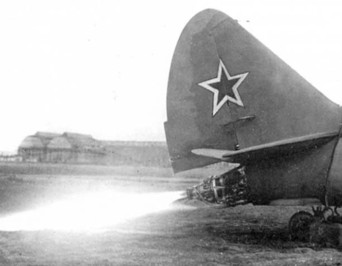
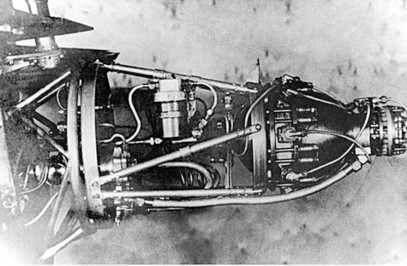
Developed as a mixed-power testbed, the La-7R incorporated a tail-mounted RD-1KhZ liquid-fuelled rocket engine to explore rapid interception capabilities.
The RD-1KhZ delivered 300 kgf (660 lbf) of thrust using a volatile mix of kerosene and red-fuming nitric acid.
Fuel capacity allowed for a brief 3–3.5-minute burn.
RD-1KhZ
Rocket activation increased top speed by approximately 80 km/h (50 mph) but severely compromised handling and stability.
Fifteen test flights were conducted in early 1945.
RD-1KhZ
The rocket exploded on the ground in May and later again in flight—though the pilot landed safely.
Despite its dangers, the La-7R was publicly demonstrated at the August 1946 Tushino Airshow with its rocket firing, showcasing Soviet experimentation with hybrid propulsion.
La-7PVRDRamjet Speed Trial
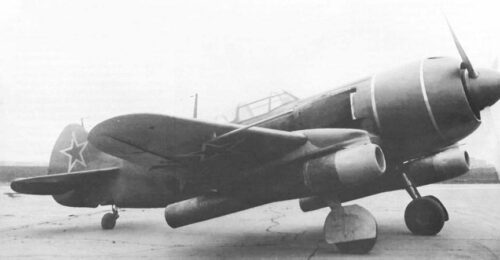
This variant tested two underwing ramjet engines (PVRD), intended to push the La-7’s speed envelope beyond conventional limits.
Theoretical performance aimed for 800 km/h (497 mph) at 6,000 metres altitude, but actual trials peaked at 670 km/h (416 mph) due to excessive drag from the ramjet nacelles.
Ramjets require high initial speeds to function, and the La-7’s airframe was not optimised for such integration.
The project demonstrated the limitations of retrofitting jet technology onto piston-era designs.
La-7 ASh-71 Engine Upgrade Testbed
The La-7 ASh-71 was a 1944 experimental variant fitted with the Shvetsov ASh-71, an 18-cylinder radial engine delivering up to 2,000 hp—a major boost over the standard ASh-82FN.
Though promising speeds over 700 km/h (435 mph), the engine faced cooling issues and mechanical faults and lacked production readiness.
After limited trials, the project was abandoned, and frontline units retained the proven ASh-82FN-powered La-7.
La-7UTICombat-Capable Trainer
The tandem-seat La-7UTI was designed for pilot conversion and advanced training, retaining much of the single-seat fighter’s agility.
Modifications included a relocated oil cooler beneath the cowling, a reduced armament of one 20 mm cannon, and the addition of a radio compass and gun camera for instructional use.
Despite its increased weight (3,500 kg / 7,716 lbs.), the UTI preserved the La-7’s flight characteristics, making it an effective trainer.
A total of 584 units were built, with the final pair delivered in 1947—marking the end of La-7 production.
La.126
Despite its excellent performance, the Lavochkin La-7 suffered from a wooden airframe that was heavier than metal and prone to rot and warping, sometimes grounding entire squadrons.
To address this, Lavochkin pursued an all-metal successor. In 1944, a La-7 was tested with a 23 mm NS-23 cannon, a laminar flow wing (La-7L), and the new ASh-83 engine, which offered better high-altitude performance than the ASh-82FN.
These innovations were combined in the La-120 prototype, which reached 735 km/h (457 mph) in early 1945, but engine reliability issues halted development after two units.
The La-120 evolved into the La-126, reverting to the dependable ASh-82FN and refining the laminar wing to eliminate problematic slats.
Although it boasted four NS-23 cannons—doubling the La-7’s firepower—flight tests in 1946 showed no major performance gains, and the project was shelved.
The all-metal vision was finally realised in the production Lavochkin La-9.
La. 7
Specifications(La-7R-1)
Crew
1
Length
8.6 m (28 ft 3 in)
Wingspan
9.8 m (32 ft 2 in)
Height
2.54 m (8 ft 4 in)
Wing area
17.59 m² (189.3 sq ft)
Empty weight
2,638 kg (5,816 lbs)
Gross weight
3,315 kg (7,308 lbs)
Powerplant
1 × Shvetsov ASh-82FN 14-cylinder,
two-row air-cooled radial,
1,380 kW (1,850 hp)
Propellers
3-bladed VISh-105V-4
La-7TK High-Altitude Aspirant
Performance
Maximum speed
661 km/h (411 mph, 357 kn) at 6,000 m (19,685 ft)
Range
665 km (413 mi, 359 nmi) (1944 model)
Service ceiling
10,450 m (34,280 ft)
Rate of climb
15.7 m/s (3,095 ft/min)
Time to altitude
5.3 minutes to 5,000 m (16,404 ft)
Wing loading
188 kg/m² (38.6 lbs./sq ft)
Power/mass
0.41 kW/kg (0.25 hp/lbs)
Armament
Guns
2 × cowl-mounted 20 mm ShVAK cannons with 200 rounds per gun
or
3 × cowl-mounted 20 mm Berezin B-20 cannons with 100 rounds per gun