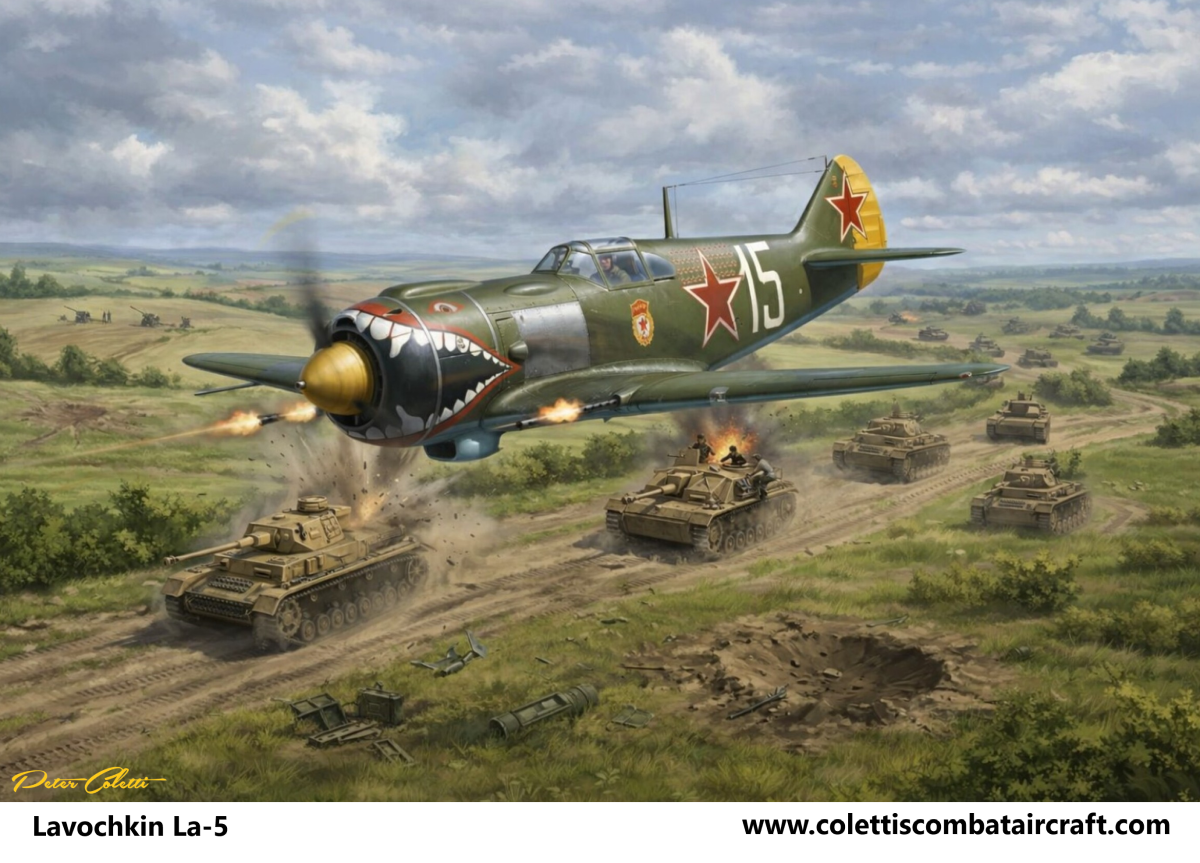
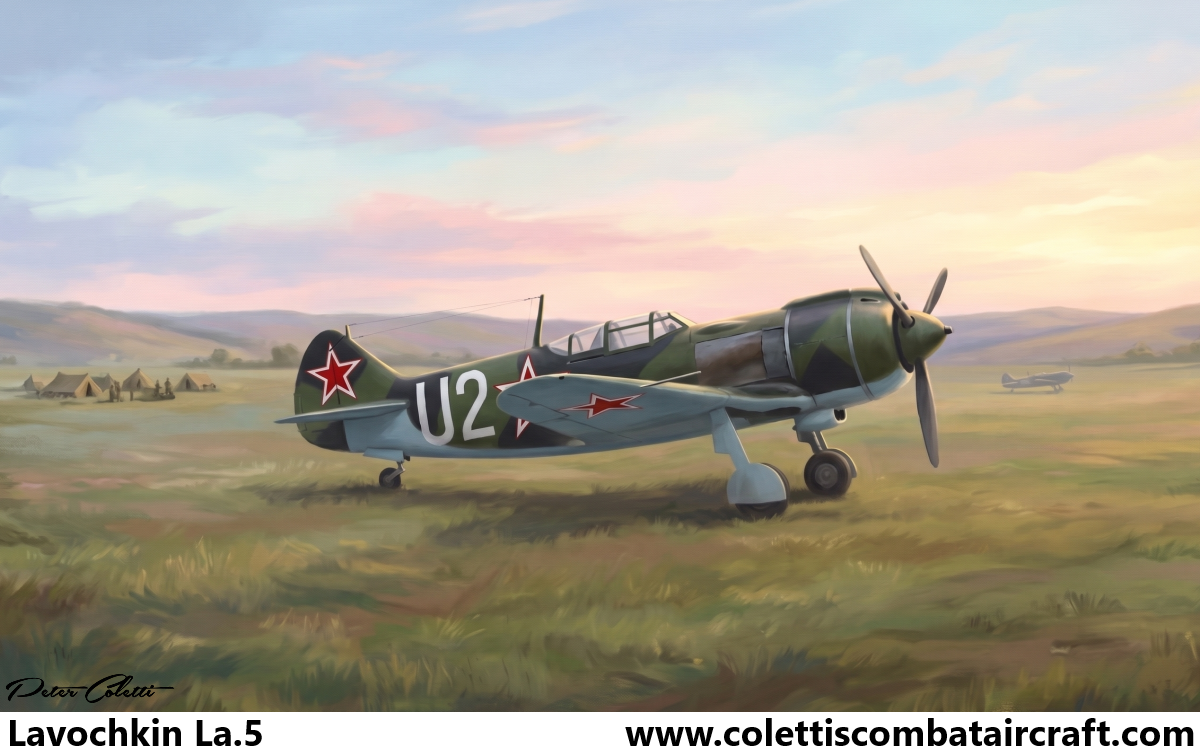
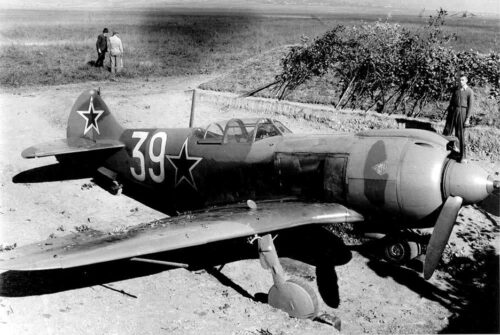
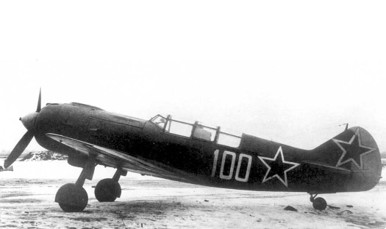
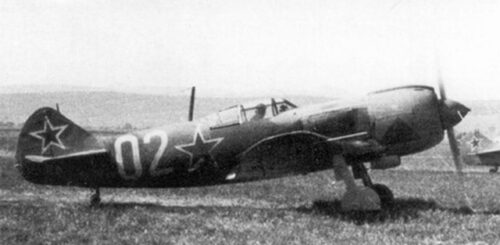
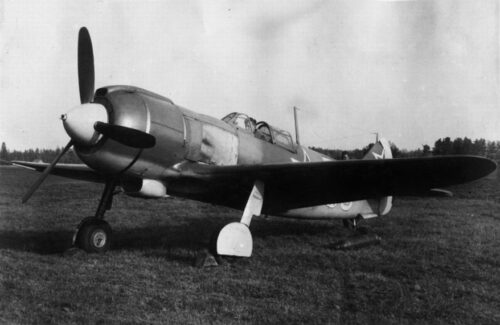
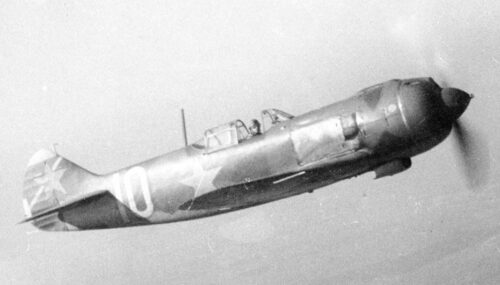
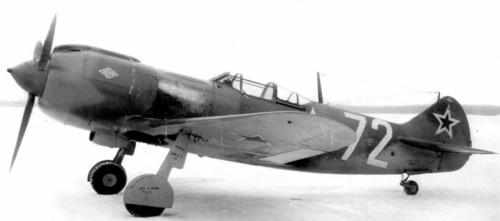
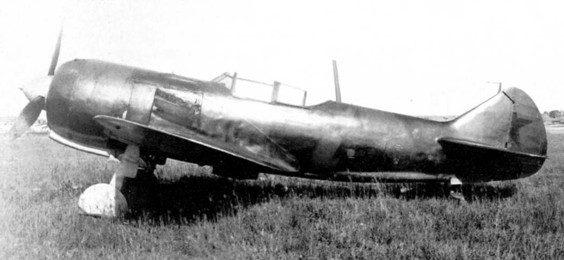
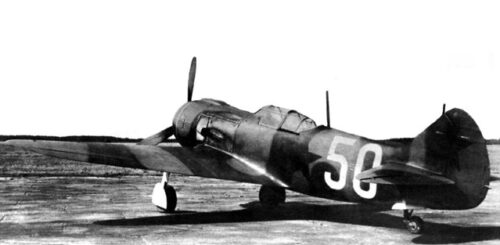
The Lavochkin La-5 was a Soviet single-seat fighter aircraft that emerged as a critical asset in the Eastern Front air war.
Developed from the underpowered LaGG-3, the La-5 introduced the Shvetsov ASh-82 radial engine, dramatically improving speed, climb rate, and agility—traits essential for countering German fighters like the Bf 109 and Fw 190.
Development and Deployment
Entered service in mid-1942, with rapid deployment to frontline units.
Designed for low to medium-altitude combat, ideal for the Eastern Front’s tactical environment.
Armed with two 20 mm ShVAK cannons and capable of carrying light bombs, it was versatile in both air superiority and ground attack roles.
La-5UTI — Two-Seat Trainer Variant
Combat Performance
First saw major action during the Battle of Stalingrad, where its improved performance helped regain Soviet air parity.
Played a decisive role in the Battle of Kursk (1943), providing air cover and engaging Luftwaffe fighters in intense dogfights.
Proved highly effective in the Siege of Leningrad and subsequent offensives, often flown by elite Guards regiments.
Legacy
Pilots praised its ruggedness, visibility, and responsiveness.
Over 9,900 units were produced, including improved variants like the La-5FN, which featured fuel-injected engines and better cockpit ergonomics.
Its success paved the way for the even more refined La-7, continuing Lavochkin’s legacy into the final years of the war.
La-5 (1942)
Base model derived from the LaGG-3, replacing the inline engine with the Shvetsov ASh-82 radial.
Featured a wooden airframe and improved performance over its predecessor.
Still retained some LaGG-3 drawbacks: poor cockpit ventilation, heavy weight, and limited visibility.
La-5F (1943)
“F” stands for Forsirovannyi (boosted).
Introduced the Shvetsov ASh-82F engine with higher take-off power.
Airframe weight reduced by removing wing fuel tanks and thinning armour.
Improved cockpit layout and visibility.
Marked a significant leap in climb rate and agility.
La-5FN (1943–44)
“FN” = Forsirovannyi, Nizkovysotnyi
(boosted, low-altitude).
Featured the ASh-82FN engine with direct fuel injection.
Further aerodynamic refinements: cut-down rear fuselage, improved canopy.
Became the definitive wartime variant with superior low-altitude performance.
Widely used by Soviet aces and frontline units.
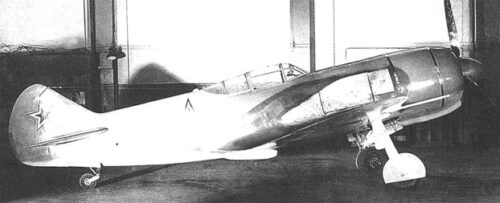
La-5U (Prototype)
Experimental version with a more powerful engine and revised airframe.
Served as a stepping stone towards the La-7.
Not mass-produced.
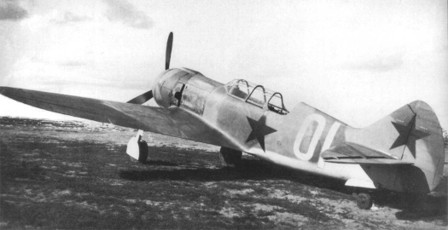
La-5UTI — Two-Seat Trainer Variant
Development Origin
Based on the La-5F airframe, the La-5UTI was designed in mid-1943 to train pilots on radial-engine fighters.
Configuration
Dual-control layout with a second cockpit replacing the radio compartment.
The oxygen system, armour, and one of the guns were removed to reduce weight and simplify training.
Instructor’s controls could override the student’s inputs automatically.
Production
In October 1943, the Soviet State Defence Committee ordered 163 units.
Due to delays, production began only in November 1944.
Some combat La-5Fs were converted into UTIs using existing serial equipment.
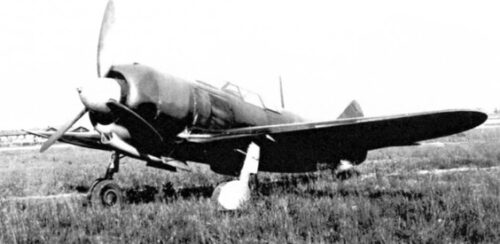
Lavochkin La-5 M-71 — High-Power Prototype
Purpose
To evaluate the Shvetsov M-71 engine, which offered significantly more horsepower than the standard ASh-82 used in production La-5s.
Engine
The M-71 was a 2,000+ hp radial engine, promising improved speed and climb rate.
Airframe Modifications
Reinforced structure to handle increased torque and weight.
Enlarged cowling and revised cooling system.
Likely retained the La-5F or La-5FN fuselage as a base.
Performance
Test flights showed promising results, with better high-altitude performance than standard La-5s.
However, engine reliability and production delays hampered its viability.
Outcome
The M-71 engine was ultimately not adopted for mass production.
The La-5 M-71 remained a prototype and did not enter service.
Lessons from its development fed into later Lavochkin designs, including the La-7 and La-9.