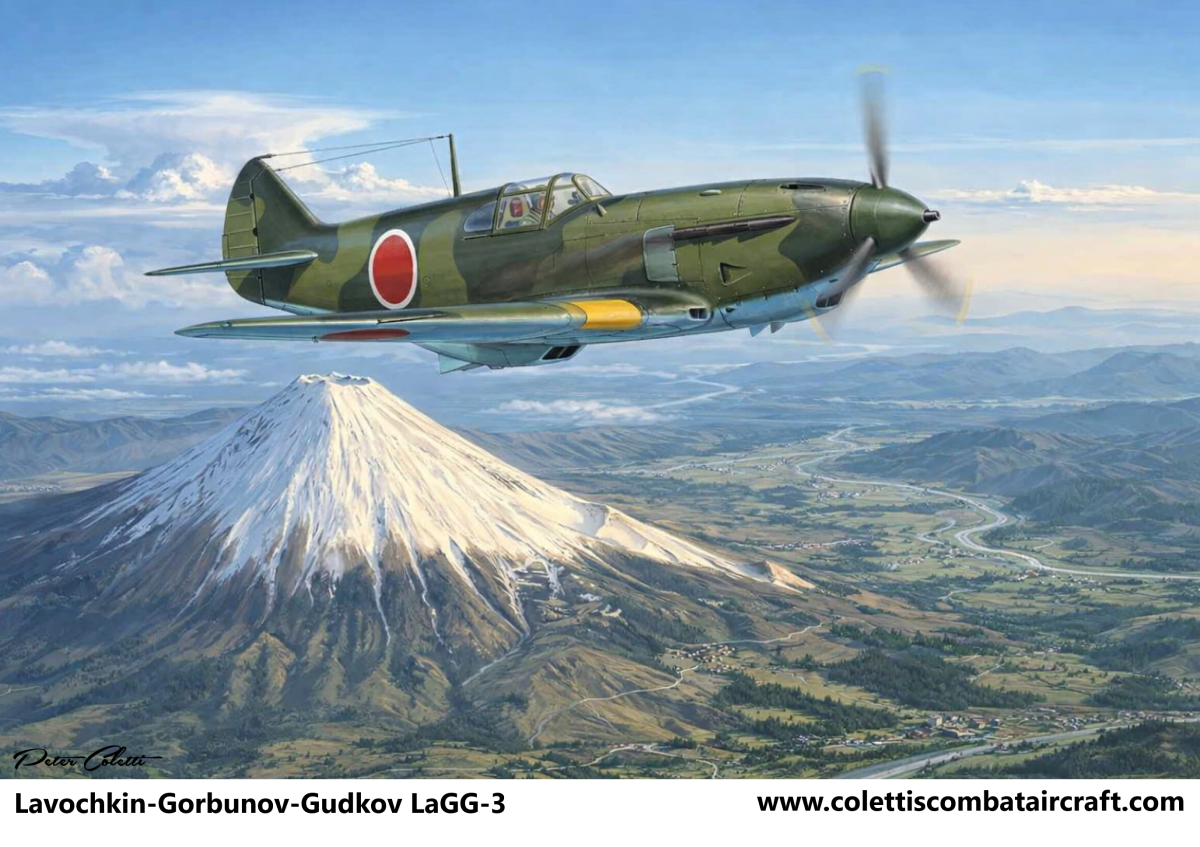
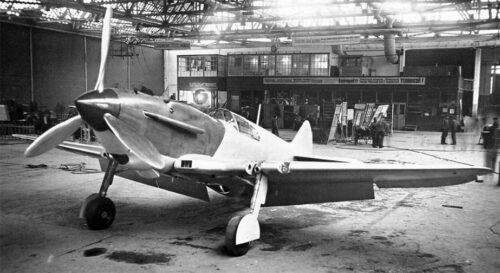
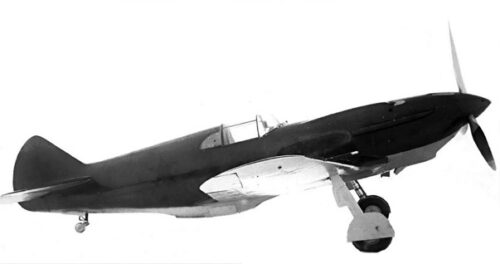
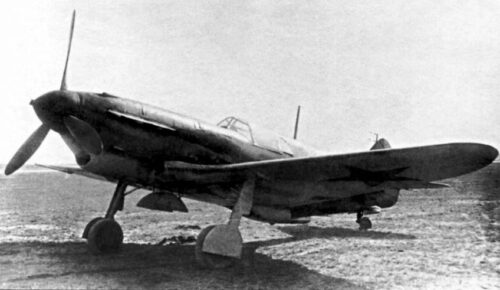
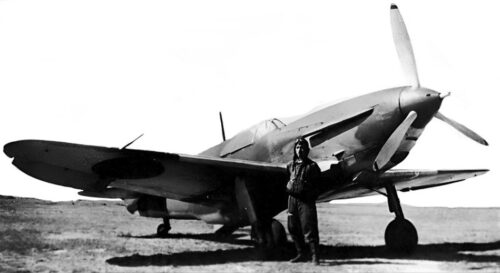
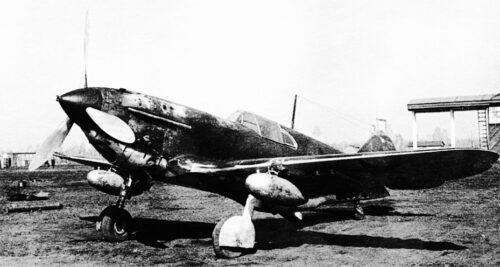
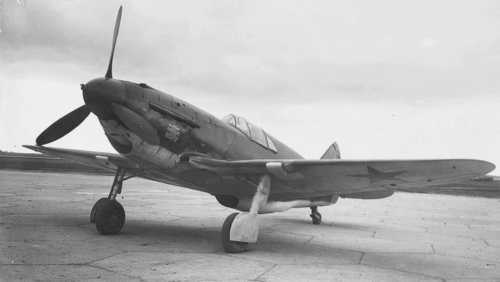
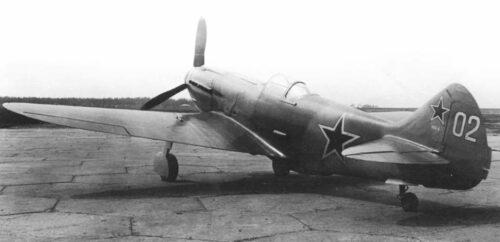
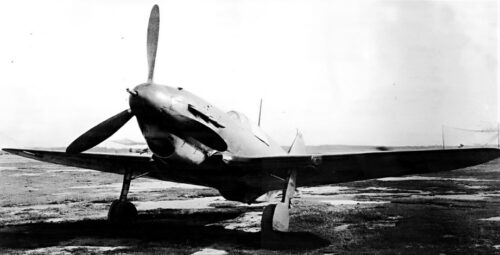
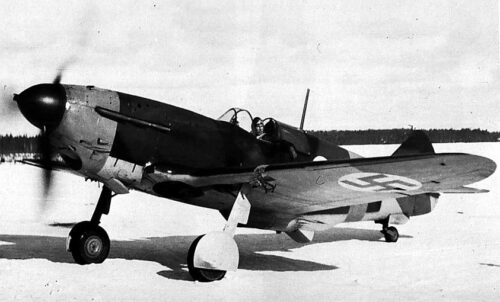
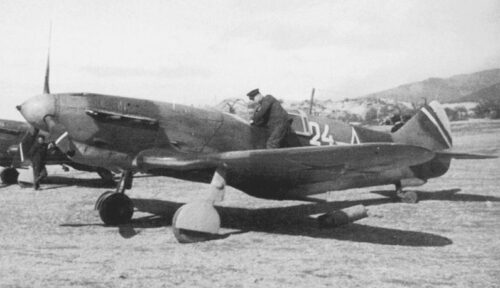
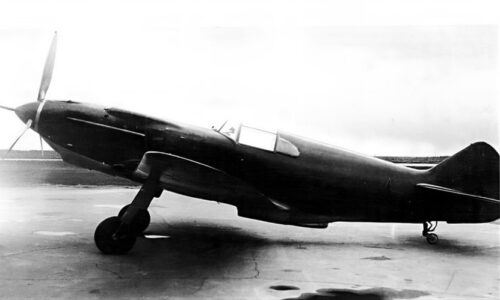
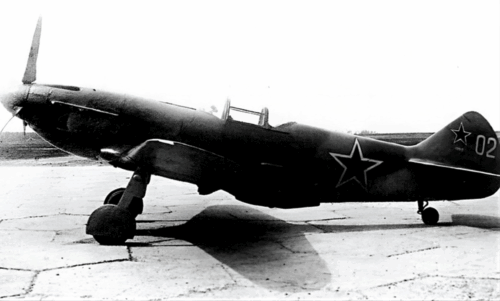
The Lavochkin-Gorbunov-Gudkov LaGG-3 entered Soviet service in early 1941 as one of the Red Air Force’s first modern monoplane fighters.
Designed to replace outdated types like the I-16, it featured a largely wooden airframe constructed from delta wood chosen to conserve strategic metals.
Though innovative, this material contributed to excessive weight and underwhelming performance.
Early Combat Use
At the time of Operation Barbarossa, the LaGG-3 was rushed into frontline service despite unresolved design flaws.
It was deployed across multiple Western Front air armies, often flown by inexperienced pilots.
Its robust construction allowed it to absorb damage, but its poor climb rate, sluggish acceleration, and limited agility made it unpopular in dogfights against nimble German aircraft like the Bf 109F.
Tactical Roles
Despite its shortcomings, the LaGG-3 was used extensively in the following:
Air defence and interception roles over key cities and industrial zones
Ground attack missions, where its durability proved useful
Escort duties for bombers and reconnaissance aircraft
Some units modified armament configurations to improve firepower, including the addition of 20 mm ShVAK cannons and increased UBS machine gun loads.
Mid-War Improvements
Throughout 1942–43, incremental upgrades were introduced:
Engine variants (e.g., Klimov M-105PF) improved power marginally.
Weight reductions and aerodynamic tweaks slightly enhanced handling.
Radio equipment and cockpit armour were standardized across production batches.
However, performance still lagged behind contemporaries like the Yak-1 and later the La-5, which evolved directly from the LaGG-3’s airframe but replaced the inline engine with a radial Shvetsov ASh-82, dramatically improving speed and climb.
Decline and Replacement
By late 1943, the LaGG-3 was gradually withdrawn from frontline service, replaced by superior designs such as the La-5, Yak-9, and La-7.
Production ceased in 1944 after approximately 6,528 units were built.
Remaining aircraft were relegated to training or second-line defence or transferred to allied Soviet republics.
The1st Series
Production of the LaGG-3 1st Series was slow and plagued by early issues: an inexperienced workforce, unfamiliarity with delta wood construction, incomplete drawings, lack of jigs, and factories still transitioning from Polikarpov I-16/I-153 production.
Compared to the prototype, production aircraft featured:
Reinforced landing gear
10 mm (0.39 in) seat armour
Enlarged carburettor intake
Armament: three Berezin UBS and two ShKAS machine guns
RSI-3 radios (5-channel) for flight leaders; others had receivers or none
Rudder mass balances to prevent flutter
Three self-sealing fuel tanks and a unique exhaust-based fire suppression system
Top speed: 549 km/h (341 mph) at 5,000 m—55 km/h slower than prototype
Climb to 5,000 m: 8.6 min vs. 5.85 min
Ground-level climb rate: 8.5 m/s (28 ft/s)
Take-off run: ≥500 m (1,600 ft), hindered by flap restrictions due to propeller governor (limited to 2,400 rpm vs rated 2,700 rpm)
Neither of its rivals suffered such a steep performance drop from prototype to production.
The 4th Series
The 4th Series introduced key modifications to improve combat effectiveness:
Replaced hub-mounted Berezin MG with a ShVAK 20 mm cannon (120 rounds)
Deleted starboard cowl Berezin MG
Taller antenna mast, enlarged wing root and oil cooler intakes
Rudder counterweight (from 1st Series) removed
Powered by the Klimov M-105PA engine (890 kW / 1,200 hp), the 4th Series aimed to reduce weight and improve performance.
Fuel capacity was cut from 410 kg to 340 kg, reducing range to 705 km (438 mi).
In 1941, 2,463 LaGG-3s were built—2,141 after factory relocations to the East.
The 8th Series
The 8th Series simplified armament by removing the two cowl-mounted ShKAS 7.62 mm machine guns, which were deemed ineffective against enemy aircraft components.
Standard armament now consisted of a central ShVAK 20 mm cannon and one Berezin UBS 12.7 mm machine gun.
In some units, the ShVAK was replaced with a VYa-23 23 mm cannon, subject to availability.
The 11th Series
The 11th Series retained the core configuration of the 8th Series but was adapted for ground attack roles. Modifications included:
Two wing-mounted D3-40 bomb racks for 50 kg FAB-50 bombs, 83 L (22 US gal) drop tanks,
or
chemical/napalm dispensers
Six RO-82 launch rails for RS-82 or
RS-132 rockets
Optional ski landing gear for winter operations
These additions significantly degraded performance, especially when external stores were fitted.
The 29th Series
The 29th Series introduced the Klimov M-105PF engine (940 kW / 1,260 hp), optimised for low-altitude combat typical of the Eastern Front.
Unlike the earlier M-105PA, rated to 4,000 m, the PF variant delivered peak performance at 2,700 m (8,858 ft).
Key changes included
Deletion of the exhaust collector tube, replaced by three individual exhaust ports
Upgrade to RSI-4 variable-frequency radios, replacing the unreliable RSI-3
Weight reduction and increased power boosted top speed by 31 km/h, reaching 565 km/h (351 mph), with improved climb rate
These refinements made the 29th Series the most capable LaGG-3 variant before the transition to the La-5.
The 33rd Series
The 33rd Series switched to the new VISh-105SV propeller with a larger spinner.
The tailplane was modified with a pointed fin and updated rudder hinges.
The 34th Series
Produced in limited numbers, the 34th Series replaced the standard 20 mm ShVAK cannon with a 37 mm NS-37 (20 rounds), aiming to convert the LaGG-3 into a dedicated anti-tank platform.
Approximately 40 aircraft were deployed to Stalingrad for combat trials.
However, the variant proved unsuccessful—a forward shift in the centre of gravity impaired handling, and recoil stress from the NS-37 caused engine damage, limiting operational viability.
The 35th Series
The 35th Series introduced several aerodynamic and mechanical upgrades:
Automatic leading-edge slats on the outer wings to enhance low-speed handling.
A retractable tail wheel for reduced drag.
An enlarged radiator to improve engine cooling efficiency.
These refinements aimed to address persistent control and thermal issues in earlier variants, contributing to modest performance gains.
The 66th Series
The 66th Series was the final LaGG-3 variant, produced from spring 1943 to mid-1944 before Factory 31 (Tbilisi) transitioned to Yak-3 production.
It was 175 kg (385 lb) lighter than earlier models, resulting in the best climb rate, manoeuvrability, and top speed of the series—591 km/h (367 mph).
Distinctive features included:
Four exhaust stacks
Short antenna mast
New windscreen
Reshaped radiator and oil cooler
Despite these improvements, the 66th Series remained outclassed by both Yakovlev designs and German fighters like the Bf 109 and Fw 190, marking the end of the LaGG-3’s frontline relevance.
The Gudkov Gu-82
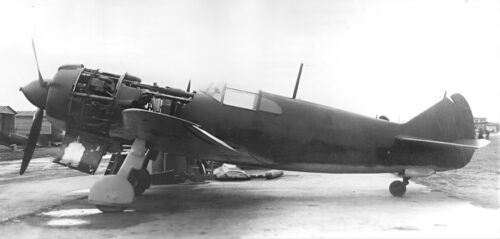
Developed as a contingency against delays with the Klimov VK-107, the Gudkov Gu-82 was a one-off LaGG-3 prototype fitted with a Shvetsov M-82 radial engine (1,150 kW / 1,540 hp) and a Sukhoi Su-2 propeller.
This experimental configuration demonstrated the viability of a radial-powered LaGG airframe and directly influenced the development of the Lavochkin La-5.
The Gudkov K-37
The Gudkov K-37 was a modified 1st Series LaGG-3, configured as an anti-tank variant.
It featured a Shpitalny Sh-37 axial cannon firing through the propeller hub.
Only 20 units were built in summer 1942 and assigned to the 42nd IAP for combat evaluation.
The Sh-37 was exceptionally powerful—capable of destroying enemy fighters with a single hit.
Its high-velocity shell could create impact holes exceeding 1 m² (11 sq ft), making it effective against lightly armoured ground targets as well.
Gorbunov 105
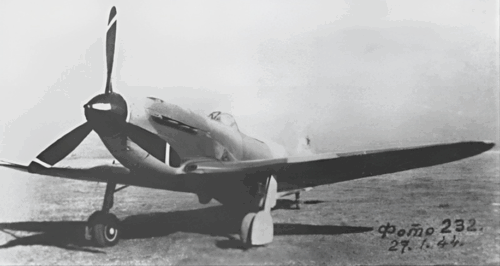
In May 1943, a new variant of the LaGG-3 was developed under the direction of Semyon Gorbunov and designated the Gorbunov 105.
This prototype incorporated several aerodynamic and structural refinements aimed at improving overall performance and pilot visibility.
Key modifications included the following:
Streamlined sheet metal nose sections for reduced drag.
A cut-down rear fuselage and redesigned canopy to enhance rearward visibility.
Weight reduction through structural optimisation.
Although still powered by the Klimov M-105PF engine, the Gorbunov 105 benefited from test data derived from the Yak-1M, contributing to its improved flight characteristics.
Performance comparisons with the standard LaGG-3 Series 66 revealed:
Take-off weight reduced to 2,875 kg (6,338 lb), down from 2,999 kg (6,611 lb).
Maximum speed increased to 618 km/h (384 mph) at 3,400 m (11,200 ft), compared to 589 km/h (366 mph).
Time to climb to 5,000 m (16,400 ft) improved to 4.7 minutes
Sustained turn time recorded at 16 seconds.
Despite lacking the automatic wing slats fitted to later LaGG-3 series, the Gorbunov 105 demonstrated superior handling.
Test pilots noted it was “superior to all Messerschmitt variants in terms of trouble-free handling and manoeuvrability.”
Gorbunov 105-2
The second prototype in the Gorbunov series, designated 105-2, was completed in February 1944.
It was powered by the Klimov M-105PF-2 engine rated at 970 kW (1,300 hp) and armed with one VYa-23 cannon and one Berezin UBS machine gun.
Flight testing conducted between May and June 1944 revealed critical limitations.
According to the test pilot’s report:
“In terms of maximum speed and climb rate, the Gorbunov 105-2 is inferior to the Yak-1M tested at the NII in October 1943… due to oil and water overheating, flight at maximum speed can be sustained for only three or four minutes.”
Despite the upgraded powerplant, the 105-2 failed to deliver meaningful performance gains.
Persistent cooling issues and subpar climb characteristics led to the decision to discontinue further development.
Priority shifted to serial production of the Yak-3 and La-5, both of which offered superior operational potential.