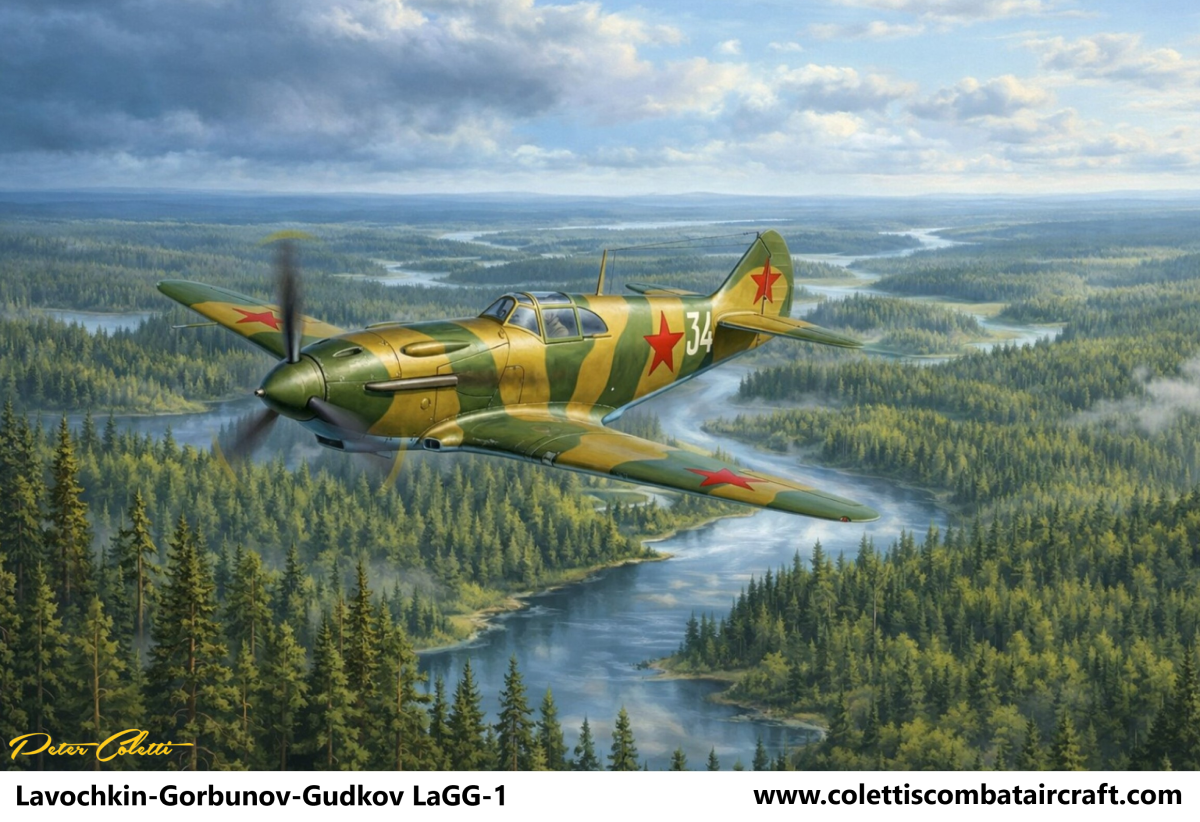
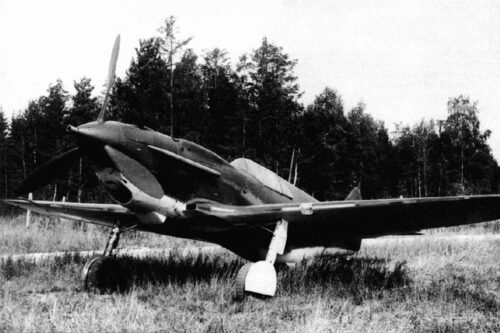
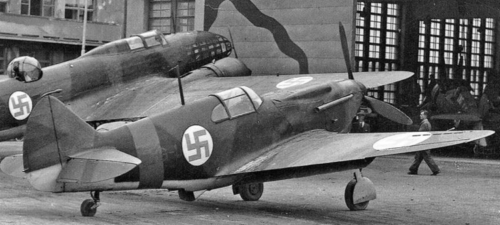
The LaGG-1 was the first fighter aircraft developed by the newly formed Lavochkin-Gorbunov-Gudkov design bureau (OKB-301) in the Soviet Union, conceived in response to a 1938 directive to produce a modern monoplane fighter using non-strategic materials.
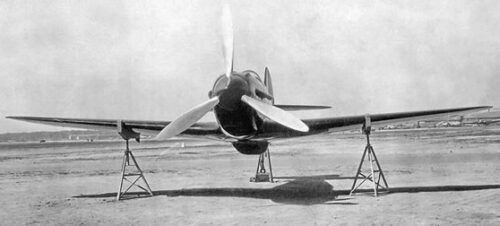
I-22
With aluminium in short supply, the LaGG-1 was constructed almost entirely from delta wood—a laminated, resin-impregnated birch veneer—chosen for its strength and availability.
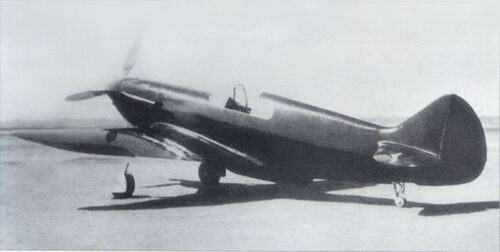
The prototype, designated I-22, made its maiden flight on 30 March 1939.
I-22
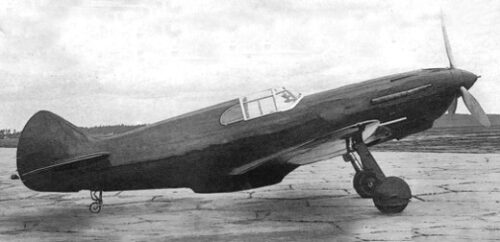
While the airframe was aerodynamically clean and structurally sound, the aircraft was powered by the Klimov M-105 engine, which proved insufficient for the design’s weight.
Despite this, over 100 evaluation units were produced to test its viability in frontline service.
I-22
Performance and Operational Feedback
Test pilots and early combat crews reported several critical shortcomings:
Underpowered engine, resulting in poor climb rate and acceleration.
Limited agility, especially in comparison to contemporary German and Finnish fighters.
Restricted range, which hampered operational flexibility.
These deficiencies led to unfavourable reviews, and the LaGG-1 was never adopted for mass production.
Instead, it served as a transitional platform for the improved LaGG-3, which retained the wooden construction but incorporated aerodynamic refinements and more powerful engines.
LaGG-1
Combat Use and Legacy
Although its combat deployment was limited, the LaGG-1 saw brief service during the Winter War (1939–1940) and the early stages of the Continuation War (1941–1944) against Finland.
Its operational impact was minimal, and it was quickly phased out in favour of more capable designs.
Despite its shortcomings, the LaGG-1 marked a significant milestone in Soviet fighter development.
It laid the groundwork for the Lavochkin bureau’s later successes and demonstrated the feasibility of using wood-based composites in combat aircraft—a necessity under wartime material constraints.