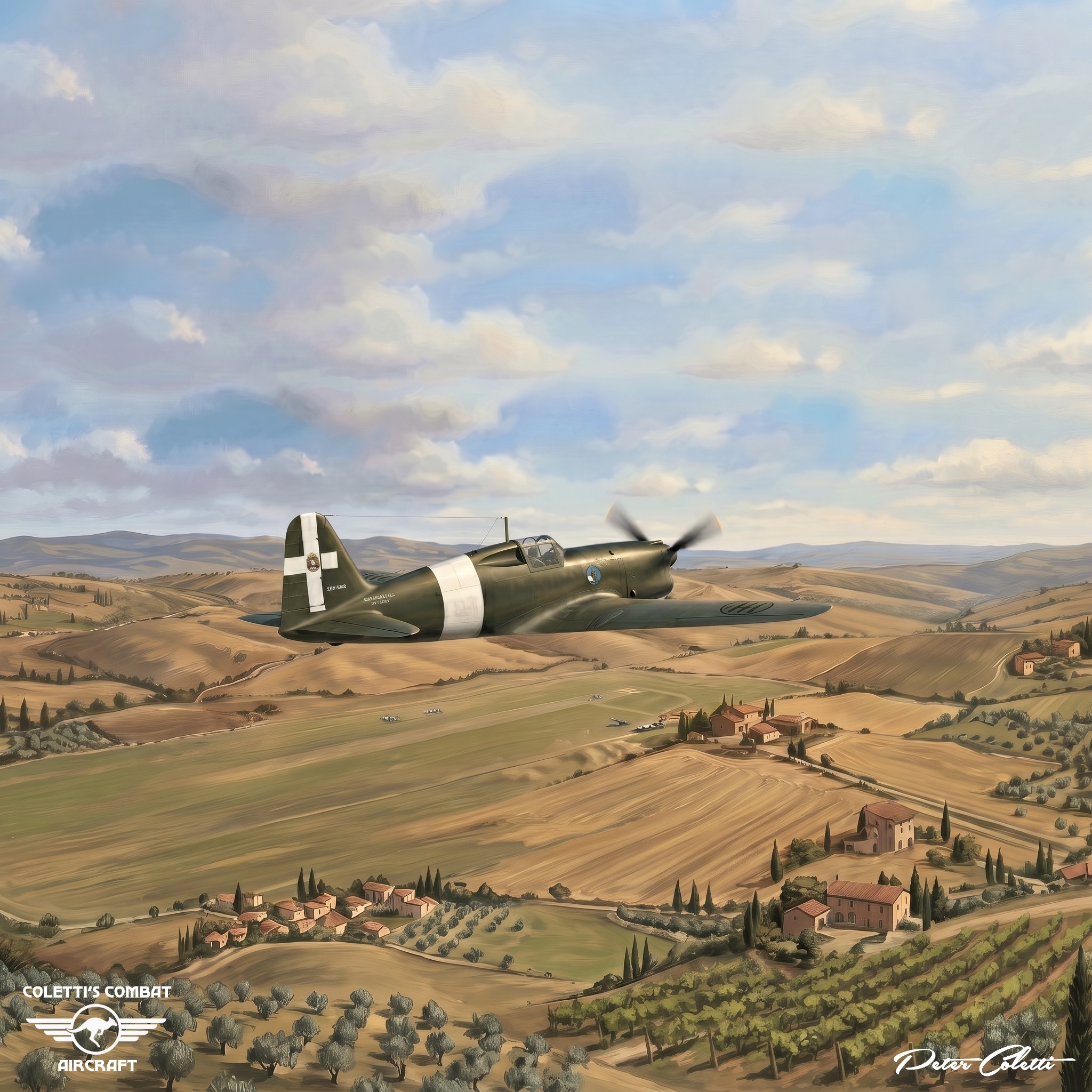
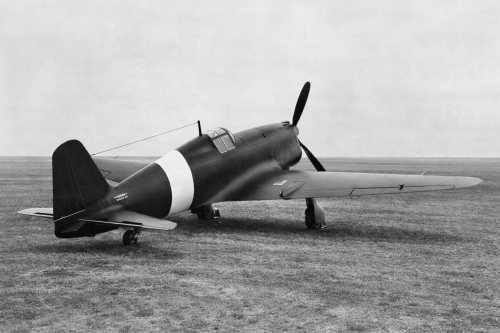
Ambrosini SAI.403 Dardo The Ambrosini SAI. 403 Dardo (“Dart”) is one of those “what‑if” fighters of the Second World War—technically promising and cleverly engineered, and yet overtaken by the collapse of the country that conceived it.
It was the ultimate refinement of Italy’s lightweight wooden fighter concept, and it came close—on paper—to matching front-line Allied and German types while using minimal strategic materials.
Only a single prototype was completed, but its story ties together Italian industry under strain, late‑war improvisation, and the ambitions of Germany and Japan to exploit any promising design they could find.
Origins and development
Italian lightweight fighter thinking
Concept roots:
The SAI.403 grew out of the work of engineer Sergio Stefanutti at SAI‑Ambrosini, who had been exploring small, very clean, low‑drag fighters built largely of wood.
This line led first to the SAI. 7 racing/trainer aircraft and then to the SAI.207 lightweight fighter.
Strategic context:
By 1941–42, Italy was short of high-power engines, aluminium, and other strategic materials.
A compact fighter with modest power but excellent aerodynamics and wooden construction was attractive:
It promised high speed from limited horsepower and could be built in dispersed, less sophisticated facilities.
a very light, wooden, low‑wing monoplane with a slim fuselage and an Isotta‑Fraschini Delta engine.
It achieved impressive speeds in testing, but its structure and armament were marginal for combat, and development delays frustrated the Air Ministry.
During these delays, Stefanutti and SAI‑Ambrosini reworked the concept into a more robust and militarily credible machine—the SAI.403 Dardo:
Revised wing:
A new wing of greater area and different profile to improve manoeuvrability and load‑carrying capacity.
Strengthened structure:
A heavier but stronger airframe to withstand higher g‑loads and carry more armament and fuel.
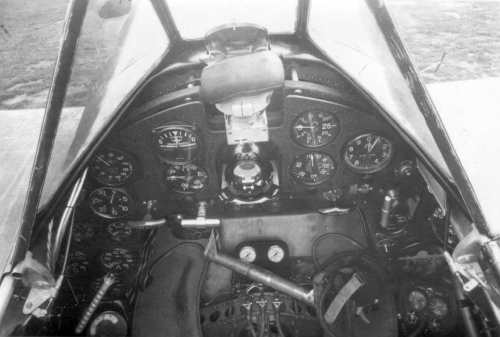
Improved systems:
A fully retractable tailwheel, provision for wing guns, and refined tail surfaces, including an in‑flight adjustable tailplane incidence.
Orders and production plans
The performance promises of the SAI.403 were so compelling that in early 1943 the Italian Air Ministry cancelled its order for 2,000 SAIs.207s and instead placed a huge order for 3,000 SAIs.403s:
800 to be built by SAI‑Ambrosini
1,000 by Caproni
1,200 by Savoia‑Marchetti (SIAI)
The design was deliberately optimised for series production:
wooden construction, relatively simple jigs, and the ability to use less critical materials.
In theory, this would allow rapid expansion of output even as Italy’s industrial base was under bombing and resource pressure.
Prototype and flight testing
The first prototype—often cited as MM.518, though some sources note confusion over its exact serial—was completed late in 1942 and first flew in January 1943.
Initial tests showed:
Very high speed for its power class, confirming the aerodynamic efficiency of the design.
Improved manoeuvrability over the SAI. 207, thanks to the larger wing.
Structural and aeroelastic issues:
At high speed, the new wing exhibited unpleasant vibrations, a sign of aeroelastic problems that would have required further refinement.
One early accident is attributed to these issues.
Despite this, Italian test pilots were enthusiastic and urged immediate series production, arguing that the fighter’s advantages outweighed its teething troubles.
Airframe and structural design
General configuration
The SAI.403 was a compact, single‑seat, low‑wing monoplane of largely wooden construction:
Wooden structure with plywood skinning, designed to be strong yet light and to conserve metals.
Key dimensions (prototype):
Length
about 8.2 m (26 ft 11 in)
Wingspan
about 9.8 m (32 ft 2 in)
Height
about 2.9 m (9 ft 6 in)
Wing area
~14.5 m² (155–156 sq ft)
Wing and tail
Wing:
Increased area compared with the SAI.207 to improve lift and handling.
A new airfoil profile aimed at balancing high‑speed performance with better low‑speed characteristics.
Provision for wing‑mounted cannon in some variants.
Tail unit:
Redesigned tail surfaces for better stability.
Variable‑incidence tailplane adjustable in flight, allowing trim changes across speed and load conditions without excessive elevator deflection—useful for a high‑performance, lightly powered fighter.
Undercarriage
Main gear
Retractable, inward‑retracting main wheels housed in the wing.
Tailwheel
Fully retractable tailwheel, an advance over the semi-retractable or fixed units of some earlier Italian fighters, reducing drag and contributing to the aircraft’s high top speed.
Materials and manufacturing philosophy
The SAI.403’s wooden structure was not just a stopgap; it was a deliberate strategy:
Material savings
Minimal use of aluminium and other strategic metals was critical for Italy in 1943.
Distributed production
Wooden airframes could be built in smaller workshops and furniture‑type factories, easing the burden on major aircraft plants.
Structural strength
Properly designed wooden structures can be very strong in tension and compression – the SAI. 403 was rated for significant g‑loads, making it suitable for aggressive manoeuvring.
Powerplant and systems
Engine
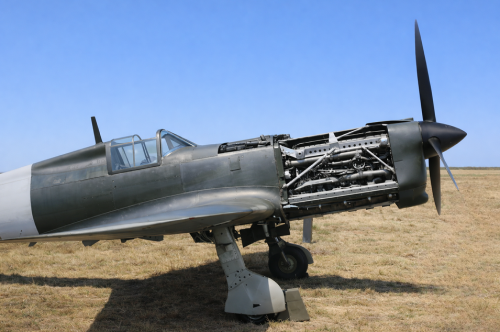
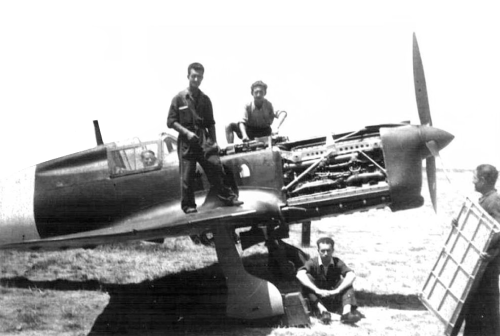
The SAI.403 used the Isotta‑Fraschini Delta R.C.21/60, an inverted, air‑cooled V‑12 piston engine:
Power
about 560 kW (750 hp) in the production-intended R.C.21/60 series.
Some sources mention an “uprated” Delta of up to around 1,000 hp in later projections, but the commonly cited figure for the prototype is 750 hp.
Cooling
Air‑cooled, reducing vulnerability to coolant loss and simplifying the installation compared with liquid‑cooled engines.
Supercharging
The “R.C.21/60” designation indicates a supercharger optimised for altitude (numbers refer to rated altitudes in hundreds of metres), giving good high-altitude performance for a relatively small engine.
Propeller and fuel
Propeller
A three‑bladed, constant‑speed Piaggio propeller, allowing the engine to operate near optimum RPM across a wide speed range.
Fuel capacity (prototype / A–B)
about 300 L internally.
Fuel capacity (C variant):
410 L total with an internal increase, plus two 150 L drop tanks, giving a ferry range over 2,300 km.
Performance and handling
Performance figures (prototype)
Typical figures cited for the SAI. 403 prototypes are:
Maximum speed:
~648 km/h (about 403 mph) at around 7,200 m (23,600 ft)
Cruise speed:
~490 km/h (about 300 mph)
Range:
~935 km (580–585 miles) on internal fuel
Up to ~2,320 km (1,440 miles) with drop tanks (C variant, ferry range)
Service ceiling:
~12,000 m (around 39,800 ft)
Rate of climb:
~15.9 m/s (about 3,100 ft/min)
Around 6 min 40 s to 6,000 m (20,000 ft)
For a fighter with only about 750 hp, these numbers are striking.
They reflect:
Very low drag
Clean lines, small frontal area, retractable gear, and careful aerodynamic refinement.
Low weight
Empty weight is around 1,900–2,000 kg, with a maximum takeoff weight around 2,640 kg.
Handling and issues
Test reports (as summarised in later sources) suggest:
Excellent speed and climb for the installed power.
Good manoeuvrability thanks to the larger wing and low weight.
Aeroelastic vibration at high speed in the new wing, which would have required structural stiffening or profile changes—likely at some cost in weight and perhaps top speed.
Even with these issues, the consensus among Italian test pilots was that the aircraft was ready for production and that its advantages outweighed the remaining problems.
Armament and planned variants
Although only one prototype was built, the SAI. 403 was conceived from the start as a family of variants with different roles and armament fits.
SAI.403A – Point‑defence fighter
Role
Lightweight interceptor for point defence.
Armament:
2 × 12.7 mm Breda‑SAFAT machine guns in the fuselage, synchronised to fire through the propeller arc.
Gross weight
~2,478 kg.
Philosophy
Keep the aircraft as light as possible to maximise climb and speed for short‑range interception, accepting relatively light armament.
SAI.403B – Standard fighter
Role
A mainline fighter with heavier armament.
Armament (typical plan):
2 × 12.7 mm Breda‑SAFAT machine guns in the fuselage, plus
2 × 15 mm MG 151/15 or 2 × 20 mm MG 151/20 cannons in the wings.
Gross weight
~2,643 kg.
Notes:
The prototype is generally described as corresponding to the B standard, with provision for the heavier mixed Italian–German armament.
This configuration would have given the SAI. The 403 firepower is comparable to many contemporary fighters.
SAI.403C – Long-range fighter
Role
Escort and long‑range fighter.
Armament:
2 × 20 mm cannon (sources differ on exact placement, but wing mounting is typical).
Fuel and range:
Extra internal fuel plus two 150 L drop tanks, giving a total range on the order of 2,200–2,320 km.
Concept
Exploit the aircraft’s efficiency to create a long‑legged escort or patrol fighter, something Italy largely lacked.
Operational history and wartime context
Italy in 1943
By the time the SAI. As the 403 prototype was flying, Italy’s strategic situation was deteriorating rapidly:
Allied bombing was hitting industrial centres.
Raw material shortages were acute.
Frontline units were struggling with outdated or underpowered fighters.
The SAI.403 looked like a potential answer.
fast, efficient, and relatively cheap in strategic materials. But events moved faster than the production lines.
The Armistice and German Seizure
In September 1943, Italy signed an armistice with the Allies.
The country effectively split.
the south under the co‑belligerent government, the north under German occupation and the Italian Social Republic.
The ambitious production programme for 3,000 SAI.403s collapsed before any series aircraft left the factories.
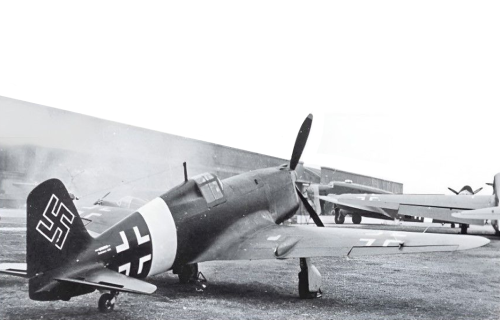
The single completed prototype was seized by the Germans and taken to Vergiate for evaluation by the Luftwaffe:
German testing
Luftwaffe pilots flew the aircraft and were reportedly impressed by its performance, especially given its modest power and wooden construction.
Japanese interest
Japanese pilots present in Germany also flew the SAI. 403.
According to later accounts, both Heinkel in Germany and Mitsubishi in Japan considered or even initiated plans to produce the design under licence.
None of these projects progressed to flying hardware before the war ended.
Why it never entered service
Several factors doomed the SAI. 403:
Timing
Its first flight in early 1943 left very little time before Italy’s collapse and the subsequent chaos.
Industrial disruption
Bombing, occupation, and political fragmentation made large‑scale production of a new type unrealistic.
Engine and supply issues
Even with wooden construction, a reliable supply of Isotta‑Fraschini Delta engines and other components would have been challenging.
Competing priorities
Germany and Japan already had their own advanced fighter programmes; integrating a foreign wooden design into their production systems in late-war conditions was a tall order.
As a result, the SAI.403 remained a one‑off prototype, remembered mainly through test reports, photographs, and post‑war analyses.
Comparative and historical significance
Technical significance
The SAI.403 stands out for several reasons:
Efficiency
Achieving ~400 mph with ~750 hp put it in a rare class of highly efficient fighters, comparable in speed to much more powerful aircraft.
Wooden high‑performance design
It demonstrated that, with careful aerodynamics and structural design, a wooden fighter could approach the performance of metal contemporaries like the Bf 109 or Spitfire, at least in speed and climb.
Advanced details
Features like the variable‑incidence tailplane and fully retractable tailwheel show that it was not a crude “emergency” design but a sophisticated, integrated concept.
Place in WWII fighter evolution
In the broader WWII context, the SAI.403 fits into a late‑war pattern:
Resource‑driven innovation:
Similar to the German Ta 154 or He 162 and the Japanese Ki‑106, it reflects attempts to conserve metals and simplify production while still fielding competitive fighters.
Too late to matter:
Like many late‑war projects, it was overtaken by strategic collapse and industrial exhaustion rather than technical failure.
Had it entered service in numbers in 1943–44, the SAI.403 would likely have been a fast, agile, but lightly powered fighter with strong point defence and escort potential—especially in the B and C variants with heavier armament and extended range.
Its actual impact, however, is historical and technical rather than operational.
Summary
The Ambrosini SAI.403 Dardo was
A refined evolution of Italy’s lightweight wooden fighter concept, derived from the SAI. 207.
Technically impressive, combining a modest 750 hp engine with a very clean airframe to reach around 648 km/h and a high service ceiling.
Planned in large numbers, with 3,000 aircraft ordered and multiple variants (A, B, C) tailored for interception, general fighter duties, and long‑range escort.
A victim of timing and politics, with only one prototype completed, seized and tested by the Germans and briefly eyed by both Heinkel and Mitsubishi before the war’s end, it made further work pointless.