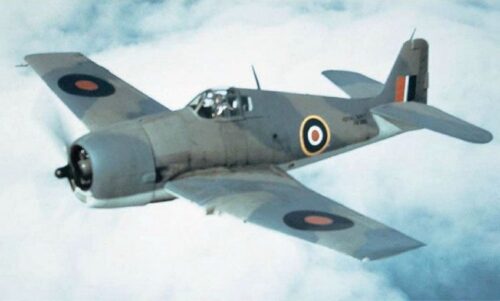
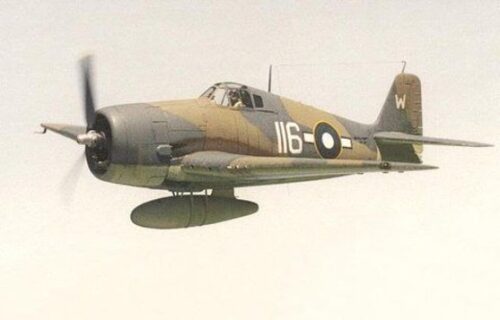
U.S. Navy, U.S. Marine Corps, Royal Navy Fleet Air Arm
Pacific Theatre Dominance
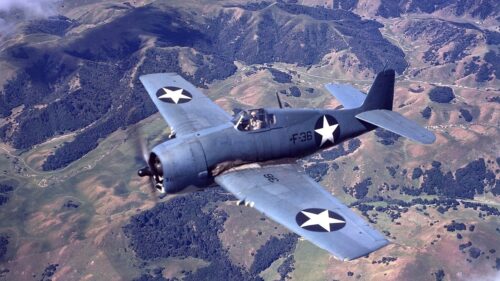
The Hellcat was designed to counter the Mitsubishi A6M Zero, which had outclassed earlier U.S. fighters like the F4F Wildcat.
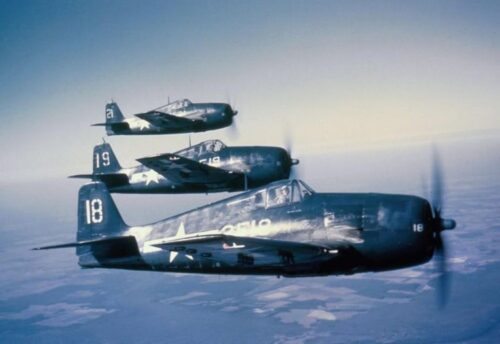
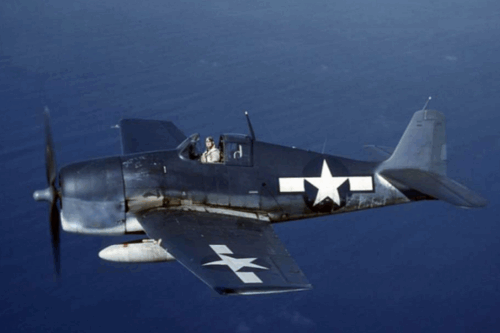
It became the dominant U.S. Navy fighter in the second half of the Pacific War, replacing the Wildcat on fleet carriers.
Its ruggedness, firepower (six .50 Cal Browning machine guns), and reliability made it ideal for carrier operations and deck landings.
Combat Effectiveness
Credited with 5,223 aerial victories, more than any other Allied naval aircraft.
In its first major engagement (Kwajalein, 4 December 1943), 91 Hellcats faced 50 Zeros, shooting down 28 while losing only 2.
Pilots praised its ability to absorb damage and outperform Japanese fighters, especially as Japanese pilot quality declined in 1944.
Night Fighting and Ground Attack
The F6F-5N variant was equipped with radar for night operations, extending its versatility.
By 1945, Hellcats were increasingly used in fighter-bomber roles, carrying bombs and rockets for ground attack missions.
Royal Navy Service
Operated by the Fleet Air Arm in the European and Pacific theatres.
Late-war deployments included squadrons based in Bankstown and Schofields, NSW, Australia, under Royal Navy control.
Design Highlights
Powered by a 2,000 hp Pratt & Whitney R-2800 Double Wasp engine.
Featured folding wings for carrier storage and wide-set landing gear for improved deck handling.
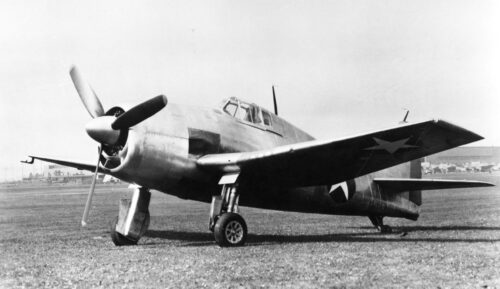
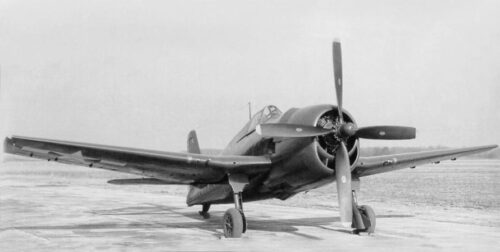
Prototype
Background
The Grumman F6F Hellcat was conceived as a successor to the F4F Wildcat, which had proven inadequate against the agile Japanese Mitsubishi A6M Zero.
Initiation
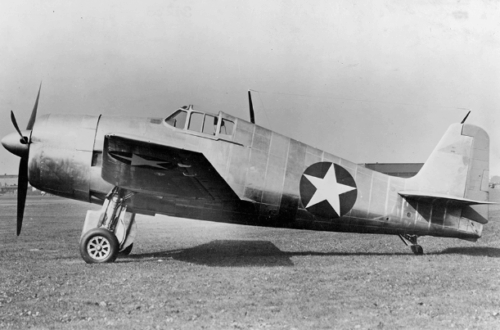
In response to combat feedback and technological advances, the U.S. Navy ordered two prototypes—XF6F-1 and XF6F-2—on 30 June 1941.
Production and Impact
First Deliveries
January 1943 to the VF-9 squadron aboard the USS Essex.
Combat Debut
September 1943.
Total Built
12,275 Hellcats, including all variants.
Combat Record
Credited with over 5,200 enemy aircraft destroyed—more than any other Allied naval aircraft.
The Variants
XF6F-1
First Flight
26 June 1942 at Bethpage, Long Island.
Engine
Initially powered by the Wright R-2600 radial engine (1,700 hp), later upgraded to the Pratt & Whitney R-2800 Double Wasp (2,000 hp) for better performance.
Design Features
Wide-set, hydraulically actuated landing gear.
Folding wings using Grumman’s patented “Sto-Wing” system.
More robust airframe than the Wildcat, optimised for carrier operations.
XF6F-2
Purpose
Experimental version with a turbo-supercharged engine.
Outcome
Did not enter production due to complexity and limited performance gains.
XF6F-3
First Flight
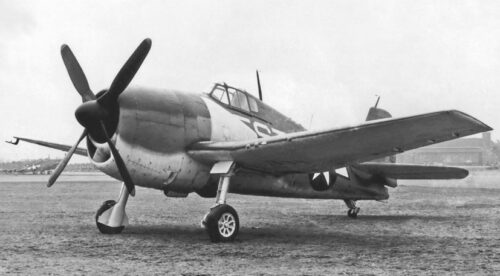
30 July 1942, just six weeks after the XF6F-1.
Improvements
Incorporated aerodynamic refinements.
Served as the basis for the production F6F-3 variant.
XF6F-6
Final Prototype
Represented the ultimate refinement of the Hellcat design.
Engine
Featured the R-2800-10W with water injection for short bursts of increased power.
Legacy
Served as the basis for the F6F-5, the most widely produced variant.
Grumman Production Variants
F6F-3
Introduction
Early 1943
Engine
Pratt & Whitney R-2800-10 Double Wasp (2,000 hp)
Armament
Six .50 calibre M2 Browning machine guns
Features
Improved cockpit visibility
Armor protection and self-sealing fuel tanks
First major production model, over 4,423 built.
Sub-variants
F6F-3N
Night fighter with APS-6 radar in a wing-mounted pod (205 built).
F6F-3E
Experimental night fighter with APS-4 radar (18 built).
F6F-5
Introduction
Mid-1944
Engine
R-2800-10W with water injection for increased power