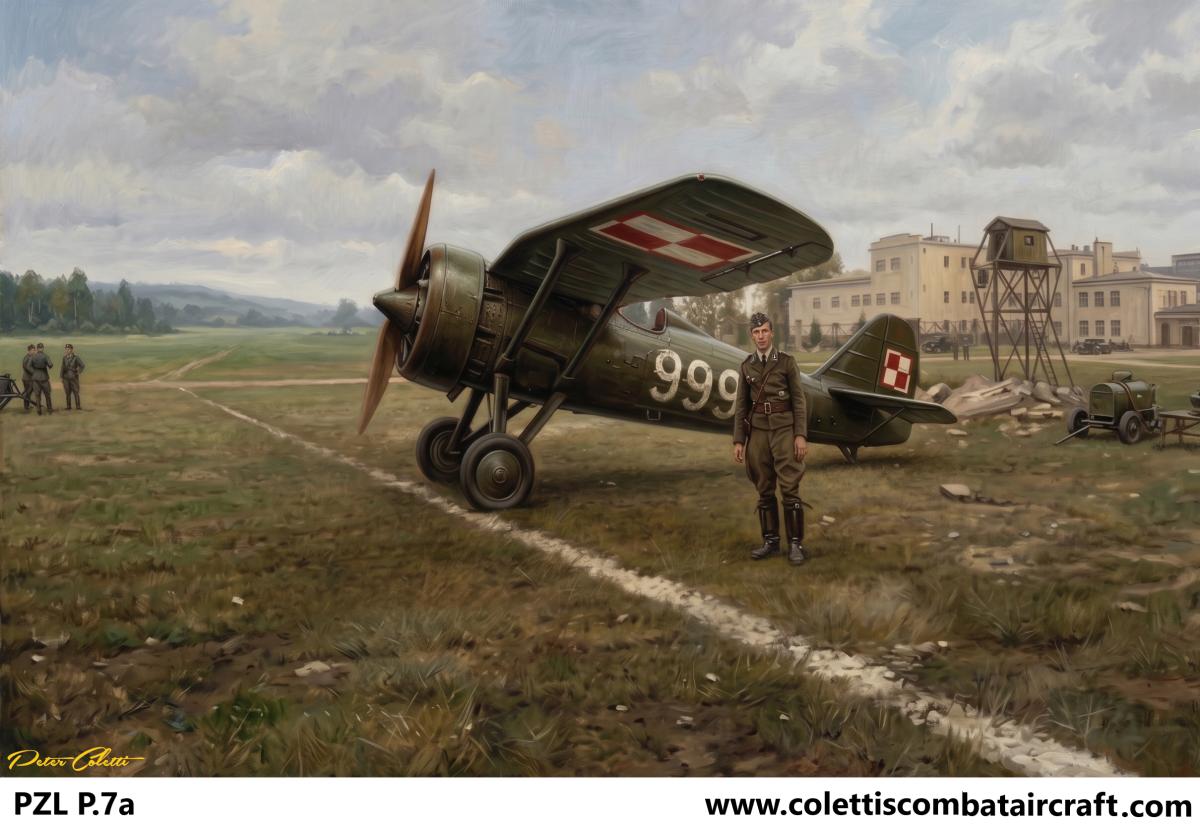
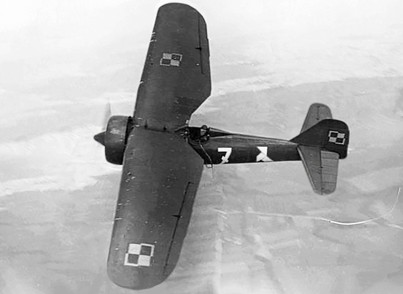
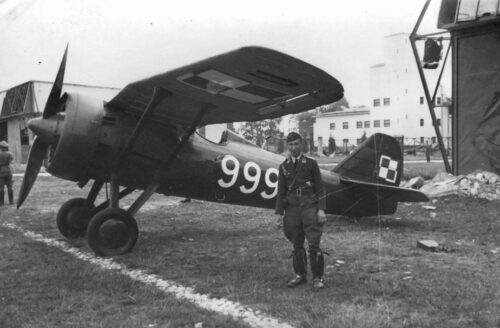
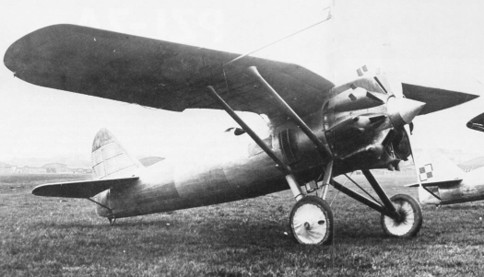
The PZL P.7a entered World War II as one of the most obsolete fighters still in frontline service anywhere in Europe.
Designed in the early 1930s as Poland’s first all‑metal monoplane fighter, it was technologically surpassed long before 1939, yet it remained in combat because replacement types (P.11c and P.24) were too few to fully re-equip the Polish Air Force.
Status at the Outbreak of War (September 1939)
By 1 September 1939, the P.7a was officially relegated to training and second‑line duties, but shortages forced it back into combat roles.
Approximately 30–40 P.7a fighters were still operational in combat units.
They were assigned mainly to army cooperation squadrons and airfield defence flights.
The aircraft’s performance was severely outdated:
Top speed barely 327 km/h
Light armament of two 7.92 mm machine guns.
Poor climb and acceleration compared to German Bf 109D/E fighters
Despite this, Polish pilots flew the P.7a aggressively in the opening days of the invasion.
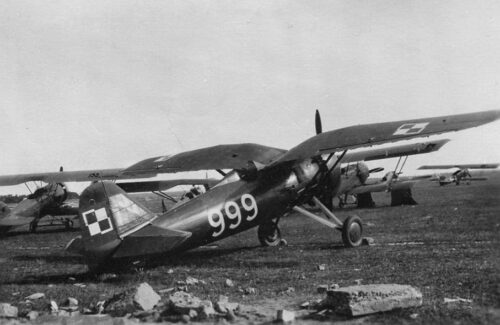
P.7a
First Combat Actions (1–3 September 1939)
P.7a units were among the first Polish fighters to engage the Luftwaffe.
Key characteristics of early engagements
Most encounters were against He 111, Do 17, and Ju 87 formations.
The P.7a could still out‑turn German bombers and early Stukas.
Against fighters, it was completely outclassed but could sometimes evade using tight, low-speed manoeuvres.
Notable early actions
1 September:
P.7a fighters of the 162nd Fighter Squadron intercepted German bombers attacking Warsaw and Radom.
2–3 September:
Several P.7a pilots scored confirmed or probable kills on He 111s and Do 17s, often through close‑range fire or forcing damaged bombers to break formation.
Losses were heavy, but the aircraft proved surprisingly resilient in low‑altitude dogfights.
Sustained Operations and Attrition (4–10 September)
As the Luftwaffe intensified attacks on Polish airfields, P.7a units were forced to disperse to improvised strips.
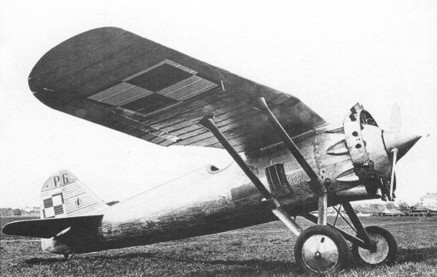
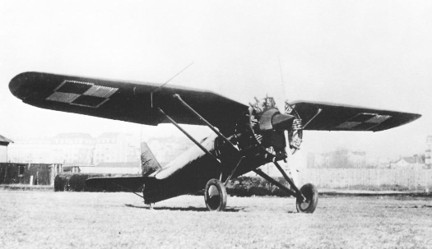
P.6
Operational realities
Constant relocation reduced maintenance capacity.
Many aircraft were lost on the ground due to strafing.
Fuel and ammunition shortages became severe.
Pilots often flew multiple sorties per day, mostly interception and reconnaissance escort.
Despite obsolescence, P.7a pilots continued to challenge German raids, focusing on bomber harassment rather than fighter combat.
Late Campaign (11–17 September)
By mid‑September, surviving P.7a fighters were concentrated in small detachments supporting retreating Polish ground forces.
Roles during the final phase
Low‑level reconnaissance
Bomber harassment
Local air defence of key crossings and troop concentrations
Last‑ditch interception of Stuka attacks
The aircraft’s low speed made it vulnerable, but its manoeuvrability at low altitude allowed skilled pilots to survive encounters that should have been fatal.
Collapse and Withdrawal (17–20 September)
After the Soviet invasion on 17 September, remaining P.7a units attempted to withdraw towards Romania.
Many aircraft were destroyed by their own crews to prevent capture.
A handful were interned in Romania, where they were eventually scrapped.
None survived the war in operational condition.
Assessment of Combat Effectiveness
The PZL P.7a was hopelessly outdated in 1939, yet it still contributed meaningfully in the first week of the war.
P.7a
Strengths
Excellent low‑speed manoeuvrability
Rugged construction
Reliable engine
Small silhouette, difficult to hit
Weaknesses
Extremely low speed
Weak armament
Poor climb and acceleration
No radios in most aircraft
Vulnerable to all modern fighters
Despite these limitations, P.7a pilots displayed remarkable skill and courage, scoring several kills and disrupting German bombing runs during Poland’s most desperate hours.
Archival Summary
The PZL P.7a entered WWII as a relic of early‑1930s fighter design, yet it fought from the first to the last days of the September campaign.
Though outclassed by every German combat aircraft, it served as a stopgap interceptor, reconnaissance escort, and airfield defender.
Its operational history is defined by improvisation, attrition, and the determination of Polish pilots who flew an obsolete machine against overwhelming odds.
The P.6 Precursor Design
(Two Prototypes)
The P.6 was the immediate predecessor to the P.7 and the aircraft that first demonstrated Zygmunt Puławski’s “Polish wing” (the gull‑wing, high‑mounted monoplane layout).
It was built in two prototypes in 1930, intended as Poland’s first modern all-metal fighter.
Key historical points:
Engine limitations shaped the design.
The P.6 used a lower‑powered Bristol Jupiter VI engine, which restricted performance but allowed PZL to validate the airframe concept before committing to a more advanced power plant.
International success.
The P.6 prototype won the National Air Races in the U.S. in 1931, giving Poland global recognition for its fighter-design philosophy.
Structural testbed.
The aircraft proved the strength and handling of the all-metal fuselage and the gull-wing configuration, which offered excellent pilot visibility and short-field performance.
Transition point.
Although promising, the P.6 was overtaken by the improved P.7 concept before it could be ordered into production.
Its main legacy is as the direct technological foundation for the P.7 series.
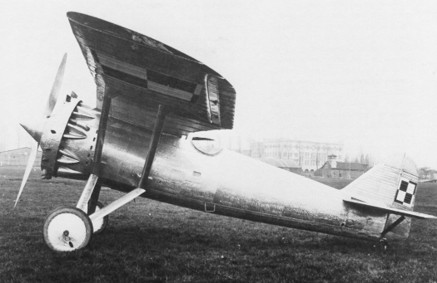
PZL P.7-I
First Prototype
The P.7/I was the first true P.7 prototype, built in 1930–31 as an evolutionary step from the P.6.
Historical significance:
New engine integration.
It introduced the Bristol Jupiter VII F engine, giving higher power and better altitude performance than the P.6.
Refined aerodynamics.
The airframe incorporated aerodynamic clean‑ups, including improved wing root fairings and fuselage streamlining.
Cooling and reliability trials.
Much of the testing focused on engine cooling, oil temperature stability, and airflow management—issues that would define the next prototype.
Baseline for the production model.
The P.7/I established the structural and aerodynamic configuration that would be carried into the P.7/II and ultimately the P.7a.
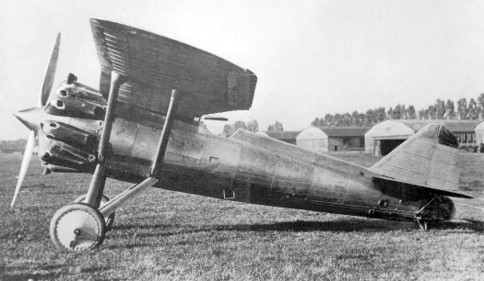
PZL P.7/II
Second Prototype (Townend Ring)
The P.7/II was the second prototype, built to address cooling and drag issues identified in the P.7/I.
Key developments:
Townend ring installation.
The most visible change was the addition of a Townend drag‑reducing ring around the radial engine.
This improved:
cooling airflow,
aerodynamic efficiency,
and top speed.
Refined cowling and intake layout.
Engineers experimented with different cowling shapes and carburettor intake positions to stabilise engine temperatures during long climbs.
Flight testing for production readiness.
The P.7/II served as the final evaluation platform before the Polish Air Force approved the aircraft for serial manufacture.
Direct precursor to the P.7a.
The lessons from the P.7/II’s aerodynamic improvements were incorporated almost unchanged into the production model.
P.7a
Serial Production Version
The P.7a was the only production variant, built from 1932 onward, with 149 aircraft completed.
Historical role:
The first modern Polish fighter in service.
It became the backbone of the Polish Air Force’s fighter arm from 1933 to 1935, replacing older biplanes.
Standardised improvements.
The P.7a incorporated the following:
the Townend ring from the P.7/II,
strengthened landing gear,
revised cockpit equipment,
improved engine installation,
and production‑grade structural refinements.
Training and second‑line service.
By 1939, the P.7a was obsolete but still widely used in training units and reserve squadrons.
Combat in 1939.
Despite being outclassed, P.7a units flew combat sorties during the German invasion, scoring several victories before being overwhelmed.
Specifications (P.7a)
Crew
One
Length
7.16 m (23 ft 6 in)
Wingspan
10.3 m (33 ft 10 in)
Height
2.75 m (9 ft 0 in)
Wing area
17.2 m² (185 sq ft)
Airfoil
Root
IAW-72 (Bartel 37/IIa) (6.5%)
Tip
IAW-72 (Bartel 37/IIa (8%))
Empty weight
1,010 kg (2,227 lb)
Gross weight
1,409 kg (3,106 lb)
Fuel capacity
250 L (55 imp gal; 66 US gal) in a jettisonable fuselage tank