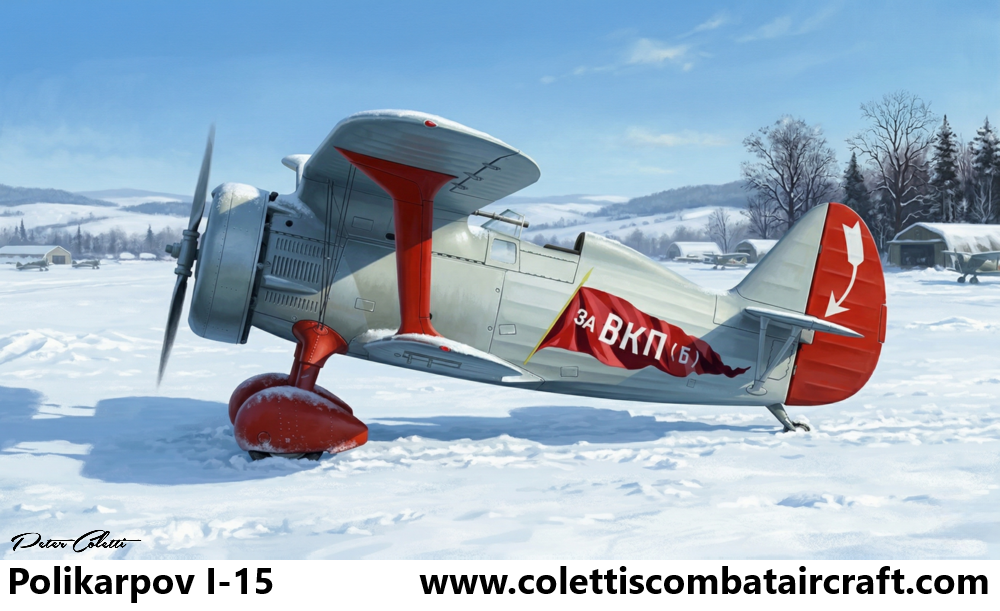
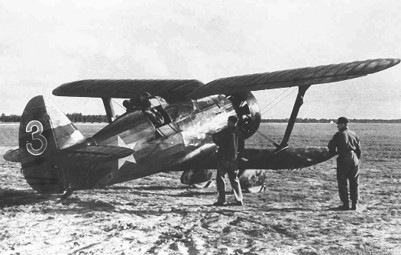
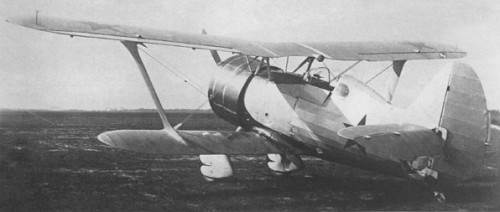
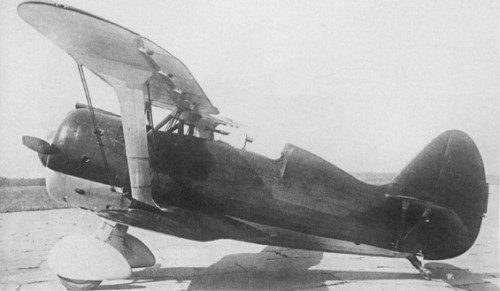
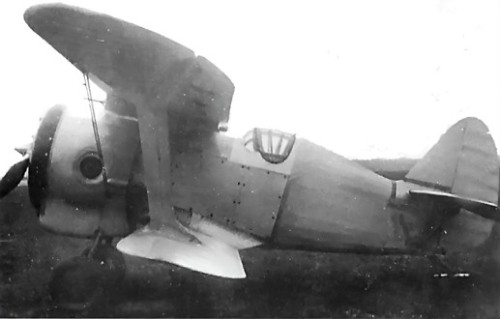
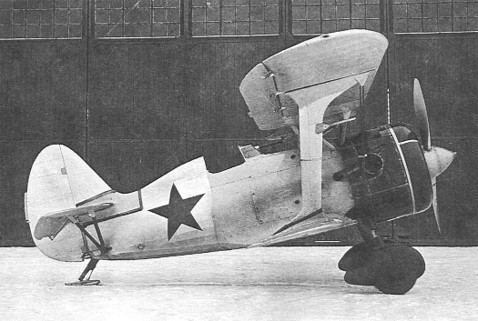
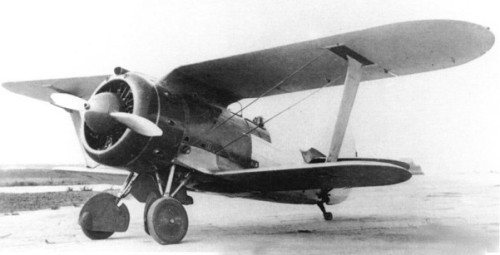
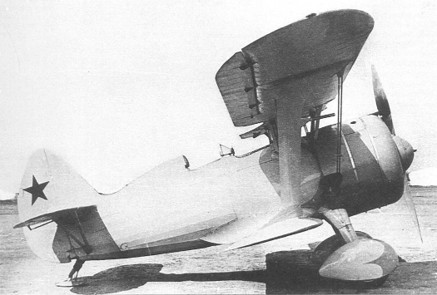
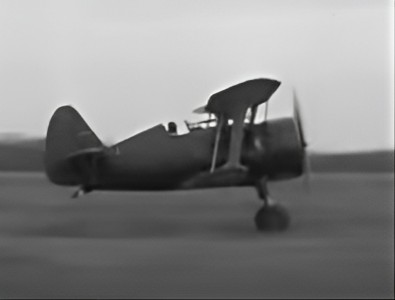
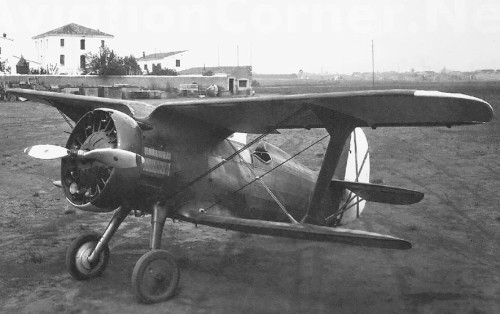
Although considered obsolete by the outbreak of World War II, the Polikarpov I-15 remained in frontline and auxiliary service due to its sheer numbers and the Soviet Union’s urgent need for aircraft in the early war years.
Soviet Union
Winter War (1939–1940)
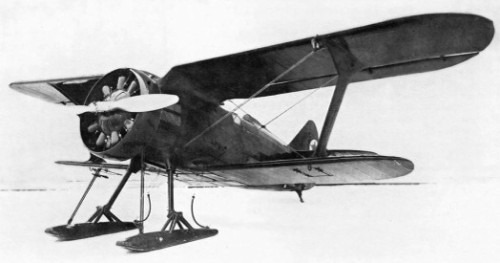
The I-15 and I-15bis were used extensively against Finnish forces.
Despite their age, they performed ground-attack and close-support roles, often flying in harsh Arctic conditions.
Operation Barbarossa (1941)
At the time of the German invasion, hundreds of I-15s were still in service.
They were quickly outclassed by modern Luftwaffe fighters like the Bf 109, suffering heavy losses.
Many were destroyed on the ground during the initial air raids.
Secondary Roles
As the war progressed, surviving I-15s were relegated to training, liaison, and night harassment duties.
Some were used by Soviet naval aviation for coastal patrols and convoy escort.
Mongolia
I-15s were deployed by Soviet forces during the Battle of Khalkhin Gol (1939) against Japanese aircraft.
Their agility proved useful in dogfights, though they were increasingly vulnerable to newer enemy types.
China
Chinese Nationalist forces operated I-15s (including the Chung 28B variant) during the Second Sino-Japanese War, which overlapped with WWII.
They were used in air defence and ground-attack roles against Japanese forces, often flown by Chinese and Soviet volunteer pilots.
Spain
(Legacy Use)
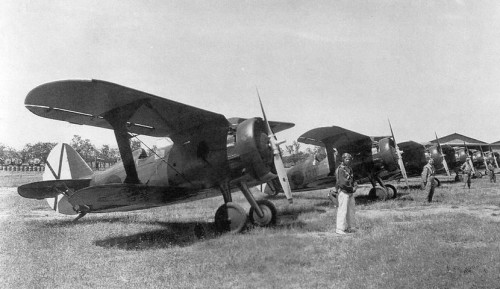
Though Spain was neutral during WWII, the I-15s left over from the Spanish Civil War (designated A.4) remained in limited use by the Spanish Air Force into the early 1940s, primarily for training and coastal patrol.
Despite its obsolescence, the I-15’s ruggedness, ease of maintenance, and availability ensured it played a meaningful—if limited—role in the early years of WWII.
The Variants
TsKB-3bis
Role
Prototype
Overview
An early refinement of the original TsKB-3 design, the TsKB-3bis retained the gull-wing configuration and served as a testbed for aerodynamic improvements.
It helped validate structural changes before mass production of the I-15 began.
TsKB-3ter
Role
Prototype with upgraded engine
Overview
This version introduced the Shvetsov M-25V radial engine, offering improved power and reliability.
It marked a transitional step towards the I-15bis, focusing on performance enhancements and engine integration.
I-15
Role
First production series
Overview
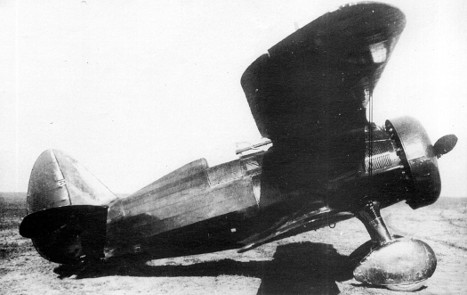
Known as “Chato” in Spain and “Chaika” (gull) in the USSR, the I-15 featured a distinctive gull-shaped upper wing and was powered by the M-22 engine (licensed Bristol Jupiter).
It entered service in 1934 and saw combat in the Spanish Civil War, the Second Sino-Japanese War, and the Winter War.
A total of 647 were built.
I-15 bis
Role
Improved production fighter
Overview
A major upgrade over the I-15, the I-15bis featured a straight upper wing for simplified production and improved stability.
It was powered by the 570 kW (760 hp) Shvetsov M-25V engine and armed with four 7.62 mm PV-1 or ShKAS machine guns.
It could also carry up to 150 kg of bombs.
With 2,408 units built, it became the most widely produced variant.
I-152
Role
Modernized I-15bis prototype
Overview
Built in 1938, the I-152 was a testbed for further refinements, including structural and aerodynamic tweaks.
Despite its promise, it was sidelined in favour of the more advanced I-153, which offered retractable landing gear and better performance.
I-152GK
Role
Pressure cabin prototype
Overview
This experimental aircraft tested a hermetically sealed cockpit for high-altitude operations.
It was part of Soviet efforts to explore pilot survivability and performance in pressurised environments, though it remained a one-off prototype.
I-152TK
Role
Turbocharged prototype
Overview
Fitted with two turbochargers, this variant aimed to improve engine performance at altitude.
It was an experimental step towards high-altitude combat capability but did not enter production.
I-15ter (I-153)
Role
Advanced development with retractable landing gear
Overview
Officially designated I-153, this variant combined the biplane layout with modern features like retractable undercarriage and improved aerodynamics.
It was powered by the M-62 radial engine and became a key Soviet fighter in the late 1930s, with over 3,400 built.
UTI-1
Role
Fighter trainer
Overview
A two-seat trainer derived from the I-15, the UTI-1 featured dual controls and a repositioned front cockpit.
Though 20 were built in 1934, they were not adopted by the Soviet Air Force, possibly due to performance limitations or training doctrine shifts.
Chung 28B
Role
Chinese production variant
Overview
Based on the I-152, this version was manufactured in China and powered by a 712 hp Wright R-1820-F3 engine.
Armed with four .30 calibre Browning machine guns, it reflected localised adaptation for Chinese Nationalist forces.
A total of 30 were built.
A.4
Role
Spanish Air Force designation
Overview
The I-15 was known as the A.4 in Spanish service, where it played a prominent role during the Spanish Civil War.
It was favoured for its agility and climb rate and was flown by both Soviet volunteers and Spanish Republican pilots.