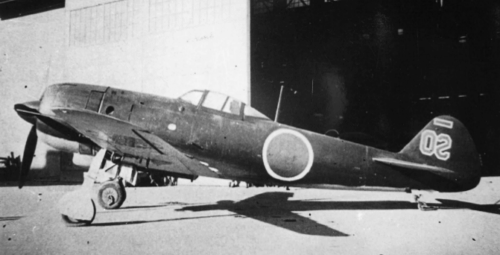
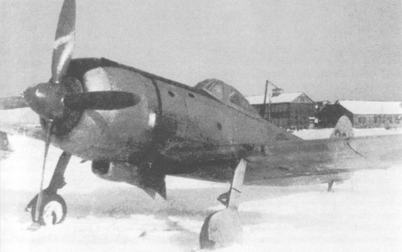
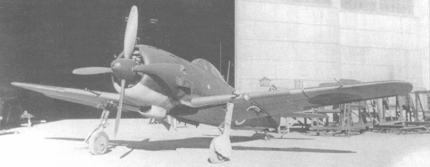
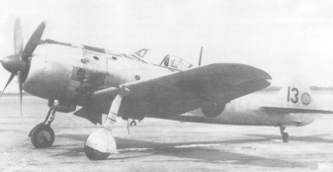
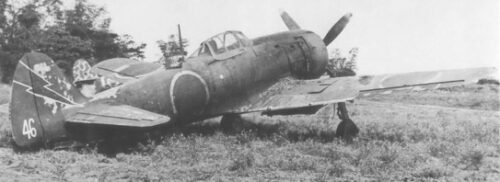
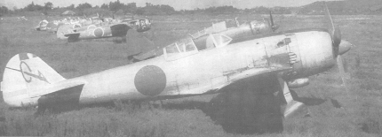
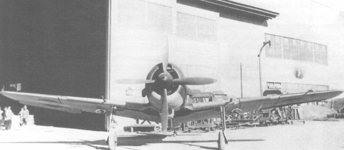
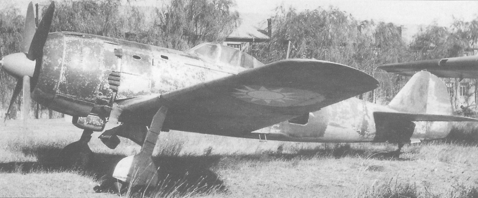
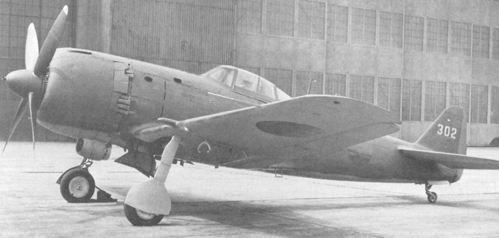
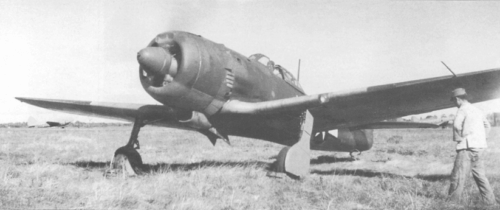
The Nakajima Ki‑84 was the Imperial Japanese Army Air Force’s most capable late‑war fighter, combining high speed, heavy armament, and excellent climb with the ruggedness needed for frontline operations.
Entering combat in late 1944, it became the IJAAF’s primary high‑performance interceptor during the final year of the war, fighting across China, the Philippines, Okinawa, and the Japanese Home Islands.
Despite its formidable design, the Ki‑84’s operational effectiveness was increasingly constrained by Japan’s collapsing industrial base, shortages of high‑octane fuel, and declining pilot quality.
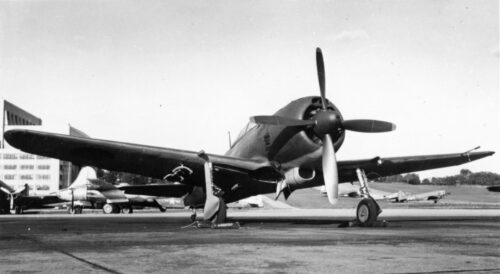
In ideal condition, however, the Hayate was one of the few Japanese fighters that could match late‑war Allied types such as the P‑47D, P‑51D, F6F‑5, and F4U‑1D.
Development and Introduction to Service (1943–1944)
Origins
By 1942, the IJAAF recognised that the Ki‑43 and Ki‑44 were no longer adequate against newer Allied fighters.
Nakajima was tasked with producing a next-generation design that combined the following:
High speed at altitude
Heavy armament
Good climb and maneuverability
Adequate protection and self‑sealing tanks
The result was the Ki‑84, powered by the 1,800–2,000 hp Nakajima Ha‑45 Homare radial engine.
Prototype Testing
Prototype flights in early 1943 revealed:
Excellent acceleration and climb
High top speed (over 390 mph in early tests)
Good roll rate and maneuverability
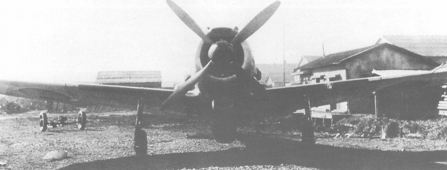
Strong landing gear suitable for rough fields
The IJAAF approved the aircraft for mass production as the Army Type 4 Fighter Model 1A.
Combat Debut
China, Summer 1944
The first operational Ki‑84s were issued to 22nd Sentai and 85th Sentai in central China during the massive Ichi‑Go offensive.
Operational Performance in China
The Hayate quickly proved superior to most Chinese-based Allied fighters, including P‑40s and P‑51A/Bs operating at long range.
Pilots praised its climb, dive, and firepower (two Ho‑5 20 mm + two Ho‑103 12.7 mm).
Maintenance was initially good due to proximity to Japanese supply lines.
These early successes gave the Ki‑84 a strong reputation before its more difficult campaigns later in the war.
Maintenance was initially good due to proximity to Japanese supply lines.
These early successes gave the Ki‑84 a strong reputation before its more difficult campaigns later in the war.
The Philippines Campaign (1944–1945)
The Ki‑84’s most intense combat occurred during the defense of the Philippines.