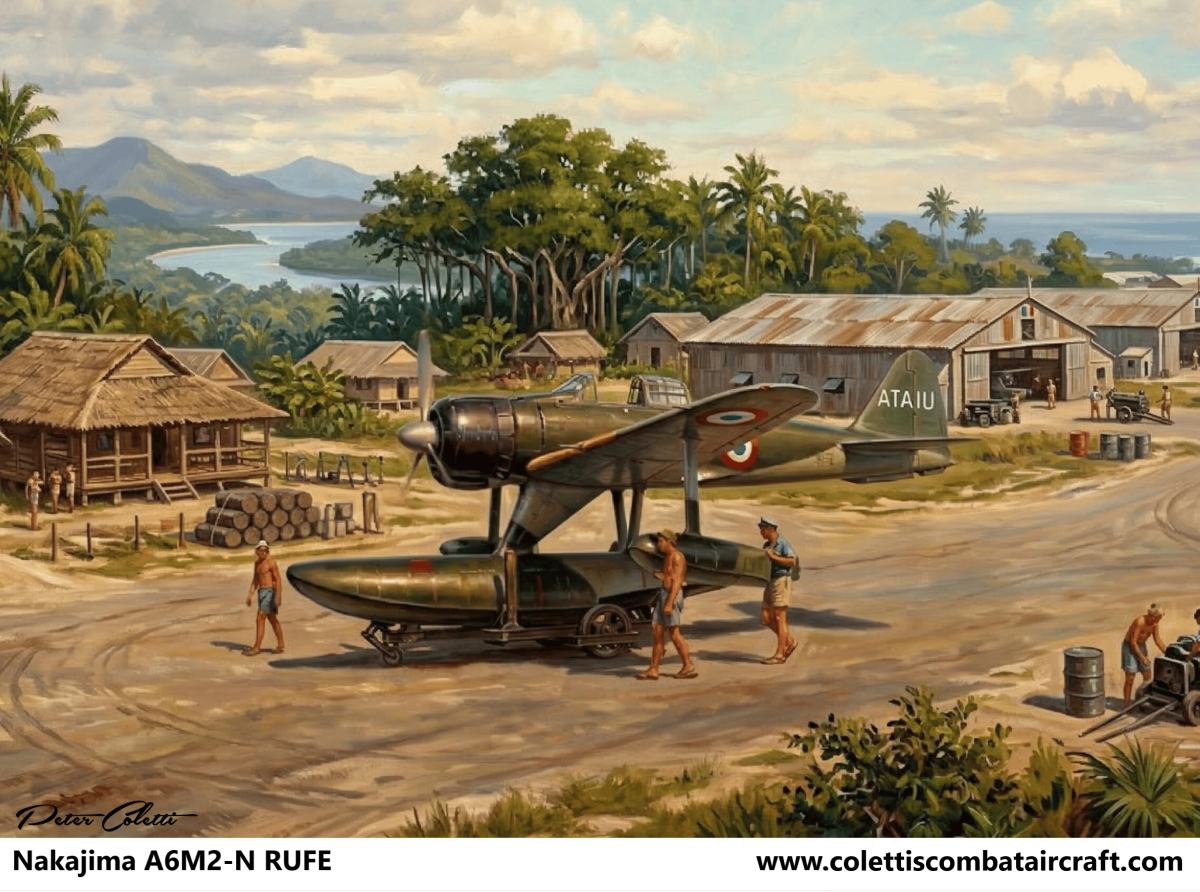
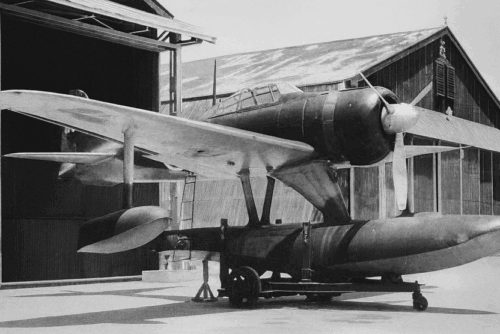
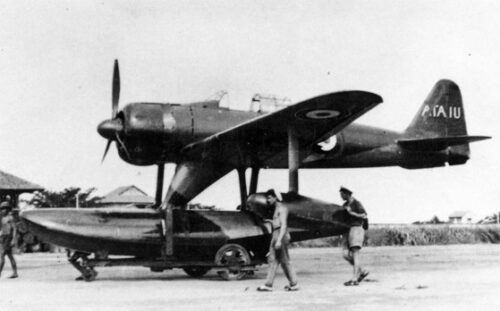
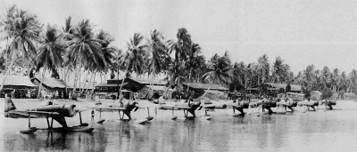
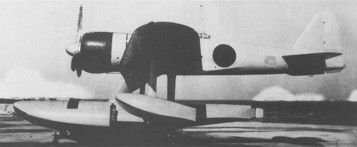
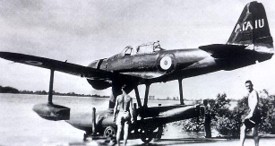
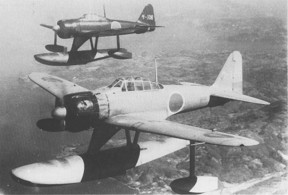
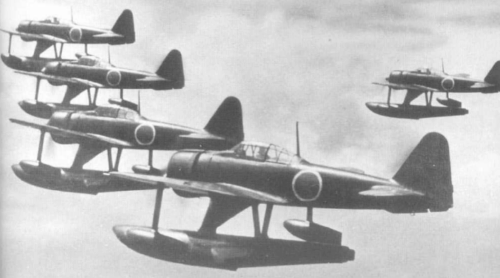
The Nakajima A6M2‑N was conceived as a stop‑gap floatplane fighter to support Japanese naval operations in areas lacking airfields.
Built from the Mitsubishi A6M2 Model 11 Zero, it entered service in 1942 and ultimately saw action across the Pacific in a variety of defensive and offensive roles.
Strategic Purpose
The Imperial Japanese Navy required a fighter capable of:
Defending remote island bases without runways
Operating from seaplane tenders during amphibious operations
Providing local air superiority where conventional fighters could not be based
The A6M2‑N filled this niche, though only 327 aircraft were produced—far fewer than the Navy needed for widespread deployment.
Deployment and Combat Use
Early Service (1942)
Upon entering service, A6M2‑Ns were assigned to several IJN air groups (kokutai), including:
5th Kokutai
36th Kokutai
452nd Kokutai
Otsu, Yokohama, and Yokosuka Kokutai. Otsu, Yokohama, and Yokosuka Kokutai
These units operated from:
Seaplane tenders
Remote island anchorages
Forward bases in the Aleutians, Solomons, and New Guinea
The aircraft’s ability to operate from water allowed Japan to quickly establish fighter cover in newly occupied or contested regions.
Aleutian Islands Campaign
The A6M2N saw significant action in the Aleutians, where its long range and ability to operate from sheltered bays made it valuable.
Rufes conducted:
Patrols
Interceptions of U.S. bombers and reconnaissance aircraft
Local air defense for isolated garrisons
Their performance was respectable early on, and they scored several victories against Allied aircraft.
Solomon Islands and New Guinea
In the Solomons, Rufes defended Japanese positions during the intense island‑hopping campaigns.
They were used to:
Protect seaplane bases
Escort reconnaissance floatplanes
Intercept low-level Allied raids
However, as the war progressed, the Rufe’s limitations—especially drag from its floats—became more apparent when facing modern Allied fighters.
Defence of Remote Bases (1943–1945)
Despite becoming increasingly obsolete, the A6M2N continued to serve through 1945, largely because:
Japan lacked replacements for floatplane fighters
Remote bases still required air defence
The aircraft remained reliable and familiar to pilots
Rufes were used in:
Local interception
Harassment raids
Last-ditch defensive operations
They were still present in scattered island garrisons at the war’s end.
Combat Effectiveness
Strengths
Excellent manoeuvrability inherited from the Zero
Strong armament
(2× 20 mm cannon + 2× 7.7 mm MG)
Long range for a floatplane fighter
Ability to operate where no airfields existed
Weaknesses
Reduced speed and climb due to float drag
Vulnerable to modern Allied fighters by 1943
Limited production
(only 327 built)
Despite these drawbacks, Rufes did score numerous aerial victories, especially early in the war when Allied aircraft were less advanced.
Overall Assessment
The Nakajima A6M2 N was never intended to replace land-based fighters, but it excelled in its niche role.
It provided the Imperial Japanese Navy with:
A flexible, mobile fighter presence
Rapid deployment capability in newly occupied areas
A defensive screen for seaplane bases and remote outposts
By 1944–45, it was outclassed, yet it remained in service simply because Japan had no alternative floatplane fighter ready in sufficient numbers.
Specifications
Crew
1
Length
10.1 m (33 ft 2 in)
Wingspan
12 m (39 ft 4 in)
Height
4.3 m (14 ft 1 in)
Wing area
22.44 m² (241.5 sq ft)
Empty weight
1,912 kg (4,215 lb)
Gross weight
2,460 kg (5,423 lb)
Max take-off weight
2,880 kg (6,349 lb)
Powerplant
1 × Nakajima NK1C Sakae 12,
14-cylinder air-cooled radial piston engine,
700 kW (940 hp) for take-off
950 hp (710 kW) at 4,200 m (13,800 ft)
Propellers
3-bladed constant-speed metal propeller
Performance
Maximum speed
435 km/h (270 mph, 235 kn) at 5,000 m (16,000 ft)
Cruise speed
296 km/h (184 mph, 160 kn)
Range
1,148 km (713 mi, 620 nmi)
Ferry range
1,783 km (1,108 mi, 963 nmi)
Service ceiling
10,000 m (33,000 ft)
Time to altitude
5,000 m (16,000 ft) in 6 minutes 43 seconds
Armament
Guns
2 × 7.7 mm (0.303 in) Type 97 machine guns in forward fuselage
2 × 20 mm (0.787 in) Type 99 Mark 1 autocannon in the outer wings