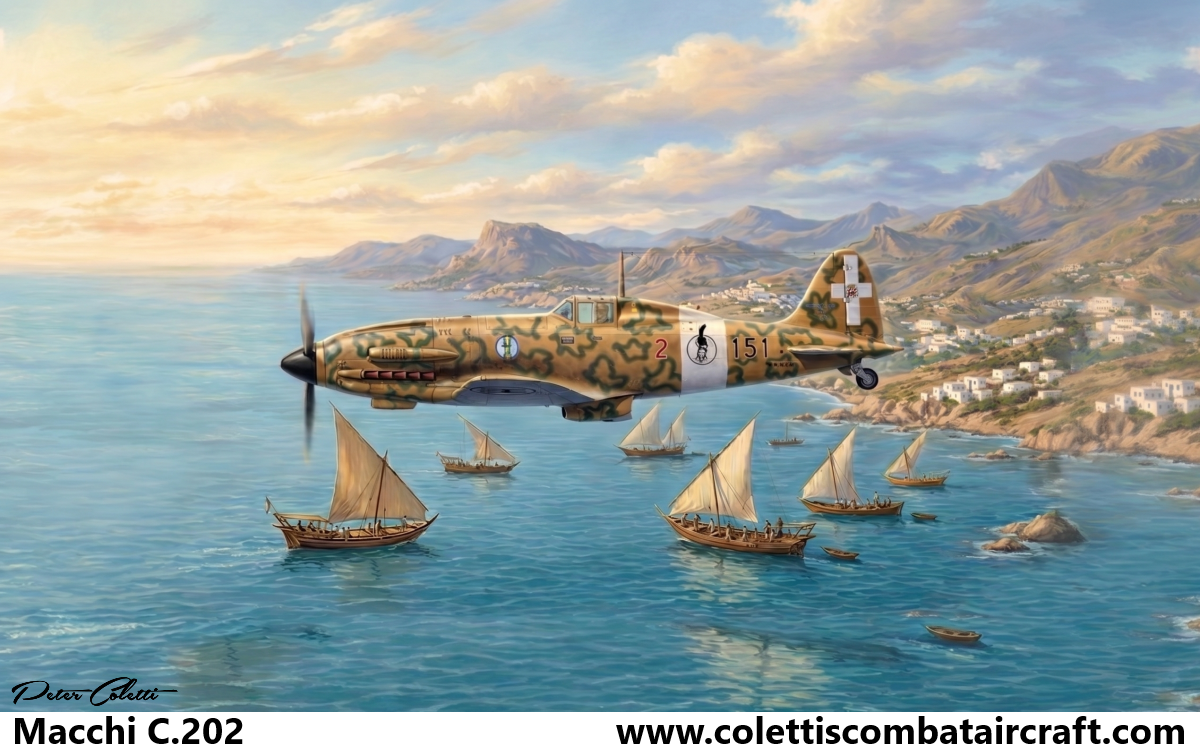
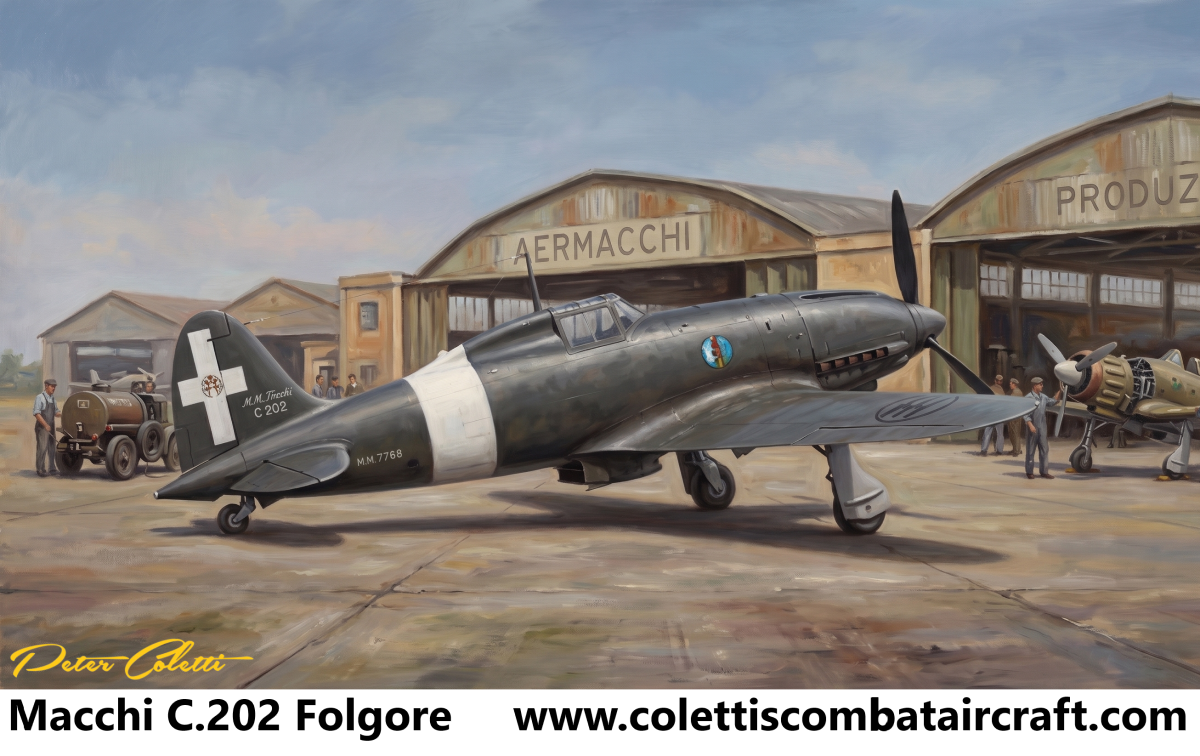
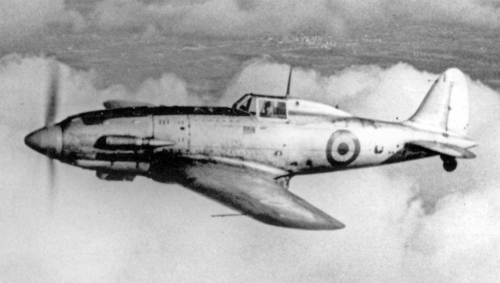
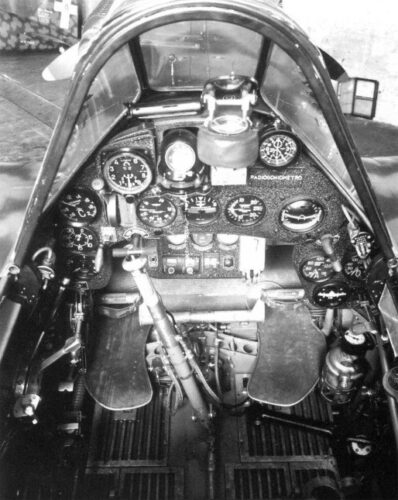
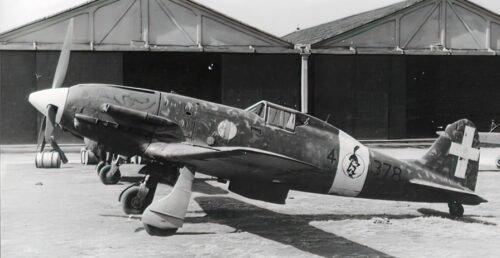
Entering service in July 1941, the Macchi C.202 Folgore (“Thunderbolt”) was a major leap forward for Italian fighter aviation.
Designed by Mario Castoldi and powered by the German Daimler-Benz DB 601 engine, it offered excellent speed, agility, and climb rate—finally matching Allied fighters like the Hawker Hurricane and early Spitfires.
Combat Debut
The Folgore first saw action in North Africa, where it quickly proved superior to earlier Italian fighters.
It was deployed by the Regia Aeronautica in Libya and Tunisia, engaging RAF aircraft during the Western Desert Campaign and the Siege of Malta.
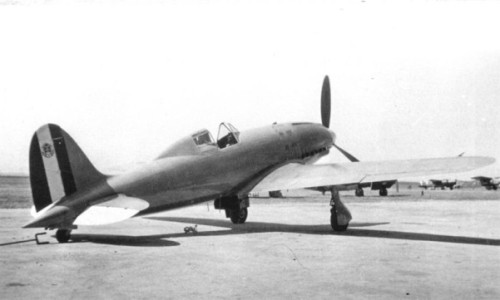
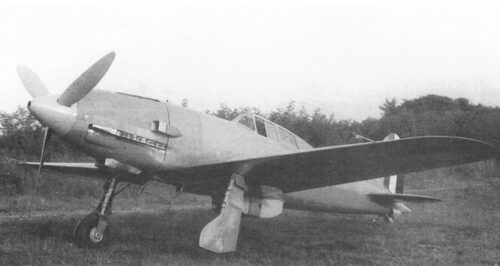
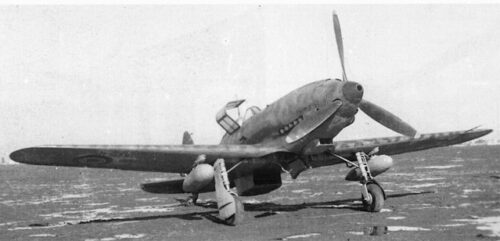
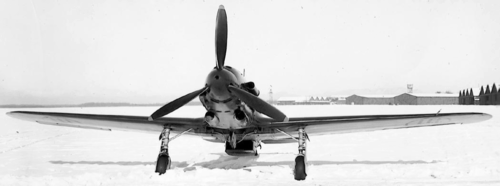
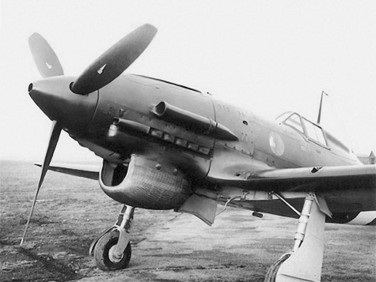
C.202 Prototype (MM.445)
Mediterranean Theater
The C.202 played a key role in defending Sicily and southern Italy from Allied bombing raids.
It was also used in escort missions and air superiority roles over the Mediterranean, often clashing with American P-40s and British Spitfires.
Eastern Front & Balkans
A limited number of Folgores were sent to the Eastern Front and operated in the Balkans.
The aircraft was also used by the Air Force of the Independent State of Croatia and briefly by the Luftwaffe.
Strengths & Limitations
Strengths
Excellent manoeuvrability, good speed (up to 600 km/h), and a robust airframe.
Limitations
Light armament (typically two 12.7 mm machine guns), lack of radios in early models, and limited production capacity.
Legacy
Over 1,150 units were built.
Though eventually outclassed by newer Allied fighters, the C.202 was considered one of the best Axis fighters of its time and laid the groundwork for its successor, the Macchi C.205 Veltro.
Prototype (MM.445)
The sole prototype of the C.202 Folgore was a modified C.200 airframe fitted with a Daimler-Benz DB 601Aa inline engine—designed by Mario Castoldi to replace the earlier radial configuration.
It first flew on 10 August 1940, piloted by Giuseppe Burei at Lonate Pozzolo, showcasing a major performance leap over the C.200.
Key features included a streamlined nose, a retractable tailwheel, and the absence of a radio mast, enhancing aerodynamics.
The imported German engine enabled speeds over 500 km/h, prompting immediate production orders from the Regia Aeronautica before formal testing concluded.
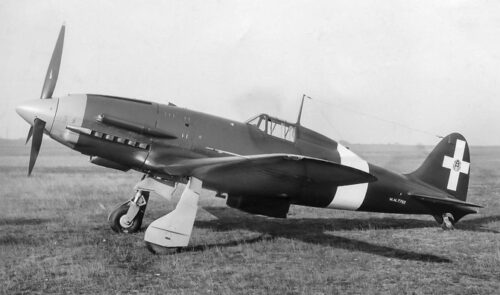
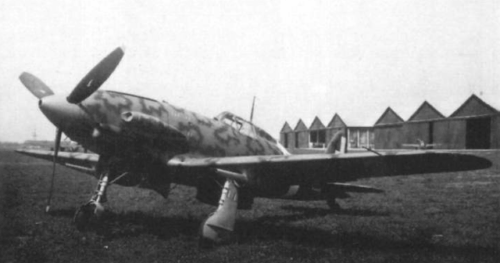
C.202 Standard
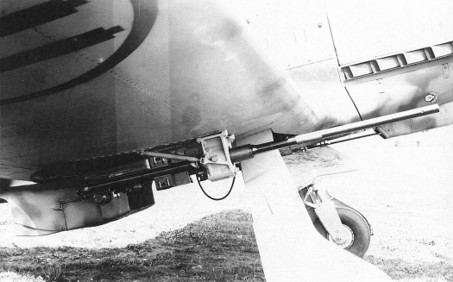
From Serie VII onward: new wing design with optional twin 7.7 mm Breda-SAFAT machine guns and armoured windscreen.
Series IX: increased weight (2,515–3,069 kg); machine guns rarely installed.
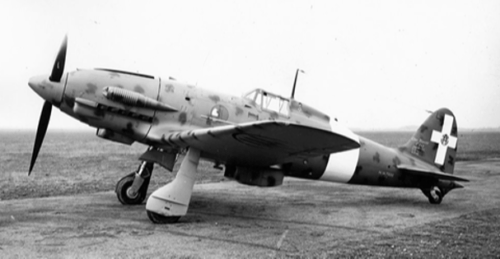
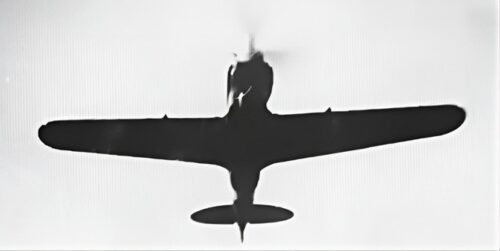
C.202AS (Africa Settentrionale)
Equipped with dust filters for desert operations.
It became the de facto standard due to minimal speed penalty.
Serie XI introduced underwing pylons for bombs (50–160 kg), small bomb clusters (10–20 kg) or
100 L drop tanks—rarely used due to interceptor role priority.
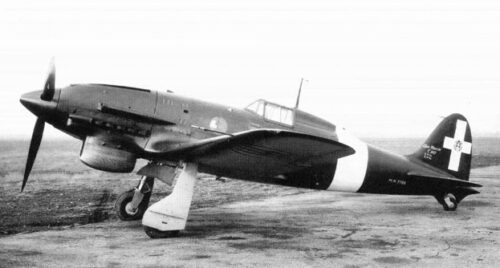
C.202CB (Caccia Bombardiere)
Fighter-bomber variant with underwing hardpoints for ordnance or fuel tanks.
C.202EC (Esperimento Cannoni)
Experimental cannon-armed variant: one aircraft (MM 91974) fitted with twin 20 mm gondola-mounted cannons.
Four additional units tested, but performance degradation halted further development.
Led to MC.205V/N development due to lack of internal space for cannon integration.
C.202RF (Ricognizione Fotografica)
Photo-reconnaissance variant with camera equipment.
Very limited production; role later assumed by C.205 Veltro.
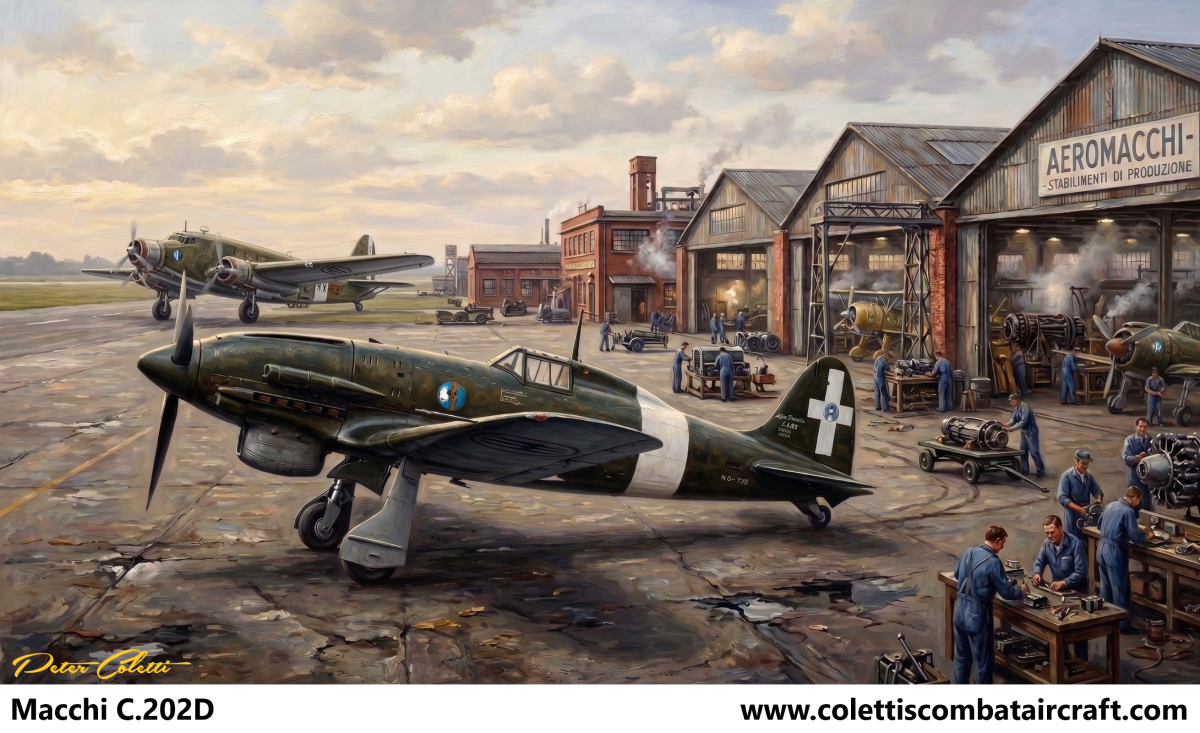
C.202D
Prototype with redesigned radiator under the nose, resembling the P-40 layout (MM 7768).
DB 601E-1 Hybrid
One aircraft tested with a 1350 ps engine & Bf 109F technology crashed in 1946.
Folgeltro
Post armistice conversions by the Co-Belligerent Italian Air Force, 24 units were modified.
Specifications (C.202CB)
Crew
1
Length
8.85 m (29 ft 0 in)
Wingspan
10.58 m (34 ft 9 in)
Height
3.49 m (11 ft 5 in)
Wing area
16.82 m² (181.0 sq ft)
Airfoil
Root
NACA 23018 (modified)
Tip
NACA 23009 (modified)
Empty weight
2,491 kg (5,492 lbs)
Max takeoff weight
2,930 kg (6,460 lbs)
Drop tanks
2 × 100 L (26.4 US gal; 22.0 imp gal) drop tanks
Powerplant
1 × Alfa Romeo RA.1000 R.C.41-I Monsone
V-12 inverted liquid-cooled piston engine,
864 kW (1,159 hp) at 2,500 rpm for takeoff
Propellers
3-bladed constant-speed propeller
Performance
Maximum speed
600 km/h (370 mph, 320 kn) at 5,600 m (18,400 ft)
Range
765 km (475 mi, 413 nmi)
Service ceiling
11,500 m (37,700 ft)
Rate of climb
18.1 m/s (3,560 ft/min)
Wing loading
174.2 kg/m² (35.7 lbs./sq ft)
C.202D
Armament
2 × 12.7 mm (0.500 in) Breda-SAFAT machine guns in the engine cowling,
360/400 rpg
2 × 7.7 mm (0.303 in) Breda-SAFAT machine guns in the wings,