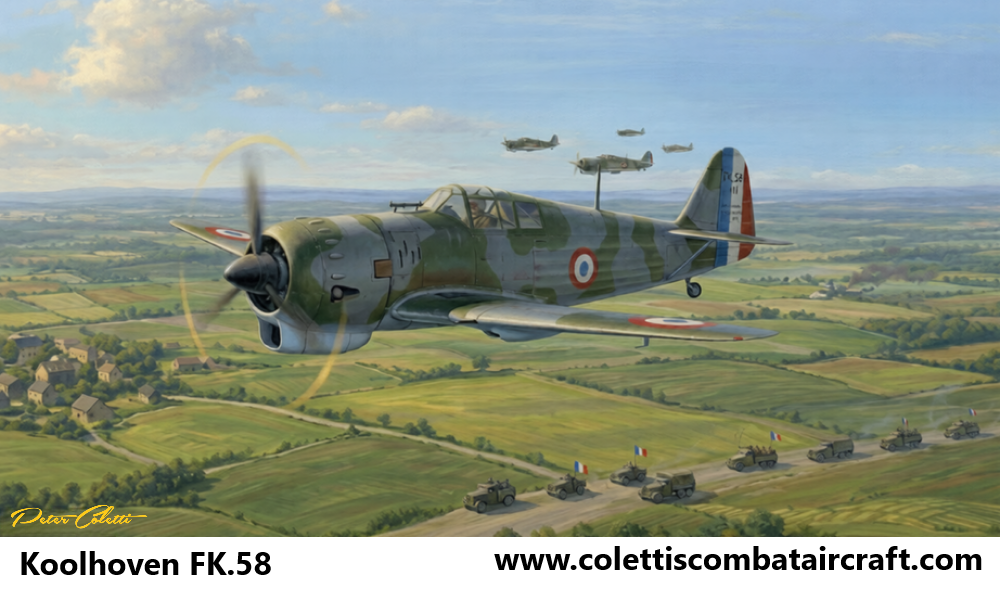
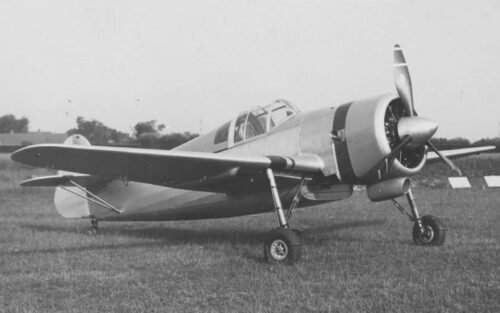
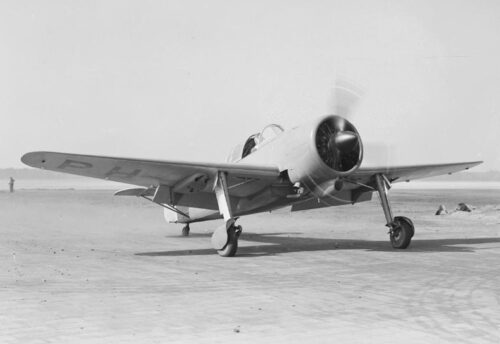
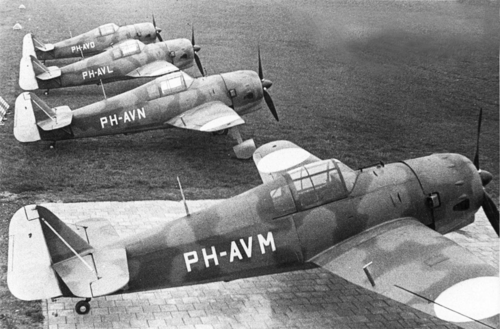
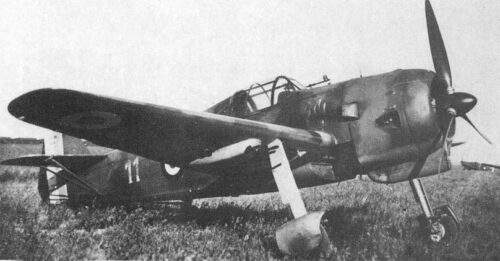
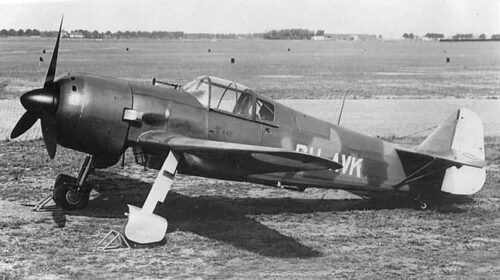
The Koolhoven F.K.58 was a Dutch-designed fighter built under contract for France in 1939–1940.
It was intended to bolster the Armée de l’Air’s capabilities, especially in colonial territories like French Indochina.
Production & Delivery Issues
Only 18 aircraft were completed and delivered due to limited Dutch production capacity and wartime disruptions.
French-specified engines and instruments were unavailable, forcing the use of Dutch substitutes.
Final assembly was rushed, and some aircraft were completed with Hispano-Suiza engines instead of the intended Gnome-Rhône units.
Deployment
The F.K.58s were assigned to Polish pilots serving in the French Air Force, notably in the D.A.T. (Défense Aérienne du Territoire) unit at Clermont Aulnat.
These aircraft were used primarily for interception and patrol duties during the Battle of France in May–June 1940.
Combat Performance
Operational effectiveness was limited.
The aircraft suffered from logistical issues, lack of spare parts, and poor reliability due to rushed production and mismatched components.
Despite these challenges, Polish pilots flew the F.K.58 in combat, though with minimal impact on the broader conflict.
Fate
Most F.K.58s were lost or abandoned during the German invasion of France.
The type was retired by mid-1940, having seen only brief and troubled service.
F.K.58 Prototype
Engine
Hispano-Suiza 14AA radial, 1,080 hp.
Quantity
1 built.
First Flight
17 July 1938.
Purpose
Designed rapidly to meet French demand for colonial fighter aircraft.
Notes
Featured mixed construction:
steel tube fuselage (metal and fabric skin), and wooden wings with Bakelite skin.
Performance was modest;
max speed ~448 km/h, below French expectations.
Used for trials at Villacoublay; civil registration allowed transit over neutral Belgium.
F.K.58 (Dutch Demonstrator)
Engine
Bristol Mercury radial.
Quantity
1 built.
Purpose
Evaluated by the Dutch Luchtvaart Afdeling (Army Aviation).
Notes
Served as a national demonstrator to explore domestic fighter options.
No formal adoption;
The Dutch Air Force ultimately favoured other designs like the Fokker D.XXI.
F.K.58
Engine
Hispano-Suiza 14AA radial.
Quantity
4 built.
Purpose
Early production for France before Gnome-Rhône engines became available.
Notes
These aircraft were delivered in haste and not accepted by the Armée de l’Air for frontline use.
Some were retained for training or secondary duties.
F.K.58A
Engine
Gnome-Rhône 14N-39 radial, ~1,070 hp.
Quantity
13 built.
Purpose
Main production version for French service.
Notes
Delivered to the D.A.T. (Défense Aérienne du Territoire) and flown by Polish pilots.
Used in limited combat during the Battle of France.
Suffered from logistical issues—lack of spares, mismatched instruments, and rushed assembly.
Specifications (F.K.58)
Crew
1
Length
8.69 m (28 ft 6 in)
Wingspan
9.96 m (32 ft 8 in)
Wing area
17.3 m² (186 sq ft)
Empty weight
1,810 kg (3,990 lbs)
Fuel capacity
505 L (133 US gal; 111 imp gal) in three wing tanks