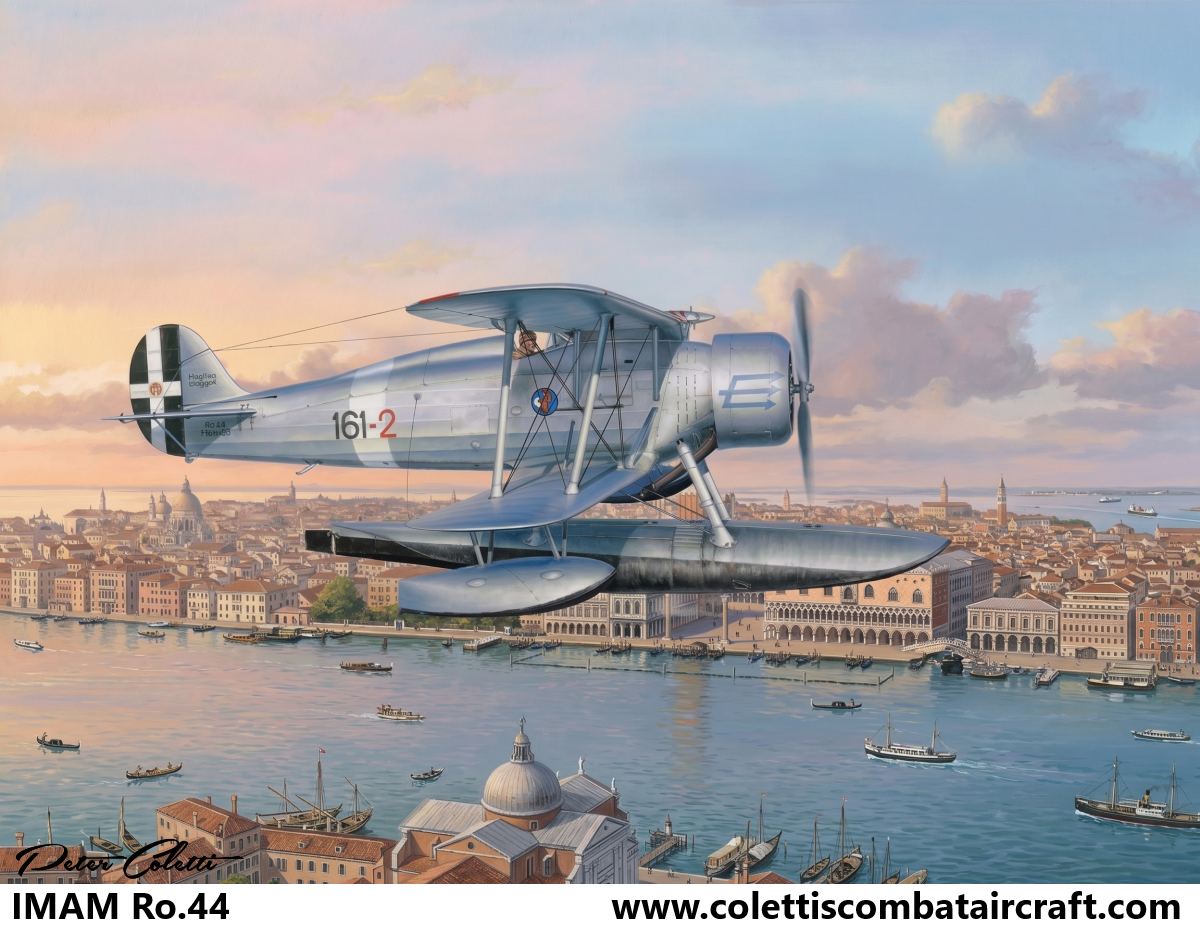
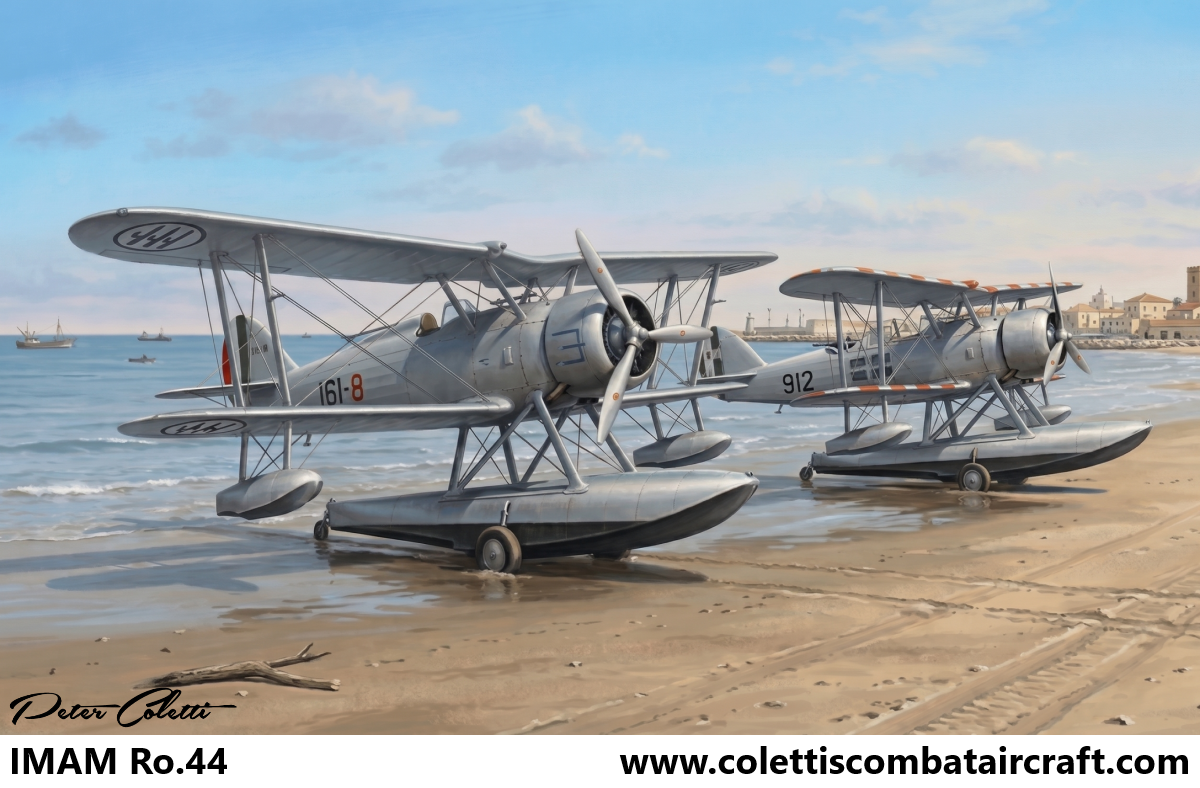
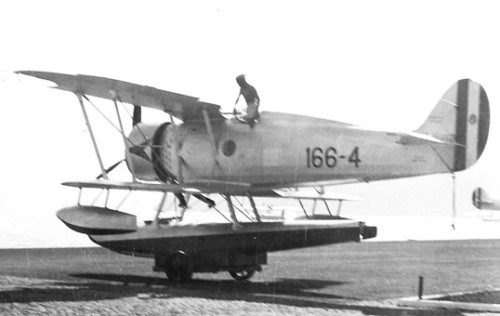
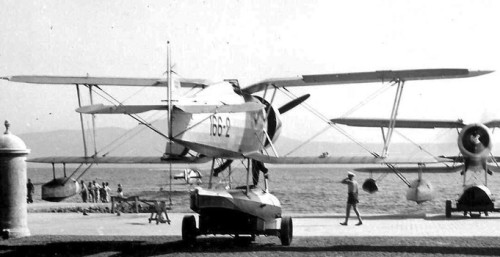
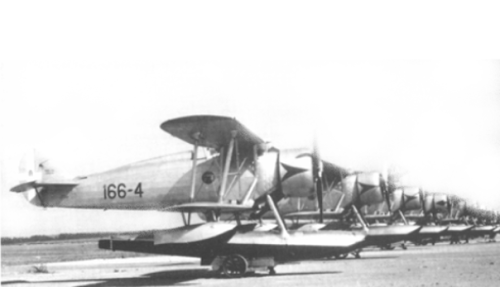
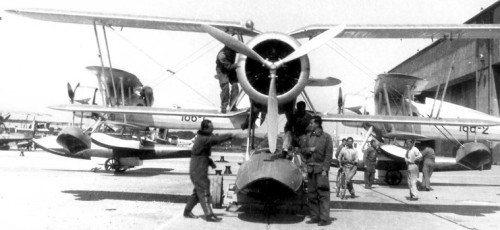
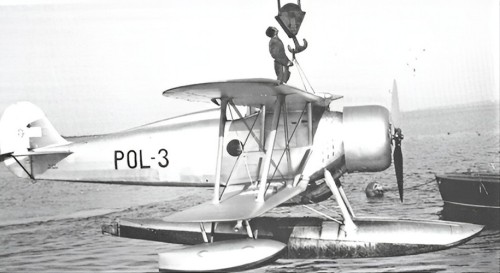
The IMAM Ro.44 was a single-seat fighter seaplane developed in Italy as a derivative of the earlier Ro.43 reconnaissance floatplane.
Designed by Giovanni Galasso, it first flew in October 1936 and was intended to improve upon the Ro.43’s shortcomings by removing the observer’s position and enhancing manoeuvrability.
Despite these changes, the Ro.44’s performance remained largely unimproved
It retained the same Piaggio P.X.R. engine (700 hp) and had similar speed and range.
Armed with two 12.7 mm machine guns, it was capable of intercepting slower aircraft like the Fairey Swordfish and Seafox but struggled against more modern opponents.
Sea-handling characteristics were poor, and its overall reliability was disappointing.
Of the 51 units ordered, only 35 were built, reflecting its limited utility.
Operational deployment was minimal
The aircraft served briefly with 161ª Squadriglia in the Aegean Sea at the start of the war.
It was quickly withdrawn from frontline service and reassigned to seaplane training schools.
The Ro.44 was the last biplane fighter designed by OFM / IMAM before the company transitioned to more modern monoplane designs.
Its brief and underwhelming combat role underscores Italy’s struggle to modernise its naval aviation assets in the early years of WWII.
The Ro.44 represented Italy’s attempt to field a naval fighter capable of defending fleet units and coastal installations from aerial threats.
While the Ro.43 had already proven underwhelming in service—plagued by poor handling and limited endurance—the Ro.44 failed to resolve its predecessor’s core deficiencies.
The redesign removed the observer’s cockpit, shortened the rear fuselage, and modified the tail assembly to improve agility.
It retained the same Piaggio P.X R radial engine, delivering 700 hp, and was armed with two fixed 12.7 mm Breda-SAFAT machine guns mounted in the nose.
Despite these changes, the Ro.44’s performance remained nearly identical to the Ro.43
Maximum speed
~311 km/h (193 mph)
Range
~1,200 km (745 mi)
Service ceiling
~7,000 m (23,000 ft)
Its only notable improvement was increased manoeuvrability, which made it marginally more capable in dogfights.
However, its sea-handling characteristics were poor, and its structural reliability in rough maritime conditions was questionable.