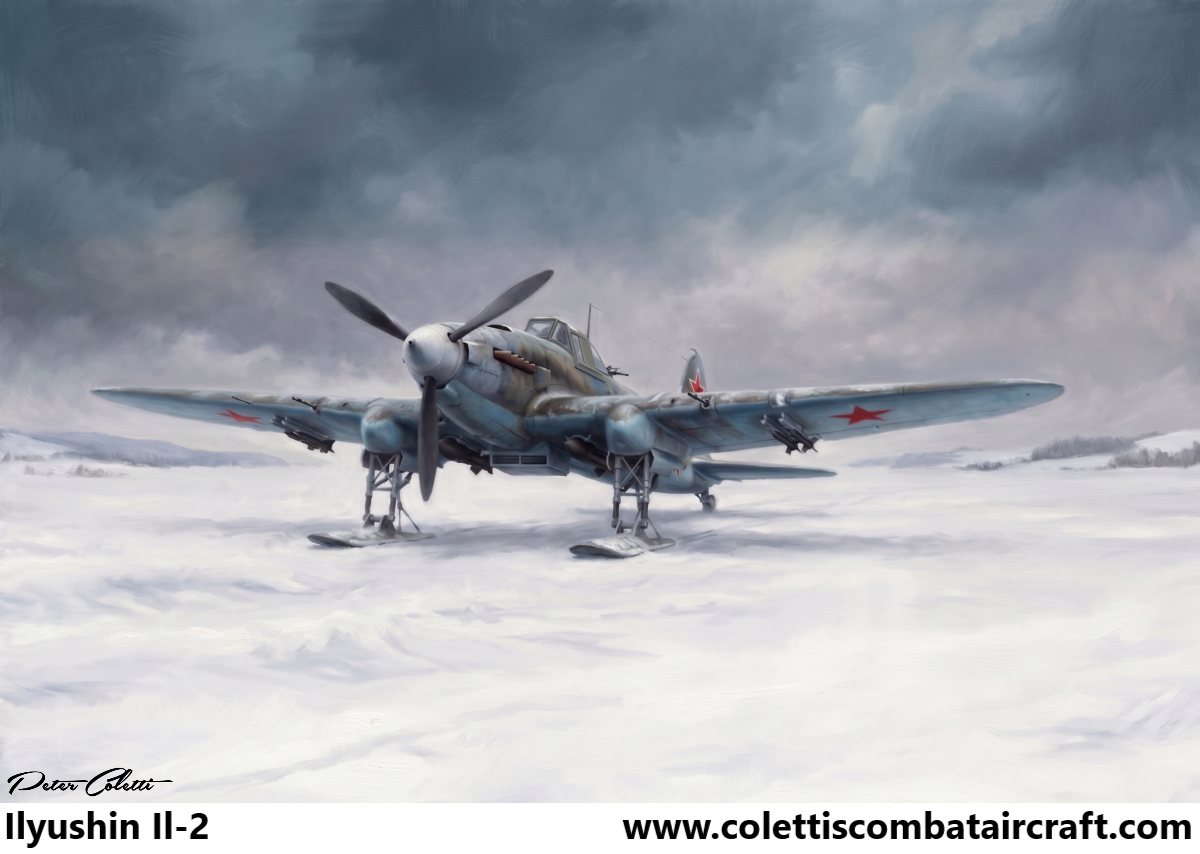
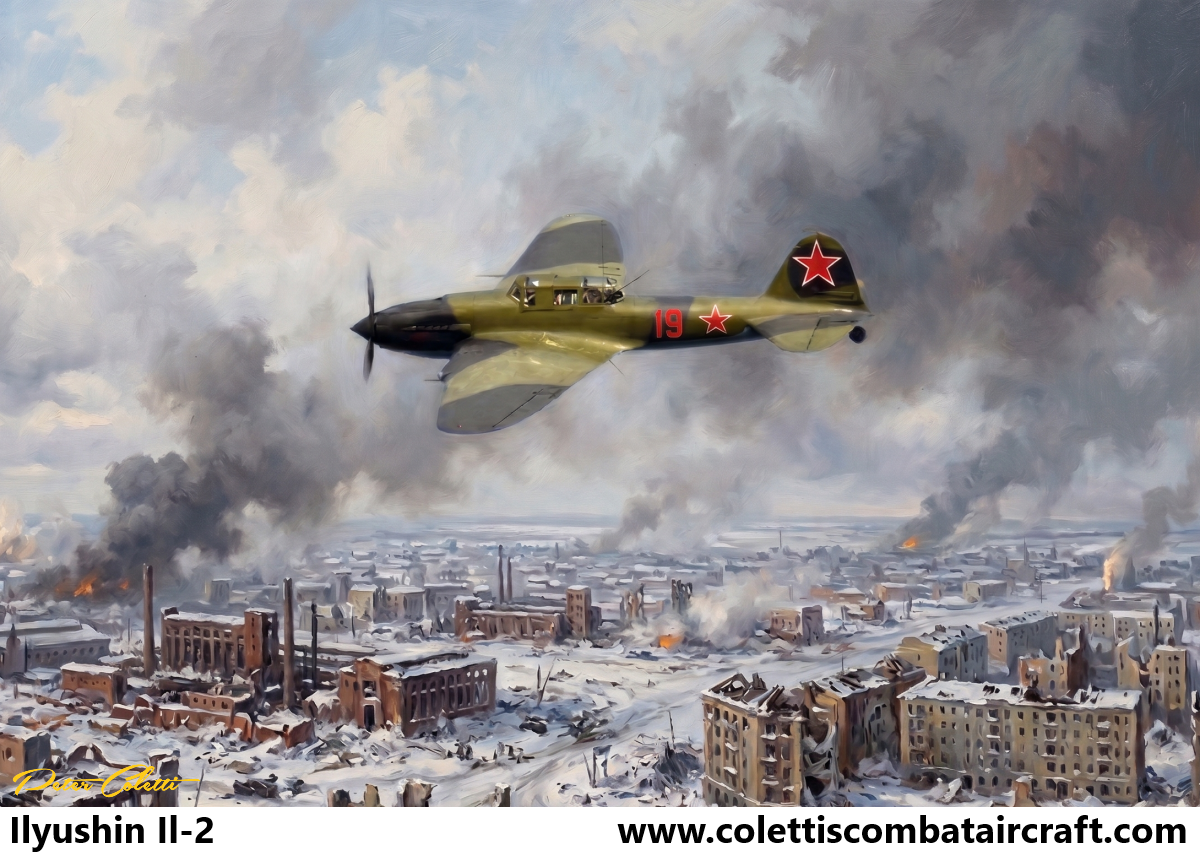
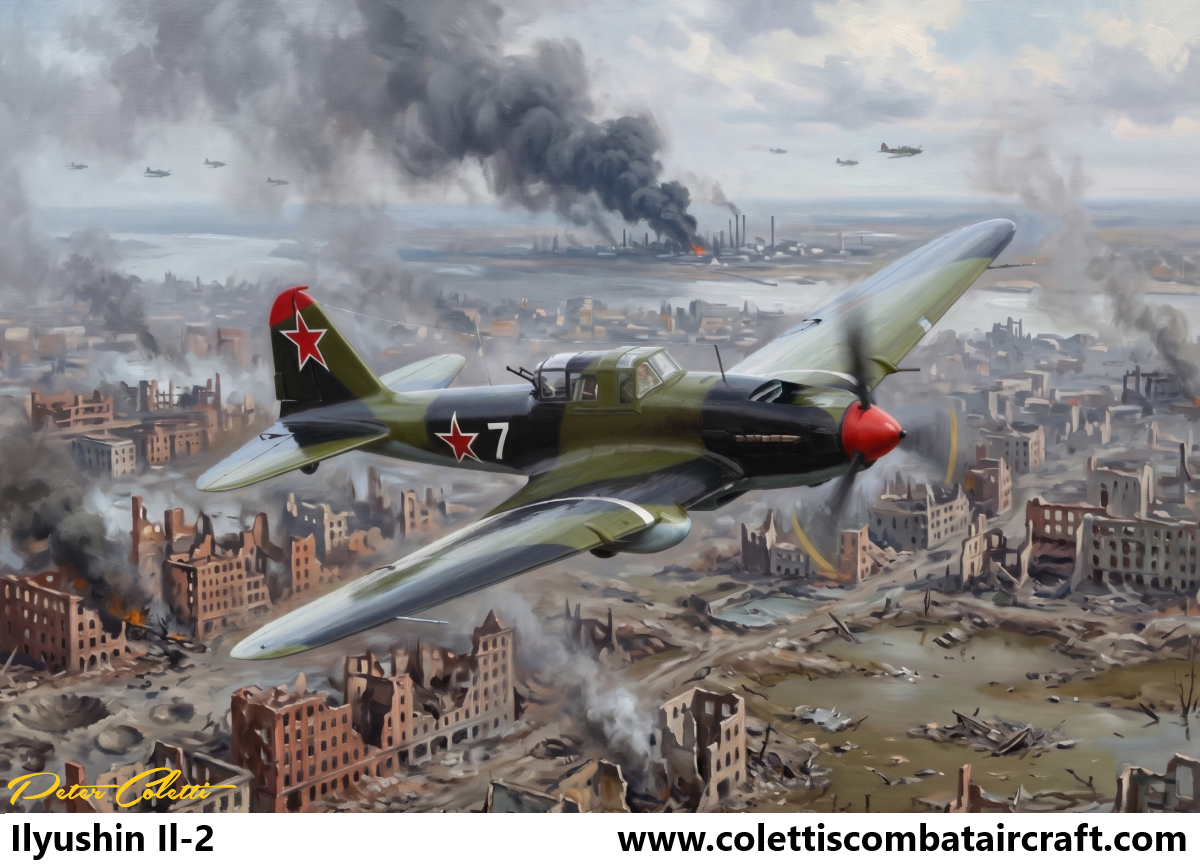
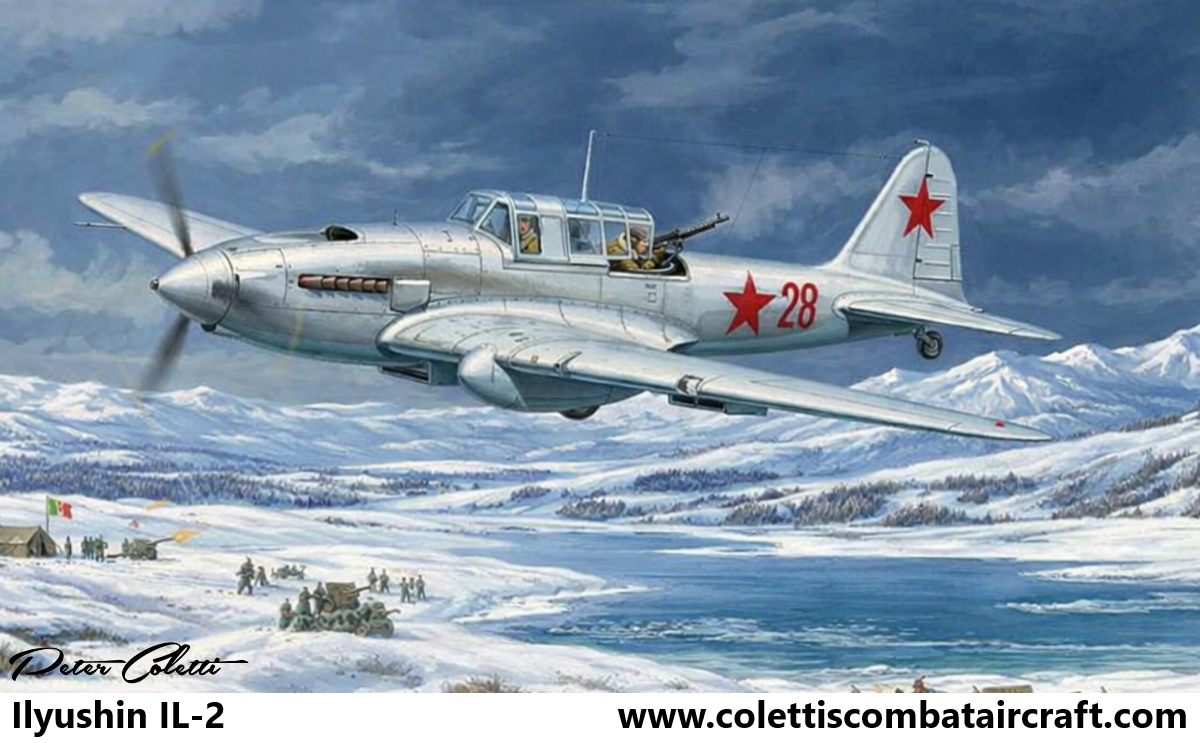
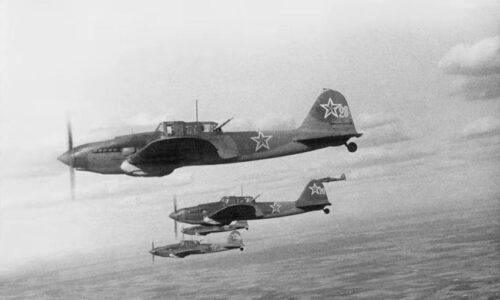
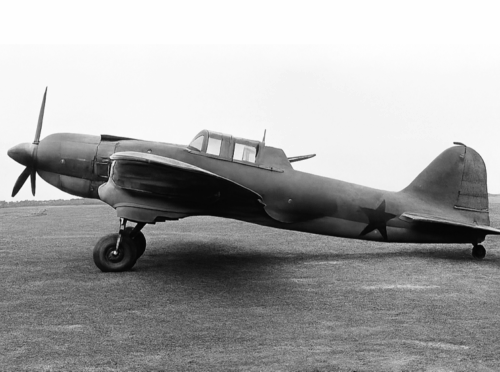
The Ilyushin Il-2 emerged in 1941 as the Soviet Union’s primary ground-attack aircraft.
Across four years of brutal combat on the Eastern Front, it delivered close air support, interdicted enemy supply lines, and became a symbol of Soviet resilience.
1941: Baptism by Fire
The first single-seat Il-2s reached combat units in May–June 1941 as Germany launched Operation Barbarossa.
Pilots flew low-level attacks on advancing Panzer columns and rear-area targets, often without fighter cover.
Armour plating allowed the Il-2 to absorb significant ground fire, but vulnerability to Luftwaffe fighters and coordination issues led to heavy losses in this opening phase.
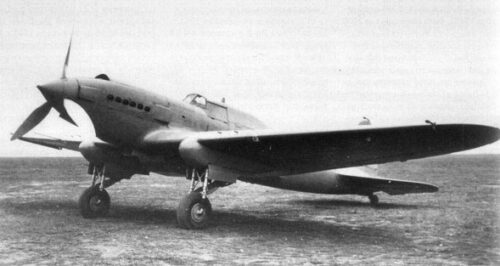
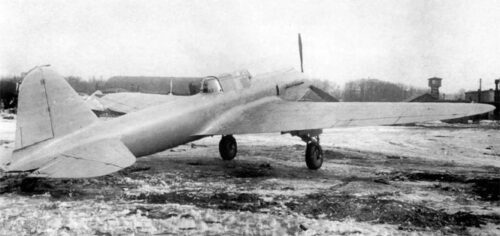
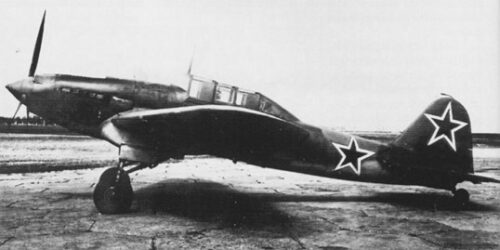
TsKB-57
1942: Two-Seat Upgrade and Tactics Refinement
By September 1942, the Il-2M two-seater—with a rear gunner—entered service.
This variant dramatically improved survivability against enemy fighters.
Ground-attack tactics matured rapidly
Formation flying in “walls” of eight to twelve aircraft
Fighter escort integration with Yakovlev and Lavochkin fighters
Coordinated rocket and bomb strikes on armored columns and field fortifications
These innovations reduced attrition rates and increased mission effectiveness during Stalingrad and Kursk preparatory operations.
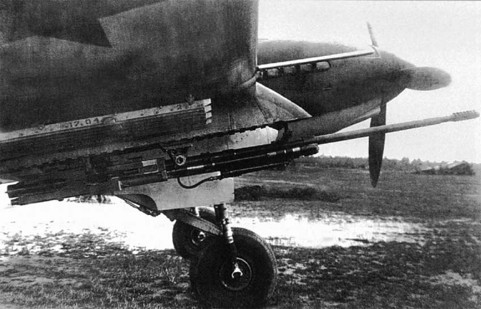
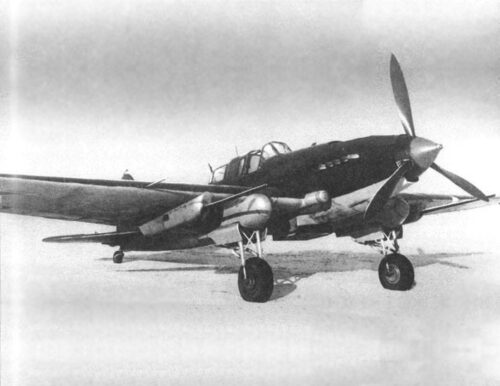
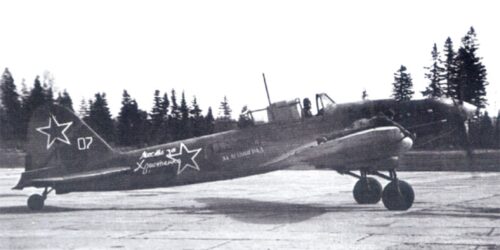
Il-2-37-Type-3M
1943–1944: Peak Operational Intensity
With industrial output surging, Il-2 production hit its stride by mid-1943.
The aircraft supported major offensives—most notably the following:
Battle of Kursk (July 1943), where Il-2s disrupted German armour thrusts
Il-2 crews flew multiple sorties per day, targeting bridges, rail yards, and artillery emplacements.
Improved radios and air–ground liaison allowed precise strikes in close coordination with Soviet tank and infantry brigades.
1945: Final Push and Legacy
In the Berlin Offensive (April–May 1945), the Il-2 remained on the front lines despite newer aircraft arriving.
Its proven durability and pilot proficiency ensured uninterrupted support for Red Army breakthroughs into Germany.
By war’s end, Il-2 units had flown an estimated 360,000 sorties, destroyed thousands of enemy vehicles, and earned a place in Soviet military legend.
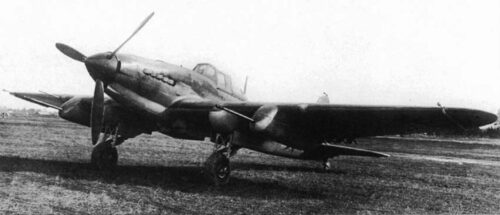
TsKB-55
Early Prototypes
The first prototype, TsKB-55 (also designated BSh-2), was a two-seat design powered by the Mikulin AM-35 inline engine.
Its extensive armour made it too heavy for the AM-35’s output, leading to marginal performance in flight tests beginning 2 October 1939.
To reduce weight and improve handling, the TsKB-57 single-seat prototype emerged with the more powerful AM-38 engine.
Its maiden flight on 12 October 1940 set the stage for the Il-2’s initial production run.
Single-Seat Production Model (TsKB-57P / Il-2)
First flight
29 December 1940
Entered service
May–June 1941
(renamed Il-2 in April 1941)
Engine
Mikulin AM-38 inline-12
Armament
20 mm ShVAK or 23 mm VYa-23 wing-mounted cannons
(factory-dependent)
Bomb load
up to 600 kg
This version saw frontline action during the opening months of Barbarossa.
High losses prompted a return to a two-seat layout for better rear-defence.
Two-Seat Il-2M Series
In February 1942 the design was revised to include a rear-gunner under a stretched canopy.
By September 1942, the Il-2M entered service, and earlier single-seat airframes were retrofitted.
Key changes from the original IL-2 included the following:
Addition of a rear-facing 7.62 mm machine gun
Upgraded cannons
23 mm VYa-23 or, in some factories, 37 mm N-37
Aerodynamic refinements to fuselage and control surfaces
Wooden outer wing panels replacing metal
Increased fuel capacity for longer loiter times
Bomb capacity dropped to 400 kg to offset added weight.
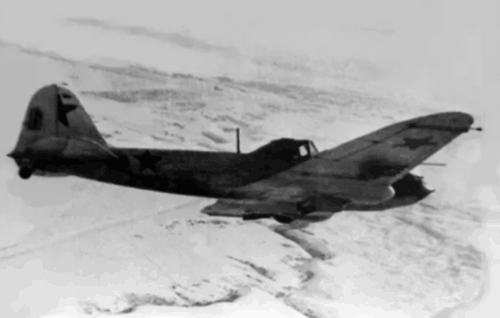
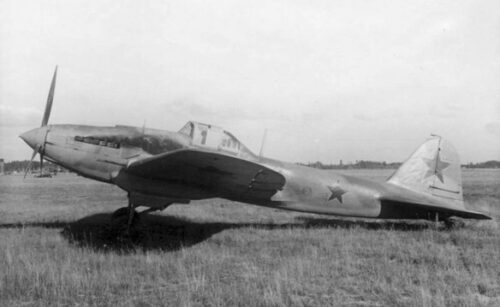
Arrow-Wing Il-2M3 (Type 3)
By mid-1943, the “Type 3” or Il-2M3 introduced swept outer wing panels (15° sweep on leading edges and nearly straight trailing edges) and all-metal construction as the duralumin supply improved.
This “arrow wing” shifted the aerodynamic centre rearwards—restoring handling to single-seat levels—and became the most numerous production variant.
NS-37 Anti-Tank Variant (Il-2-37 / Type 3M)
To counter German armour, about 3,500 two-seat Il-2s were fitted with Nudelman‐Suranov NS-37 37 mm guns in conformal wing pods.
First used at Kursk, this version carried only 200 kg of bombs (two FAB-100 or four FAB-50) and proved less effective than hoped.
It was phased out in favour of standard cannon-armed Il-2s with bomblet dispensers.
Specialized and Experimental Versions
Il-2U (UIl-2)
Dual-control trainer retaining full armour but without combat weapons.
Il-2I
Armoured fighter prototype: performance too low to intercept modern Luftwaffe bombers.
Il-2 with ASh-82/M-82IR
Intended as a stopgap when inline-engine shortages loomed, it featured additional armour and a rear gunner but suffered a reduced climb rate.
Recommended for production but cancelled once AM-38 output stabilised.
Specifications (Il-2M3)
Crew
2
Length
11.65 m (38 ft 3 in)
Wingspan
14.60 m (47 ft 11 in)
Height
4.17 m (13 ft 8 in) (tail up)
Wing area
38.50 m² (414.4 sq ft)
Empty weight
4,425 kg (9,755 lbs)
Max take-off weight
6,360 kg (14,021 lbs.)
Fuel capacity
730 L (190 US gal; 160 imp gal)
Powerplant
1 × Mikulin AM-38F liquid-cooled V12 engine,
1,280 kW (1,720 hp) (take-off power),
1,100 kW (1,500 hp) at 750 m (2,460 ft)
Propellers
3-bladed AV-57-158 variable-pitch propeller,
3.60 m (11 ft 10 in) diameter
Performance
Maximum speed
410 km/h (250 mph, 220 kn) at 1,500 m (4,900 ft)
Range
765 km (475 mi, 413 nmi) at 275 km/h (171 mph; 148 kn) and 1,000 m (3,300 ft)