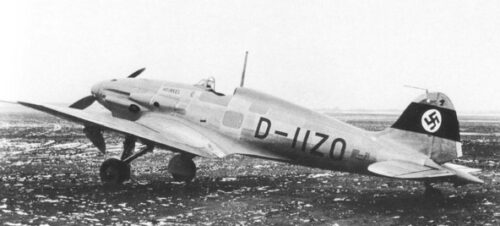
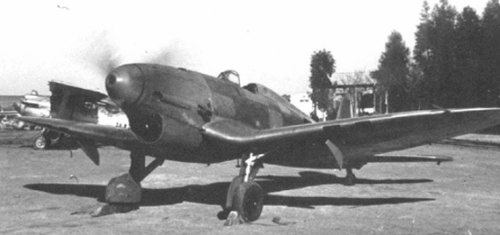
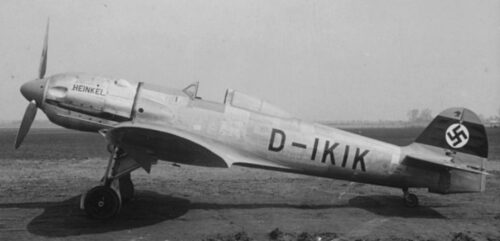
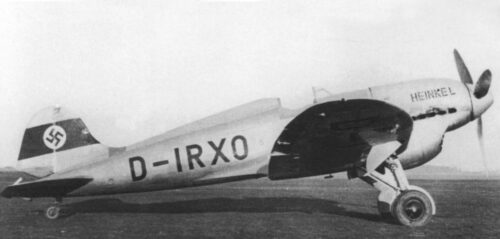
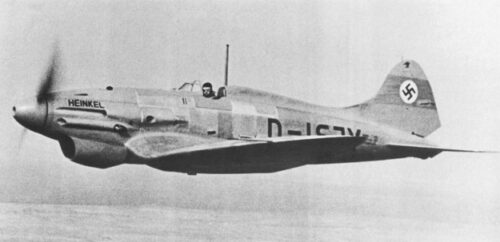
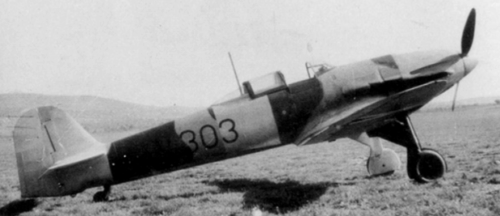
The Heinkel He 112 was a German monoplane fighter developed in the mid-1930s, envisioned as a potential backbone of the Luftwaffe.
Although it featured advanced innovations—such as an enclosed cockpit and retractable landing gear—it was ultimately outperformed by the Messerschmitt Bf 109 in Luftwaffe selection trials.
Around 100 units were produced, and its operational history reflects a patchwork of limited combat service and international experimentation.
Germany primarily used the He 112 for evaluation and pilot training.
B-1
It never saw deployment with front-line combat units of the Luftwaffe.
Spain received early examples, deployed during the latter stages of the Spanish Civil War.
Pilots utilised the aircraft in combat, but post-war use by Nationalist forces was minimal.
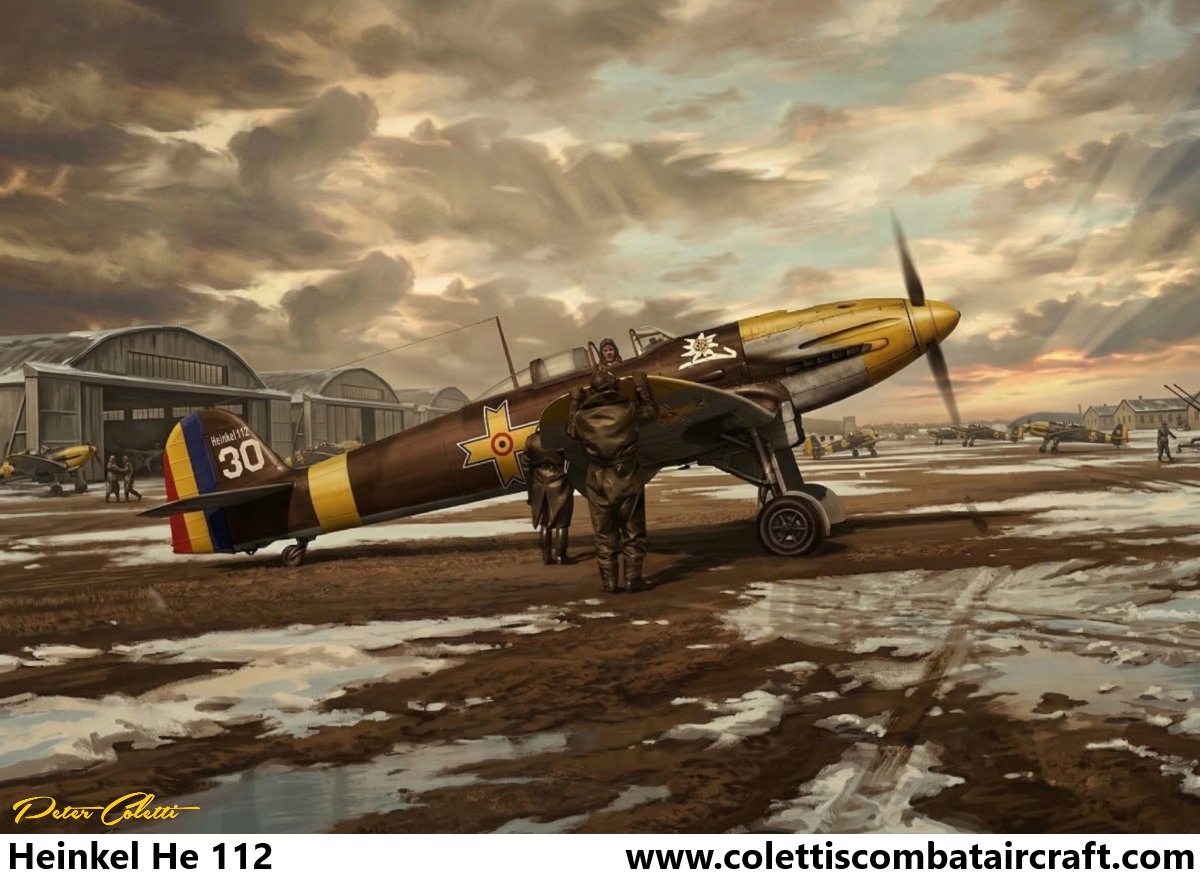
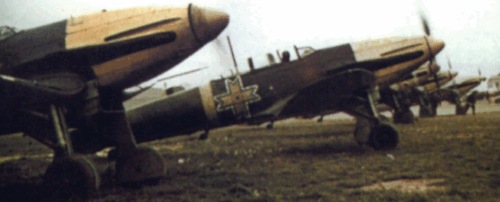
Romania acquired several He 112s before joining Operation Barbarossa in 1941.
Romanian forces deployed them in air defence and ground attack roles against Soviet targets.
Despite performing adequately, the He 112 was phased out in favour of more advanced aircraft by 1942.
112
Hungary purchased a small number for testing.
However, their operational role was minor, and they were quickly supplanted by domestic designs and German alternatives.
Japan took delivery of thirteen aircraft primarily for technical evaluation and pilot familiarisation.
None were deployed in combat roles.
Although the He 112 offered impressive firepower for its time—often armed with two 20mm cannons and two machine guns—it suffered from lower speed and climb rates than contemporary fighters.
Its limited production and brief operational lifespan curtailed its impact on the war, but it contributed to aerodynamic and armament developments that informed later designs.
Prototypes
V-1
V1
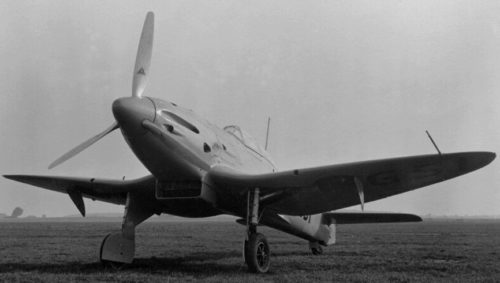
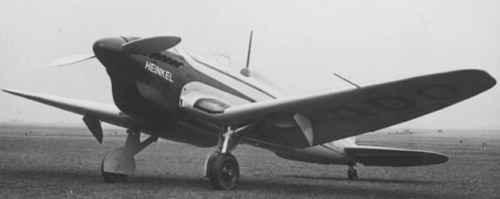
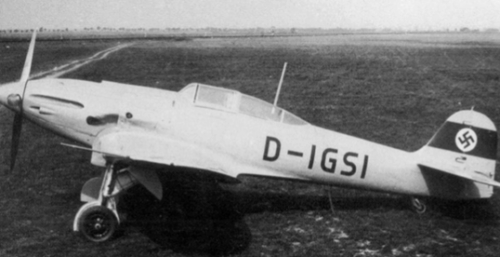
The first prototype, completed on 1 September 1935, the Heinkel He 112 V1, was initially designed to meet specifications set by the Technisches Amt, which mandated the use of the Junkers Jumo 210 engine.
Due to its unavailability, a 518 kW (695 hp) Rolls-Royce Kestrel V was installed instead.
The V1 featured relatively large wings and a heavier airframe compared to its contemporaries.
The broad wing area allowed for more evenly distributed mass and resulted in reduced wing loading, improving turn performance.
However, this configuration also increased aerodynamic drag and diminished roll responsiveness.
V-2
V2
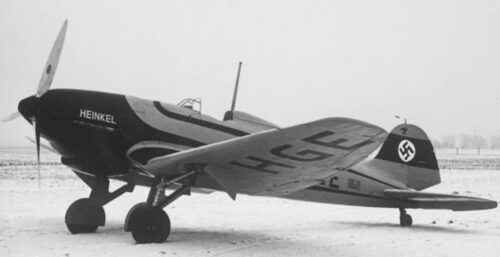
Revised Design: The second prototype, V2, was completed in November 1935.
It incorporated the intended 480 kW (640 hp) Junkers Jumo 210C engine and a three-blade propeller but retained most of V1’s airframe characteristics.
Analysis of V1’s flight test data revealed excessive drag, which the Günter brothers traced to the thick wing profile.
In response, they designed a thinner, elliptical wing.
As an interim measure, V2’s wings were shortened by 1.010 m (3 ft 3.8 in) to improve competitiveness against the Messerschmitt Bf 109.
Though this slightly exceeded the specified wing loading limits, the far greater loading of the Bf 109 rendered the discrepancy acceptable.
Despite the modifications, V2 encountered significant spin instability and was lost when test pilot Gerhard Nitschke was forced to bail out during spin trials.
V-3
V3
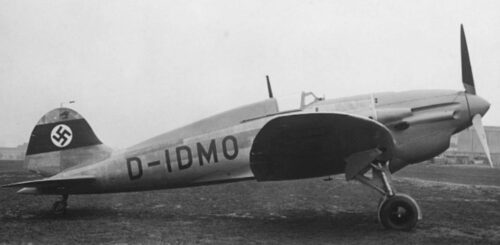
Enhanced Configuration The third prototype, V3, flew in January 1936.
Closely derived from the V2, it retained the Jumo 210C engine and introduced several refinements, including a larger radiator, a reinforced fuselage spine, a redesigned vertical stabiliser, and a single exhaust cover in place of the customary stack arrangement.
V3 was also the first prototype equipped for armament, mounting two 7.92 mm (0.312 in) MG17 machine guns in the cowling.
Subsequent modifications included a sliding canopy and adoption of a fully elliptical wing.
Although slated for official trials alongside the V2, the aircraft was instead recalled to Heinkel in early 1937 for experimental rocket propulsion tests.
A rocket explosion destroyed the prototype, but V3 was reconstructed with notable changes, most prominently an enclosed cockpit.
V-4
Prototype Lineage and Configuration
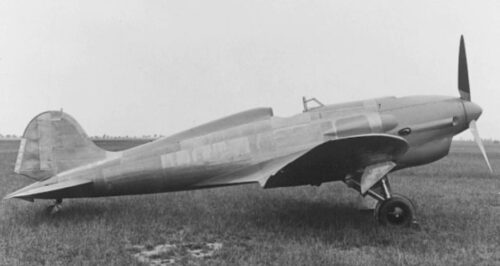
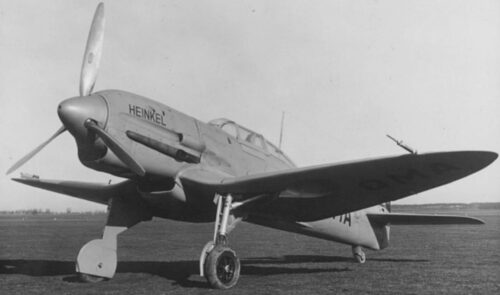
The pre-production batch of fifteen Heinkel He 112 A-0 aircraft was conceived as a developmental bridge between the He 112 prototypes (V-series) and the later B-series production models.
Constructed between 1936 and 1937, these airframes embodied a series of iterative refinements grounded in aerodynamic testing, armament evaluation, and export customisation.
Units A-01 through A-03 drew their structural lineage from the V4 prototype, utilising the Jumo 210C engine.
These aircraft incorporated early modifications to wing geometry and cockpit instrumentation, aiding in pilot acclimation and control feedback trials.
Airframes A-04 to A-06, derived from the V5 prototype, were powered by the upgraded Jumo 210D engine.
This trio featured a redesigned radiator system and subtle tailplane adjustments, enhancing thermal efficiency and longitudinal stability.
The A-07 through A-09 models stemmed from the V6 configuration, each also equipped with the Jumo 210D.
V-5
These units played a pivotal role in weapons testing, with fine-tuned control surfaces and experimental armament loadouts including synchronized machine guns and mounting provisions for light cannons.
Airframes A-10 through A-12 deviated from prototype lineage, constructed as hybrid testbeds with mixed Jumo 210C/D powerplants.
They were designated for specialised evaluations, including carrier landing trials—complete with retractable arrestor gear—and early rocketry integration experiments conducted at Heinkel’s Marienehe facility.
The final trio, A-13 to A-15, was built for foreign deployment.
Configured for export, these aircraft retained the Jumo 210D engine but featured adjusted instrumentation and minor structural alterations aligned with recipient countries’ military standards, notably Japan and Spain.
V-6
Known Export and Deployment Destinations
Germany (Domestic Use)
Several A-0 models were retained by Heinkel for aerodynamics and weapons testing.
One modified for experimental rocket propulsion at Marienehe.
A few fitted with arrestor hooks for carrier landing tests, though trials were discontinued.
V-7
Japan
At least two airframes were delivered for evaluation and technical study by the Imperial Japanese Navy.
Primarily used as instructional platforms, never armed for combat.
Spain
The He 112 A-0 aircraft was possibly deployed during the late phase of the Spanish Civil War.
Reports suggest they were used in limited operational roles—mainly reconnaissance.
Some sources indicate reassembly and deployment by Spanish technicians with minimal Luftwaffe involvement.
V-8
Legacy and Transition
The feedback from A-0 trials contributed to the armament revisions and aerodynamic tweaks seen in the He 112 B-series.
Though ultimately sidelined by the Bf 109, the A-0 series showcased Heinkel’s innovation and flexibility—especially in adapting designs for unique experimental roles.
Development and Operational History
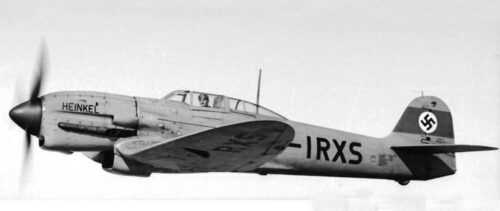
Following the limited success of the He 112 A-series, Heinkel undertook a comprehensive redesign in late 1936 to produce a more competitive fighter.
The result was the He 112 B-series, which featured significant aerodynamic refinements, improved armament, and a fully enclosed cockpit—bringing the aircraft closer in performance to its rival, the Messerschmitt Bf 109.
V-9
Design Evolution
The B-series was based on the V7 and V9 prototypes, which introduced the following:
A thinner, elliptical wing for reduced drag
A deeper fuselage spine and enclosed canopy for improved pilot protection and visibility
Revised undercarriage geometry for better ground handling
Armament upgrades, including two 7.92 mm MG 17 machine guns and optional 20 mm MG FF cannons
Powerplant options included the Junkers Jumo 210Ea and later variants with the Jumo 210G, offering modest performance improvements.
V-10
Production Overview
He 112 B-0
Pre-production batch of 30 aircraft, delivered to the Luftwaffe in 1938 for service trials.
He 112 B-1
Minor refinements over the B-0, with 11 aircraft produced primarily for export.
Total B-series production reached approximately 85–90 aircraft, including both B-0 and B-1 units.
V-11
Operational Deployment
Germany
B-0 aircraft were evaluated by the Luftwaffe but never adopted for frontline service.
Some units were retained for training and experimental roles, including high-altitude trials and weapons integration.
Spain
17 B-0 aircraft were deployed during the final phase of the Spanish Civil War with Grupo 5-G-5.
Operated by German crews, they performed reconnaissance and limited combat sorties.
15 survivors were transferred to the postwar Spanish Air Force, serving in Morocco until retirement.
112R
Japan
12 B-0 aircraft sold to the Imperial Japanese Navy in 1938.
Used exclusively as instructional airframes, never deployed in combat due to logistical and doctrinal mismatches.
Romania
Largest foreign operator, receiving 13 B-0s and 11 B-1s in 1939.
Initially used for frontline defence, including limited action during the Soviet invasion of Bessarabia in 1940.
Gradually relegated to training and secondary duties as the indigenous IAR 80 entered service.
Hungary
Acquired three B-1 aircraft alongside Bf 109s in 1939.
Despite pilot preference for the He 112’s handling, the Bf 109 was selected for standardisation.
A-0
Specifications
Crew
One
Length
9 m (29 ft 6 in)
Wingspan
11.5 m (37 ft 9 in)
Height
3.7 m (12 ft 2 in)
Wing area
23.2 m2 (250 sq ft)
Airfoil
Root
Heinkel 16.5%
Tip
Heinkel 16.5%
Empty weight
1,680 kg (3,704 lb)
Max take-off weight
2,230 kg (4,916 lb)
B-0
Powerplant
1 × Junkers Jumo 210Da,
V-12 liquid-cooled piston engine,
514 kW (689 hp)
Propellers
3-bladed variable-pitch propeller
Performance
Maximum speed
488 km/h (303 mph, 263 kn) at 3,500 m (11,500 ft)
Range
1,100 km (680 mi, 590 nmi)
Service ceiling
8,000 m (26,000 ft)
Wing loading
102.5 kg/m2 (21.0 lb/sq ft)
Armament
2 × 7.92 mm (0.31 in) MG 17 machine guns in the engine cowling
2 × 20 mm (0.79 in) MG FF cannon in the outer wing.