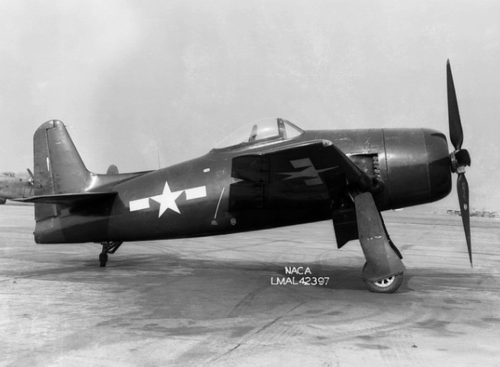
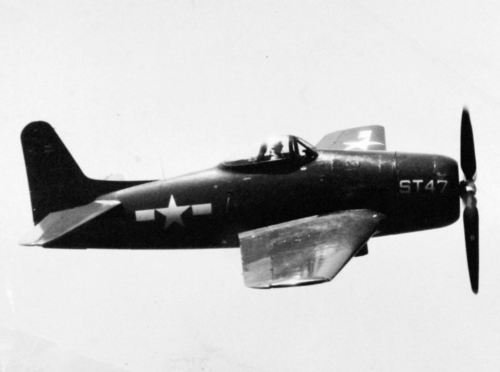
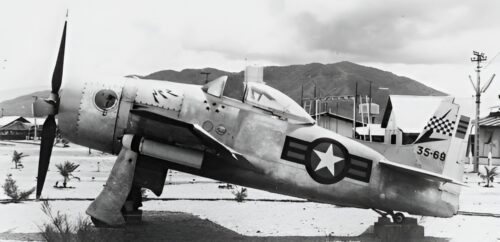
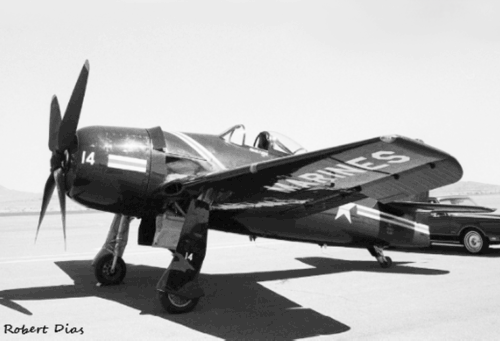
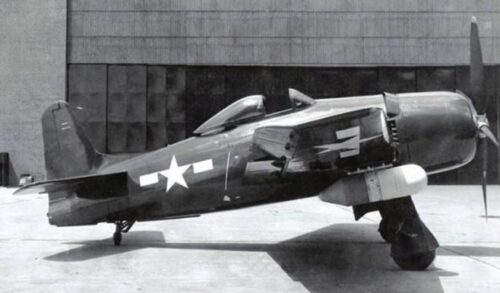
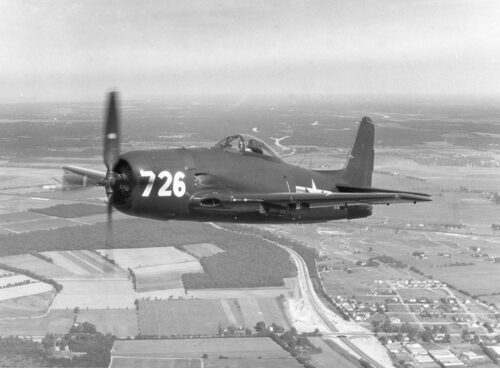
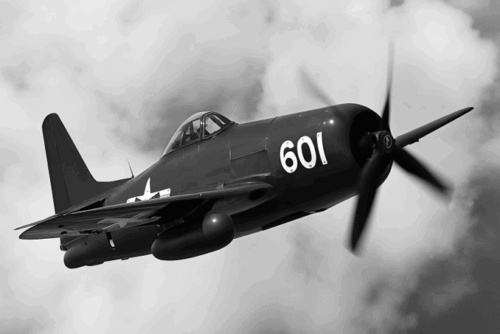
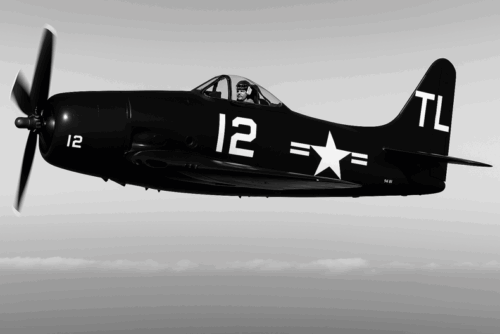
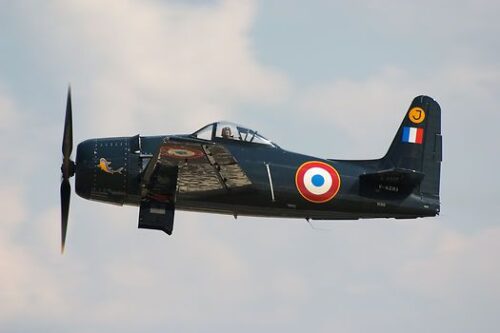
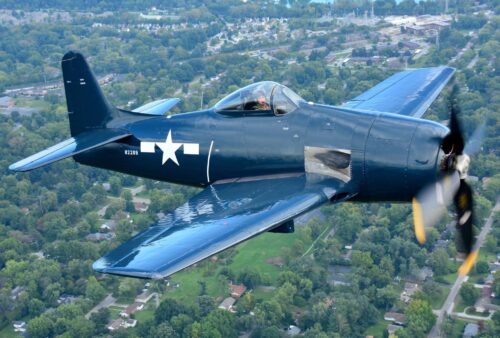
The Grumman F8F Bearcat was conceived as a high-performance, carrier-based interceptor designed to replace the F6F Hellcat.
Development began in late 1943, with the first prototype (XF8F-1) flying on 21 August 1944.
The aircraft was engineered for exceptional climb rate, manoeuvrability, and low-altitude performance, making it ideal for rapid interception missions from both fleet and escort carriers.
Despite its promising capabilities, the Bearcat arrived too late to participate in combat operations during World War II.
The first production aircraft were delivered to U.S. Navy squadron VF-19 on 21 May 1945, just months before Japan’s surrender.
At the time of VJ Day, squadrons were still undergoing familiarisation and training with the new type, and no Bearcats were deployed in combat theatres before the war ended.
The cessation of hostilities led to a significant reduction in production orders.
Of the 2,023 aircraft initially contracted, 1,258 were cancelled, along with an additional 1,876 F8M-1s that had been slated for manufacture by General Motors.
Ultimately, Grumman produced 1,266 Bearcats before ending production in 1949.
Although it did not see combat in WWII, the Bearcat’s design reflected the culmination of wartime experience and technological advancement.
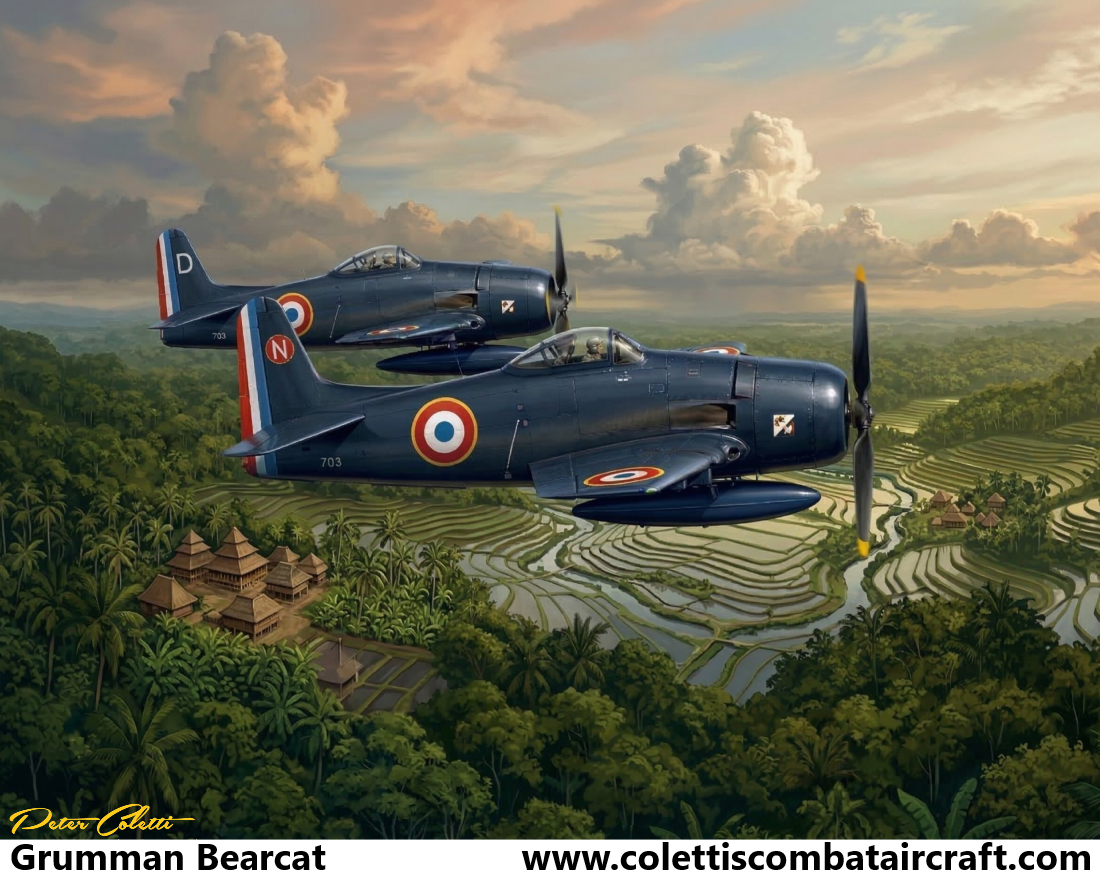
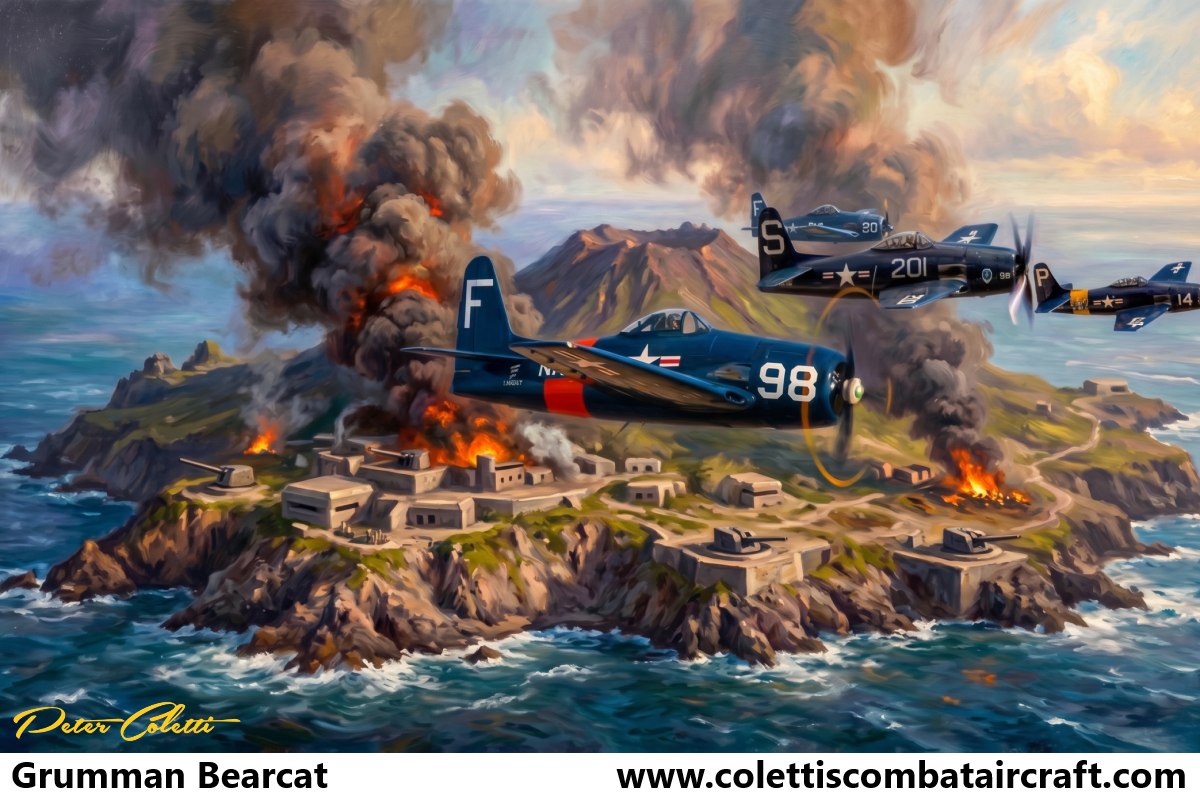
It would later serve in postwar U.S. Navy squadrons and see combat with foreign air forces, notably in the First Indochina War.
Origins and Concept
Initiated in 1943, the Bearcat was Grumman’s response to the need for a lightweight, high-performance carrier-based fighter.
The concept emerged from feedback by F4F Wildcat pilots, especially Lt Cmdr Jimmie Thach, who emphasised the importance of climb rate in combat.
Grumman aimed to create a fighter that could operate from escort carriers, which were too small for the heavier F6F Hellcat.
Design Philosophy
Designated G-58, the Bearcat was built around the powerful Pratt & Whitney R-2800 engine, also used in the Hellcat and Tigercat.
To maximize performance,
The airframe was shorter and lighter than the Hellcat.
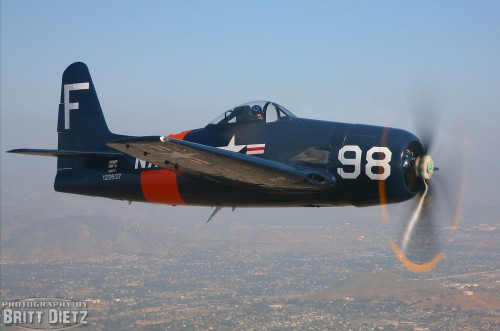
It featured a bubble canopy for improved visibility—the first for a Navy fighter.
The wings were shorter and used the same folding mechanism as the Hellcat for carrier storage.
Flush riveting and spot welding reduced drag and weight.
The prototype incorporated lessons from the Focke-Wulf Fw 190, particularly in agility and climb rate.
Prototype Development
The first prototype, XF8F-1, flew on 21 August 1944.
It demonstrated a 30% better climb rate than the Hellcat and reached 10,000 ft in just 94 seconds—a record at the time.
XF8F-1
First Flight
The XF8F-1 made its maiden flight on 21 August 1944 at Bethpage, New York, piloted by Grumman’s chief engineer, Robert Leicester Hall.
Performance
Compared to the Hellcat, the Bearcat was 20% lighter, had a 30% better climb rate, and was faster by about 80 km/h.
Design Features
Bubble canopy for 360° visibility (a first for U.S. Navy fighters)
Shortened fuselage and long landing gear, giving it a distinctive nose-up stance
Foldable wings for carrier storage
A four-bladed propeller and flush-riveted aluminium skin.
Production Variants
F8F-1
The F8F-1 featured a bubble canopy for improved visibility, manually folding wings for carrier storage, and a tall landing gear configuration to accommodate its large propeller.
Armament consisted of four 0.50-inch machine guns mounted in the wings, with provisions for underwing bombs or rockets.
The aircraft’s lightweight construction and high power-to-weight ratio enabled rapid climb rates and tight turning performance.
F8F-1B
The F8F-1B Bearcat was a modified production variant of the original F8F-1, developed to enhance firepower by replacing the standard machine gun armament with four 20 mm cannons.
It retained the core design and performance characteristics of the base model while offering increased lethality against both aerial and ground targets.
Design Features
The F8F-1B retained the Pratt & Whitney R-2800-34W radial engine, bubble canopy, and folding wings of the F8F-1.
The primary distinction lay in its armament configuration, which offered greater destructive power and improved effectiveness against armoured targets.
The aircraft could also carry bombs, rockets, or drop tanks on underwing hardpoints.
F8F-1D
The F8F-1D Bearcat was a postwar modification of the standard F8F-1, adapted for use as a drone control aircraft.
This variant was not part of the original production run but emerged during the late 1940s as the U.S. Navy sought to repurpose surplus piston-engine fighters for support roles in the jet age.
Development and Purpose
With the rapid transition to jet-powered aircraft and guided missile systems, the Navy began converting older fighters into drone controllers for use in weapons testing and target practice.
The F8F-1D designation was applied to Bearcats modified with radio control equipment and antennae to guide unmanned aircraft remotely.
F8F-1N
The F8F-1N was a specialised night-fighter adaptation of the Grumman F8F Bearcat, developed during the final phase of WWII.
Based on the standard F8F-1 airframe, it retained the Bearcat’s hallmark agility and climb performance but incorporated radar equipment for nocturnal interception duties.
Radar Integration
The F8F-1N was equipped with a radar pod mounted under one wing, enabling limited airborne interception capability in low-visibility conditions.
Production
A total of 36 aircraft were built, making it one of the rarer Bearcat variants.
Armament
Like the F8F-1, it carried four .50 cal. machine guns, though later night-fighter variants (F8F-2N) were upgraded to 20 mm cannons.
Operational Role
Intended for carrier-based night defence, the F8F-1N saw limited service due to the rapid postwar shift towards jet-powered aircraft and more advanced radar systems.
F8F-2
The F8F-2 Bearcat was the definitive refinement of Grumman’s last piston-engine fighter, introduced in 1948 as an upgrade to the original F8F-1.
Designed for superior performance and firepower, it featured aerodynamic and structural improvements that made it one of the fastest piston-engine fighters to enter squadron service.
Design Enhancements
The F8F-2 incorporated a redesigned engine cowling, a taller vertical fin and rudder for improved stability, and subtle refinements to the airframe for better handling.
Standard armament was upgraded from four .50 cal. machine guns to four 20 mm cannons, significantly boosting firepower.
Production
A total of 293 F8F-2 aircraft were built before production ceased in 1949.
Operational Use
The F8F-2 served with U.S. Navy squadrons until 1952 and was also exported to France and Thailand.
It saw combat in the First Indochina War under French markings.
F8F-2N
The F8F-2N was the final night-fighter development of Grumman’s Bearcat series, introduced in the late 1940s.
Radar Capability
The F8F-2N was equipped with wing-mounted radar pods for limited night interception, reflecting the Navy’s transitional efforts in nocturnal carrier defence.
Production
Only 12 aircraft were built, making it the rarest Bearcat variant.
Operational Role
Intended for carrier-based night operations, its service was brief due to the rapid shift towards jet-powered fighters and more advanced radar-equipped platforms.
F8F-2P
The F8F-2P was the dedicated photo-reconnaissance version of Grumman’s Bearcat, derived from the improved F8F-2 airframe introduced in 1948.
Design Features
Modified to carry aerial cameras for tactical reconnaissance missions.
Armament
Reduced to two 20 mm cannons to accommodate camera equipment.
Production
A total of 60 aircraft were built, making it one of the rarer Bearcat subtypes.
Operational Role
Used primarily for short-range visual and photographic reconnaissance from carrier decks, though its service life was brief due to the rapid transition to jet aircraft.