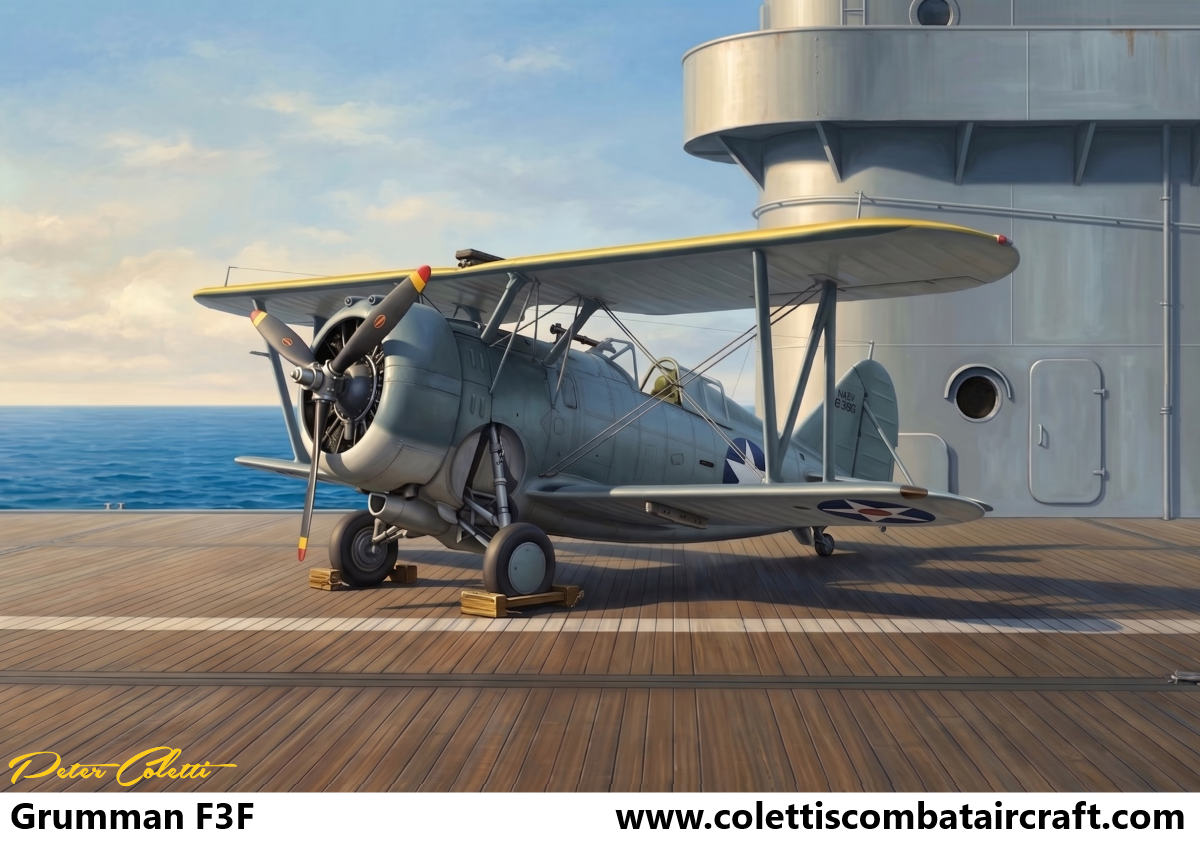
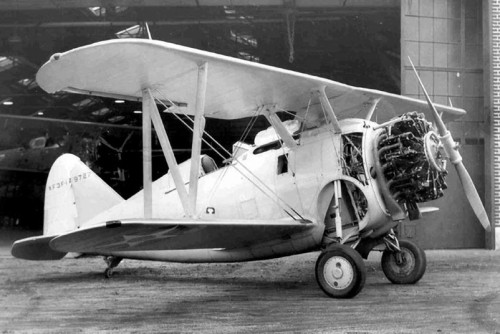
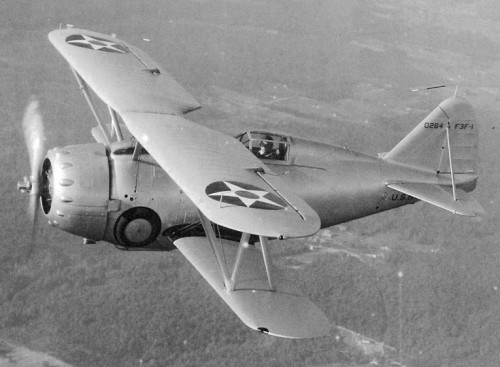
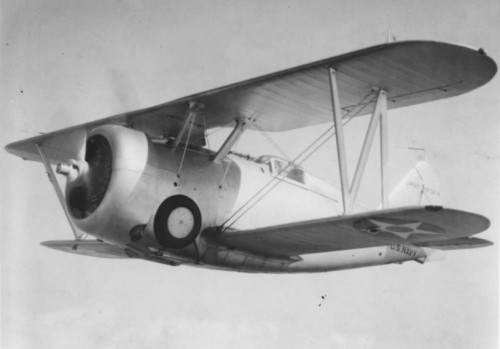
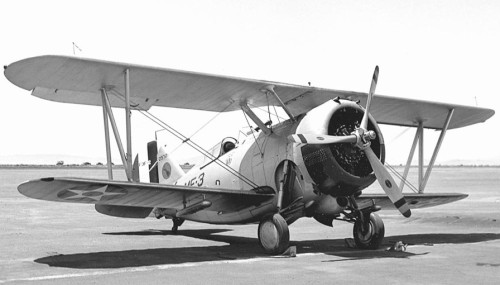
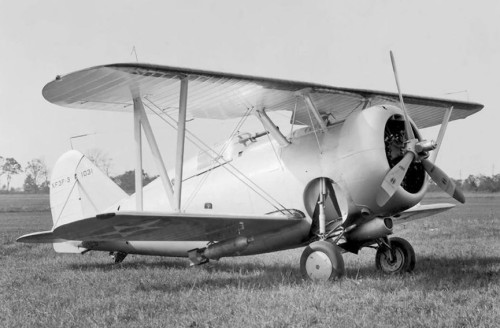
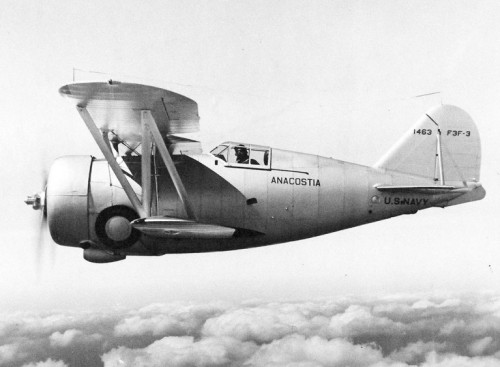
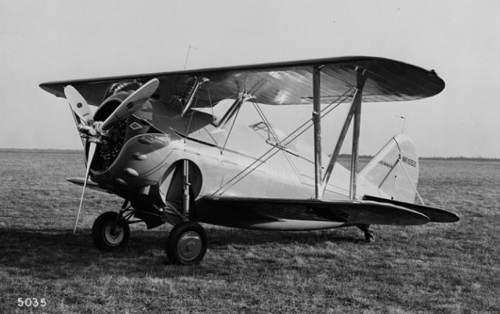
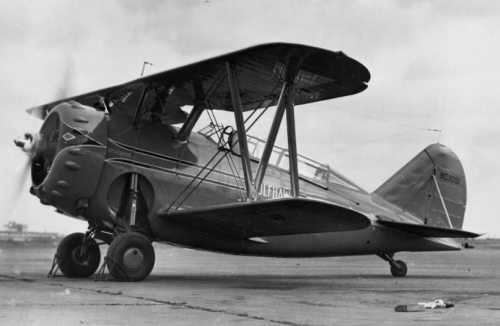
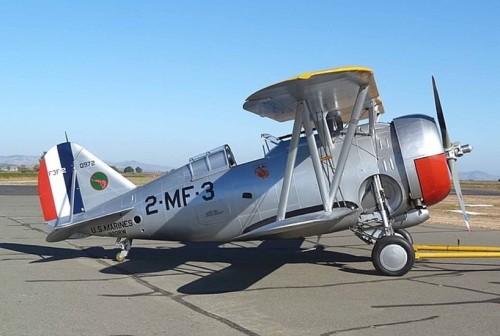
The Grumman F3F, the last biplane fighter to serve with the United States Navy, had already been retired from front-line combat squadrons by the time the U.S. entered World War II.
However, its rugged design and reliable handling ensured that it remained active in secondary roles during the early war years.
Pre-War Service and Phase-Out
The F3F series—including the F3F-1, F3F-2, and F3F-3—entered service between 1936 and 1939.
By late 1941, all F3Fs had been withdrawn from carrier-based fighter squadrons and replaced by monoplane designs such as the Brewster F2A Buffalo and Grumman’s own F4F Wildcat.
Wartime Roles
Despite its obsolescence as a combat aircraft, the F3F continued to serve in advanced training and utility roles during the early years of World War II.
These roles included
Fighter pilot transition training at naval air stations.
Administrative and courier duties, especially in domestic zones.
Occasional use in aerobatic demonstrations and public displays, particularly by modified civilian variants like the Gulfhawk series.
Final Retirement
The F3F was officially retired from U.S. Navy service in November 1943, marking the end of the biplane fighter era in American military aviation.
Legacy
Though it saw no combat in World War II, the F3F’s robust airframe and handling characteristics made it a valuable asset for non-combat operations.
Its design lineage directly influenced the development of the Grumman F4F Wildcat, a key naval fighter of the war.
The Variants
XF3F-1 Prototype Series
Three prototypes built under Bureau Number 9727.
Engine
700 hp Pratt & Whitney R-1535-84 Twin Wasp Junior radial.
Development Notes
First flight
20 March 1935.
The initial prototype broke up during dive testing (14 g pullout), killing test pilot Jimmy Collins.
Second prototype crashed during spin trials; pilot bailed out.
The third rebuilt prototype completed successful trials, leading to production approval.
Design Evolution
It featured a lengthened fuselage, increased wing area, and reduced wheel diameter for better streamlining compared to the F2F.
F3F-1 Production Model
Company Designation
G-11
First operational variant for the U.S. Navy.
Units Built
54 aircraft (BuNos 0211–0264).
Engine
650 hp R-1535-84 Twin Wasp Junior.
Deployment
Entered service in 1936 with VF-5B (USS Ranger) and VF-6B (USS Saratoga).
The final six were delivered to Marine squadron VF-4M in January 1937.
Performance
Max speed
231 mph;
service ceiling
27,500 ft.
Operational Role
Carrier-based fighter until replaced by the F3F-2; later used for training.
XF3F-2 Prototype
One aircraft (BuNo 0452).
Engine
850 hp Wright XR-1820-22 Cyclone G.
Design Changes
Larger cowling diameter due to engine size.
Improved climb rate and top speed.
Outcome
Led to the F3F-2 production contract after successful trials.
F3F-2 Production Model
Company Designation
G-19
Second major variant for the Navy.
Units Built
81 aircraft (BuNos 0967–1047).
Engine
950 hp Wright R-1820-22 Cyclone.
Performance
Max speed
256 mph;
ceiling
30,300 ft.
Deployment
Widely used across Navy and Marine Corps squadrons.
Served aboard USS Enterprise and with VMF-1 and VMF-2.
Legacy
Considered the most satisfactory single-seat biplane fighter of its time.
XF3F-3 Prototype
One aircraft (BuNo 1031).
Modifications
Curved windscreen.
Widened forward fuselage diameter.
The cowling was redesigned with single cowl flaps on each side.
Purpose
Aerodynamic refinements based on NACA wind tunnel testing to reduce drag and carbon monoxide intrusion.
F3F-3 Final Production Variant
Company Designation
G-19
The last biplane fighter delivered to the U.S. Navy.
Units Built
27 aircraft (BuNos 1444–1470).
Engine
950 hp Wright R-1820-22 Cyclone.
Performance
Max speed
263 mph;
ceiling
30,000 ft.
Deployment
Assigned to VF-5 (USS Yorktown) and VF-7 (USS Wasp).
Legacy
Served until 1941; transitioned to training roles until retirement in 1943.
G-22 Gulfhawk II Special Variant
Custom-built aerobatic aircraft for Al Williams, Gulf Oil’s aviation director.
Engine
1,000 hp Wright R-1820-G1 Cyclone.
Design
Hybrid of F2F and F3F features.
Reinforced for high-load aerobatics and inverted flight.
Bright orange paint scheme with blue trim and striped wings.
Operational Use
Flew in airshows across the U.S. and Europe (1936–1948).
Used to demonstrate dive bombing and precision aerobatics.
Final flight in October 1948; retired to the Smithsonian’s National Air and Space Museum.
G-32 Gulfhawk III / G-32A
Civilian Two-Seaters
Built for high-speed transport and demonstration.
Engine
1,000 hp Wright R-1820 Cyclone.
Units Built
Two aircraft
G-32 (NC1051) for Al Williams as Gulfhawk III.
G-32A (NC1326) was retained by Grumman as an executive chase plane.
Unique Features
Only F3F variants with landing flaps on the lower surface of the upper wing.
Used for ferry-pilot training and executive transport.
Military Service
Both were impressed into the USAAF as UC-103 in 1942.
Gulfhawk III crashed in Florida;
G-32A survived until 1971 and was lost after an inflight fire.