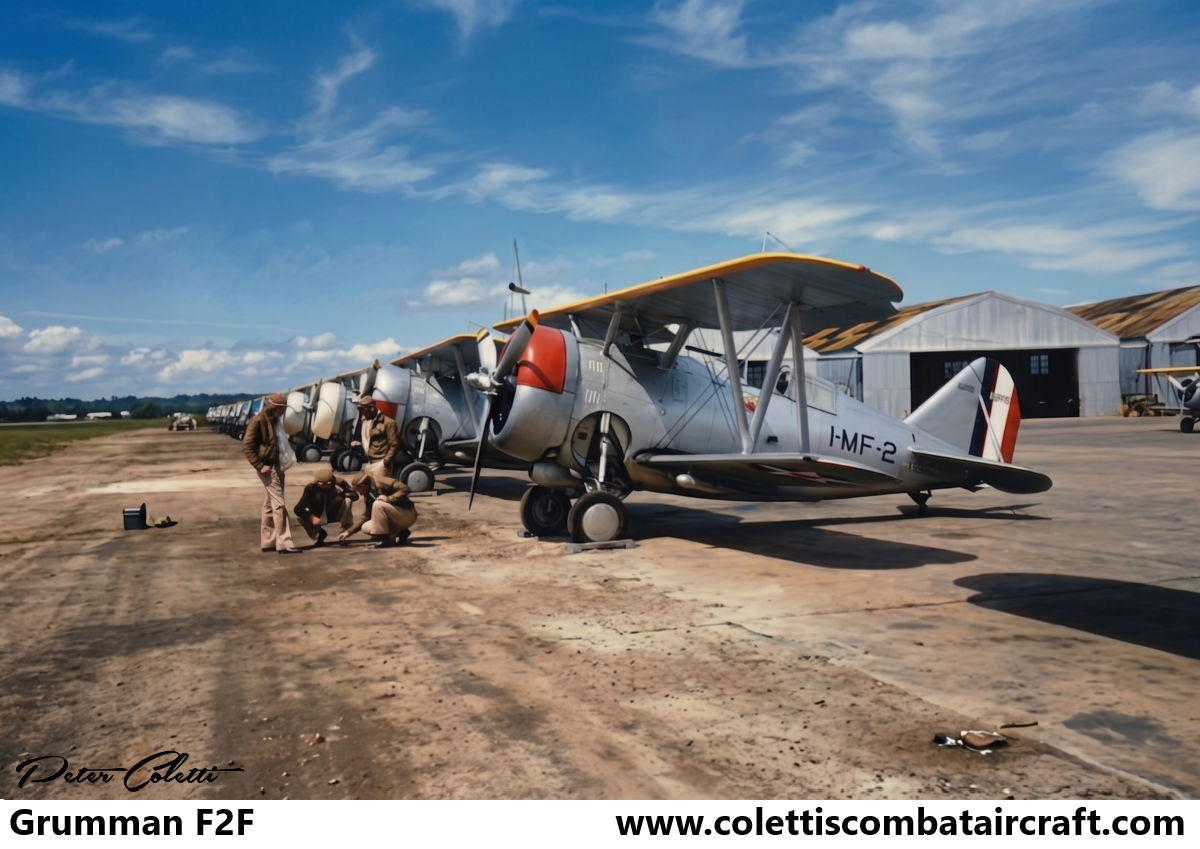
Although the Grumman F2F was officially retired from front-line service before the United States entered World War II, a small number of aircraft remained in secondary roles during the early war years.
Transition from Combat
By late 1939, the F2F-1 had been replaced in active fighter squadrons by the more advanced Grumman F3F-3.
As of September 1940, the F2F was fully withdrawn from combat units and reassigned to training and utility duties.
Wartime Roles
During the early stages of World War II (1941–1942), surviving F2F-1s were used primarily for:
Pilot training at naval air stations such as NAS Seattle, NAS Alameda, and NAS Pearl Harbour.
Utility tasks, including courier flights and administrative transport.
These aircraft were no longer suitable for combat due to their limited speed, armament, and outdated biplane configuration.
Final Retirement
The last F2F-1s were officially stricken from the Navy’s aircraft inventory in early 1943, ending their service life.
While the F2F did not see combat in World War II, its continued use in support roles reflects its durability and the Navy’s reliance on proven airframes for non-combat operations.
The Variants
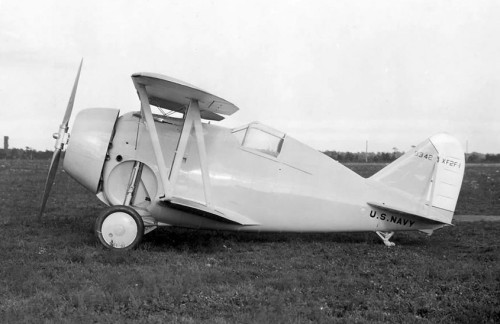
XF2F-1 (Prototype)
Designation
Navy prototype of the Grumman Model G-8.
Engine
625 hp Pratt & Whitney XR-1534-44 Twin Wasp Junior radial engine.
Armament
Two 0.30 in Browning machine guns are above the forward fuselage.
Design
Metal semi-monocoque fuselage, canvas-covered wings, retractable landing gear, watertight compartments.
Performance
First flown 18 Oct 1933; reached 229 mph at 8,400 ft. Agile but prone to directional instability and spins.
Modifications
Enlarged canopy, extended upper wingspan, and reshaped cowling with cylinder fairings.
Outcome
One was built and served as the foundation for the F2F-1 production model.
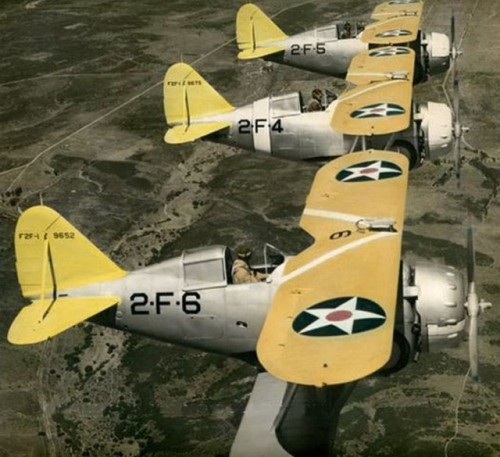
F2F-1 (Production Variant)
Designation
First production fighter of the Grumman G-8 lineage for the U.S. Navy.
Engine
700 hp Pratt & Whitney R-1535-72 Twin Wasp Junior radial.
Armament
Two 0.30 in machine guns, some fitted with underwing bomb racks.
Production
55 built (including one crash replacement); delivered between Jan and Aug 1935.
Service
A front-line carrier fighter from 1935 to 1939 with squadrons like VF-2B and VF-3B; later used for training until retirement in 1943.
Performance
Max speed
231 mph;
range
985 miles;
ceiling
27,100 ft;
climb rate
~940 m/min.
Legacy
A key transitional design between the FF-1 and the more advanced F3F series.