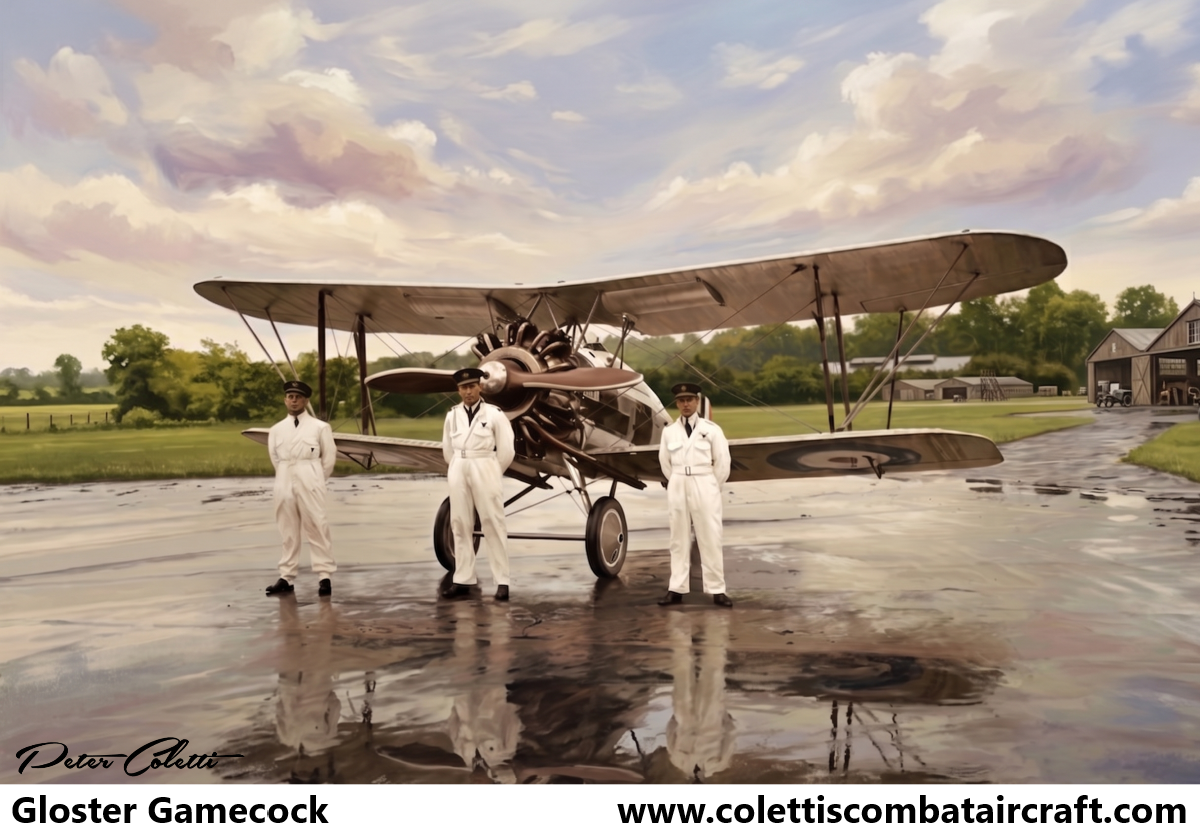
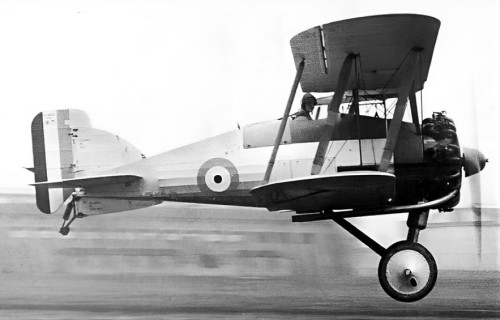
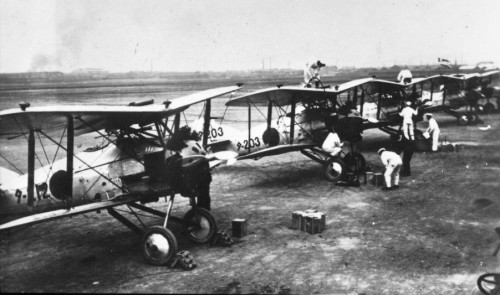
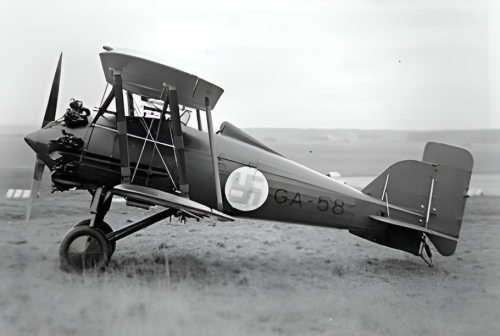
The RAF phased out the Gamecock in the early 1930s due to its high accident rate and aerodynamic flaws inherited from the Gloster Grebe.
No Combat Role in WWII
By the outbreak of war in 1939, the Gamecock was long gone from British front-line service.
It did not participate in any RAF operations during the war.
Finnish Air Force
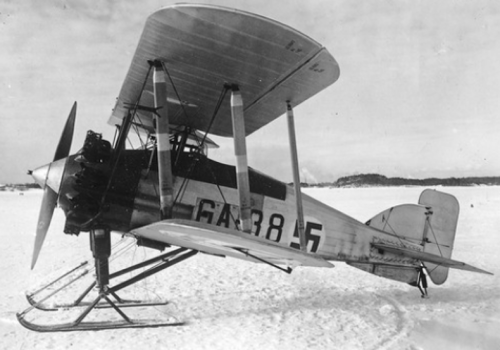
Licence-Built as the “Kukko”
Finland acquired Gamecocks in the late 1920s and built additional units under licence.
These remained in service far longer than their British counterparts.
Winter War (1939–1940)
During the Soviet invasion of Finland, a handful of Gamecocks were reportedly pressed into service as emergency fighters and reconnaissance aircraft.
Combat Use
Though largely outclassed by Soviet aircraft, Finnish pilots used them in limited roles, including harassment sorties and local defence.
Historical Footnote
The Gamecock was the last RAF fighter made almost entirely of wood and one of the first to feature internally mounted machine guns.
Its brief WWII cameo in Finland is a testament to the resourcefulness of smaller air forces during desperate times.
The Variants
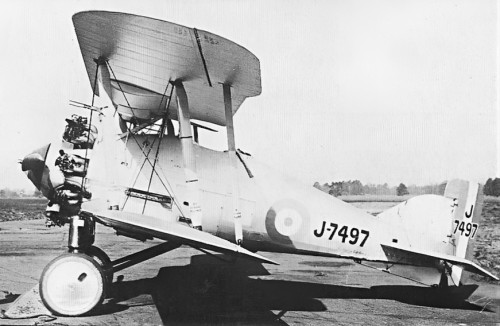
J7497 – Initial Prototype (Specification 37/23)
Purpose
Built to meet Air Ministry Specification 37/23, which called for a Jupiter-powered successor to the Gloster Grebe.
Engine
Bristol Jupiter IV radial engine.
First Flight
22 February 1925.
Notes
This aircraft marked the formal beginning of the Gamecock programme.
Designed by Henry Folland, it incorporated structural improvements over the Grebe, including internally mounted Vickers machine guns and a more robust fuselage.
Evaluation trials at RAF Martlesham Heath praised its agility and performance.
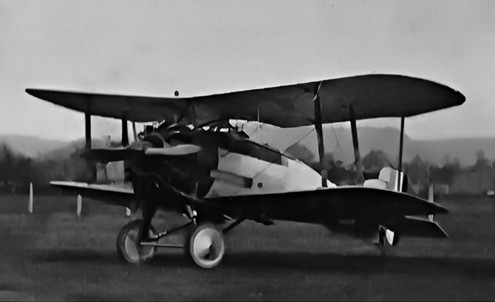
J7756 – Second Prototype
Engine
Bristol Jupiter IV.
Role
Used to refine handling and structural elements following feedback from J7497’s trials.
Notes
Helped validate the Gamecock’s design for production.
Minor aerodynamic tweaks were tested, including adjustments to wing rigging and control surfaces.
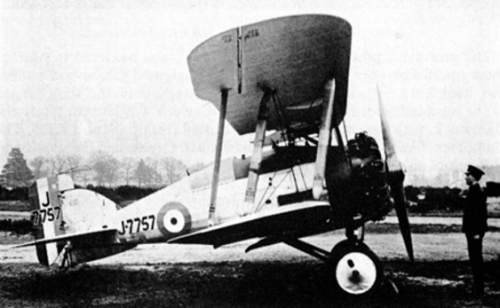
J7757 – Third Prototype
Engine
Bristol Jupiter VI, offering improved performance and reliability.
Purpose
Engine testbed and aerodynamic refinement platform.
Notes
This prototype helped assess the Jupiter VI’s compatibility with the airframe, contributing to the final configuration of the Gamecock Mk I.
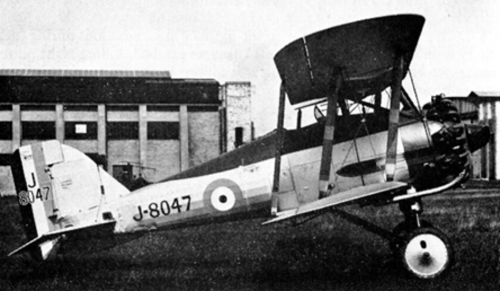
Gamecock Mk I
RAF Production Fighter
Production
90 units built for the Royal Air Force.
Engine
Bristol Jupiter VI radial engine.
Armament
Two fixed .303 Vickers machine guns.
Service Entry
1926.
Notes
The Mk I was praised for its manoeuvrability and speed but suffered from a high accident rate due to its short fuselage and sensitive handling.
It replaced the Grebe in frontline service but was withdrawn by 1931.
Despite its brief RAF career, it influenced subsequent biplane fighter designs.
Gamecock Mk II
Revised Export and Test Variant
Modifications
Steel-tube centre section in the upper wing.
Enlarged tail surfaces for improved stability.
Narrow-chord ailerons.
RAF Use
One new-build and one Mk I conversion.
Finnish Service
3 aircraft exported in 1928.
15 were licence-built by Valtion Lentokonetehdas (State Aircraft Factory) in Helsinki from 1929 to 1930.
Designated Kukko (“Rooster”) in Finnish service.
Operational History
Served until 1944, including during the Winter War against the Soviet Union.
Finnish pilots appreciated its agility, though it was increasingly outclassed by newer monoplane designs.
Gamecock Mk III
Spin Trials Testbed
Configuration
One Mk II modified with a lengthened fuselage.
Purpose
Used for spin recovery and stall behaviour testing.
Notes
Provided valuable data on longitudinal stability and contributed to RAF understanding of spin dynamics in short-fuselage biplanes.
Gambet / Nakajima A1N – Naval Derivative
Origin
Private venture by Gloster to adapt the Gamecock for carrier operations.
Modifications
Arrestor gear and naval fittings.
Strengthened undercarriage.
Japanese Production
Licensed by Nakajima Aircraft Company.
Produced as the Nakajima A1N.
Approximately 150 were built between 1929 and 1935.
Operational Use
Served aboard IJN carriers such as Hōshō and Akagi.
Participated in the 1932 Shanghai Incident, providing air cover and ground support.
Legacy
One of Japan’s first carrier-based fighters, it laid the groundwork for future naval aviation development.