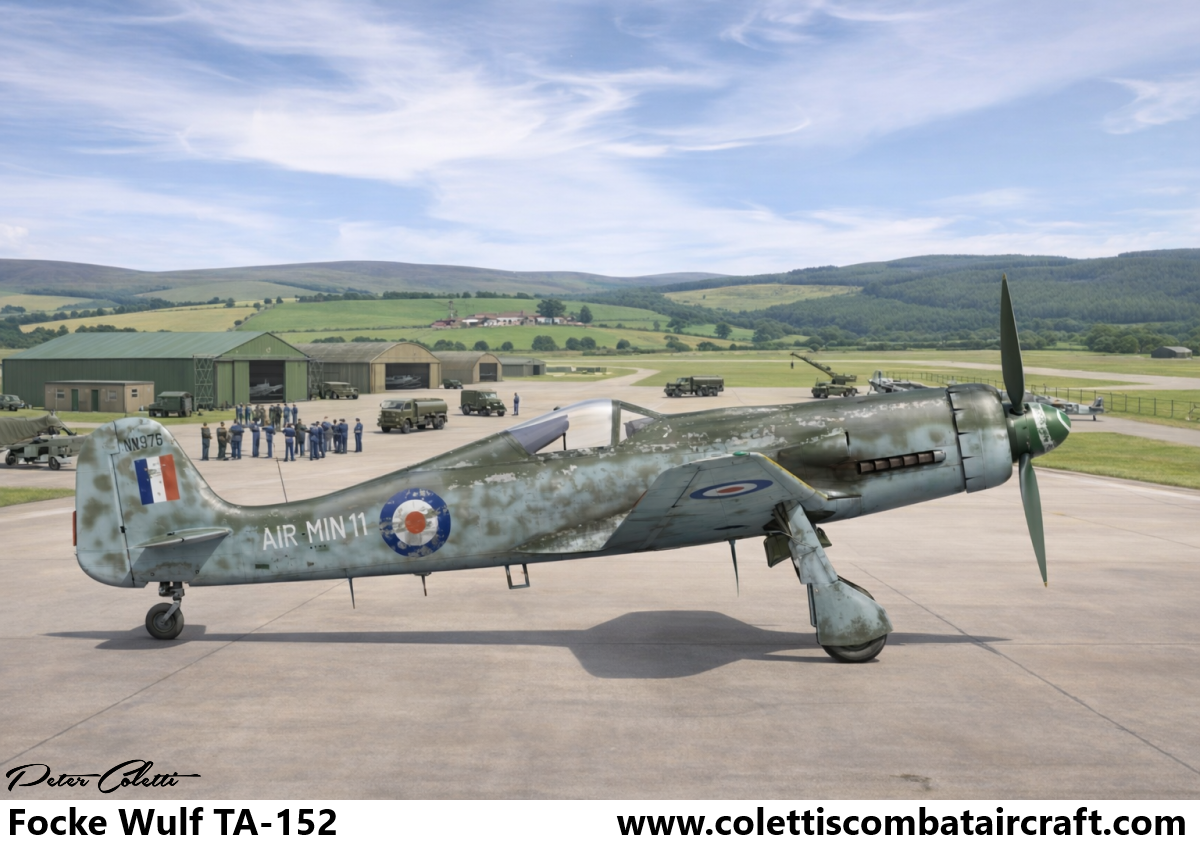
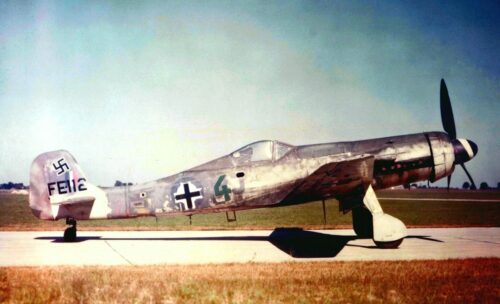
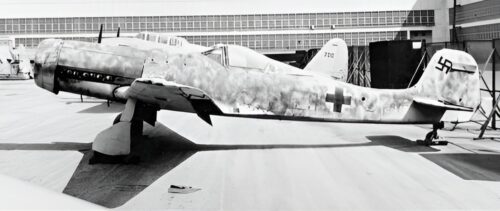
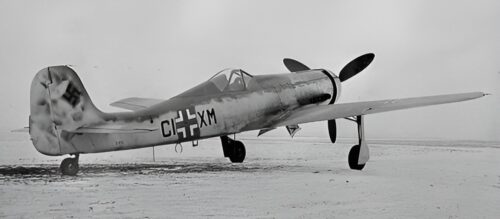
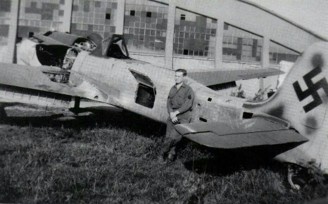
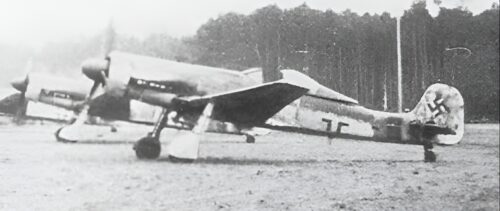
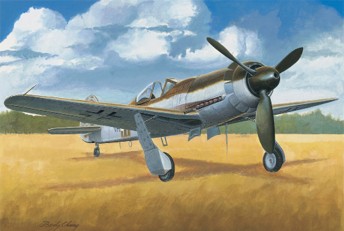
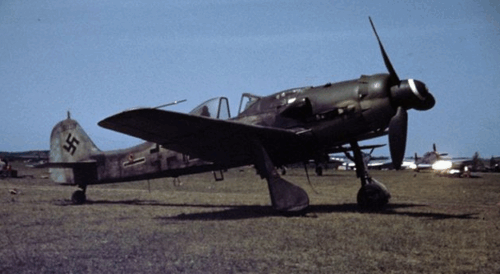
The Ta 152 entered Luftwaffe service in January 1945, with JG 301 as the only unit to operate it.
Designed as a high-altitude interceptor, it was rushed into service before all development issues were resolved.
Despite its exceptional performance—especially the Ta 152H variant—only around 43 to 69 aircraft were completed due to production delays and Germany’s collapsing war effort.
Ta 152s were primarily tasked with defending airfields and intercepting Allied reconnaissance and bomber aircraft.
Pilots reported excellent speed, climb rate, and manoeuvrability at altitude.
However, the aircraft saw limited combat and had no strategic impact on the war’s outcome.
After May 1945, the Ta 152 was retired, with no postwar use or export.
Its advanced design influenced later high-performance aircraft but remained a rare and short-lived operational type.
Prototypes & Development Airframes
These were experimental conversions or testbeds, often based on Fw 190D airframes
Ta 152 V1
Prototype converted from Fw 190 V32/U1; powered by Jumo 213A.
Ta 152 V2
Similar to V1;
used for aerodynamic testing.
Ta 152 V3
The first prototype had a pressurised cockpit and a Jumo 213E engine.
Ta 152 V4–V6
Continued development of the H-series: the V6 was the first with the full H-1 configuration.
Ta 152 V7–V10
C-series prototypes with DB 603 engines; the V7 was used for armament trials.
Ta 152 V11–V14
Further refinements:
V14 was a reconnaissance prototype (basis for E-series).
Ta 152 V15–V18
Late-war testbeds; V18 was reportedly a high-speed test aircraft.
Preproduction Series
These were limited-run aircraft used for evaluation and training
Ta 152 H-0
Preproduction high-altitude fighter: pressurised cockpit, long wingspan.
Ta 152 C-0
Preproduction medium-altitude fighter; shorter wings, DB 603 engine.
Ta 152 E-0
Reconnaissance variant; hybrid of H and C features, equipped with cameras.
Production Variants
Only a small number were completed before war’s end
Ta 152 H-1
High-altitude interceptor, the Jumo 213E, with ~25 built, saw limited combat in 1945.
Ta 152 C-1
Medium-altitude fighter, DB 603LA, ~1–2 completed; not operational.
Ta 152 C-3
Improved C-series, DB 603L, possibly 1 built, and an armament upgrade.