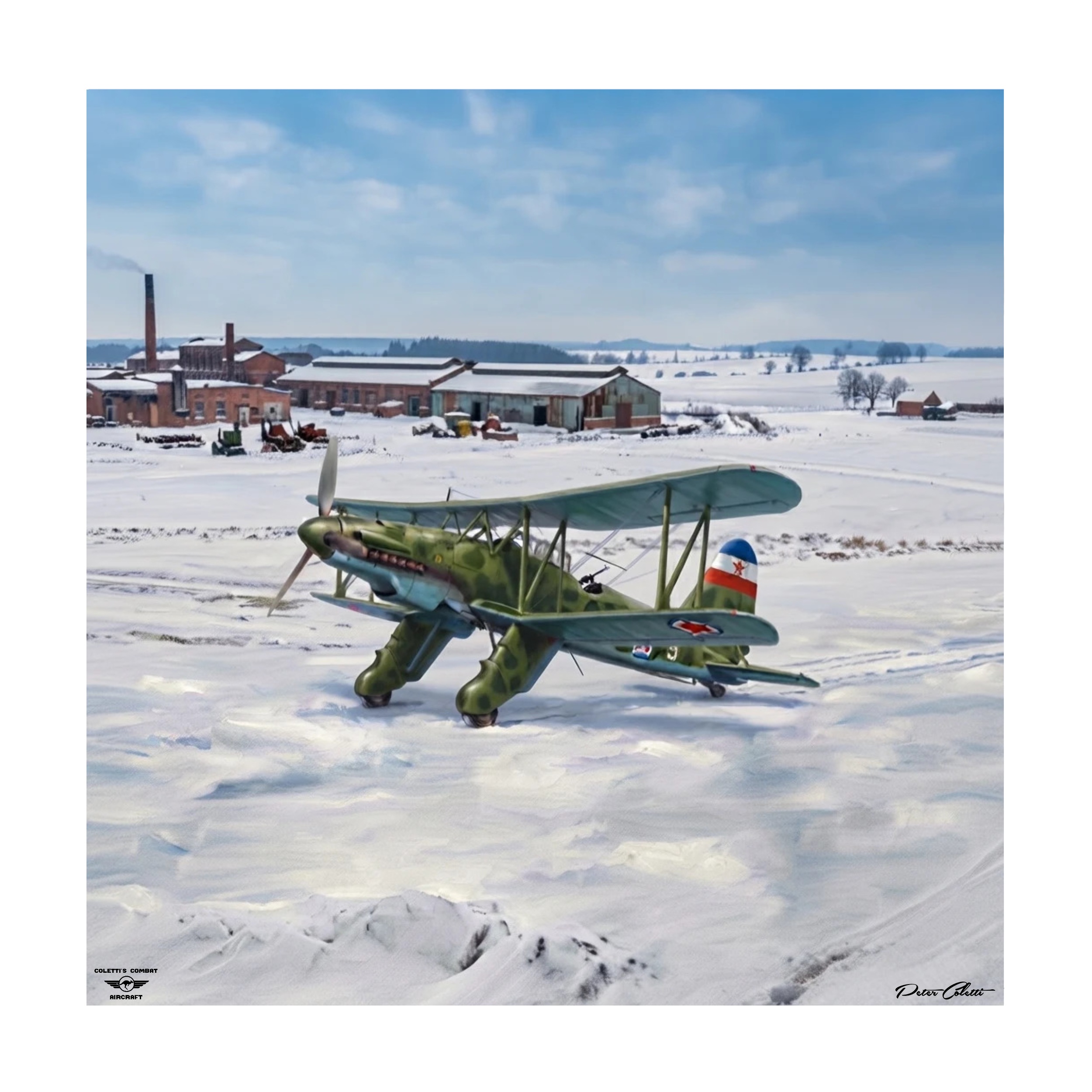
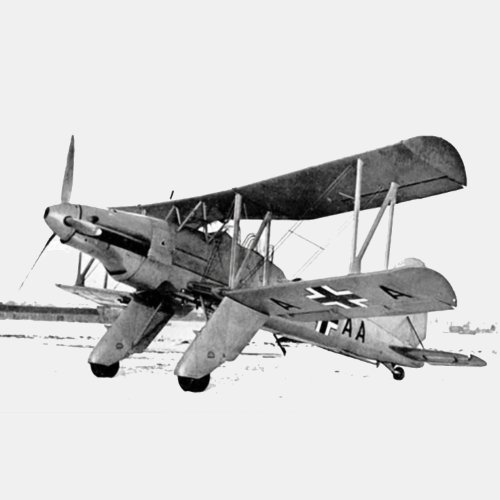
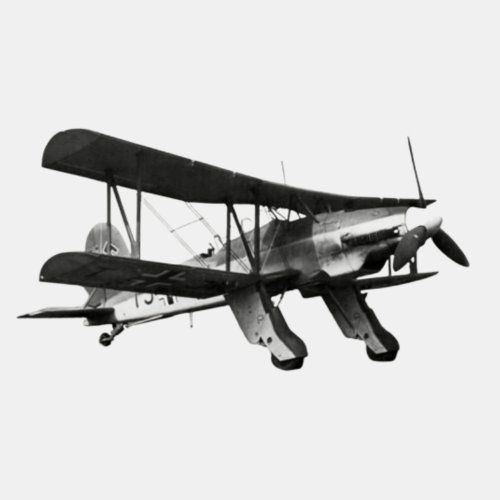
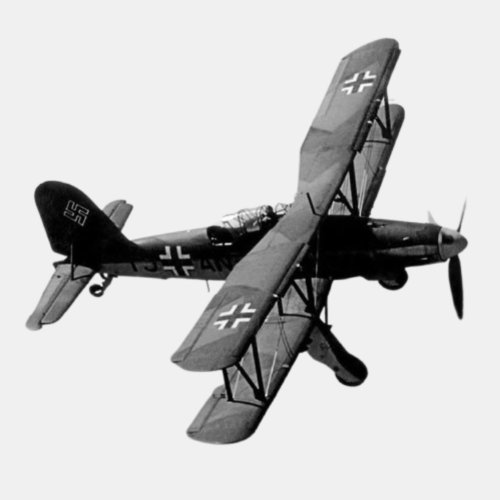
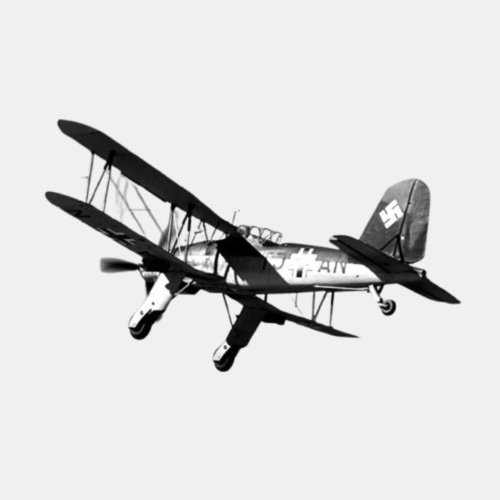
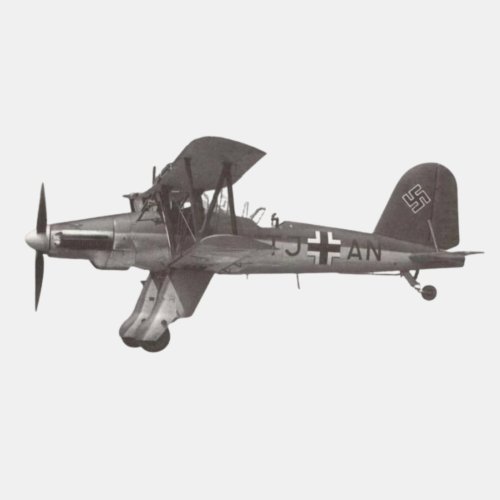
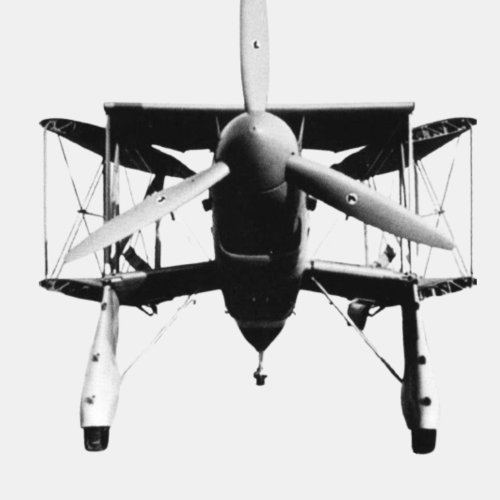
The Fieseler Fi 167 was a German carrier-based torpedo bomber and reconnaissance aircraft developed in the late 1930s for operation from the planned Graf Zeppelin-class aircraft carriers.
Although it was one of the most successful carrier aircraft designs produced in Germany before the Second World War, the cancellation and repeated suspension of the Graf Zeppelin programme prevented the type from entering large-scale production.
Only fourteen examples were built, yet the aircraft developed a reputation for exceptional handling, outstanding short take-off and landing performance, and an unusually large payload for its size.
The Fi 167 remains one of the less well-known aircraft of the Luftwaffe, largely because it was designed for a naval aviation arm that never fully came into existence.
Historical Background
During the mid-1930s, Germany began rebuilding its naval forces.
Among the most ambitious projects was the construction of the aircraft carrier Graf Zeppelin, intended to provide the Kriegsmarine with a modern carrier aviation capability comparable to those of Britain, Japan, and the United States.
Construction began in 1936–1937.
To equip the carrier, the Reich Air Ministry issued specifications for several naval aircraft types, including:
A carrier fighter.
A carrier dive bomber.
A carrier torpedo and reconnaissance aircraft.
The torpedo-bomber requirement called for a two-seat aircraft capable of:
Torpedo attack missions.
Maritime reconnaissance.
Dive-bombing operations.
Carrier take-offs and landings.
Long-range operations over water.
Only two major competitors submitted designs:
Fieseler Fi 167
Arado Ar 195
Development
The Fi 167 was designed by Fieseler Flugzeugbau, a company best known for producing the Fi 156 Storch liaison aircraft.
Drawing from experience with excellent low-speed handling characteristics, Fieseler engineers created an aircraft that emphasised controllability, carrier suitability, and payload rather than outright speed.
Two prototypes were constructed:
Fi 167 V1
Fi 167 V2
Flight testing demonstrated that the Fi 167 substantially outperformed the competing Arado Ar 195.
By mid-1938 the Fi 167 had been selected as the winning design for Germany’s future carrier force.
Test pilots praised the aircraft’s handling qualities.
The machine not only met the official requirements but greatly exceeded them in payload capacity and low-speed performance.
Reports from the period note that the aircraft could operate safely at remarkably low speeds, an important characteristic for carrier landings.
Following prototype trials, twelve pre-production aircraft designated Fi 167 A-0 were manufactured.
These aircraft differed only slightly from the original prototypes.
Design and Technical Features
General Configuration
The Fi 167 was a single-engine, two-seat biplane of all-metal construction.
While many contemporary air forces were shifting towards monoplanes, the biplane arrangement was deliberately chosen for carrier operations because it provided:
Excellent lift at low speeds.
Short take-off runs.
Slow and predictable landing characteristics.
Good manoeuvrability during shipboard operations.
The pilot sat in the forward cockpit, while a rear crewman served as observer, navigator, and defensive gunner.
Carrier Adaptations
The aircraft incorporated several specialised naval features:
Folding Wings
The wings could be folded for storage aboard aircraft carriers, reducing the space required in hangars and on lifts.
Sea-Ditching Capability
For emergency landings on water, the aircraft’s landing gear could be jettisoned.
Airtight compartments within the wing structure improved flotation and increased crew survival chances following ditching.
STOL Performance
Perhaps the aircraft’s most remarkable feature was its extremely low stalling speed.
The Fi 167 reportedly could maintain control at speeds so low that its landing approach resembled the vertical-descending behaviour later associated with STOL aircraft.
These traits reflected the influence of Fieseler’s work on the Fi 156 Storch and made the aircraft ideally suited to carrier operations, particularly on the relatively short deck of Graf Zeppelin.
Powerplant
The production aircraft used:
One Daimler-Benz DB 601B
Liquid-cooled inverted V-12 engine
Approximately 1,100 horsepower
The DB 601 was the same basic engine family that powered aircraft such as the Bf 109 and Bf 110, providing the Fi 167 with excellent power for a biplane of its size.
Armament
The aircraft’s armament was relatively heavy for a carrier torpedo bomber.
Fixed Armament
1 × 7.92 mm MG 17 machine gun firing forward through the fuselage.
Defensive Armament
1 × flexible 7.92 mm MG 15/MG 17 machine gun in the observer’s cockpit.
Offensive Loads
The Fi 167 could carry:
One LT F5b torpedo weighing approximately 765 kg.
Up to 1,000 kg of bombs.
Various combinations of smaller bombs for reconnaissance-strike missions.
One of the aircraft’s most impressive characteristics was that it could carry nearly twice the ordnance originally required by the specification.
Performance
Dimensions
Length: 11.4 m
Wingspan: 13.5 m
Height: approximately 4.8 m
Wing area: approximately 45.5 m²
Weights
Empty weight: approximately 2,800 kg
Maximum loaded weight: approximately 4,850 kg
Flight Performance
Maximum speed: approximately 320-325 km/h
Range: approximately 1,300 km
Service ceiling: roughly 8,200 m (26,900 ft)
Although not especially fast compared with contemporary monoplanes, its combination of endurance, payload, and low-speed handling made it highly effective for its intended naval strike role.
Operational History
Cancellation of the Carrier Programme
The Fi 167’s greatest problem was not technical but strategic.
The completion of Graf Zeppelin was repeatedly delayed, and work on the carrier was eventually suspended in 1940.
As a result, the Luftwaffe and Kriegsmarine no longer required a dedicated carrier torpedo bomber.
Consequently:
Large-scale production was cancelled.
Only fourteen aircraft were completed.
The planned operational carrier air group never materialised.
Luftwaffe Evaluation Service
The completed aircraft were assigned to Erprobungsgruppe 167, a testing and evaluation unit.
Their role focused on experimentation and operational trials rather than combat deployment.
Nine aircraft were later transferred to the Netherlands for coastal and maritime evaluation work.
Later Service
When work on Graf Zeppelin briefly resumed in 1942, naval aviation priorities had changed.
The Ju 87C carrier variant of the Stuka was selected for reconnaissance duties, and dedicated torpedo bombers were no longer considered essential.
The surviving Fi 167s returned to Germany in 1943.
Some were then transferred to Axis allies, with sources reporting service in Croatia and, according to some accounts, Romania.
Other aircraft were employed in aeronautical testing programmes, including landing-gear experiments conducted by German research organisations.
Variants
Fi 167 V1
The first prototype was used for basic development and flight testing.
Fi 167 V2
Second prototype with revised undercarriage arrangements and refinements for carrier operations.
Fi 167 A-0
Pre-production version was built in a batch of twelve aircraft.
This represented the only series production model completed.
No true mass-production variant entered service.
Assessment and Legacy
The Fi 167 is often regarded as one of the most capable carrier biplanes ever developed.
Although its appearance seemed outdated compared to emerging monoplanes, its naval performance characteristics were outstanding.
It combined:
Excellent low-speed controllability.
Heavy weapons load.
Long range.
Rugged construction.
Exceptional carrier suitability.
Its failure was not due to deficiencies in design but to the strategic collapse of Germany’s carrier aviation programme.
Had Graf Zeppelin entered operational service, the Fi 167 would likely have become the principal strike aircraft of the Kriegsmarine’s air arm.
Specifications (Fi 167 A-0)
Role: Carrier-based torpedo bomber and reconnaissance aircraft