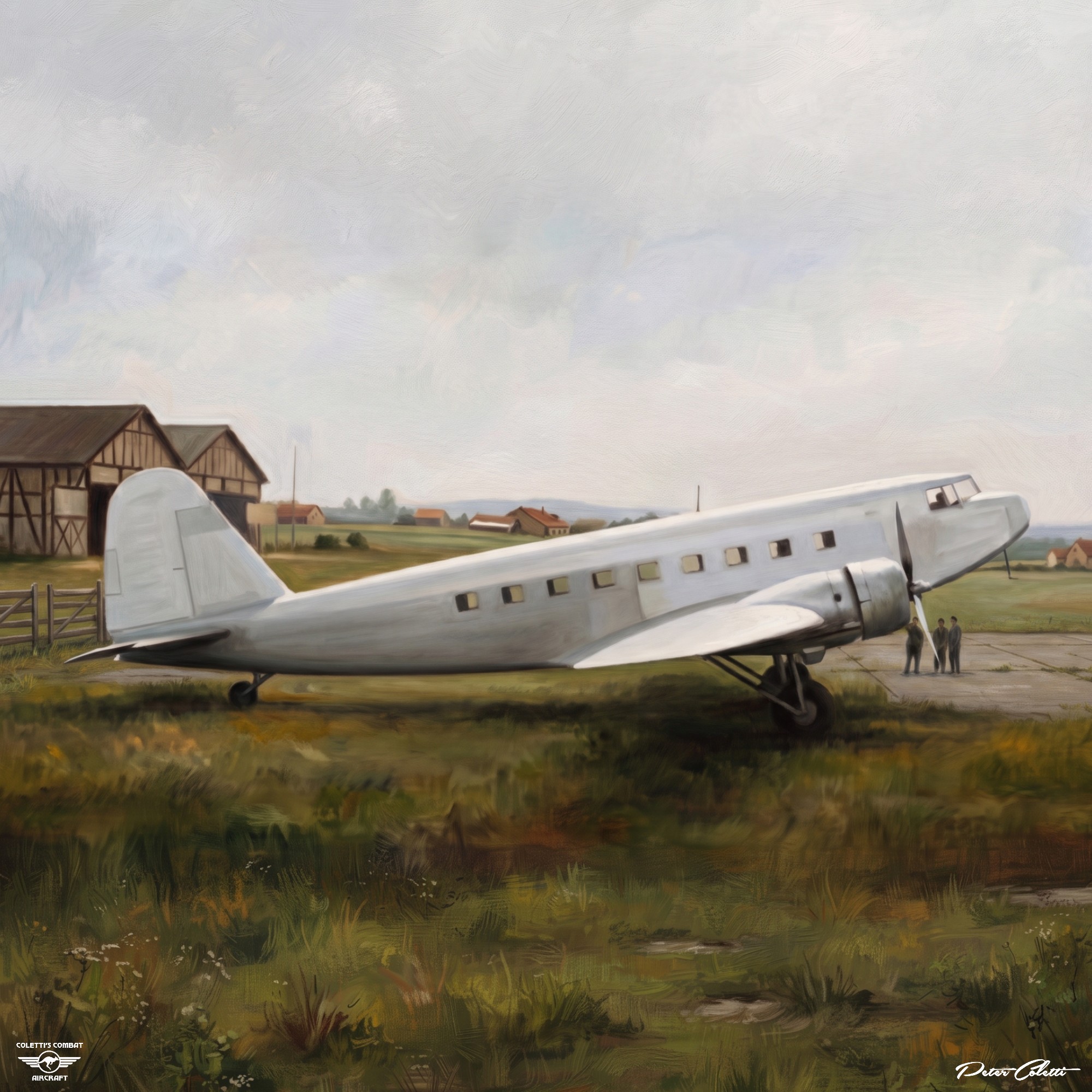
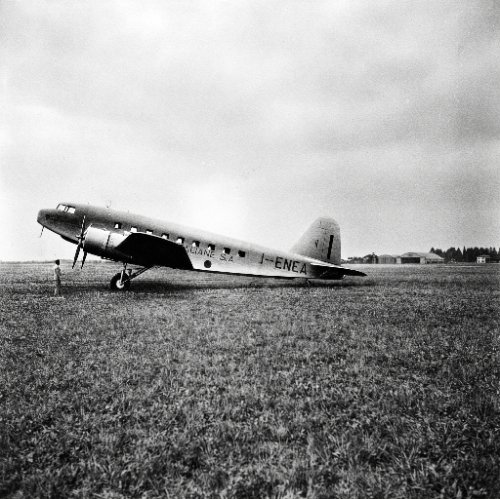
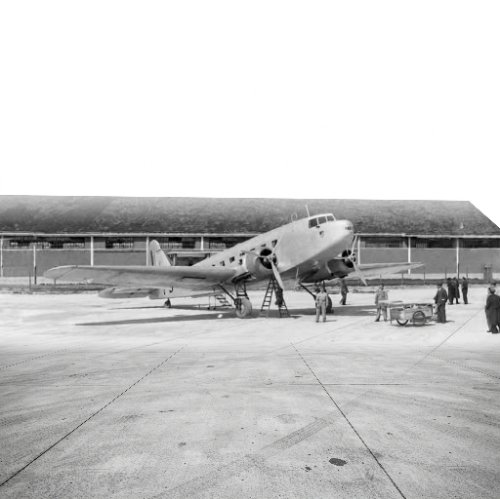
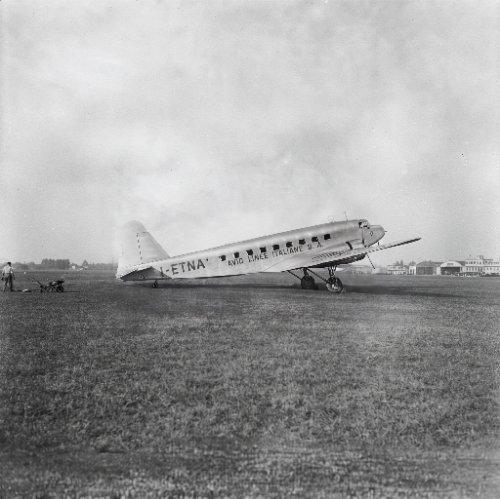
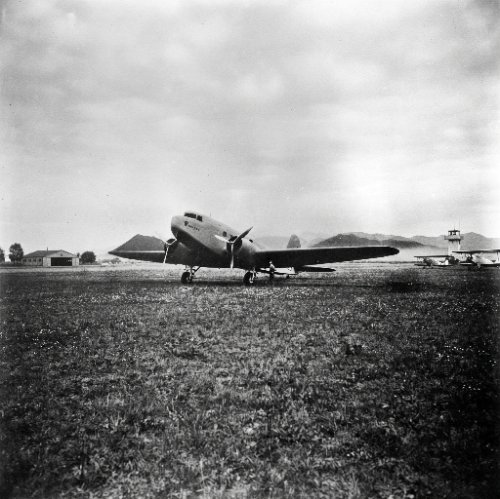
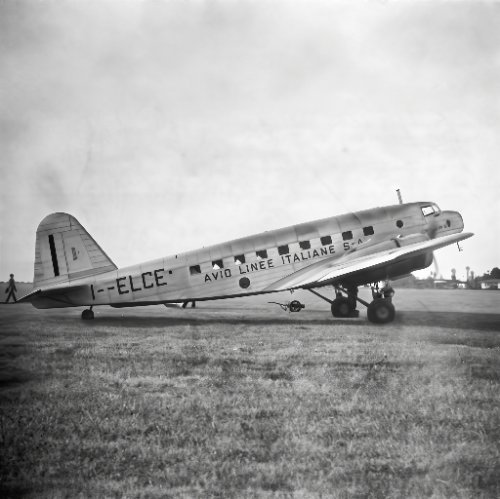
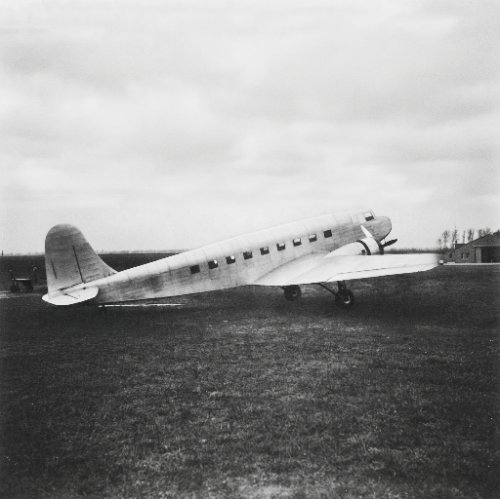
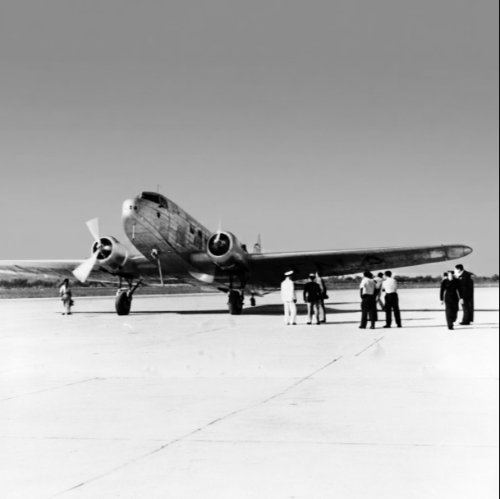
In the mid-1930s, the evolution of high-speed commercial aviation—exemplified globally by groundbreaking American designs like the Douglas DC-1 and DC-2—prompted Italian industrial titan Fiat to modernise civil air transport.
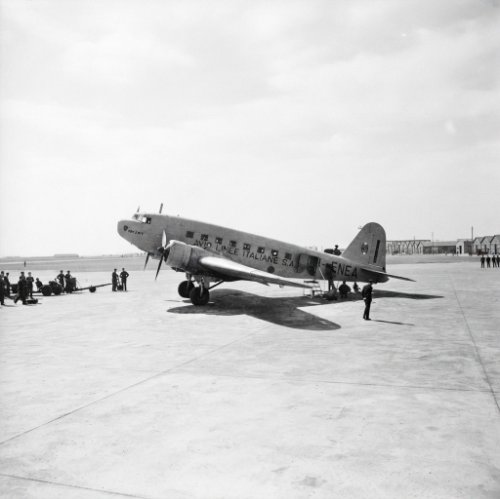
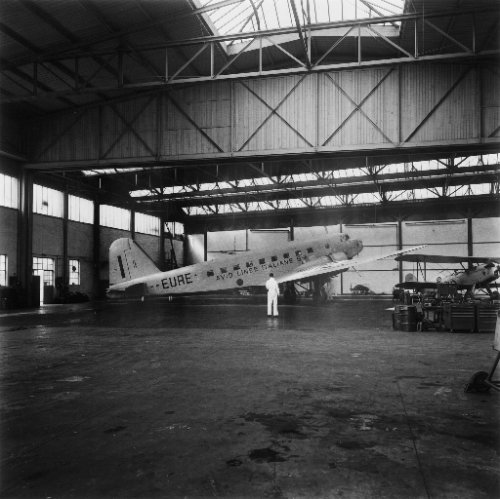
Under the direction of brilliant aeronautical engineer Giuseppe Gabrielli, Fiat’s design bureau embarked on creating a state-of-the-art, twin-engine, all-metal airliner intended for Avio Linee Italiane (ALI), the corporate airline owned and operated by Fiat.
Gabrielli’s creation, designated the FIAT G.18, was conceived to provide domestic and continental European routes with high-speed passenger connectivity, comfort, and structural durability.
The prototype made its maiden flight on March 18, 1935.
Initial flight testing demonstrated a clean aerodynamic profile and sound handling but revealed that the original powerplant selection lacked sufficient power for optimal performance under fully loaded conditions.
Responding to feedback from ALI and operational evaluations, Fiat swiftly redesigned the airframe into the vastly improved G.18V (Veloce), introducing more powerful engines, aerodynamic refinements, and structural alterations.
Though produced in very limited numbers—totalling only 3 original G.18s and 6 G.18Vs (9 airframes in total)—the type established a reputation for reliability and formed a critical high-speed luxury transport bridge for Italy prior to and during the early years of World War II.
Technical Design and Structural Layout
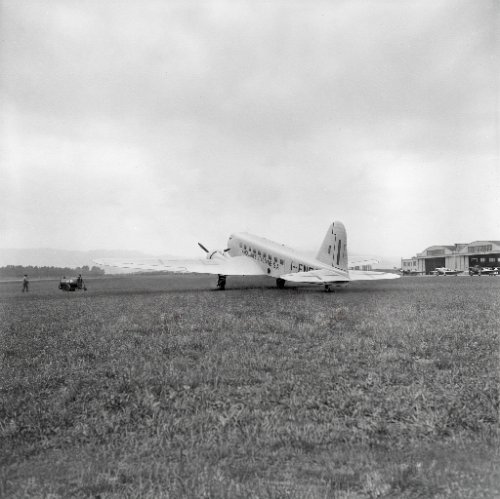
The FIAT G.18 was an advanced, low-wing cantilever monoplane of all-metal construction, featuring stressed-skin aluminium cladding and a sleek profile heavily reminiscent of contemporary American transport standards.
Fuselage and Structure: The semi-monocoque fuselage utilised an oval cross-section structure composed of duralumin frames and stringers covered in smooth light-alloy sheet metal, ensuring high torsional rigidity.
Wings and Control Surfaces: The cantilever wing featured a multi-spar duralumin layout divided into a strong centre section and detachable outer panels.
Fabric-covered ailerons and split trailing-edge flaps assisted with low-speed handling and landing characteristics.
Tail Configuration: The initial G.18 featured a single vertical fin, but the definitive G.18V introduced a redesigned, taller vertical tail integrated with a long dorsal strake running down the upper spine of the fuselage to enhance directional stability.
Landing Gear: The aircraft featured a conventional retractable tailwheel undercarriage.
The main gear legs and large wheels retracted rearward into the streamlined engine nacelles, though—characteristically for the period—the wheels remained partially exposed when fully retracted to minimise structural complexity.
Powerplant: The initial G.18 was powered by two Fiat A.59 R radial engines (licence-built Pratt & Whitney Hornets).
The upgraded G.18V transitioned to two Fiat A.80 R.C.41 18-cylinder, air-cooled radial engines, each generating 1,000 hp and driving three-bladed variable-pitch metal propellers.
Accommodation: The flight deck accommodated a crew of three (pilot, co-pilot, and radio operator/flight engineer).
The comfortable, soundproofed cabin was outfitted to seat up to 18 passengers in rows of paired seats, equipped with individual ventilation, lighting, and luggage compartments.
Performance Specifications (G.18V Veloce)
Crew: 3
Capacity: 18 passengers
Length: 18.81 m (61 ft 9 in)
Wingspan: 25.00 m (82 ft 1 in)
Height: 5.01 m (16 ft 5 in)
Wing Area: 88.30 m² (950 sq ft)
Empty Weight: 7,200 kg (15,900 lb)
Gross/Max Takeoff Weight: 10,800 kg (23,800 lb)
Powerplant: 2 × Fiat A.80 R.C.41 18-cylinder radial engines, 1,000 hp each
Maximum Speed: 400 km/h (250 mph / 220 kn) at altitude
Cruising Speed: 278–337 km/h (173–209 mph)
Operational Range: 1,675 km (1,041 mi / 905 nmi)
Service Ceiling: 8,700 m (28,600 ft)
Rate of Climb: 4.8 m/s (944 ft/min)
Variants and Modifications
Production of the G.18 family was concise, divided into two distinct iterations alongside later military conversion efforts:
G.18 (Original Version): Three airframes built, powered by Fiat A.59 R radial engines.
While functionally sound, they suffered from marginal performance margins and were soon supplanted.
G.18V (Veloce): The definitive production model featuring upgraded Fiat A.80 engines (1,000 hp), a refined vertical tail structure, a long dorsal spine fairing, and improved overall performance. Six airframes were constructed.
Military Transports (Militarised G.18/G.18V): Following the outbreak of World War II, surviving airframes were structurally adapted for military service, outfitted with auxiliary equipment, troop-bench fittings, and heavy cargo-handling provisions.
Armament
Defensive/Offensive Armament: The FIAT G.18 and G.18V carried no permanent built-in defensive or offensive weaponry, as they were strictly utilised as high-speed utility, passenger, and VIP military transports.
Defensive protection relied entirely on evasive routeing, speed, and fighter escort when flying through contested zones.
Operational History and WWII Context
Entering commercial service with Avio Linee Italiane in the mid-1930s, the G.18 and G.18V fleets linked major Italian hubs (Rome, Turin, Milan, and Venice) with key
European capitals, establishing a reputation for speed and reliability across international civil aviation channels.
When Italy entered World War II in June 1940, ALI was brought under direct military control.
Reorganised under the Nucleo Comunicazioni Avio Linee (NCA), the airline’s remaining G.18 and G.18V aircraft were painted in military markings and pressed into urgent logistics and VIP transport roles for the Regia Aeronautica.
They flew high-priority liaison and supply missions across the Mediterranean and the Balkans, notably hauling troops, staff officers, and critical equipment to
Albania and Greece during the Italian campaigns of late 1940.
As the conflict dragged on, attrition, accidents, and a severe shortage of spare parts steadily depleted the small fleet.
For instance, a G.18V operating a courier flight from Belgrade crashed into the sea off Venice in January 1943 during poor weather conditions, resulting in fatalities.
Following the Italian armistice in September 1943, the remaining operational history of the type fractured.
Several airframes were seized by German forces or operated under the authority of the Italian Social Republic (ANR).
The operational career of the G.18 came to a dramatic and abrupt end on April 30, 1944, at Bresso airfield near Milan: a G.18V heavily loaded with military munitions and explosives suffered a catastrophic detonation on the runway, resulting in a massive blast that heavily damaged airfield infrastructure and effectively erased the last active airframe from the inventory.