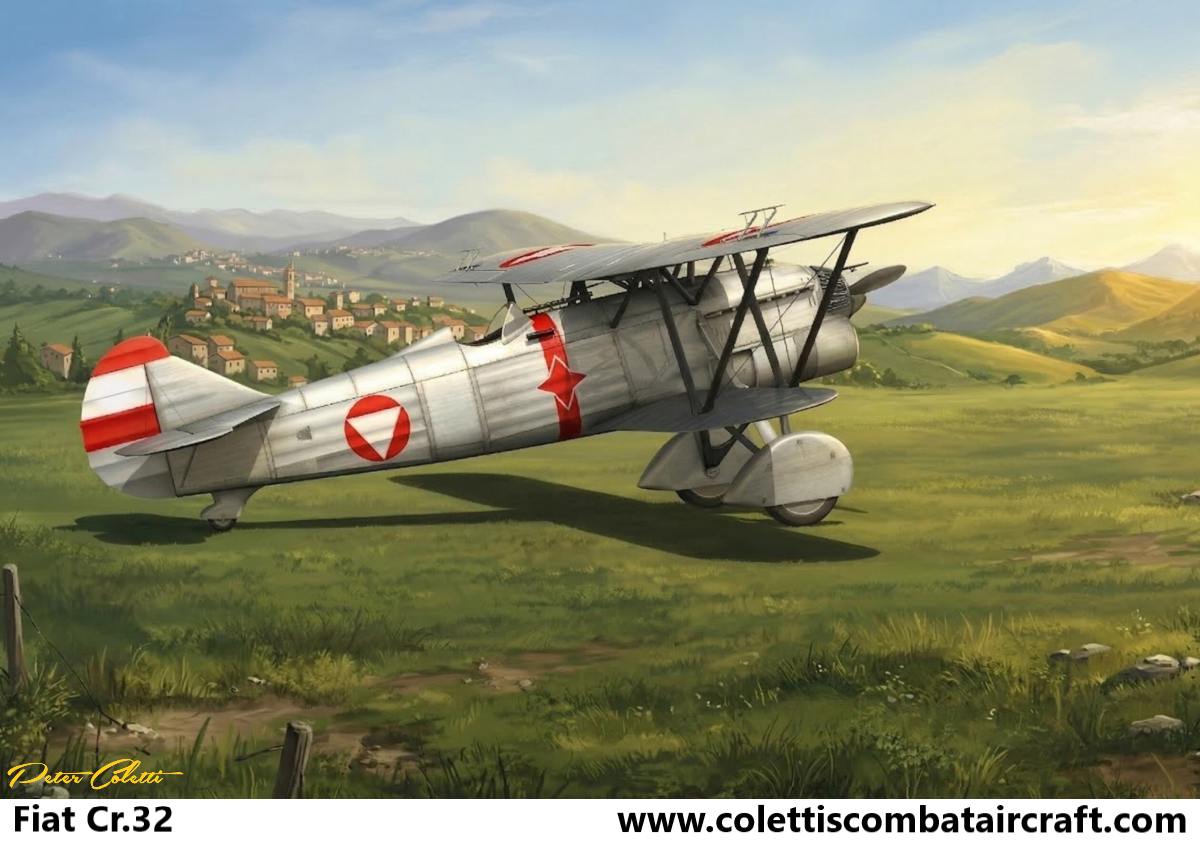
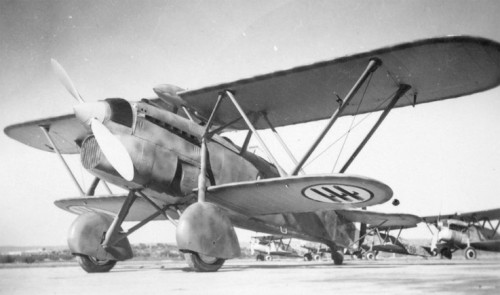
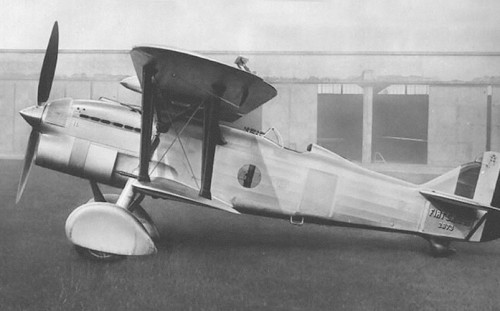
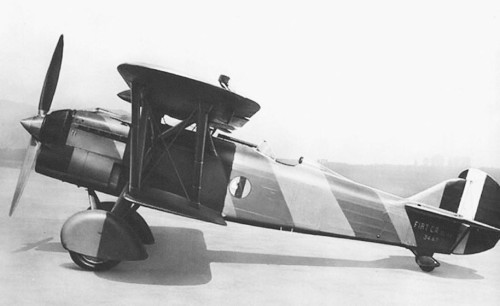
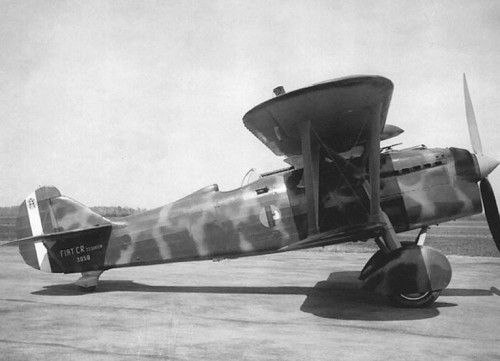
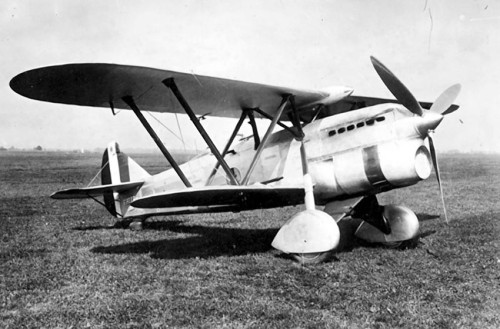
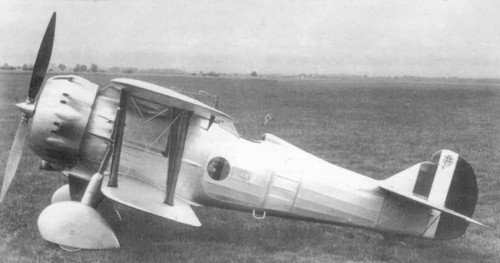
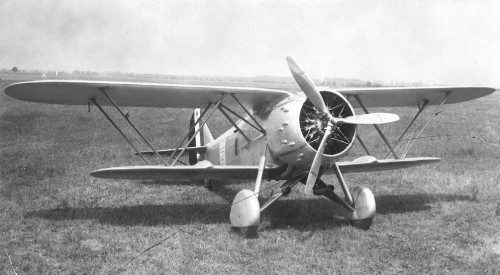
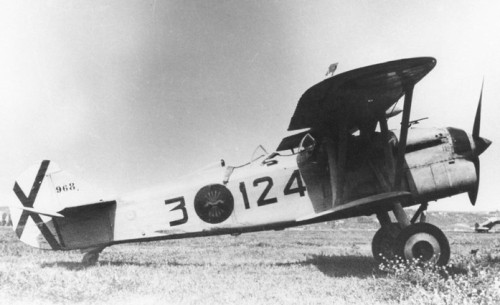
The Fiat CR.32, a compact and agile biplane fighter designed by Celestino Rosatelli, was already considered obsolete by the outbreak of World War II.
Nevertheless, it remained in service with several air forces and saw combat in multiple theatres.
Pre-War Legacy
The CR.32 gained fame during the Spanish Civil War (1936–1939), where Italy deployed over 380 aircraft to support Franco’s Nationalists.
Its performance against Soviet-supplied aircraft earned it a reputation as one of the finest biplane fighters of its time.
By 1939, two-thirds of the Regia Aeronautica’s fighter strength still consisted of CR.32s, with 294 stationed in Italy and North Africa and 34 in Italian East Africa.
WWII Combat Service
North Africa & Mediterranean
The CR.32 participated in early clashes against British aircraft, including successful engagements against Bristol Blenheim bombers and even Hawker Hurricanes.
In one notable encounter, six CR.32s downed two Blenheim’s without loss.
Albania & Balkans
The aircraft supported Italian operations during the invasion of Albania and later in the Balkans, though its limited speed and firepower made it vulnerable to newer monoplane fighters.
Italian East Africa
CR.32s flew defensive and reconnaissance missions, often facing logistical challenges and overwhelming Allied air superiority.
Hungary & Germany
Austrian CR.32s were absorbed into the Luftwaffe after the Anschluss but saw little use.
Germany later transferred some to Hungary, where they were used for training and secondary roles.
Decline and Retirement
As monoplane fighters like the Macchi C.200 and Fiat G.50 entered service, the CR.32 was gradually relegated to training, liaison, and rear-area defence roles.
Despite its obsolescence, the aircraft remained in limited use until 1943, with some surviving in Spanish service until the 1950s.
The Variants
CR.32 (Standard Model)
Engine
Fiat A.30 R.A.bis V12, 447 kW (600 hp).
Armament
2 × 7.7 mm Breda-SAFAT machine guns
(some fitted with 12.7 mm guns).
Performance
Max speed
~360 km/h (225 mph).
Range
~780 km (485 mi).
Service ceiling
~8,800 m (28,870 ft).
Features
Open cockpit, fixed tailwheel undercarriage, excellent agility.
Service
Delivered to Regia Aeronautica between March 1934 and February 1936; also exported to China, Austria, Hungary, and Venezuela.
CR.32bis (Close-Support Variant)
Purpose
Ground attack and close air support.
Armament
2 × 7.7 mm Breda-SAFAT Mod. 1928 AV machine guns.
2 × 12.7 mm Breda-SAFAT heavy machine guns.
Bomb load
Up to 100 kg (220 lbs) – typically 1 × 100 kg or 2 × 50 kg bombs.
Modifications
Field units often removed 7.7 mm guns to reduce weight.
Operational Use
Enhanced firepower made it suitable for strafing and tactical bombing missions.
CR.32ter (Refined Fighter Variant)
Upgrades
Improved gunsight for better targeting.
Strengthened undercarriage for rough field operations.
Removal of wing-mounted guns to streamline weight and reduce drag.
CR.32quater (Final Production Model)
Engine
Fiat A.30 R.A.bis (the same as earlier variants).
Performance
Max speed
356 km/h (221 mph) at 3,000 m (9,843 ft).
Features
Reduced structural weight.
Integrated radio equipment for improved communication.
Production
337 units built for Regia Aeronautica.
Legacy
Considered the most refined and combat-ready CR.32 variant.
Role
Continued use as a fighter with better survivability and handling.
CR.33 (High-Speed Prototype)
Engine
Fiat AC.33RC, 520 kW (700 hp).
Performance
Max speed
412 km/h (256 mph) at 3,500 m (11,500 ft).
Purpose
Experimental model to test high-performance configurations.
Production
Only 3 prototypes built; not adopted for mass production.
CR.40 Series (Experimental Radial Engine Variants)
CR.40
Fitted with a Bristol Mercury IV radial engine.
CR.40 bis
Follow-up prototype with minor refinements.
Purpose
Evaluated alternative powerplants and configurations.
Outcome
Neither variant entered production.
CR.41 (Single Prototype)
Details
Very limited information; likely a testbed for aerodynamic or structural innovations.
Production
One prototype only.
HA-132L Chirri (Spanish licence-built version)
Built by
Hispano Aviación under licence.
Production
100 new aircraft; 49 rebuilt from wartime survivors.
Modifications
40 converted to two-seat trainers.
Used for aerobatic training and displays.
Service Life
Remained in Spanish Air Force service until 1953.
Combat Use
Extensively deployed during the Spanish Civil War, proving highly effective against Republican aircraft.