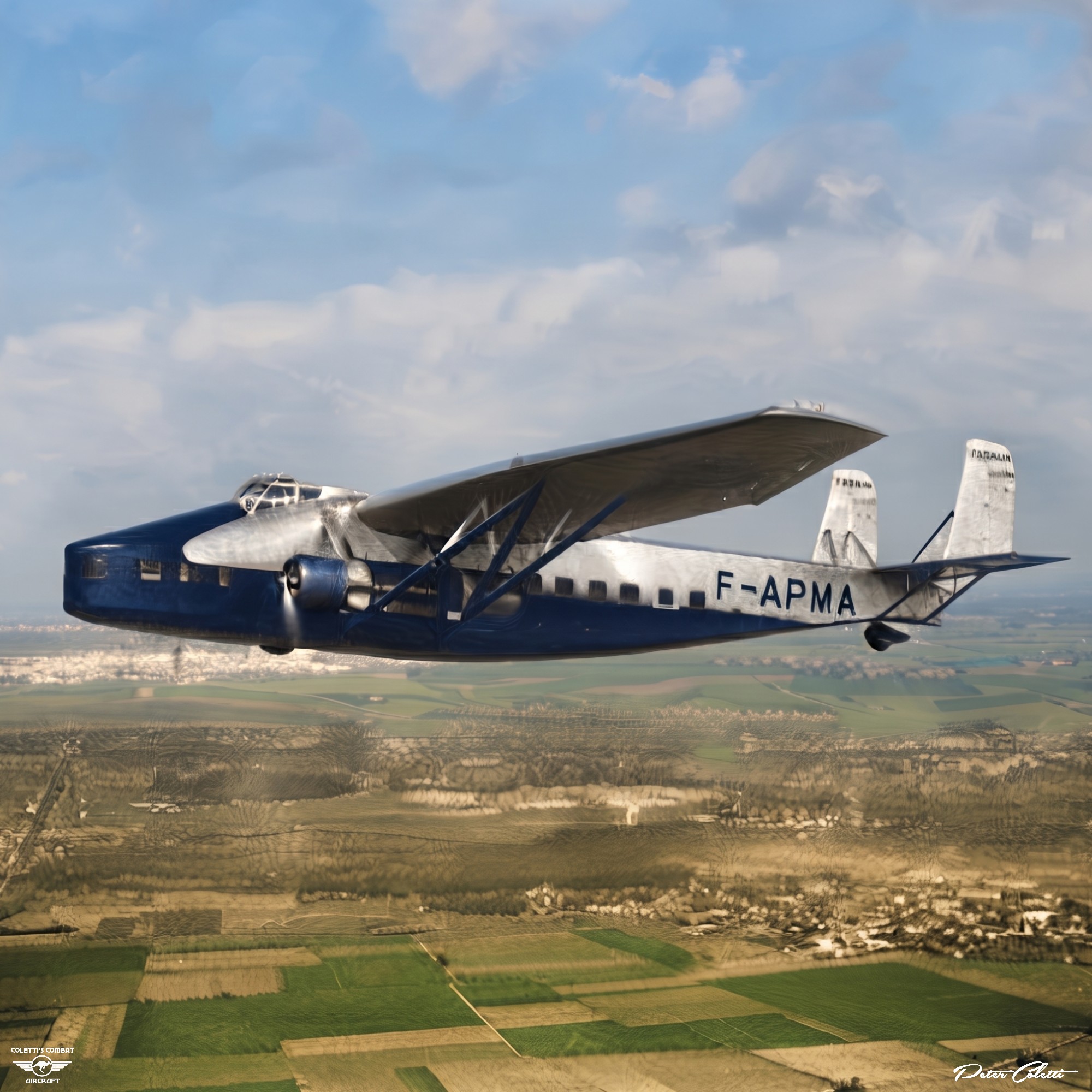
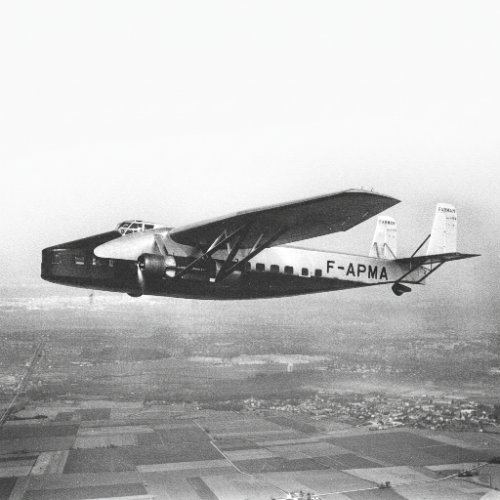
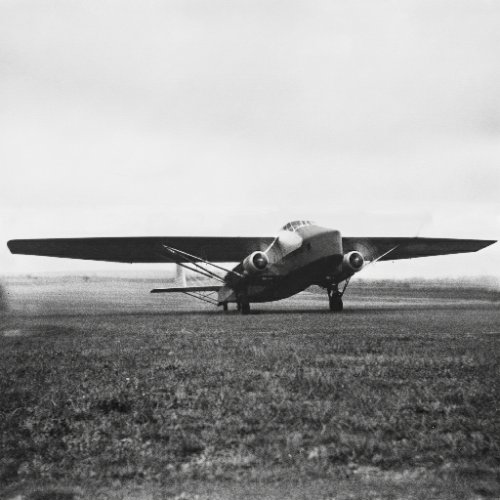
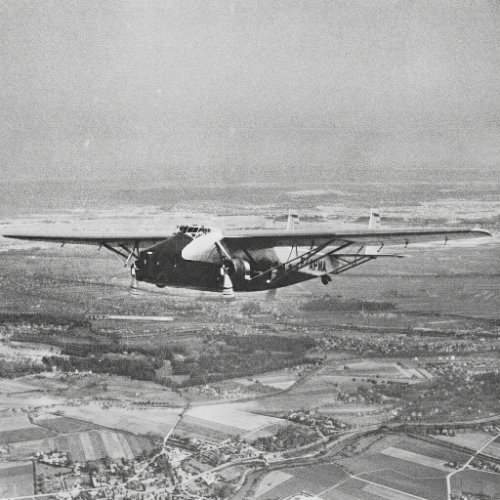
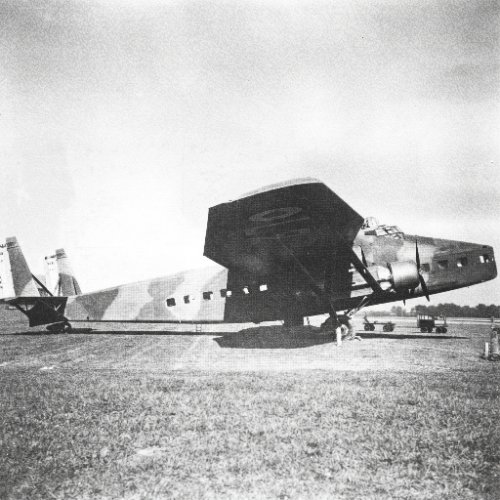
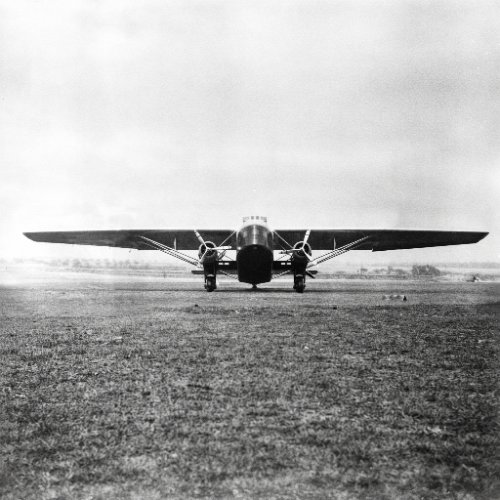
The Farman F.224 was a large four-engined French transport aircraft developed during the late 1930s by the Farman aviation company.
Although designed as a modern commercial airliner for Air France, it ultimately found its principal role as a military transport and paratrooper aircraft in French service during the opening stages of the Second World War.
The type represented the final civil development of the Farman F.220 bomber family and reflected French efforts to create high-capacity airliners capable of serving major European routes.
However, operational shortcomings prevented it from achieving success as a commercial aircraft, and its career became closely tied to France’s desperate military situation between 1939 and 1942.
Origins and Development
The origins of the F.224 can be traced directly to the Farman F.220 series of heavy bombers.
During the early 1930s, Farman had developed a family of large four-engined aircraft characterised by a high-mounted wing, a deep fuselage, and tandem push-pull engine installations.
These aircraft became the largest bombers operated by France during the interwar years.
In parallel with military development, the French aviation industry sought to expand commercial air transport.
Air France desired a large airliner capable of carrying substantial numbers of passengers on domestic and international routes such as Paris-London and Paris-Marseille.
Farman therefore adapted the successful F.222 military airframe into a purpose-built civil transport.
The resulting design became the Farman F.224. A new fuselage was created specifically for passenger service, while retaining much of the wing and structural arrangement of the bomber family.
The prototype appeared during 1936, and six examples were ordered before testing had been completed.
Air France expected the aircraft to become one of the largest passenger transports operating in Europe.
Despite impressive capacity and modern features, flight testing revealed serious drawbacks.
The aircraft required long take-off runs, and its performance following engine failure was viewed as inadequate.
Due to these shortcomings, Air France refused to accept the type for regular commercial service and cancelled its intended operations.
Rather than scrapping the programme, the French Air Force acquired all six aircraft and converted them for military use.
This decision effectively transformed the F.224 from a failed airliner into a military transport aircraft on the eve of war.
Design Features
General Configuration
The Farman F.224 was a large high-wing monoplane of mixed construction.
Although visually unusual, its design reflected contemporary French ideas regarding heavy aircraft.
The aircraft featured:
A thick cantilever high wing.
Four radial engines.
Fixed crew positions within an elevated cockpit.
Retractable landing gear.
A broad fuselage capable of carrying large payloads.
Twin vertical tail surfaces.
The overall layout was derived from the Farman bomber family and was intended to provide structural strength, internal volume, and long-range capability.
Engine Arrangement
One of the most distinctive aspects of the F.224 was its push-pull engine configuration.
Instead of placing four engines separately along the wing, Farman grouped them into two nacelles mounted on short stub wings extending from the fuselage.
Each nacelle housed:
One tractor (pulling) engine at the front.
One pusher engine at the rear.
This arrangement reduced asymmetric drag compared with conventional multi-engine aircraft and allowed a shorter wingspan than would otherwise have been required.
It also reflected Farman’s experience with earlier heavy aircraft.
Production aircraft used four Gnome-Rhône 14K-series radial engines, producing approximately 815-825 horsepower each.
Passenger Accommodation
The F.224 was highly ambitious as an airliner for its era.
Its spacious fuselage was designed to accommodate approximately 40 passengers, making it one of the largest European commercial aircraft of the 1930s.
Passenger comfort received considerable attention.
The cabin included:
Separate passenger compartments.
Lavatory facilities.
Luggage space.
A bar area.
Improved interior amenities compared with many contemporary airliners.
The cockpit was situated above the forward passenger section, giving the crew excellent visibility.
Flight Crew
In civil configuration the crew typically consisted of:
Pilot.
Flight engineer.
Radio operator/navigator.
Some sources identify a two-person operating crew in basic specifications, though practical airline operation generally required additional personnel.
Technical Specifications
The Farman F.224 was a four-engined transport aircraft manufactured by Farman in France.
Its wingspan measured 36 metres (118 feet), while overall length was 23.35 metres (76.6 feet) and height was 5.19 metres (17 feet).
The wing area amounted to approximately 186 square metres.
Power was provided by four Gnome-Rhône 14K-series radial engines, each developing between 815 and 825 horsepower depending on the specific engine subtype fitted.
These engines were installed in the distinctive Farman push-pull arrangement, with each nacelle carrying one tractor engine and one pusher engine.
The aircraft had a maximum take-off weight of approximately 16,270 kilograms.
Maximum speed was around 310 kilometres per hour (193 miles per hour), while normal cruising speed was approximately 280 kilometres per hour.
Operational range varied according to configuration and source but generally fell between 1,200 and 2,100 kilometres.
The service ceiling was approximately 4,900 metres (16,000 feet).
In its original civil configuration, the F.224 was designed to carry up to forty passengers in a spacious airliner cabin.
Crew numbers varied according to role, although civil operations normally required between three and four personnel.
Military transport conversions could accommodate approximately thirty-nine paratroopers and their equipment in place of the passenger seating.
Conversion to Military Service
After Air France rejected the aircraft, all six examples were transferred to the Armée de l’Air.
France was at the time exploring airborne operations and needed transport aircraft capable of carrying large numbers of troops.
The F.224’s spacious fuselage made it a logical candidate despite its shortcomings as an airliner.
The military version became known as the F.224 TT (Transport de Troupes, or troop transport).
Major modifications included:
Conversion for airborne assault operations.
Installation of military equipment.
Accommodation for approximately 39 paratroopers.
Addition of defensive machine guns.
Provision for a small bomb load.
The modified aircraft entered service between 1939 and the beginning of the Second World War.
Operational Service
French Air Force Use
The F.224 served primarily with France’s early airborne forces.
Aircraft were operated by:
Groupe d’Infanterie de l’Air 601
Groupe d’Infanterie de l’Air 602
These units represented the beginnings of French military parachute forces before the German invasion of 1940.
Although the aircraft possessed impressive carrying capacity, only six examples existed.
Consequently, their operational influence remained limited.
During the Battle of France
When Germany invaded France in May 1940, the F.224 force was small and scattered.
The aircraft served primarily in transport roles rather than major offensive airborne operations.
The rapid collapse of France prevented any large-scale employment of the aircraft as strategic troop carriers.
Instead, they were utilised where possible for transport and support duties amid the deteriorating military situation.
Vichy French Service
After the French armistice of June 1940, surviving aircraft came under the control of Vichy French authorities.
Several continued operating in North Africa and other areas under Vichy administration.
Their large carrying capacity made them useful despite their age and specialised design.
At least one aircraft survived until Operation Torch in November 1942, when Allied forces invaded French North Africa.
One F.224 was reportedly destroyed during the fighting.
Variants
F.224
The basic civil transport version.
Characteristics included:
Forty-passenger accommodation.
Commercial interior fittings.
Intended Air France service.
Four Gnome-Rhône radial engines.
F.224 TT
Military transport adaptation.
Features included:
Transport capability for around 39 paratroopers.
Military equipment installation.
Defensive armament.
Limited bomb-carrying capability.
Service with French airborne units.
Assessment
The Farman F.224 occupied an unusual place in aviation history.
It was conceived as a modern commercial airliner but never fulfilled its intended purpose.
Air France’s rejection essentially ended its civilian future before that future had truly begun.
Nevertheless, the aircraft demonstrated several important trends:
Growth in European airliner size during the late 1930s.
Use of military airframes as the basis for civil transports.
Early experimentation with large airborne troop transports.
The French search for strategic air mobility prior to the Second World War.
From a technological perspective, it represented one of the final developments of the distinctive Farman push-pull aircraft family.
While later transport aircraft adopted cleaner and more efficient configurations, the F.224 remains a noteworthy example of French interwar engineering and a transitional design linking heavy bombers with large passenger transports.
Legacy
Only six Farman F.224s were built.
No examples are known to survive today.
Although overshadowed by more successful aircraft such as the Douglas DC-3 and contemporary European airliners, the F.224 remains significant as:
The largest Farman airliner produced in series.
A direct civil derivative of France’s principal interwar heavy bomber family.
One of the earliest French aircraft adapted specifically for paratroop transport.
A symbol of the ambitious but often troubled French aviation programmes of the late 1930s.
The Farman F.224 ultimately stands as a rare example of a commercial aircraft that found its true career in military service, illustrating both the strengths and limitations of French aviation on the eve of the Second World War.