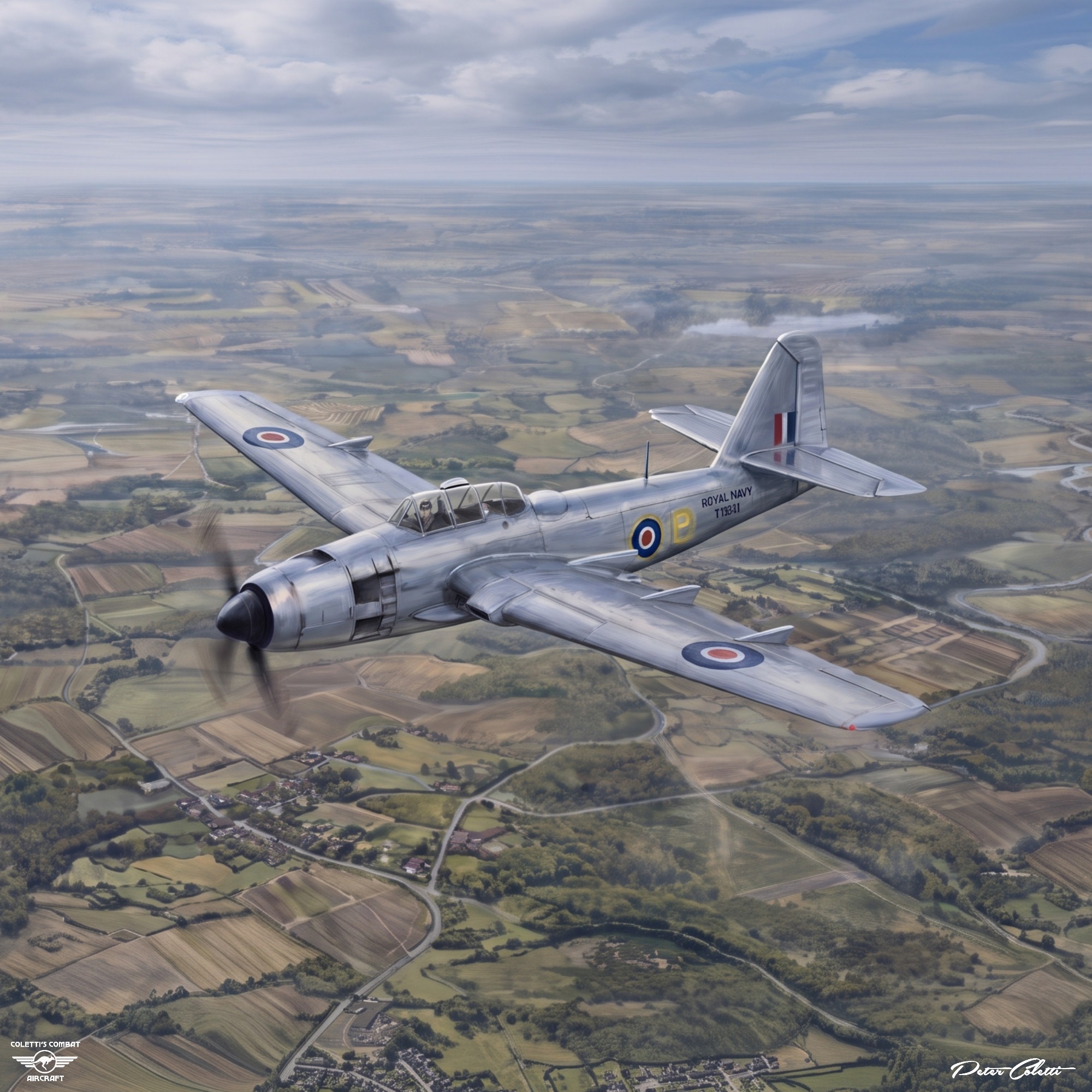
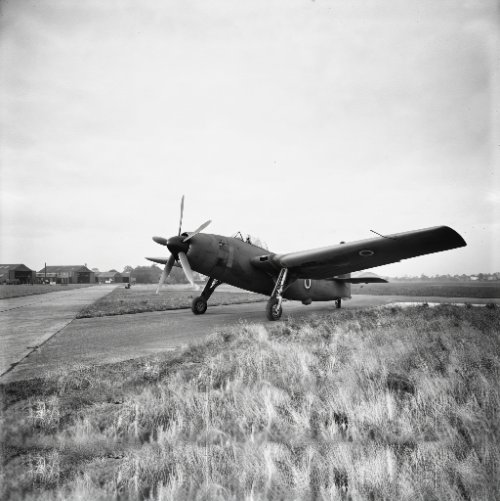
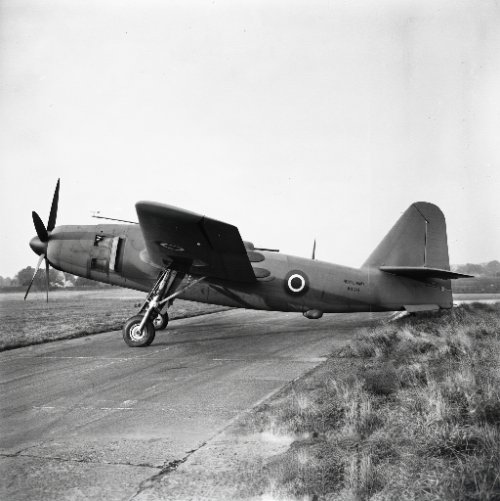
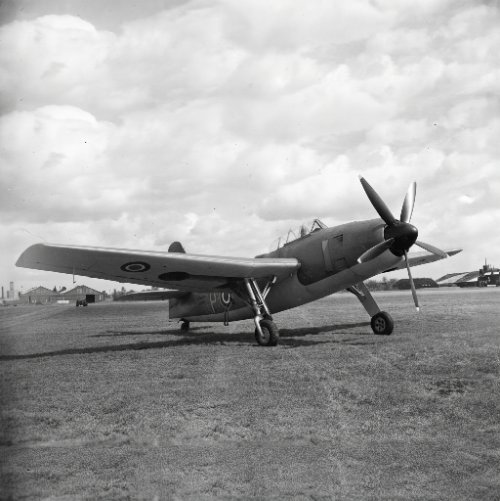
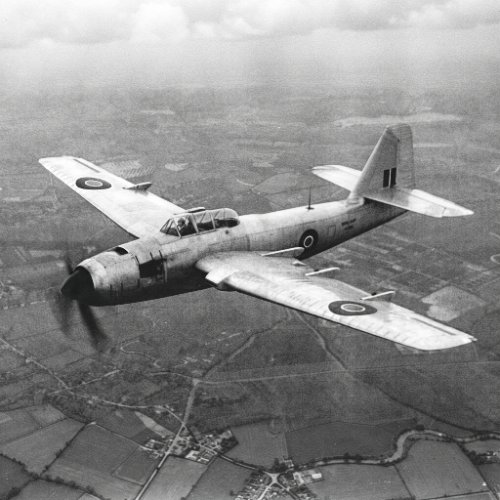
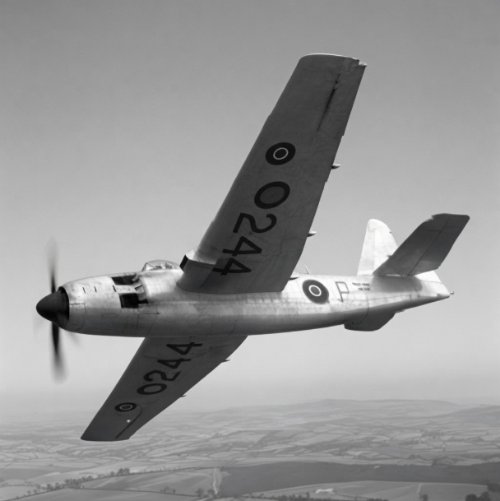
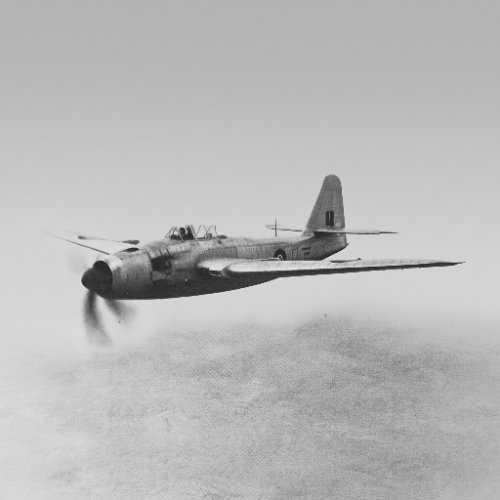
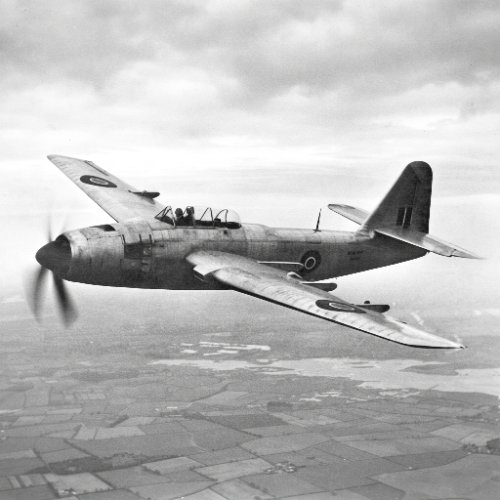
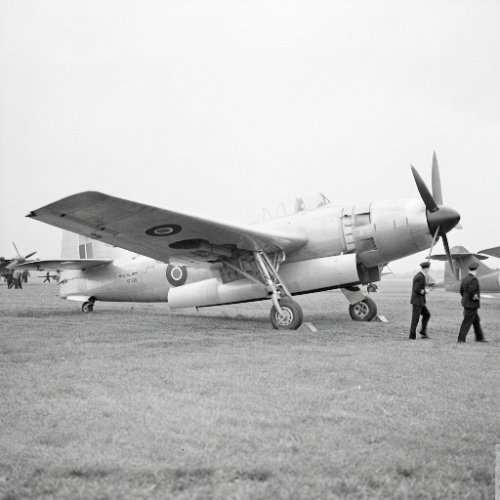
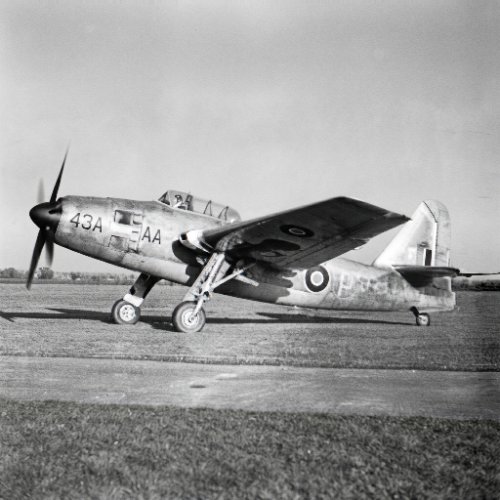
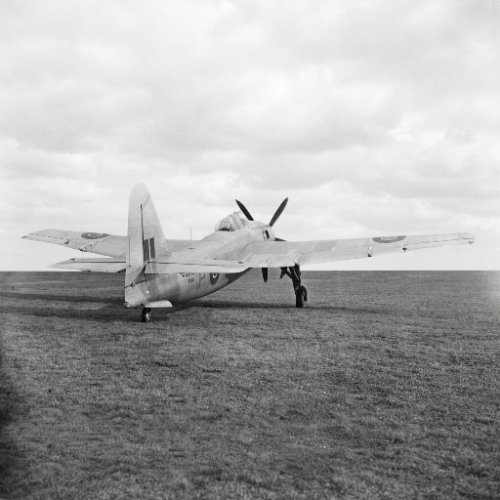
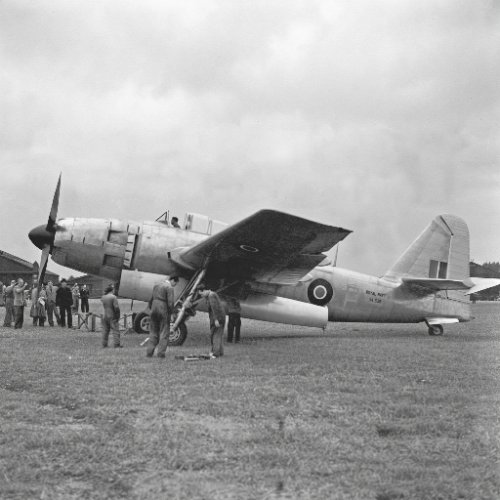
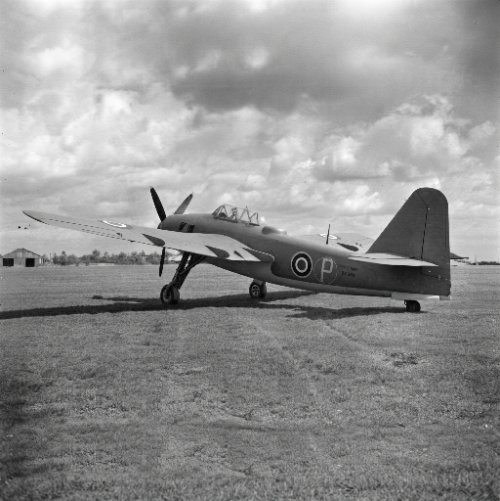
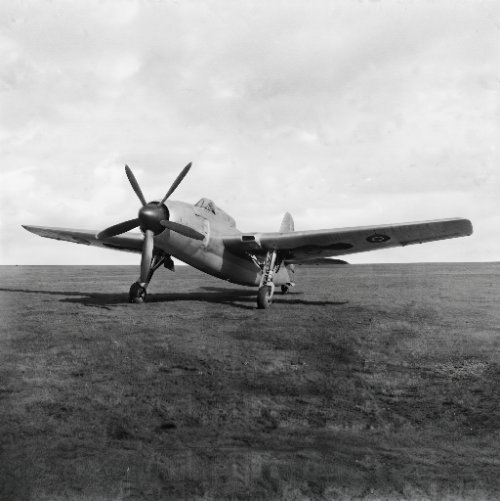
The Fairey Spearfish was the final and largest piston‑engined strike aircraft designed by Fairey Aviation during WWII.
Conceived as a successor to the Fairey Barracuda, it embodied the Royal Navy’s late‑war ambition for a powerful, long‑range torpedo/dive bomber suitable for the massive Malta‑class carriers then under construction.
Although technically advanced, the Spearfish flew too late—its first flight occurred in July 1945, after Germany’s surrender—and the programme was cancelled before production.
Only five prototypes were completed, and none entered operational service.
Development History
Admiralty Specification O.5/43
In August 1943, the Admiralty issued Specification O.5/43, calling for a two‑seat, single‑engine torpedo/dive bomber with far greater performance, payload, and range than the Barracuda.
The aircraft needed to operate from the huge Malta‑class carriers and incorporate:
A powerful radial engine
Internal bomb/torpedo bay
Radar for surface search
Strong dive‑bombing structure
Long endurance for Pacific operations
Fairey proposed two designs—one twin‑engined, one single‑engined.
The Admiralty selected the single‑engine Bristol Centaurus concept.
Prototype Construction
The first prototype, RA356, was built at Fairey’s Hayes factory and flew on 5 July 1945.
Two additional prototypes flew in 1947, and further airframes were completed but never flown.
In total:
7 prototypes ordered
5 completed
4 flown
All were used for experimental work until scrapped by 1952.
Programme Cancellation
The Spearfish was designed specifically for the Malta‑class carriers—when these were cancelled after WWII, the Fleet Air Arm no longer needed a large torpedo bomber.
Production orders for 150 aircraft were terminated, and development slowed to a crawl.
Design and Technical Characteristics
Airframe
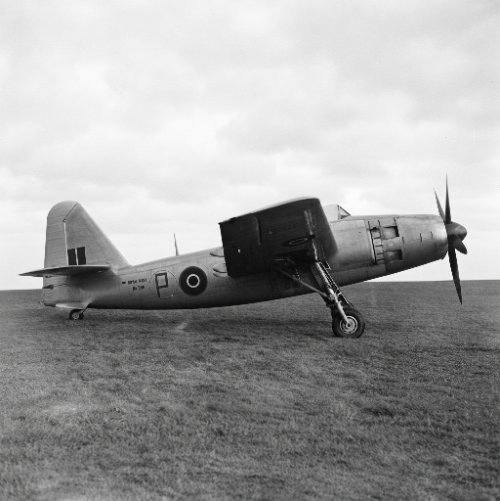
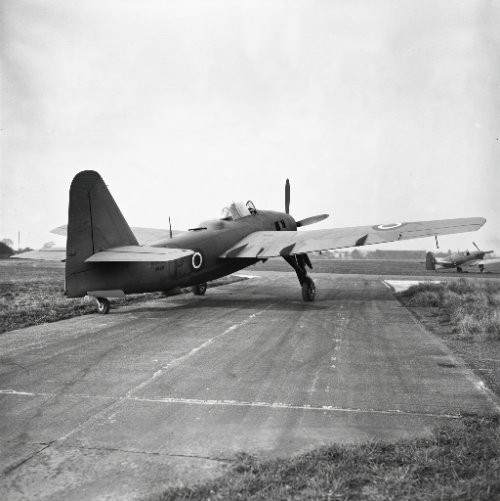
The Spearfish was half again as large as the Barracuda, making it one of the largest single‑engine naval aircraft ever built.
Key features included:
Mid‑mounted straight wings with clipped tips
Tail‑dragger undercarriage
Large internal weapons bay capable of carrying a torpedo or bombs
Retractable ASV Mk.XV radar behind the bomb bay
Spoiler‑based lateral control with small “feeler” ailerons
Enlarged flaps for carrier operations
Its size and structural strength reflected its intended role as a heavy strike aircraft for long‑range Pacific missions.
Crew
Pilot
Observer/gunner, operating radar and defensive armament
Powerplant
The prototypes used the Bristol Centaurus 57, an 18‑cylinder radial engine producing 2,585 hp, driving a five‑bladed propeller.
Later prototypes were planned to use the Rolls‑Royce Pennine, but none flew with it.
Armament
The Spearfish was heavily armed for a two‑seat strike aircraft:
Two 0.50‑in Browning machine guns in the wings
Two 0.50‑in guns in a dorsal barbette (observer‑controlled)
Internal bay for a 2,000‑lb torpedo, bombs, or depth charges
Up to 16 RP‑3 rockets under the wings
This combination made it a formidable torpedo/dive bomber on paper.
Performance (Prototype Data)
From flight‑test results:
Maximum speed: ~298 mph (480 km/h) at sea level
Range: 556 miles (895 km)
Service ceiling: 23,622 ft (7,200 m)
Length: 44 ft 11 in (13.69 m)
Wingspan: 60 ft (18.29 m)
Height: 16 ft 1 in (4.90 m)
Empty weight: 12,434 lb (5,640 kg)
Max takeoff weight: 22,046 lb (10,000 kg)
Test pilot Captain Eric Brown noted that the controls were extremely heavy, especially the ailerons, which he could “barely move with one hand at 130 knots.”
Variants and Prototypes
Spearfish Prototype Series
RA356 – First flight, 5 July 1945
Two additional Centaurus‑powered prototypes flew in 1947.
Dual‑control trainer variant – Built under Specification T.21/43, flew 20 June 1946
Pennine‑engined prototypes – Ordered but never flown
Planned Production Variant
Spearfish TD Mk I
150 ordered, none built
Operational and WWII Context
Intended Role
The Spearfish was designed for:
Torpedo attacks
Dive‑bombing
Anti‑submarine warfare
Long‑range Pacific operations
Radar‑assisted maritime strike
Its capabilities were tailored to the Malta‑class carriers, which would have been the largest British carriers ever built.
Why It Never Entered Service
By the time the Spearfish flew:
WWII in Europe had ended.
Japan surrendered weeks later.
The Malta‑class carriers were cancelled.
Naval aviation shifted towards multi‑role aircraft and jets.
Thus, the Spearfish became obsolete before it could be deployed.
Postwar Use
The prototypes served as:
Engine testbeds
Radar trials aircraft
Aerodynamic research platforms
All were scrapped by 1952.
Assessment and Legacy
The Fairey Spearfish represents:
The last generation of large British piston‑engined strike aircraft
A design optimised for a carrier class that never materialised
A technologically advanced but ill‑timed project
A bridge between WWII torpedo bombers and postwar multi‑role naval aircraft
Although it never entered service, the Spearfish remains a fascinating example of late‑war British naval aviation—ambitious, powerful, and ultimately overtaken by history.