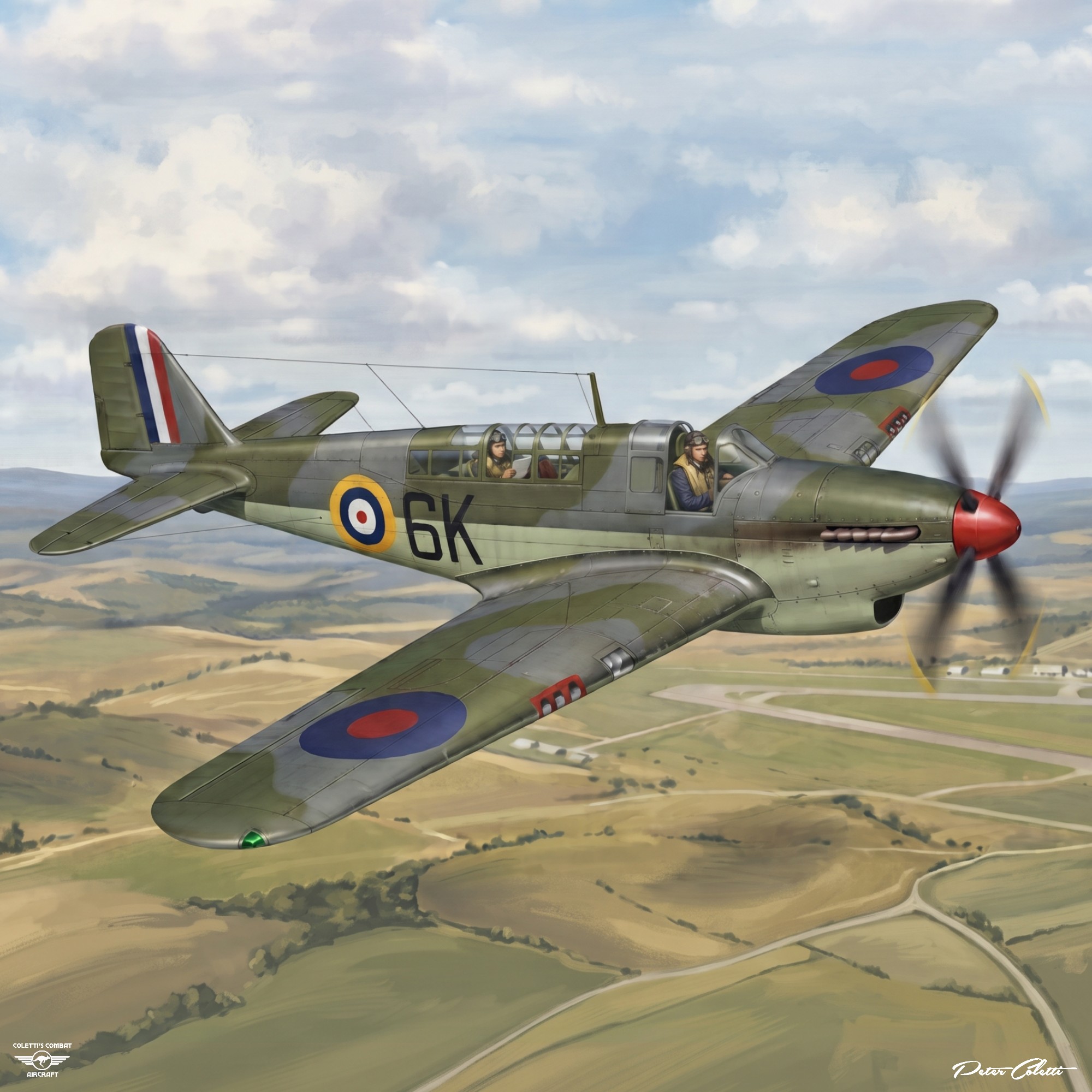
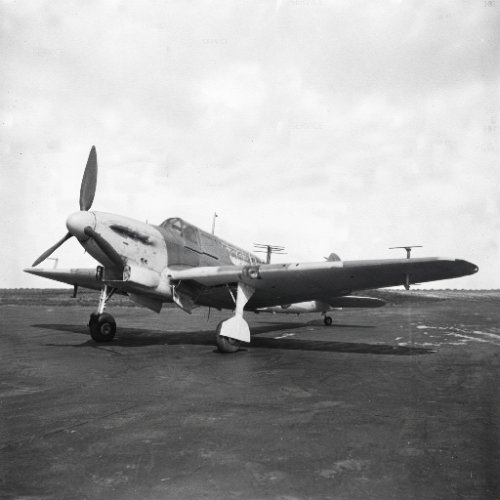
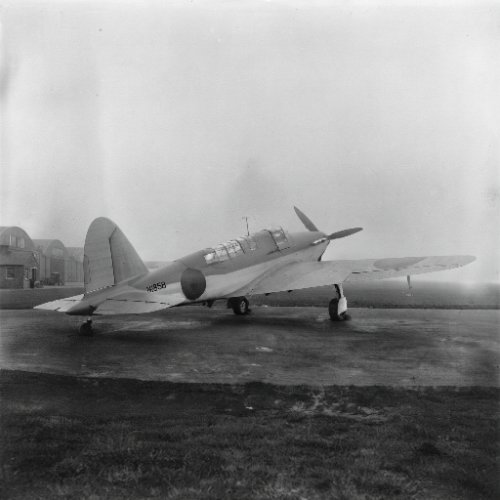
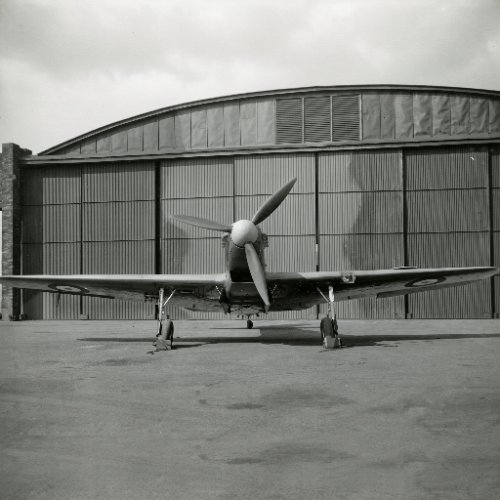
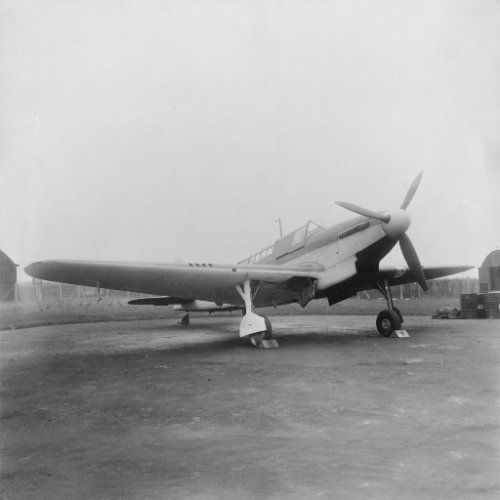
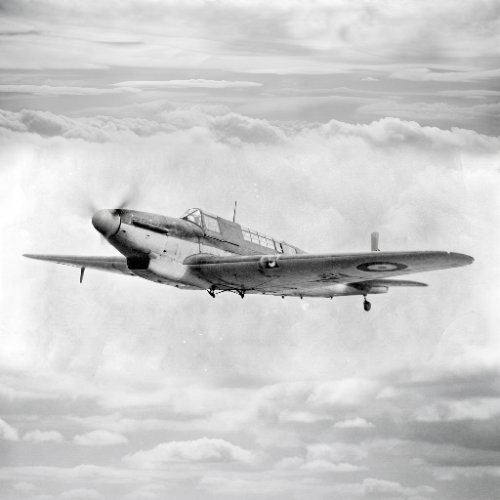
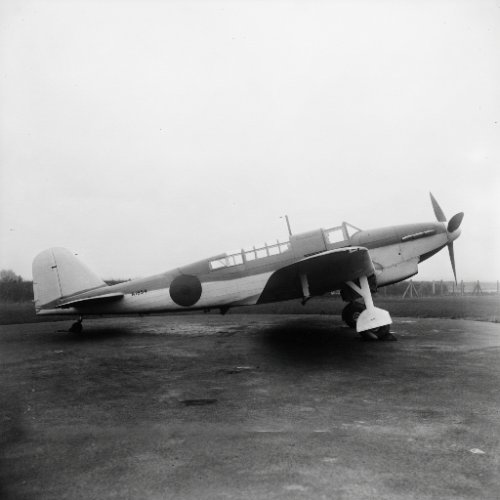
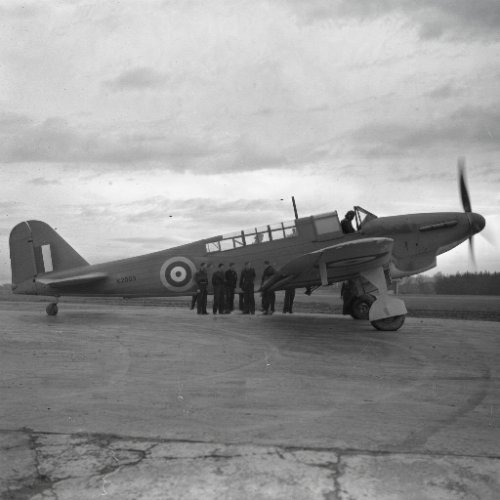
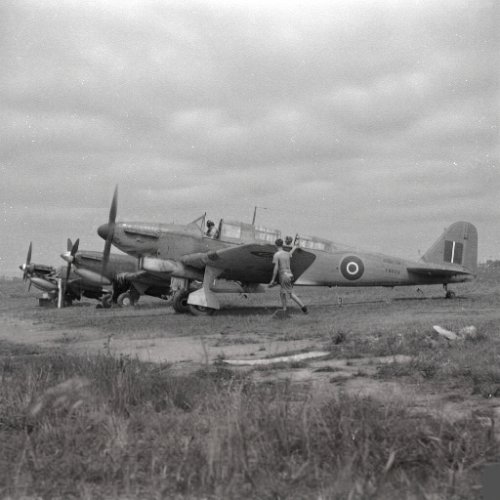
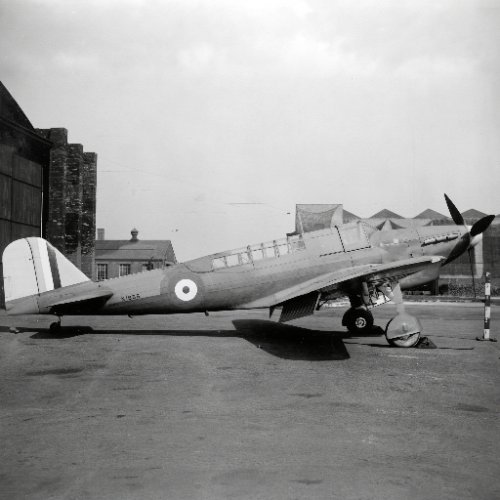
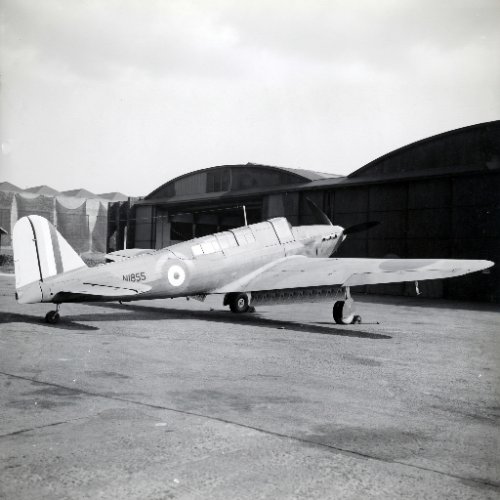
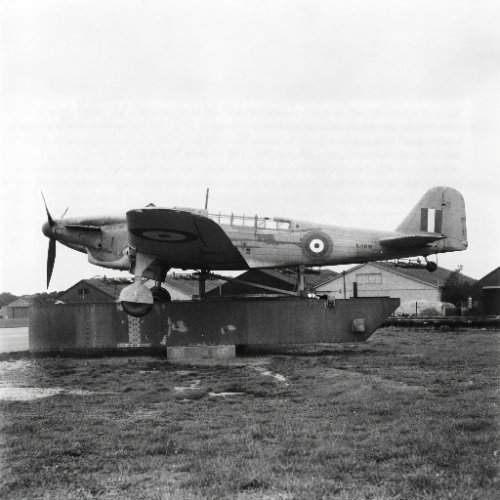
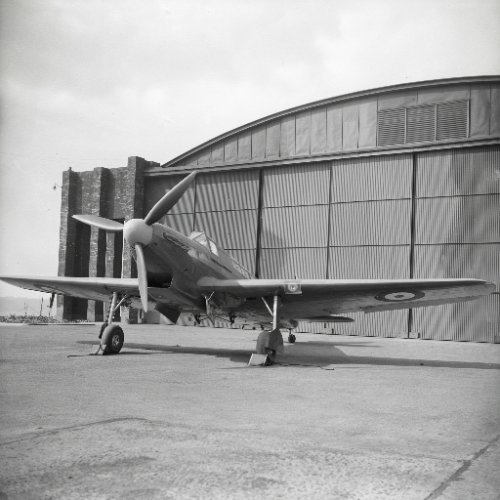
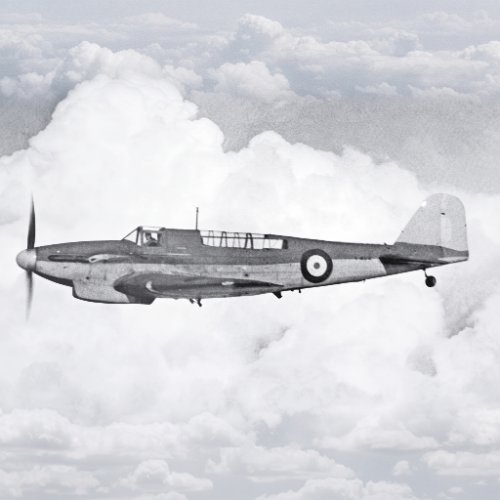
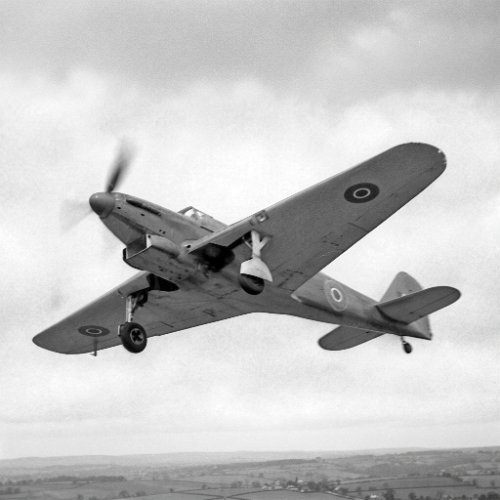
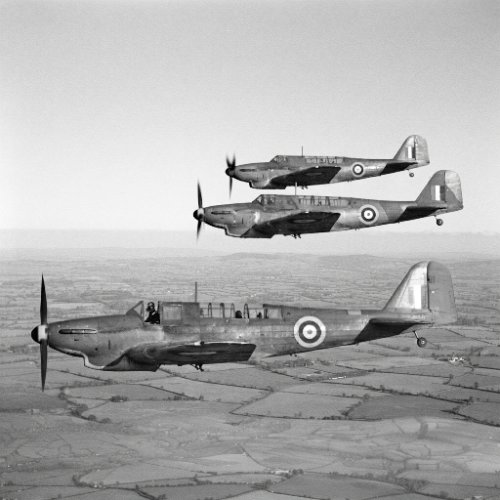
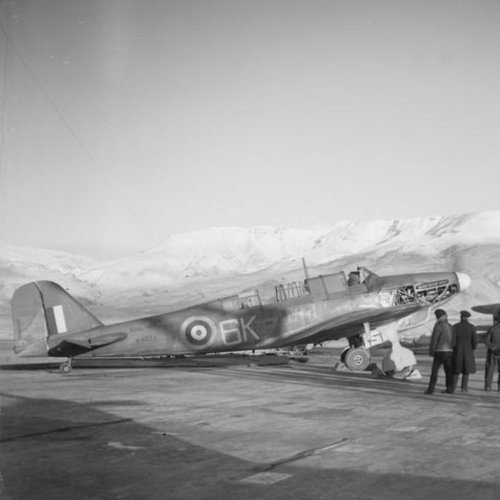
The Fairey Fulmar originated from the Fairey P.4/34 light bomber prototype of 1936, which the Air Ministry had originally considered as a replacement for the Fairey Battle.
In 1938, the Fleet Air Arm issued Specification O.8/38, calling for a two‑seat, long‑range carrier‑borne reconnaissance fighter.
Fairey adapted the P.4/34 into a navalised fighter design, emphasising endurance, reliability, and heavy armament rather than high speed.
The Admiralty insisted on a second crew member—an observer/navigator—because carrier fighters needed long‑range navigation capability to return safely to ships in poor weather or at night.
This requirement shaped the Fulmar’s size, weight, and performance characteristics.
The first prototype flew on 4 January 1940, and the type entered service on 10 May 1940. Production was rapid due to wartime urgency.
Design and Technical Characteristics
Airframe and Layout
The Fulmar was a low‑wing, all‑metal monoplane with:
Folding wings for carrier stowage.
Arrester hook and strengthened undercarriage for deck landings.
Two‑seat tandem cockpit, with the pilot forward and the observer aft.
A large, sturdy airframe prioritising range and stability over agility.
The design was reliable and easy to handle on carrier decks, though its size made it less manoeuvrable than single‑seat fighters.
Powerplant
The Fulmar was powered by Rolls‑Royce Merlin engines:
Mk I: Merlin VIII, 1,080 hp.
Mk II: Merlin 30/XXX, 1,300 hp, improving speed and ceiling.
Armament
The Fulmar carried:
Eight forward‑firing 0.303‑in Browning machine guns, matching the armament philosophy of early Hurricanes and Spitfires.
Optional 0.303‑in Vickers K defensive gun for the observer.
Up to 500 lb of bombs for light strike missions.
This made the Fulmar the Fleet Air Arm’s first eight‑gun fighter.
Performance
Fulmar Mk I
Max speed: 247 mph
Range: 800 miles
Service ceiling: 21,500 ft
Dimensions: 40 ft 2 in length; 46 ft 4 in wingspan
Max take-off weight: 9,700 lb
Fulmar Mk II
Max speed: 266 mph
Service ceiling: 27,200 ft
Although slower than land‑based fighters, the Fulmar’s range and firepower made it effective in naval operations where endurance and multi‑crew capability were essential.
Variants
Fulmar Mk I
Initial production model.
Merlin VIII engine.
250 built.
Fulmar Mk II
Improved Merlin 30/XXX engine.
Topicalisation equipment for overseas service.
350 built.
Over 100 converted to the night‑fighter configuration with radar.
Total production: 600 aircraft (1940–1943).
Operational History and WWII Context
Early Service
The first squadron to receive the Fulmar was 806 Naval Air Squadron in July 1940.
The aircraft quickly entered combat, participating in the hunt for the German battleship Bismarck, acting as a spotting aircraft for the pursuing fleet.
Mediterranean Theatre
The Fulmar saw extensive action in the Mediterranean:
Defence of Malta and convoy escort.
Battle of Cape Matapan, providing fighter cover for Swordfish torpedo bombers.
By autumn 1940, Fulmars had recorded ten Italian bombers and six fighters shot down.
Its heavy armament and long range made it effective against Italian aircraft, which were generally slower and lightly armed.
North African and Middle Eastern Operations
Fulmars flew convoy protection and reconnaissance missions across the North African theatre, often operating from carriers supporting ground operations and maritime interdiction.
Far East
In the Pacific, the Fulmar struggled against the Mitsubishi A6M Zero, whose superior speed and agility exposed the Fulmar’s limitations as a fighter.
Decline and Replacement
By 1942–43, the Fulmar was increasingly replaced by:
Supermarine Seafire (single‑seat British naval fighter)
The Fulmar continued in training and reconnaissance roles until its withdrawal from frontline service in February 1945.
Combat Record
Despite its modest performance, the Fulmar achieved 122 confirmed aerial victories, making it the highest‑scoring Fleet Air Arm fighter of WWII.
Assessment and Legacy
The Fairey Fulmar was a stop‑gap naval fighter that balanced endurance, reliability, and firepower at the expense of speed and agility.
It was:
Highly effective in early‑war Mediterranean operations.
The FAA’s most successful fighter in terms of aerial victories.
A key transitional design between pre‑war two‑seat naval fighters and later single‑seat carrier fighters.
Although outclassed by land‑based fighters and late‑war naval aircraft, the Fulmar’s long range, sturdy construction, and eight‑gun armament made it invaluable during the critical early years of WWII.