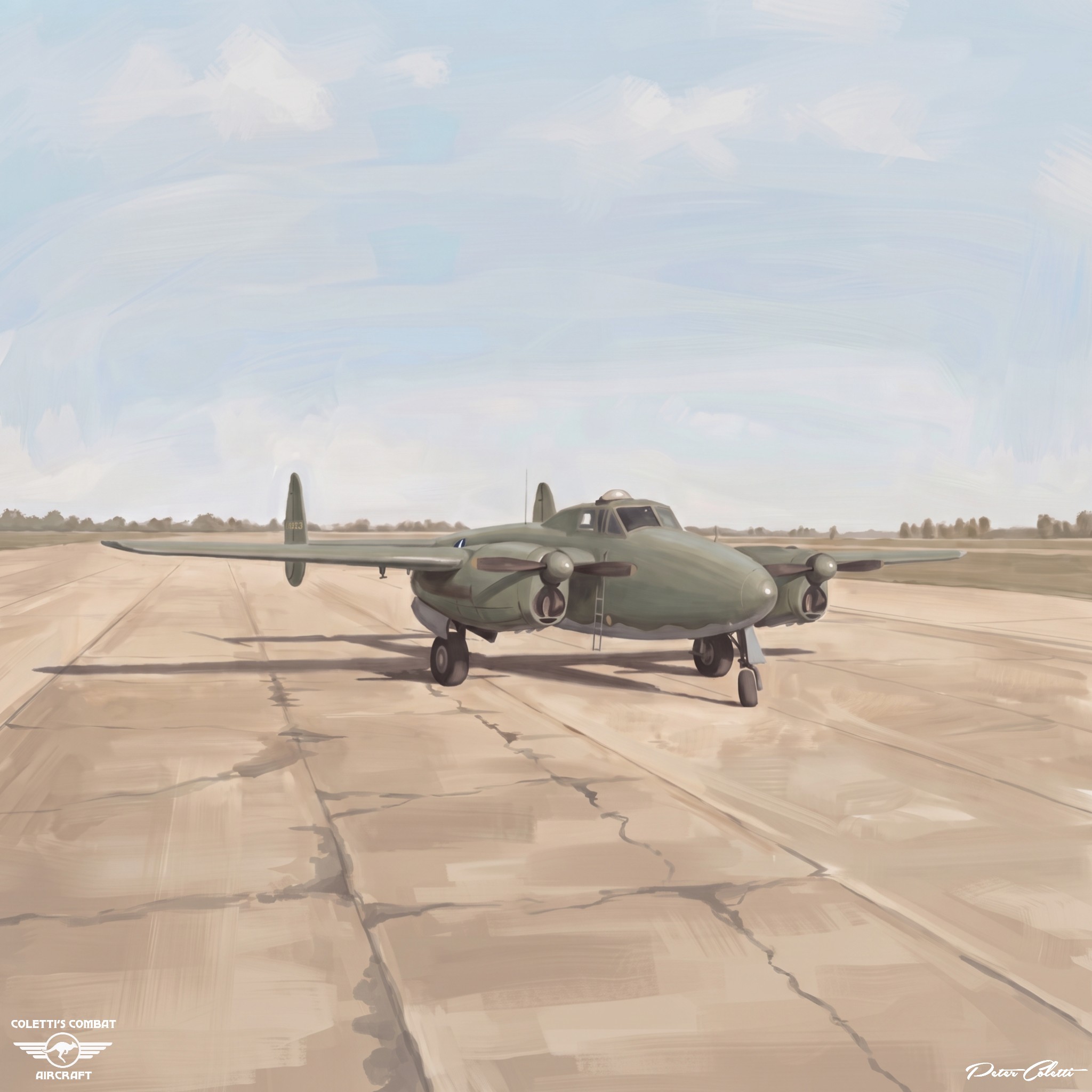
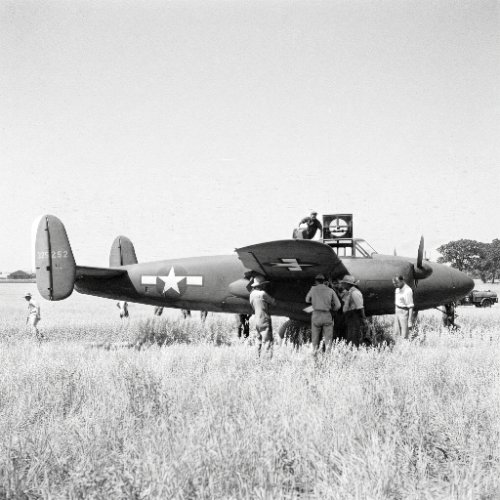
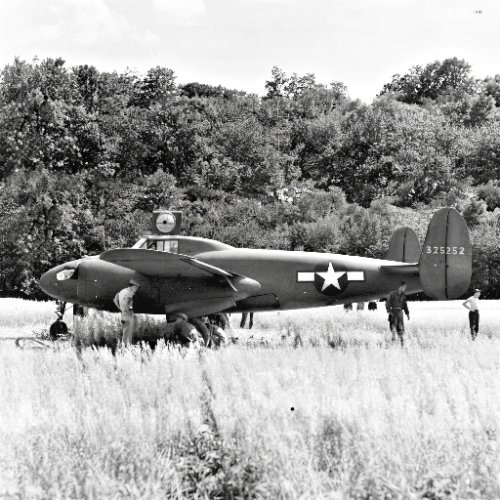
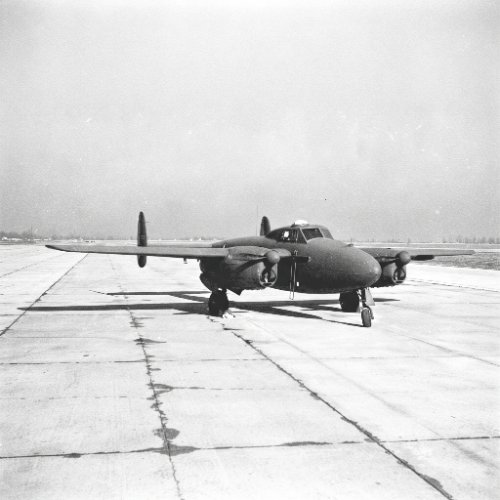
The Fairchild XBQ‑3 emerged from a rapidly evolving period in World War II when the United States Army Air Forces (USAAF) sought new ways to strike heavily defended targets without risking aircrews.
Beginning in early 1942, the USAAF initiated programmes to develop radio‑controlled “aerial torpedoes”, later termed assault drones, intended to deliver large explosive charges directly into enemy fortifications, infrastructure, and strategic sites.
This concept paralleled the growing interest in standoff weapons and remote‑controlled aircraft, reflecting both technological optimism and wartime urgency.
The XBQ‑3 was part of a family of experimental drones—including the Fleetwings BQ‑1 and BQ‑2 and the Interstate TDR—that attempted to bridge the gap between conventional bombers and emerging guided missile technology.
In October 1942, Fairchild Aircraft received a contract to build two prototypes of what would be designated the XBQ‑3, also known internally as the Model 79.
The project leveraged Fairchild’s existing AT‑21 Gunner advanced trainer, a twin‑engine aircraft already in USAAF service, providing a ready airframe adaptable to unmanned operation.
The XBQ‑3 was intended to be a large, expendable attack drone capable of delivering a 4,000‑lb (1,800‑kg) explosive payload—significantly more than earlier drone designs—and guided remotely via radio control supplemented by onboard television cameras transmitting imagery back to a “mother ship”.
Design and Engineering
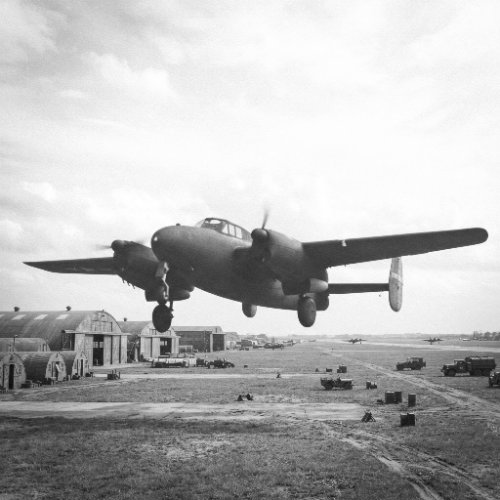
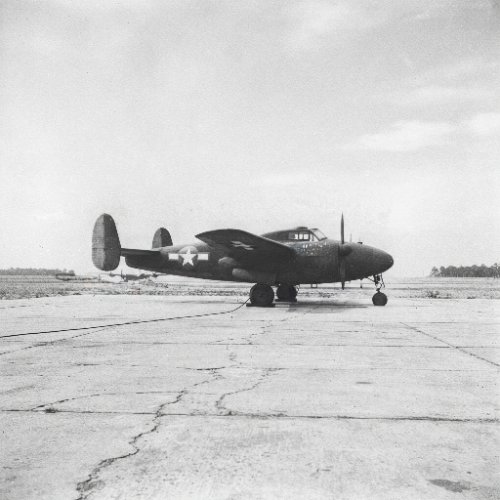
The XBQ‑3 retained the low‑wing monoplane configuration of the AT‑21 Gunner, including its twin‑finned tail and retractable tricycle landing gear, but incorporated substantial structural modifications to support its new mission.
The fuselage was reinforced to house the large warhead, and internal systems were adapted for remote operation.
Despite its intended unmanned role, Fairchild included a two‑seat cockpit for test flights, ferrying, and evaluation, allowing pilots to assess handling characteristics before switching to radio‑control modes.
Power came from two Ranger V‑770‑15 inline piston engines, each producing 520 hp (390 kW).
These engines provided adequate performance for a drone intended to fly straight towards a target rather than manoeuvre aggressively.
The XBQ‑3’s dimensions reflected its substantial payload capacity: a length of 52 ft 8 in (16.05 m), a wingspan of 37 ft (11 m), and a gross weight of 15,300 lb (6,940 kg).
Its maximum speed reached 220 mph (350 km/h), with a range of approximately 1,500 miles (2,400 km)—sufficient for deep‑penetration missions if launched from a safe distance.
The aircraft’s guidance system represented one of the most advanced drone control concepts of the era.
Television cameras mounted in the nose transmitted real‑time imagery to operators in a controlling aircraft, enabling remote steering towards the target.
This system was experimental and technologically ambitious, reflecting early attempts to integrate visual feedback into unmanned flight long before modern UAVs.
Flight Testing and Evaluation
The first XBQ‑3 prototype flew in July 1944, marking a significant milestone in the USAAF’s assault drone programme.
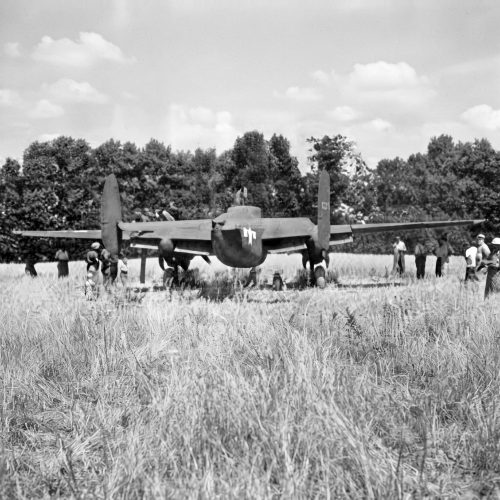
However, later that month, one of the prototypes suffered severe damage during a forced landing.
Testing continued with the remaining aircraft, demonstrating basic controllability via radio link and confirming that the airframe could carry and theoretically deliver its heavy payload.
Despite these successes, the XBQ‑3’s operational value quickly came into question.
Evaluators concluded that the drone offered no significant advantage over conventional bombers, which could already deliver comparable payloads with greater reliability.
More critically, rapid advances in guided missile technology—including weapons that promised higher accuracy, longer range, and simpler deployment—were rendering large, expendable aircraft drones obsolete even before they entered service.
By late 1944, the XBQ‑3 programme was cancelled.
Only two prototypes were built, and none entered operational use.
The aircraft thus became a transitional artefact: a bridge between early radio‑controlled drones and the guided missiles that would dominate postwar development.
Variants and Related Designs
The XBQ‑3 did not spawn direct variants, but it belonged to a broader lineage of USAAF assault drones:
Fleetwings BQ‑1 and BQ‑2: Smaller predecessors carrying lighter warheads; like the XBQ‑3, they were designed to be destroyed on impact.
Interstate TDR: A more successful assault drone that reached limited operational use in the Pacific.
Fairchild AT‑21 Gunner: The XBQ‑3’s parent aircraft, providing the structural and aerodynamic foundation for the drone.
Fairchild also proposed related designs such as the XBQ‑2 and XBQ‑2A, intended to use different engines and configurations, but these were never built or remained experimental concepts overshadowed by the XBQ‑3’s cancellation.
Role in WWII Technological Evolution
Although the XBQ‑3 never saw combat, its development reflects a critical moment in WWII military aviation.
The USAAF’s assault drone programme represented one of the earliest attempts to create large, remotely piloted strike aircraft, anticipating modern UAV concepts by decades.
The XBQ‑3 demonstrated the feasibility of integrating television guidance, heavy payloads, and remote control into a single platform.
However, the programme also revealed the limitations of mid‑war technology.
Radio control was unreliable, television transmission was primitive, and the drones lacked the precision and survivability needed for strategic missions.
As guided missiles matured—offering compactness, accuracy, and lower cost—the rationale for large expendable aircraft evaporated.
The XBQ‑3 thus stands as a technological stepping stone: an ambitious but ultimately superseded experiment that helped shape the trajectory of unmanned weapons development.
Summary
The Fairchild XBQ‑3 was a twin‑engine, radio‑controlled assault drone developed during WWII to deliver a massive explosive payload using television‑assisted remote guidance.
Built from the AT‑21 Gunner airframe, it featured a reinforced structure, two Ranger V‑770 engines, and a 4,000‑lb warhead capacity.
First flown in July 1944, it demonstrated basic feasibility but was quickly overtaken by guided missile technology.
Only two prototypes were built, and the programme was cancelled later that year.
Although never operational, the XBQ‑3 represents an important transitional step in the evolution of unmanned aerial weapons.