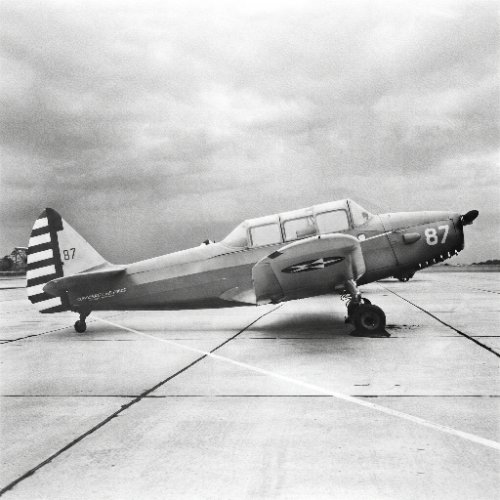
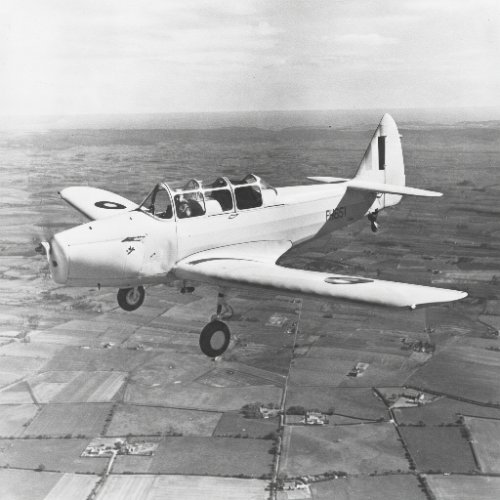
The Fairchild PT‑26 was developed as the cold‑weather, enclosed‑cockpit variant of the Fairchild M‑62 primary‑trainer family, which included the PT‑19 (open‑cockpit, inline engine) and PT‑23 (open‑cockpit, radial engine).
The lineage began with the PT‑19, first flown in 1939 and adopted by the U.S. Army Air Forces as a modern monoplane replacement for older biplane trainers.
As the British Commonwealth Air Training Plan (BCATP) expanded in Canada, the Royal Canadian Air Force (RCAF) required a trainer suitable for harsh winter climates.
Fairchild responded by designing the PT‑26 with an enclosed cockpit and improved heating, while retaining the PT‑19’s basic airframe and Ranger inline engine.
The PT‑26 first flew on 9 July 1942 and entered large‑scale production in Canada by Fleet Aircraft Ltd. of Fort Erie, Ontario.
Design and Construction
Airframe and Layout
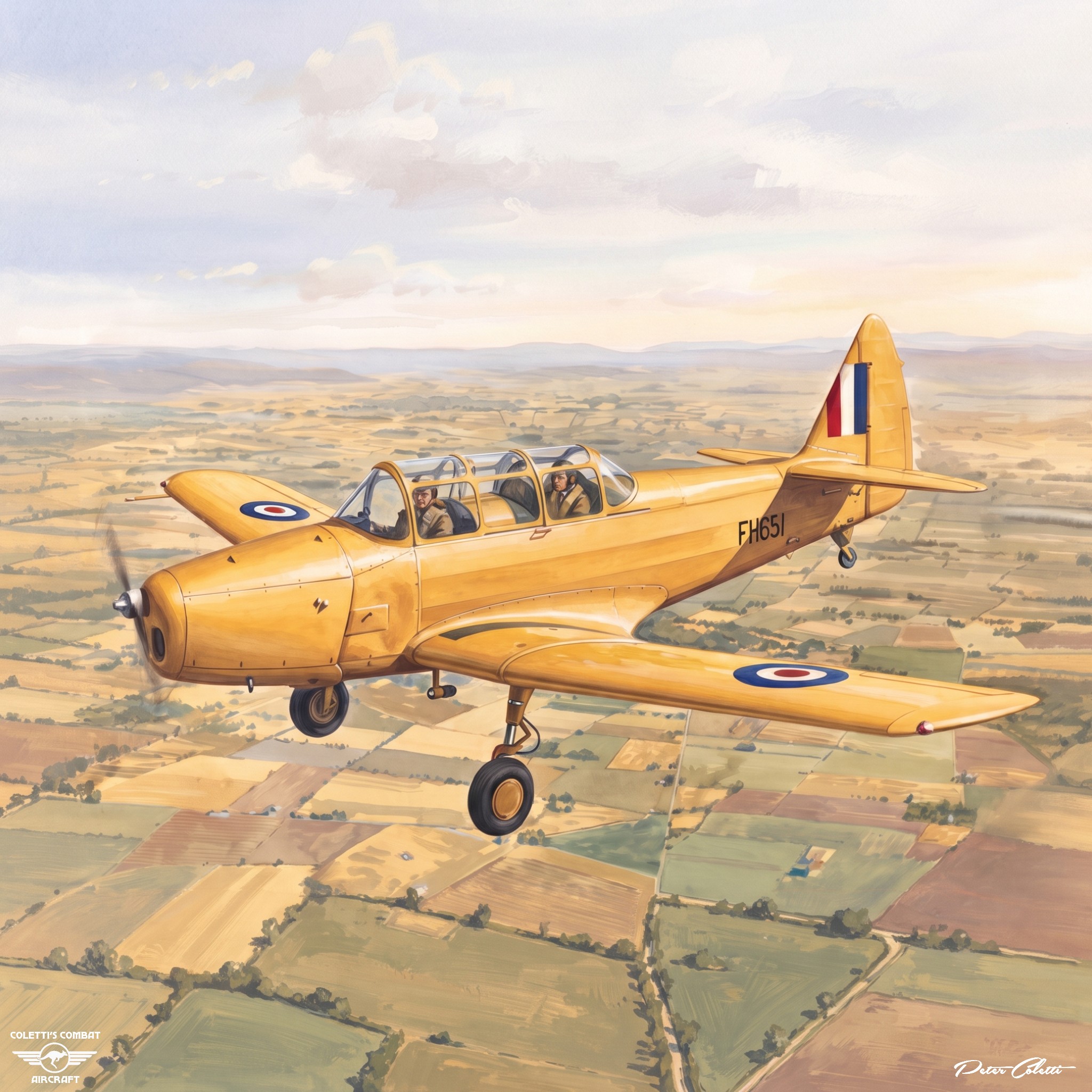
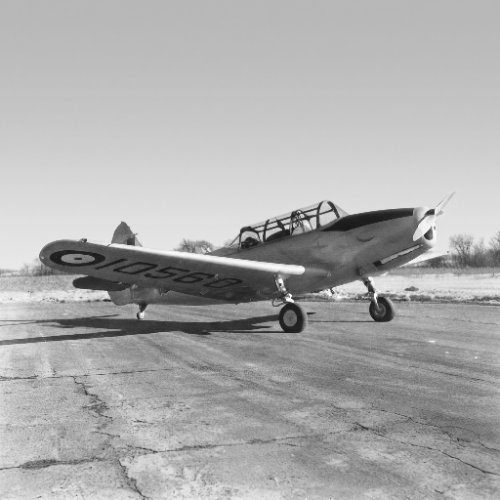
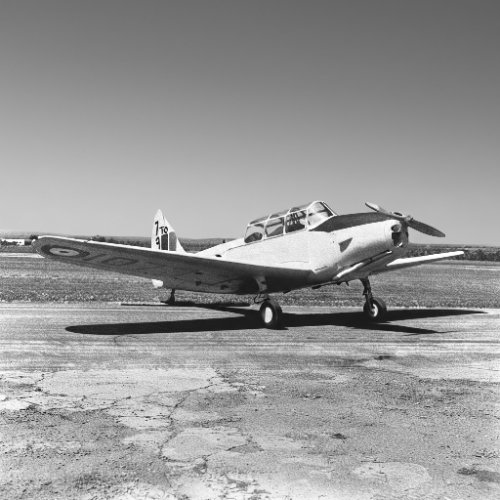
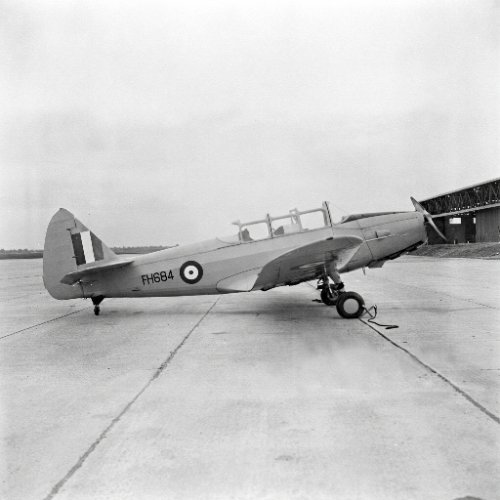
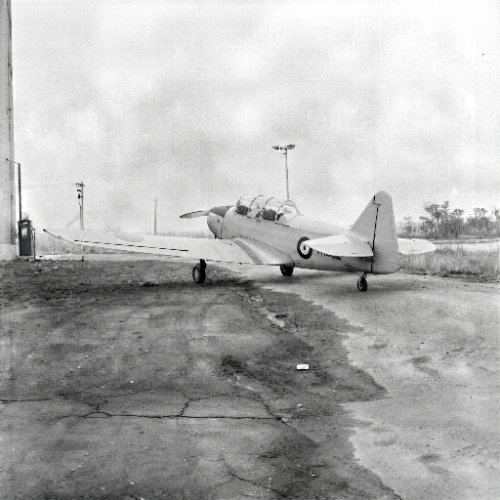
The PT‑26 is a two‑seat, tandem, low‑wing monoplane primary trainer.
Its construction closely follows the PT‑19:
Fuselage: Welded steel‑tube structure with fabric covering.
Wings: Wooden structure with plywood skin; hollow‑box spars and Duramold‑type techniques.
Landing gear: Fixed, wide‑track main gear with tailwheel, designed to reduce ground‑looping.
Cockpit: Fully enclosed canopy with cabin heating, optimised for Canadian winter operations.
The enclosed cockpit was the PT‑26’s defining feature, providing better protection for student pilots and instructors during year‑round training.
Handling Characteristics
The PT‑26 retained the M‑62 family’s reputation for:
Stable, predictable flight
Good stall behaviour
Fighter‑like control feels compared to earlier biplane trainers.
Push‑rod flight‑control linkages gave the aircraft a “solid” feel and precise response, described as flying “like a train on rails”.
Powerplant and Performance
The PT‑26 used the Ranger 6‑440 series of inverted inline six‑cylinder engines, typically producing 200 hp.
Representative Specifications (PT‑26B)
Wingspan: 11.3 m (36 ft 11 in)
Length: 8.7 m (28 ft 8 in)
Height: 2.3 m (7 ft 7 in)
Empty weight: 917 kg (2,022 lb)
Gross weight: 1,241 kg (2,736 lb)
Cruise speed: 162 km/h (101 mph)
Maximum speed: 196 km/h (122 mph)
Rate of climb: 197 m/min (645 ft/min)
Service ceiling: 4,020 m (13,200 ft)
Range: 692 km (430 mi)
Engine: Ranger 6‑440‑C5 or 6‑440‑65, 200 hp
These performance figures placed the PT‑26 squarely within the primary‑trainer category, offering modest speed and forgiving handling suitable for novice pilots.
Variants
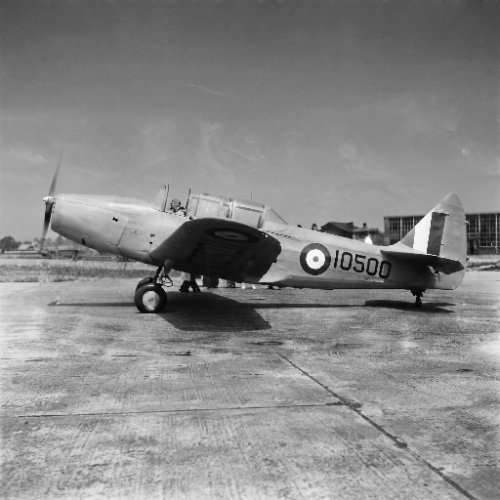
PT‑26 (Cornell I)
Base enclosed‑cockpit variant.
Used primarily by the RCAF under BCATP.
Built under licence by Fleet Aircraft Ltd (Canada).
PT‑26A (Cornell II)
Minor equipment and production‑standard changes.
Many served in RCAF Elementary Flying Training Schools.
PT‑26B (Cornell III)
Later Canadian production version.
Reinforced wing spars after 1943 due to structural failures in early aircraft.
Served until 1947 in RCAF training units.
Export and Lend‑Lease Variants
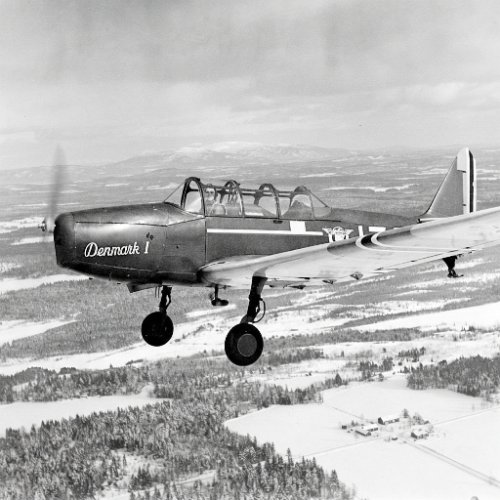
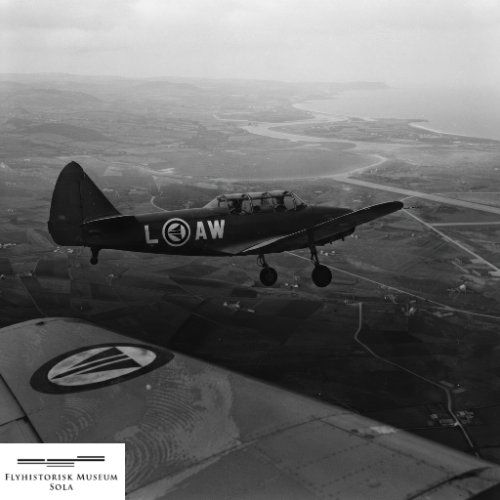
Twenty Canadian‑built Cornells used by the Royal Norwegian Air Force at “Little Norway” training bases in Ontario.
Additional Cornell IIs were shipped to Africa and India for Commonwealth training schools.
Operational History and WWII Context
Role in the British Commonwealth Air Training Plan
The PT‑26 became one of the primary trainers of the BCATP, replacing older biplanes such as the Fleet Finch and de Havilland Tiger Moth.
Its enclosed cockpit and heating made it ideal for Canadian winters, allowing year‑round training at Elementary Flying Training Schools across the country.
More than 2,800 PT‑26/Cornell aircraft were built in Canada, forming the backbone of RCAF primary training during the final years of WWII.
U.S. Army Air Forces Use
Although manufactured in Canada for the USAAF, none were delivered to U.S. units; most of the American order was diverted to the RAF under Lend‑Lease, with the remainder going to the RCAF.
Postwar Service
After WWII, many PT‑26s were sold into civilian use.
However, the wooden wings required intensive maintenance, and recurring spar‑inspection requirements made them unpopular among private owners.
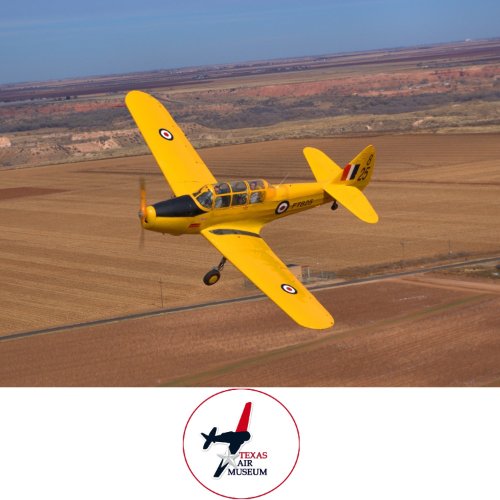
Despite this, several PT‑26s survived into the modern era, preserved by museums and flying heritage organisations.
Production and Legacy
Production Summary
Total Canadian production: 1,642 PT‑26B Cornell III aircraft (plus earlier PT‑26/26A models).
Total PT‑26 family production: Over 2,800 aircraft.
Manufacturers: Fleet Aircraft Ltd (Canada), under licence from Fairchild.
Legacy
The PT‑26 was one of the most important Commonwealth primary trainers of WWII.
Its enclosed cockpit and reliable Ranger engine made it ideal for cold‑weather training, and its monoplane layout prepared pilots for more advanced wartime aircraft.
The PT‑26’s role in the BCATP contributed directly to the training of tens of thousands of Allied pilots, making it a cornerstone of wartime aviation training infrastructure.
Summary
The Fairchild PT‑26 was the enclosed‑cockpit, cold‑weather variant of the Fairchild M‑62 primary‑trainer family.
First flown in 1942 and produced extensively in Canada, it served as a major trainer under the British Commonwealth Air Training Plan, replacing older biplanes and providing a modern monoplane platform for novice pilots.
Powered by a 200‑hp Ranger inline engine and featuring wooden wings, a steel‑tube fuselage, and a heated enclosed cockpit, the PT‑26 offered stable, predictable handling ideal for elementary flight instruction.
With more than 2,800 built and widespread use by the RCAF, RAF, and Norwegian forces, the PT‑26 became one of the defining training aircraft of WWII.
Its postwar civilian life was limited by wooden‑wing maintenance issues, but surviving examples remain important artefacts of Allied pilot training history.