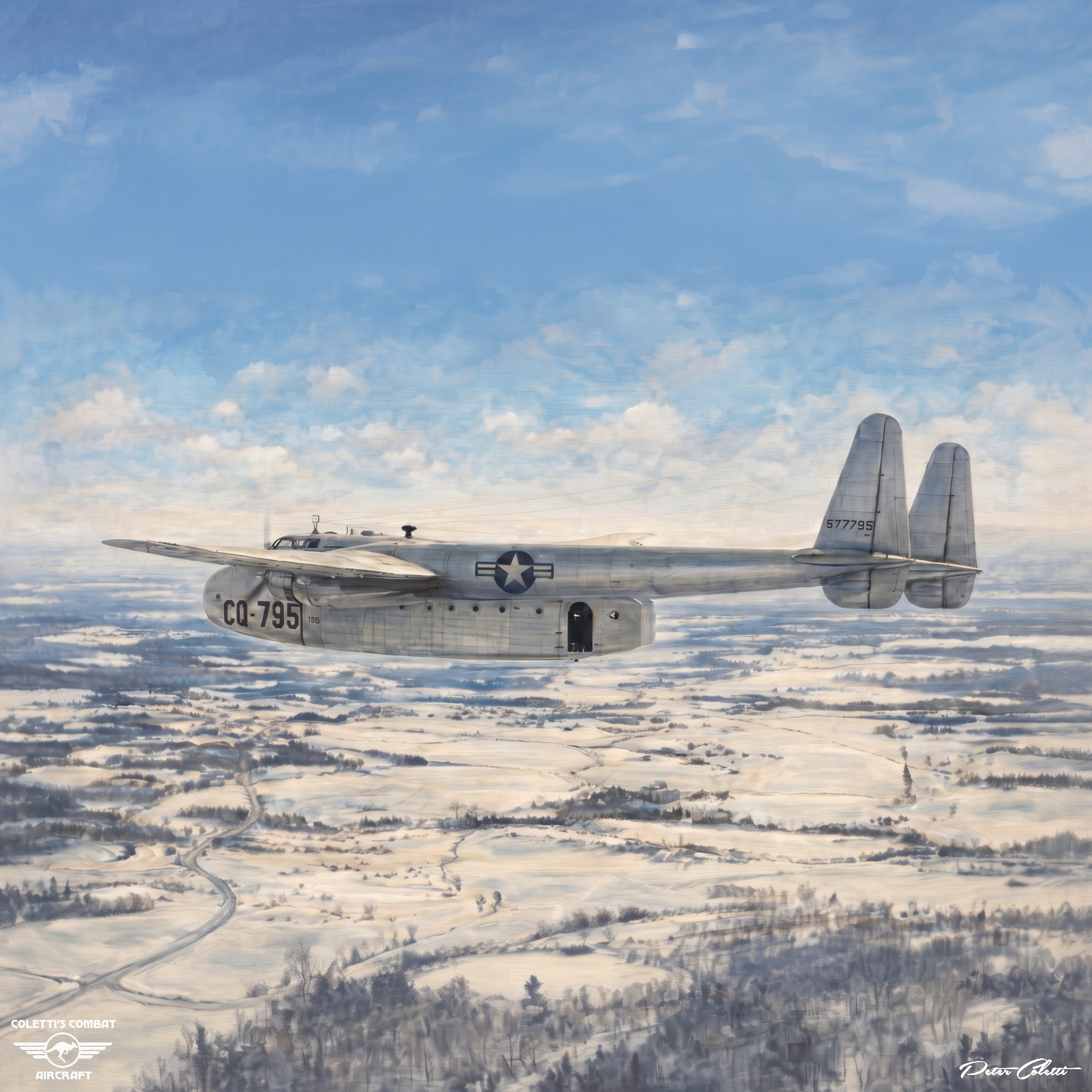
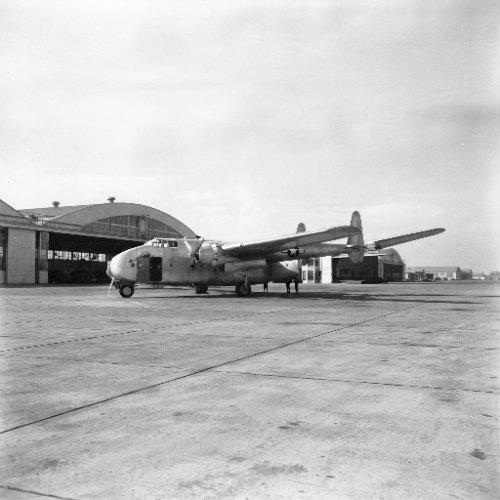
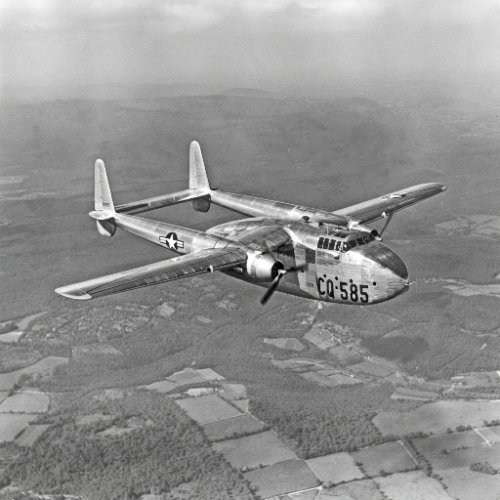
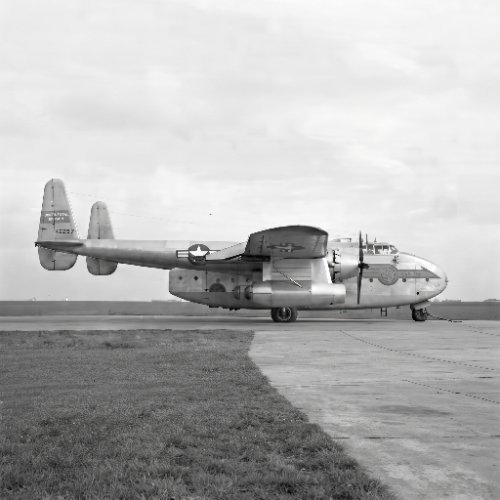
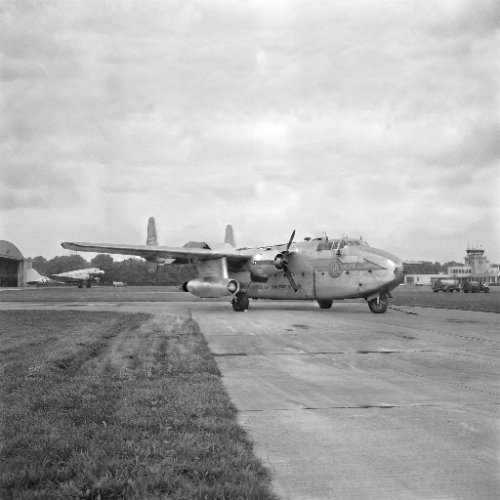
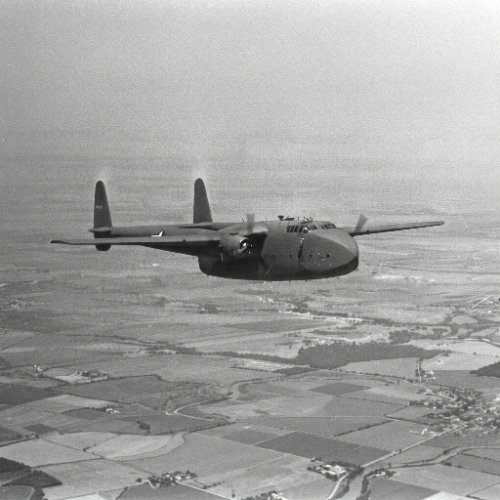
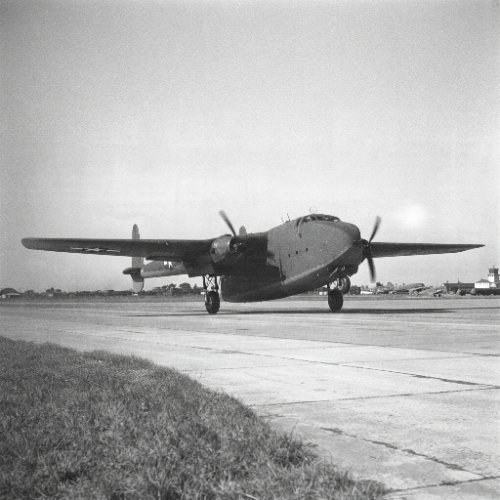
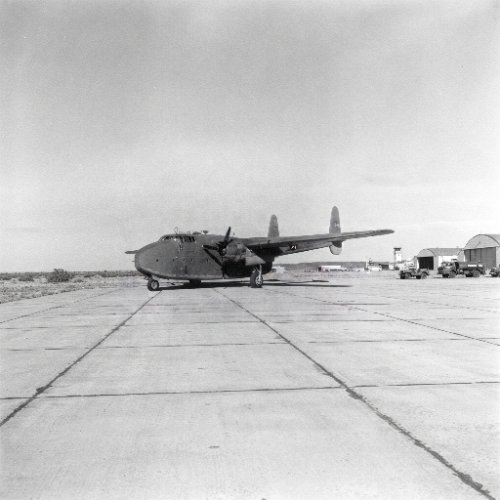
The Fairchild C‑82 Packet originated from a 1941 U.S. Army Air Forces requirement for a new heavy‑lift transport capable of carrying vehicles, artillery, paratroopers, and large cargo loads.
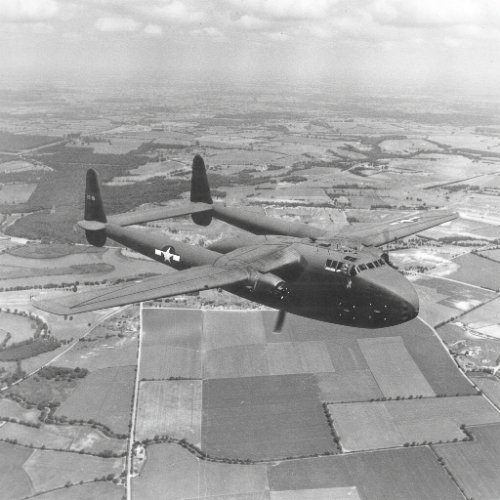
Fairchild responded with the Model 78, an innovative twin‑boom, high‑wing design that placed a dedicated cargo box between two engine‑bearing booms.
The Army approved a full‑scale mockup in October 1942, praising its modular cargo‑handling system, rear clamshell loading doors, and ability to reconfigure for troop transport, medical evacuation, or heavy‑load parachute extraction.
The first prototype, designated XC‑82, was built at Fairchild’s Hagerstown, Maryland, facility and completed its maiden flight on 10 September 1944.
Design and Construction
Airframe and Layout
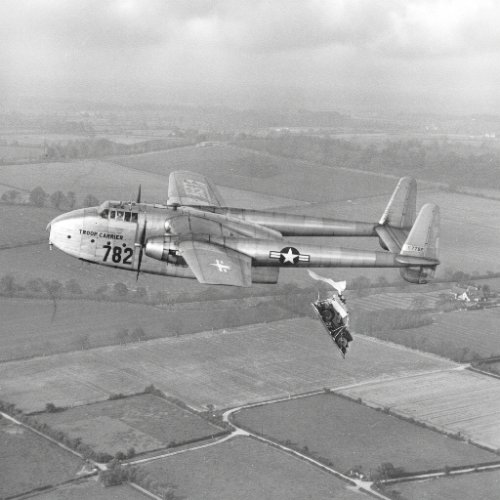
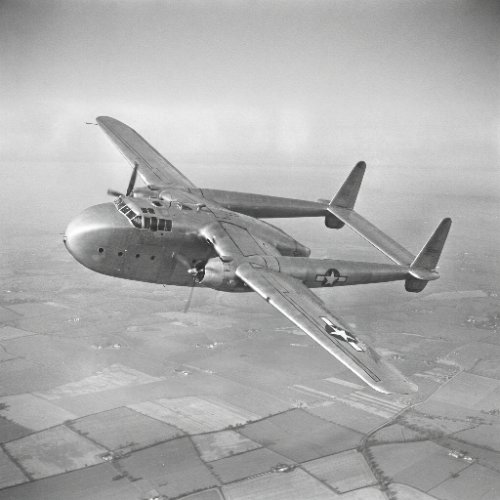
The C‑82 was a twin‑engine, twin‑boom, high‑wing military transport, designed for maximum cargo accessibility and short‑field performance.
Key features included:
Twin booms housing engines and landing gear
Central cargo fuselage with unobstructed floor
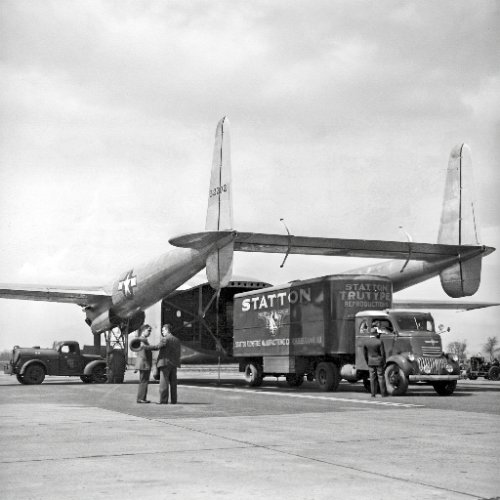
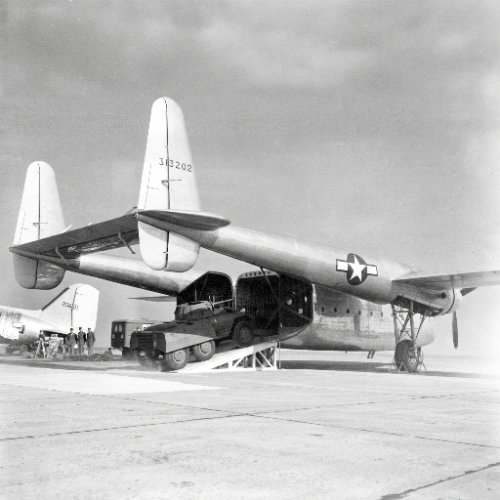
Rear clamshell doors enabling ground‑level loading of vehicles and large freight
The high eppinage set is 14 ft above ground to allow trucks to back directly to the doors
Tricycle landing gear for rough‑terrain operations
The aircraft was originally intended to use non‑critical materials such as plywood and steel to avoid competing with combat‑aircraft production, but by early 1943 specifications shifted to an all‑metal airframe.
Cargo and Troop Capabilities
The C‑82 was designed to carry:
34–42 paratroopers
12,000–18,000 lb of cargo
18 stretcher patients for medical evacuation
Vehicles and trailers loaded directly through the rear doors
Its internal layout and clamshell doors were revolutionary for the era and influenced later transports such as the C‑119 and C‑130.
Powerplant and Performance
The production C‑82A was powered by two Pratt & Whitney R‑2800‑85 Double Wasp radial engines, each producing 2,100 hp.
Representative Performance (C‑82A)
Maximum speed: 216 knots
Service ceiling: 27,000 ft
Maximum take-off weight: ~54,000 lb
Cargo capacity: up to 18,000 lb
Troop capacity: up to 42 troops
Although respectable on paper, the aircraft proved underpowered, especially in single‑engine flight, and could not maintain altitude with one engine out while carrying a load.
This deficiency caused several accidents and severely limited operational flexibility.
Variants
XC‑82 (Prototype)
First flight: 10 September 1944
Revealed underpowered performance and structural limitations.
C‑82A (Production Model)
Main production version
220 units built by Fairchild plus 3 C‑82N units completed by North American Aviation (contract cancelled early).
Used for cargo transport, paratrooper drops, glider towing, and medical evacuation.
C‑82N (North American‑built) Three aircraft were completed before cancellation of a planned 1,000‑unit contract.
XC‑82B (Redesign Prototype)
Fairchild’s redesign to correct C‑82A deficiencies
Served as the direct precursor to the Fairchild C‑119 Flying Boxcar, introduced in 1949.
Operational History and WWII Context
World War II Service
Although the C‑82 first flew in 1944, deliveries did not begin until June 1945, meaning only a small number entered service before the war ended.
As a result, its WWII operational impact was minimal.
Postwar Military Use (1945–1948)
The C‑82 served the U.S. Army Air Forces and later the U.S. Air Force primarily in:
Cargo and troop transport
Paratroop operations
Glider towing
Medical evacuation
Pilots reported poor cockpit visibility, severe underpowering, and dangerous single‑engine performance.
These issues led the Air Force to request a redesign, resulting in the XC‑82B and ultimately the C‑119 Flying Boxcar.
Special Postwar Roles
In 1946, the U.S. Postal Service experimented with flying post offices using modified C‑82s, where clerks sorted mail in flight before transferring it to trucks on landing.
Production and Legacy
Production Summary
Total built: 223 aircraft (1944–1948).
Manufacturers:
Fairchild Aircraft (220 C‑82A + XC‑82)
North American Aviation (3 C‑82N)
Legacy
The C‑82 Packet was a pioneering cargo aircraft, introducing design concepts—twin‑boom layout, rear clamshell doors, and modular cargo handling—that became standard in later transports.
Despite its shortcomings, it served as the direct ancestor of the C‑119 Flying Boxcar, which corrected its deficiencies and became one of the most important U.S. transports of the early Cold War.
Summary The Fairchild C‑82 Packet was an innovative but flawed heavy‑lift transport developed during World War II.
Its twin‑boom configuration, rear clamshell doors, and modular cargo systems were groundbreaking, but chronic underpowering and structural limitations restricted its operational effectiveness.
Produced from 1944 to 1948 in 223 units, it saw limited WWII service but played a significant role in shaping postwar airlift doctrine and directly led to the far more successful C‑119 Flying Boxcar.