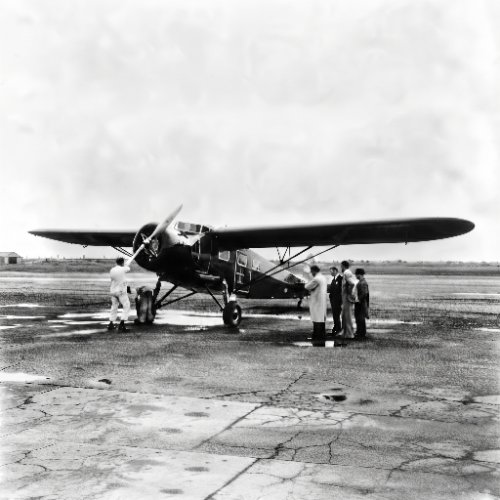
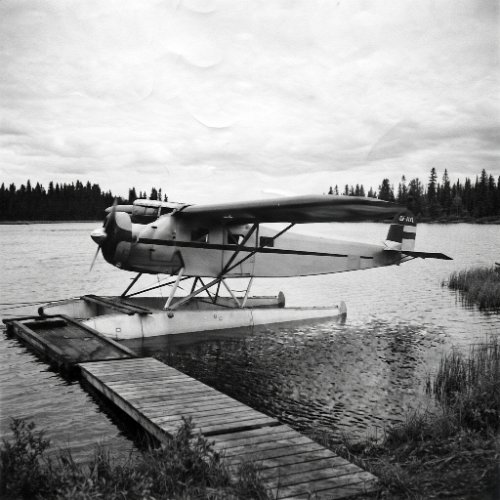
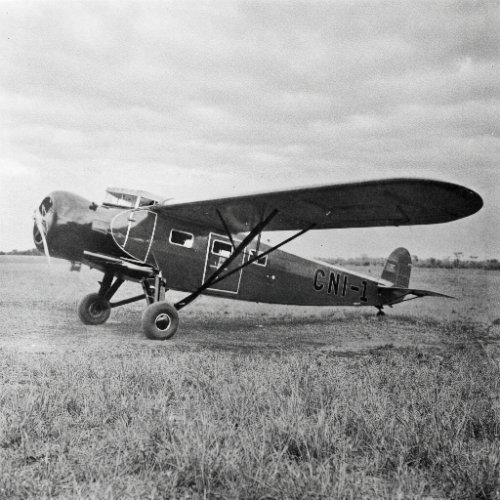
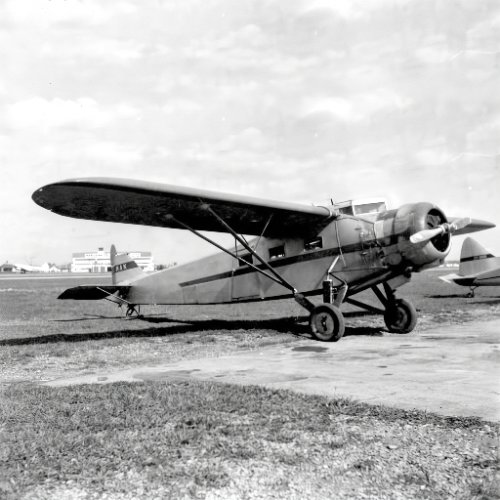
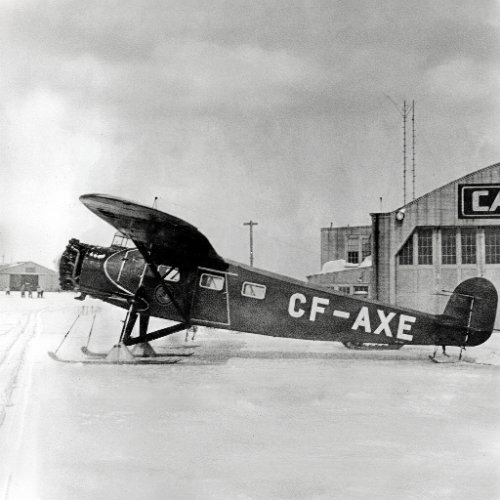
The Fairchild 82 was a Canadian‑built civil utility and bush aircraft developed in the mid‑1930s by Fairchild Aircraft Ltd. (Canada).
It followed a lineage of earlier Fairchild transports and survey aircraft, notably the FC‑2W‑2, Model 71, and the Canadian‑designed Model 81.
In 1929–1930, Fairchild (Canada) designed the eight‑seat Model 81, powered by either a 575 hp Pratt & Whitney Hornet or an Armstrong Siddeley Jaguar.
That aircraft remained a one‑off and did not enter production, but it provided experience in designing larger transports.
By 1934, the parent company in the United States had produced the Super 71, a more radical bush plane.
Market reception was limited, yet the basic concept—stretched forward fuselage, separate flight deck, and large cabin—proved sound.
Fairchild (Canada) refined this idea and, in 1935, produced the Model 82, retaining the extended forward fuselage and separate cockpit while increasing passenger and load capacity.
The first flight took place on 6 July 1935.
Only 24 Fairchild 82s were built between 1935 and 1939.
Production ended when Fairchild shifted its facilities to manufacture the Bristol Bolingbroke bomber for the RAF and RCAF in the immediate pre‑war years.
Design and construction
Airframe and layout
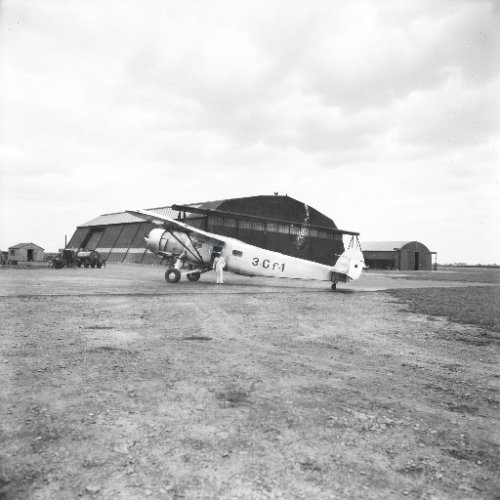
The Fairchild 82 is a single‑engine, high‑wing, strut‑braced monoplane designed as a rugged freighter and bush plane.
It features:
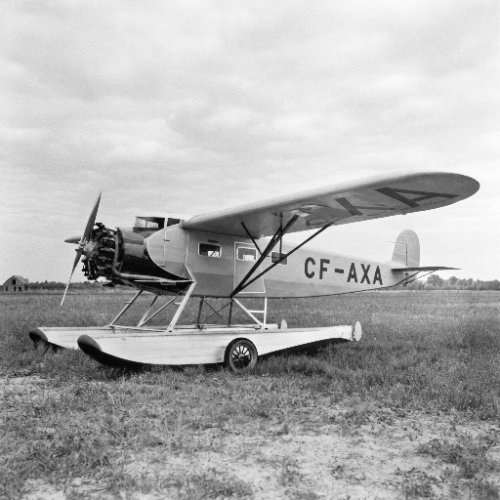
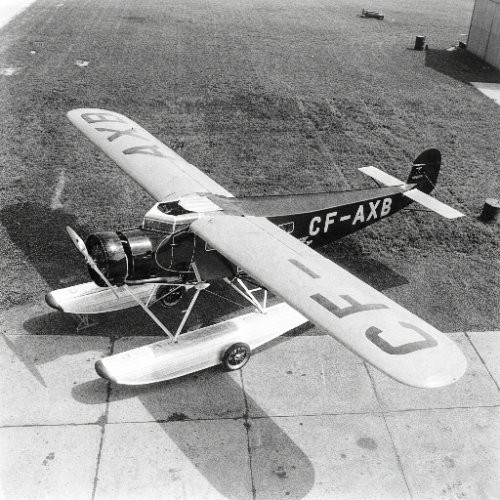
Fuselage: Stretched forward section with a separate, elevated flight deck ahead of the main cabin, giving the pilot good forward visibility and leaving a large cargo/passenger space behind.
Structure: Mixed construction typical of Fairchild bush planes—steel‑tube fuselage framework with fabric covering and wooden wings also fabric‑covered, supported by struts.
Cabin: Configured to seat up to nine passengers and two crew, or equivalent freight and survey equipment, depending on operator needs.
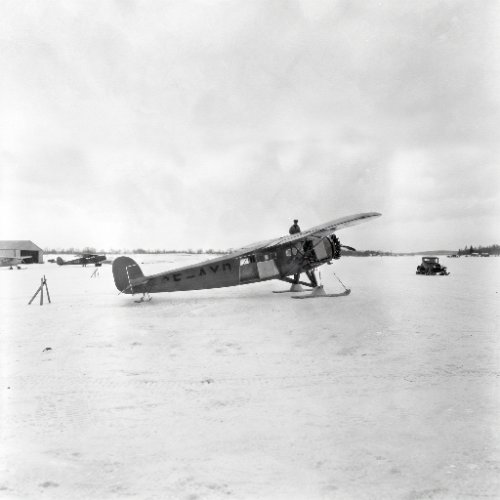
The high‑wing layout provides excellent ground clearance and downward visibility, important for operations from rough strips, lakes, rivers, and snowfields.
Bush‑plane features
The Fairchild 82 was designed from the outset as a northern utility aircraft:
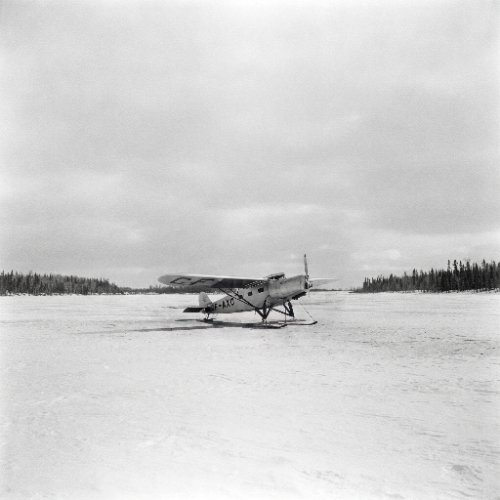
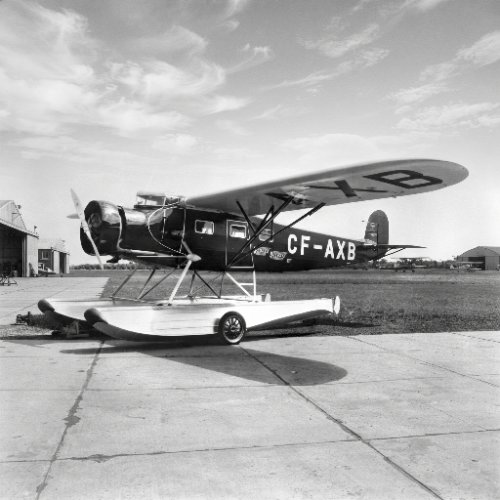
Landing gear options: Wheels for conventional strips, skis for winter snow and ice, and floats for water operations.
Large doors and cabin volume: Facilitated loading bulky freight, fuel drums, and survey gear.
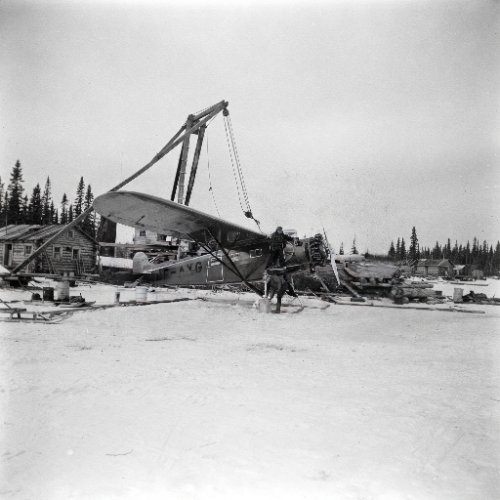
Robust structure: Allowed operation from unimproved surfaces and in harsh Arctic and sub‑Arctic conditions.
These characteristics made the aircraft particularly attractive to Canadian bush operators, who valued its load‑lifting capability and reliability.
Powerplant and performance
Most Fairchild 82s were powered by Pratt & Whitney Wasp radial engines, with specific variants using different sub‑types.
A representative example, the Fairchild 82A, used a Pratt & Whitney R‑1340‑AN‑1 Wasp rated at 600 hp.
Representative technical data (Fairchild 82A)
Wingspan: 15.5 m (51 ft)
Length: 11.2 m (36 ft 10¾ in)
Height: 2.8 m (9 ft 4½ in)
Empty weight: 1,388 kg (3,060 lb)
Gross weight: 2,720 kg (6,000 lb)
Cruising speed: 206 km/h (128 mph)
Maximum speed: 233 km/h (145 mph)
Service ceiling: 4,770 m (15,650 ft)
Rate of climb: 2,740 m (9,000 ft) in 10 minutes
Range: not precisely documented, but sufficient for long northern routes and survey missions.
These figures illustrate a capable freighter and bush plane: relatively fast for its class, with good climb performance and payload capacity, well suited to high‑altitude photo and mapping work in Mexico and South America as well as Canadian Arctic operations.
Variants
The Fairchild 82 family included several subtypes, mainly distinguished by powerplant and minor structural or equipment changes.
Model 82 (baseline)
Initial production version, retaining the stretched forward fuselage and separate flight deck derived from earlier designs.
Sold to Canadian regional airlines and foreign governments for utility, survey, and transport roles.
Model 82A
A Canadian‑designed successor to the FC‑2W‑2 and 71 series, optimised for freight and bush operations.
Seats nine passengers plus two crew; widely used by Canadian bush operators.
Known for reliability and durability in Arctic terrain; some operators preferred it to the Noorduyn Norseman.
Other engine variants (82B, 82D, etc.)
Variants incorporated different radial engines and minor modifications to suit specific customers and operating environments.
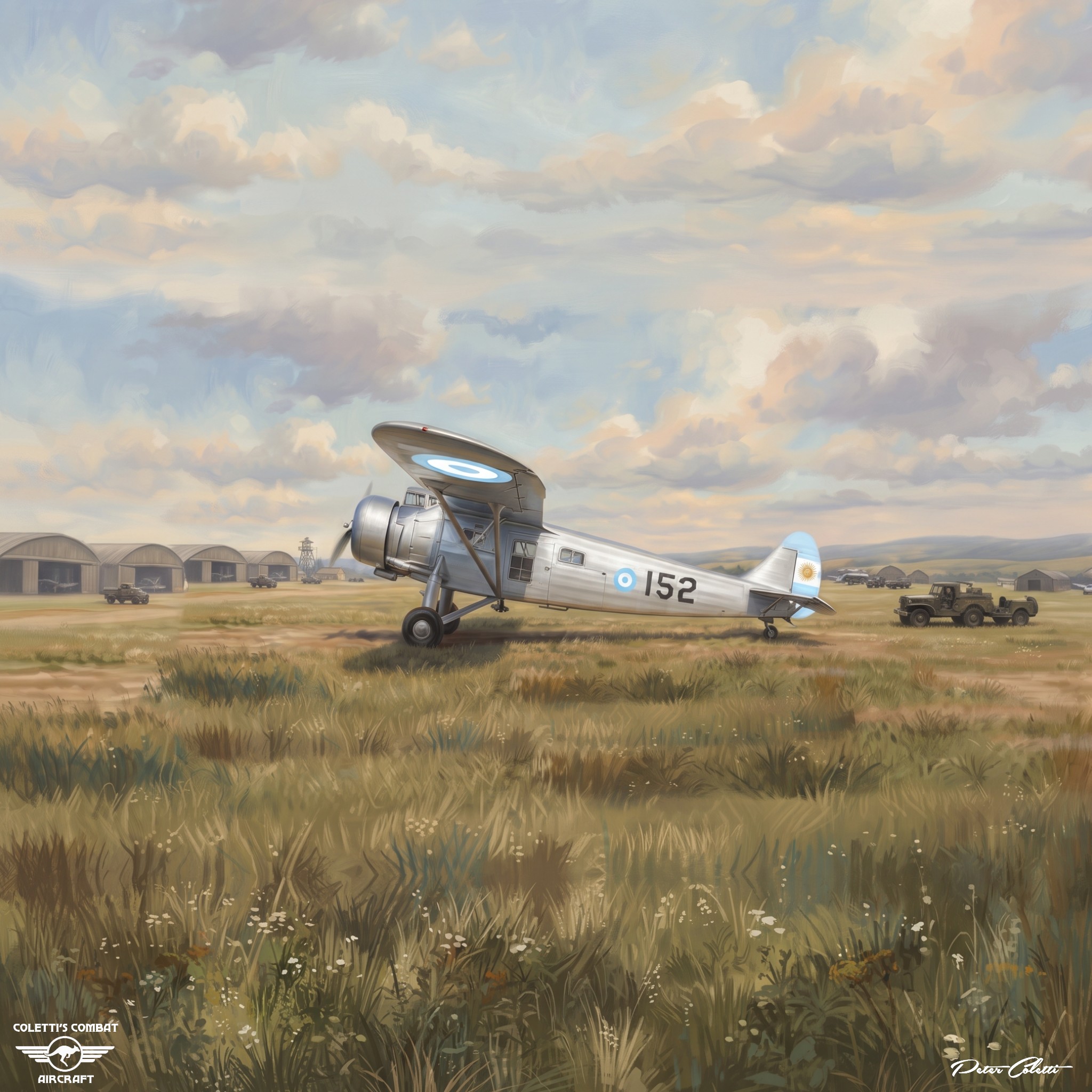
Several aircraft with alternative powerplants were exported to Venezuela, Mexico, and Argentina, including three delivered to the Argentine Navy.
34‑42 Niska (final development)
Final evolution of the design, incorporating changes introduced by N.F. Vanderlipp (formerly of Bellanca).
Reflected Bellanca‑style model numbering and took its name from an Indigenous people of Canada.
Initially powered by a 420 hp Ranger inline engine, trials proved unsatisfactory, and the aircraft was converted back to Model 82D standard with a Pratt & Whitney S3H1 Wasp.
Only one Niska was built; it survives as the sole Fairchild 82‑family aircraft remaining in Canada.
Operational history and WWII context
Civil and bush operations
The Fairchild 82 quickly found a niche as a freighter and bush plane, especially in northern Canada.
Operators appreciated its ability to lift heavy loads, operate from rough or improvised surfaces, and withstand severe weather.
It was used by numerous Canadian firms, including Canadian Pacific Air Lines and other regional carriers, for:
Freight and mail transport
Passenger services to remote communities
Survey and mapping flights
High‑altitude photo missions in Mexico and South America (seven 82As exported for this purpose).
Pre‑war and WWII industrial context
While the Fairchild 82 itself was not a front‑line combat aircraft, its production and fate were closely tied to the Second World War:
As the Noorduyn Norseman gained military orders, Fairchild chose to abandon the bushplane market temporarily and convert its production lines to build the Bristol Bolingbroke, a coastal patrol bomber for the RAF and RCAF.
This shift ended Fairchild 82 production around 1939, just as global tensions escalated.
Fairchild intended to re‑enter the post‑war civilian market with an upgraded Model 82, but the original tooling had been destroyed during the war, making revival impractical.
During the war years, surviving Fairchild 82s continued to operate in civilian roles—freight, survey, and transport—supporting northern infrastructure and resource development that indirectly underpinned wartime logistics and economy, particularly in Canada.
Post‑war service and legacy
The remaining Fairchild 82s stayed in service, primarily in Canada, until the late 1960s.
One notable aircraft, the last 82A in service, disappeared on a flight in the North-West Territories on 9 June 1964, becoming part of Arctic aviation lore.
Today, only two Fairchild 82s are known to survive:
One preserved at the Canada Aviation and Space Museum (CF‑AXL), donated by Canadian Pacific Airlines.
Another held by the Museo Nacional de Aeronáutica in Argentina.
The Fairchild 82’s legacy lies in its role as a robust, capable bush plane that bridged the gap between early survey aircraft and more modern post‑war utility types.
It demonstrated how a single‑engine high‑wing freighter could reliably serve remote regions, and its design lineage connects directly back to the FC‑2W‑2 and Fairchild 71, forming a coherent family of northern utility aircraft.