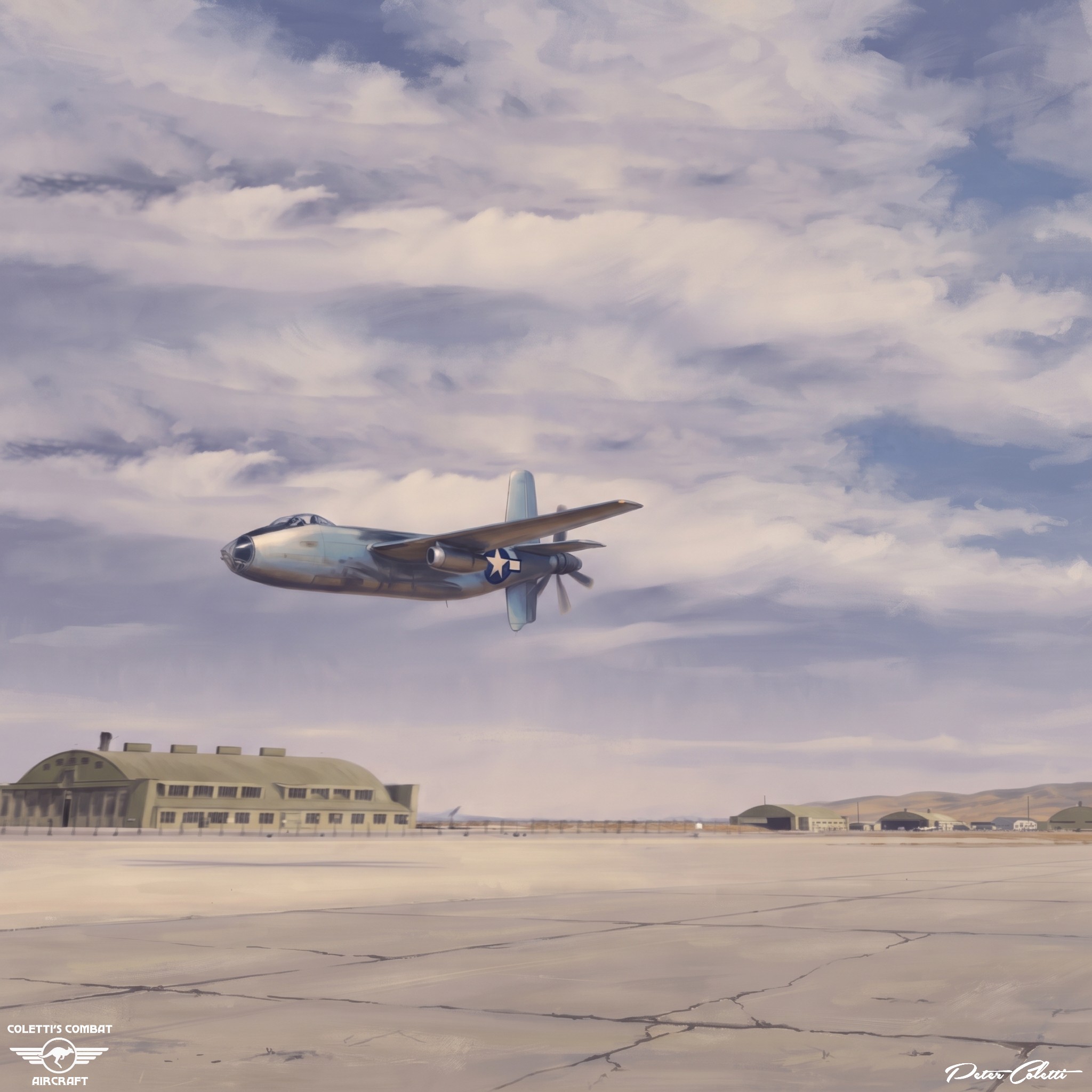
The Douglas XB‑42 Mixmaster emerged from a period in World War II when the United States Army Air Forces (USAAF) sought ways to achieve high‑speed, medium‑range bombing capability without resorting to extremely large and expensive platforms like the Boeing B‑29 Superfortress.
In early 1943, Douglas Aircraft Company initiated the XB‑42 as a private venture, presenting an unsolicited proposal to the USAAF in May 1943.
The USAAF saw potential in a bomber that could match or exceed the Mosquito’s speed while carrying a heavier payload and offering greater range.
The proposal resulted in a contract for two flying prototypes and one static test airframe on June 25, 1943.
Initially designated XA‑42 as an attack aircraft, the design was reclassified as a bomber and redesignated XB‑42 on November 25, 1943.
Design Philosophy and Engineering Innovations
Streamlined Fuselage and Pusher Propulsion
The XB‑42 was conceived as a “clean sheet” aerodynamic experiment.
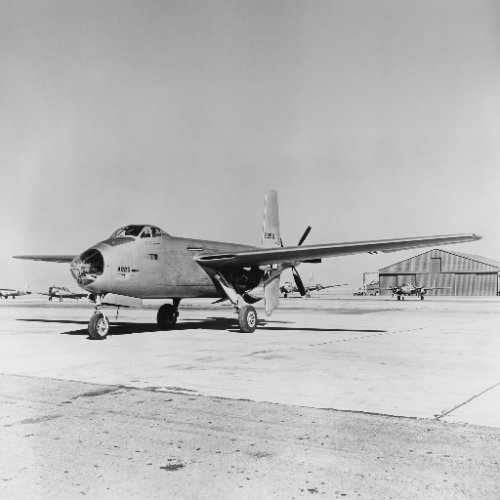
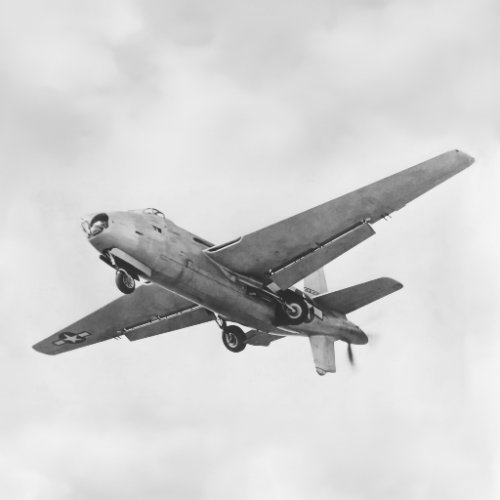
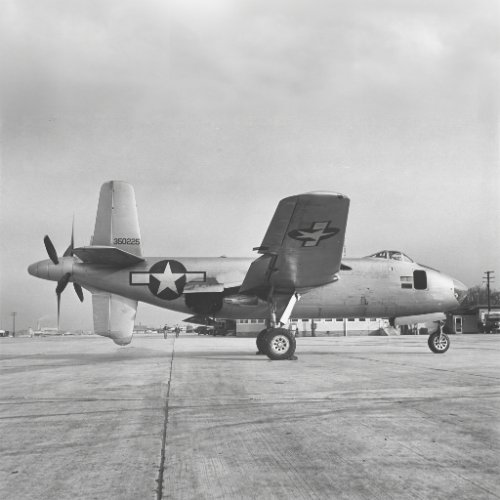
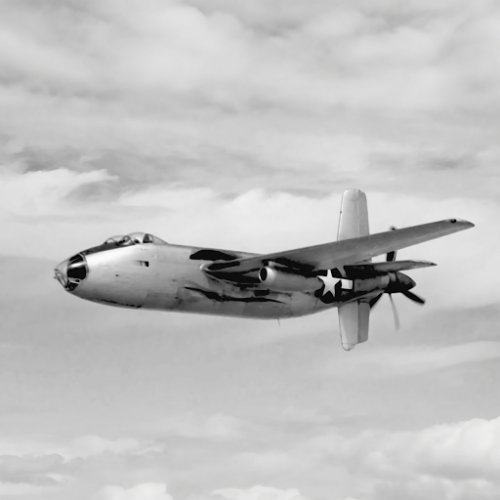
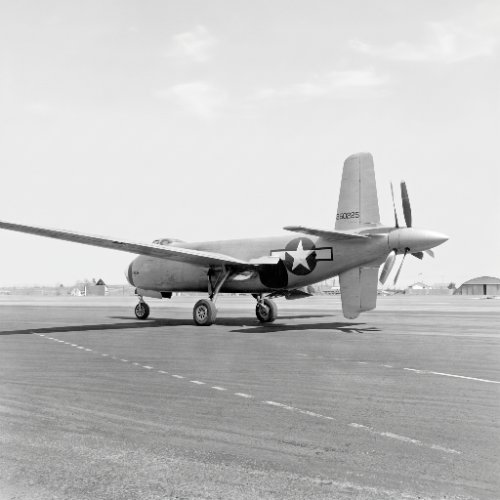
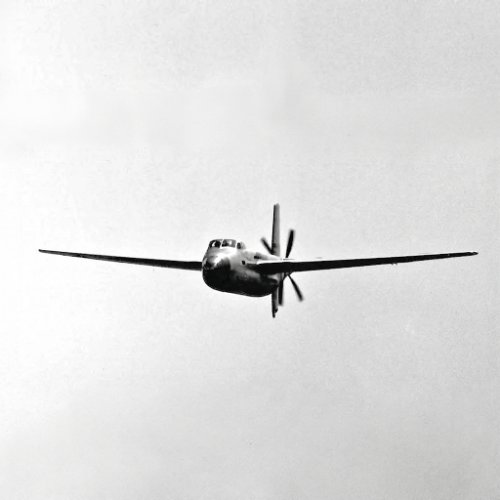
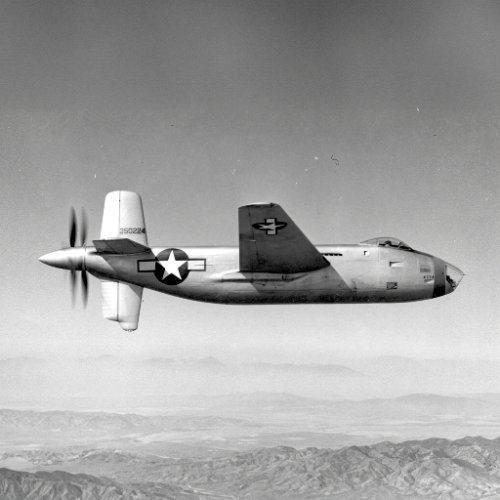
Its most distinctive feature was the placement of two Allison V‑1710‑125 liquid‑cooled V‑12 engines inside the fuselage, behind the crew compartment.
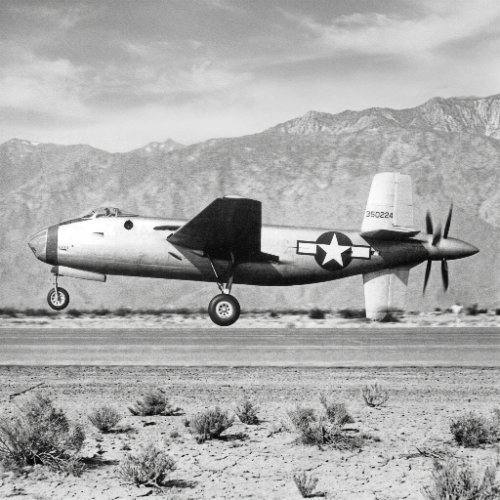
These engines drove contra‑rotating propellers mounted at the tail in a pusher configuration, eliminating drag‑inducing nacelles and giving the aircraft an exceptionally clean aerodynamic profile.
This configuration was intended to achieve speeds approaching 500 mph, though the aircraft ultimately fell short of that goal.
Airframe and Aerodynamics
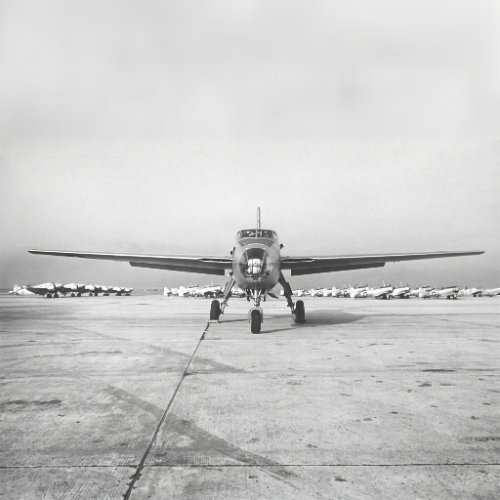
The XB‑42 was a mid‑wing, all‑metal monoplane with laminar‑flow wings designed to minimise drag.
It featured:
Length: 53 ft 8 in
Wingspan: 70 ft 6 in
Height: 18 ft 10 in
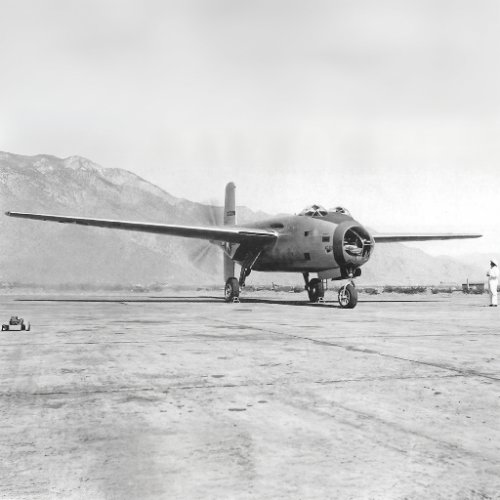
The tail was a cruciform four‑surface arrangement, including a ventral fin incorporating a tailwheel to prevent propeller strikes.
Crew Arrangement
The XB‑42 carried a crew of three:
Pilot and copilot seated side‑by‑side under twin bubble canopies
Bombardier in the nose under a large Plexiglas enclosure
Armament and Defensive Systems
The aircraft’s high speed was expected to reduce the need for heavy defensive armament.
It carried:
Two retractable .50‑cal machine guns in each wing’s trailing edge (four total), aimed by the copilot
Two fixed forward‑firing .50‑cal guns
The XA‑42 attack variant proposal included far heavier armament—16 machine guns or a 75 mm cannon plus two machine guns—but this version was never built.
Safety Innovations
Because bailing out risked crew members being pulled into the rear propellers, Douglas engineers installed an explosive propeller‑severing system to detach the tail cone and props during emergency egress.
Performance and Flight Testing
First Flights and Handling Characteristics
The first prototype (serial 43‑50224) flew on May 6, 1944, at Palm Springs, California.
Performance matched Douglas’s claims: the aircraft was as fast as the de Havilland Mosquito B.XVI while carrying twice the bomb load over short distances.
The second prototype flew on August 1, 1944.
Flight tests revealed:
Excellent stability and manoeuvrability
Issues with engine vibration, cooling, and Dutch roll oscillations
Speed and Range
Key performance figures:
Maximum speed: 410 mph at 23,440 ft
Cruise speed: 312 mph
Service ceiling: 29,400 ft
Bomb load: up to 8,000 lb internally
Ferry range: up to 5,400 miles with auxiliary tanks
The aircraft required a long takeoff run exceeding 6,000 ft, limiting its operational flexibility.
Record‑Setting Flight
On December 8, 1945, the XB‑42 set a transcontinental speed record, flying from Long Beach, California to Washington, D.C.:
Distance: 2,295 miles
Time: 5 hours, 17 minutes, 34 seconds
Average speed: 433.6 mph
This beat the previous record by 46 minutes.
Prototype Loss
The second prototype crashed on December 16, 1945, near Oxon Hill, Maryland, due to engine overheating and loss of control.
All three crew members parachuted to safety.
Variants and Jet‑Age Adaptation
XB‑42A Jet‑Assisted Variant
As jet propulsion rapidly matured after WWII, Douglas modified the surviving first prototype into the XB‑42A by adding two Westinghouse 19XB‑2 turbojet engines in underwing pods.
The XB‑42A:
First flew on May 27, 1947
Reached speeds up to 488 mph
Completed 23 test flights
Despite promising results, the aircraft was overtaken by fully jet‑powered bombers such as the North American B‑45 Tornado, and the program was cancelled in 1948.
Developmental Successor: XB‑43 Jetmaster
Douglas developed the XB‑43 Jetmaster from the XB‑42 airframe, replacing piston engines entirely with turbojets.
This represented the logical evolution of the Mixmaster concept.
Operational Assessment and Legacy
Why the XB‑42 Was Not Adopted
Although the XB‑42 demonstrated excellent speed and efficiency, several factors prevented its adoption:
The end of WWII reduced urgency for new piston‑powered bombers.
Jet propulsion quickly surpassed the performance envelope achievable by advanced propeller aircraft.
The XB‑42’s experimental configuration introduced maintenance and operational complexities.
The crash of the second prototype limited testing data.
By 1948, the USAAF (now USAF) cancelled the programme, and only two prototypes were ever built.
Historical Significance
The XB‑42 remains notable for:
Its radical pusher‑propeller configuration
Its role as a bridge between piston and jet bomber design
Demonstrating that streamlined airframes and internalised propulsion could yield near‑jet performance
Influencing later Douglas jet projects, including the XB‑43
Today, the surviving airframe is preserved by the National Museum of the United States Air Force, undergoing restoration.
Conclusion
The Douglas XB‑42 Mixmaster was one of the most innovative American aircraft of WWII—a bold attempt to push piston‑engine technology to its limits through aerodynamic refinement and unconventional propulsion.
Although overtaken by the jet age before it could enter service, it demonstrated remarkable performance, set records, and contributed valuable insights into high‑speed aircraft design.
Its legacy endures as a testament to the experimental spirit of wartime aviation engineering.