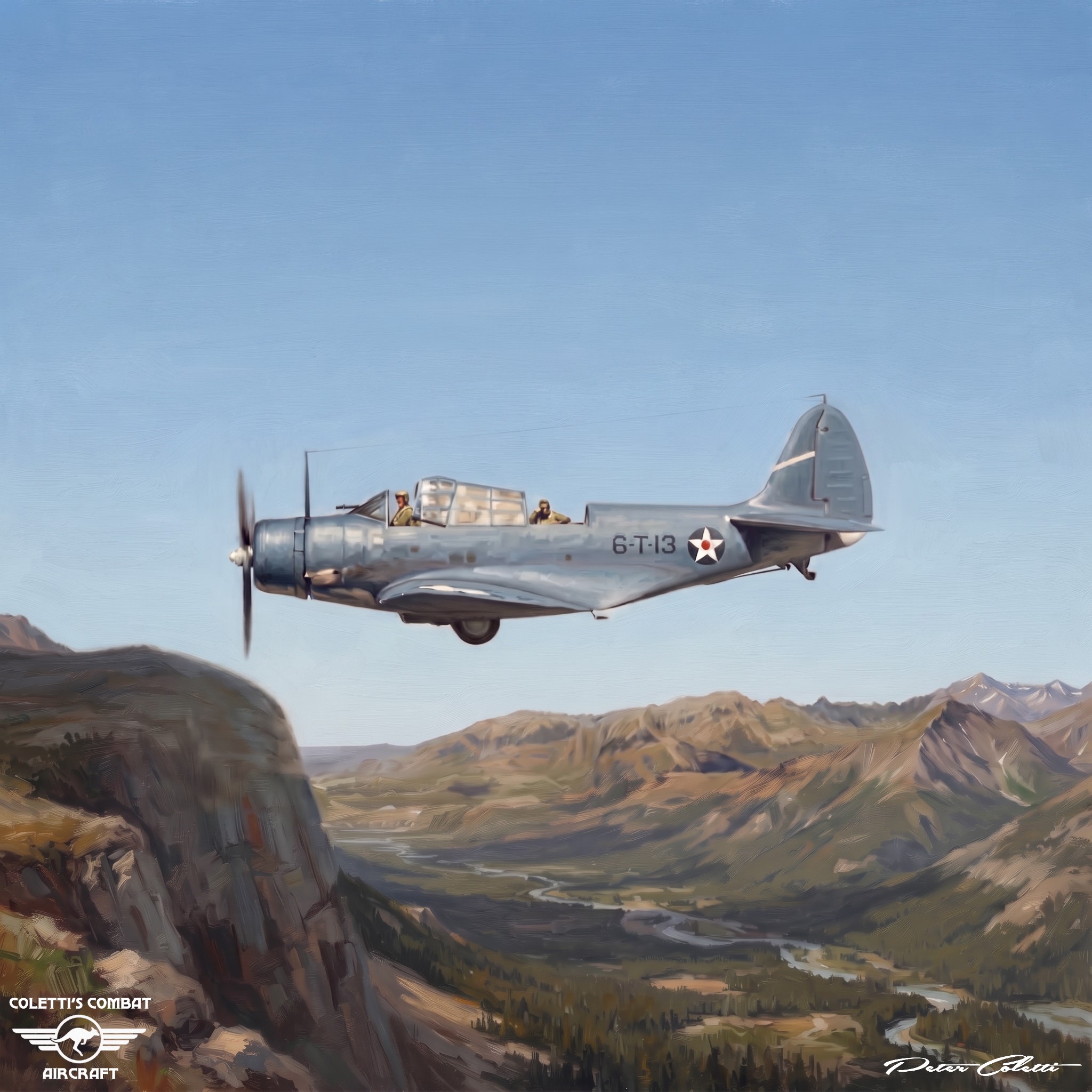
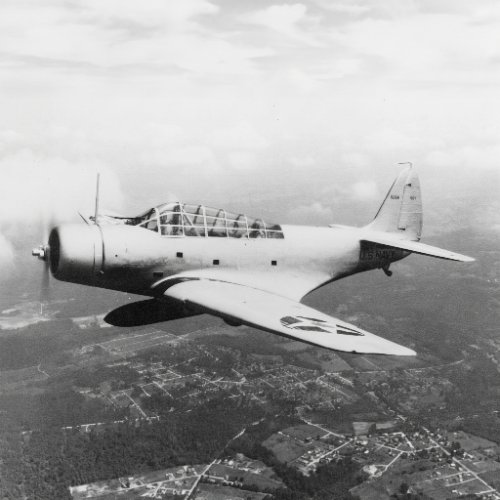
The Douglas TBD Devastator was the U.S. Navy’s first widely used all‑metal, carrier‑based monoplane torpedo bomber, entering service in 1937.
At the moment of its debut, it represented a dramatic leap in naval aviation technology—yet within only a few years, it became one of the most tragically obsolete aircraft of World War II.
Its story is inseparable from the rapid evolution of carrier warfare, the limitations of early torpedo technology, and the brutal learning curve of the Pacific War.
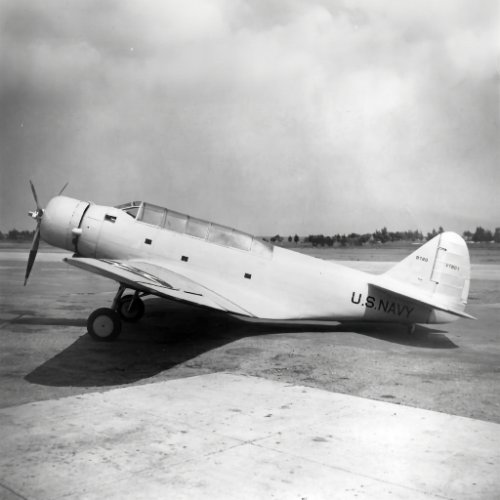
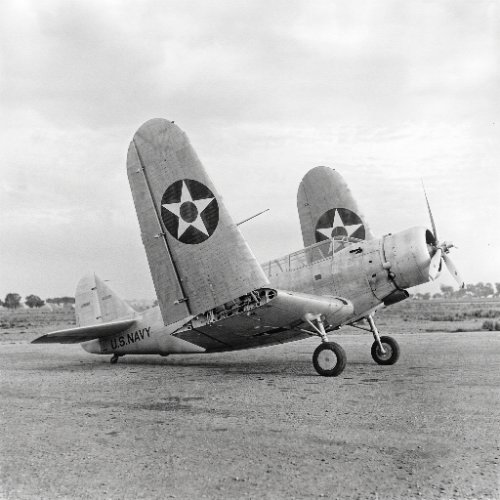
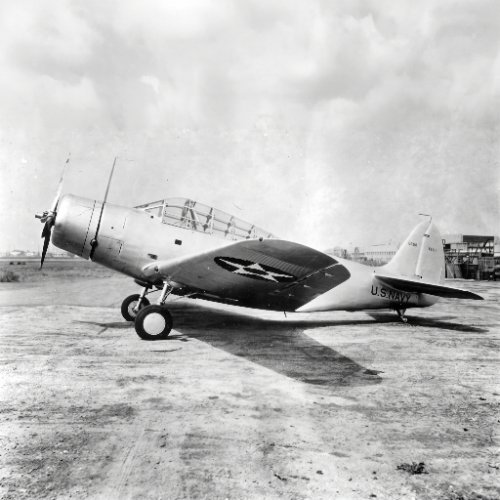
Douglas XTBD-1
Development History
Origins and Navy Requirements
In 1934, the U.S. Navy issued a requirement for a modern torpedo bomber to replace ageing biplanes such as the Martin T3M and T4M.
Douglas Aircraft Company responded with a design that would become the XTBD‑1, competing against entries from Brewster, Vought, Northrop, Great Lakes, Grumman, Hall, and others.
Douglas’s proposal was selected for further development, marking the beginning of the Devastator programme.
Douglas XTBD-1
Prototype and First Flight
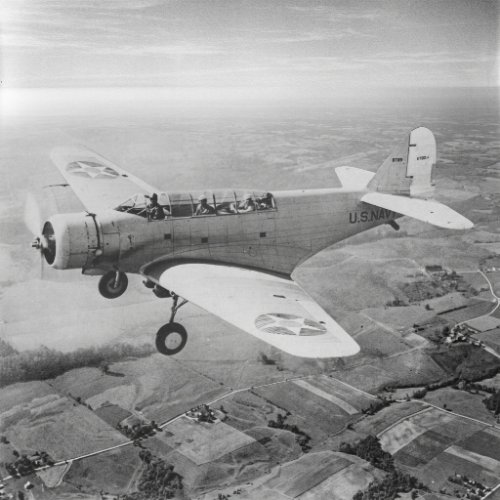
The XTBD‑1 prototype flew on 15 April 1935, demonstrating several unprecedented features for a U.S. Navy aircraft.
Its performance and advanced construction convinced the Navy to order it into production.
Douglas XTBD-1
Production
Production ran from 1937 to 1939, with 129–130 aircraft built depending on source classification (128 production TBD‑1s plus the XTBD‑1 prototype).
All were manufactured at Douglas’s El Segundo, California, facility.
Douglas XTBD-1
Entry Into Service
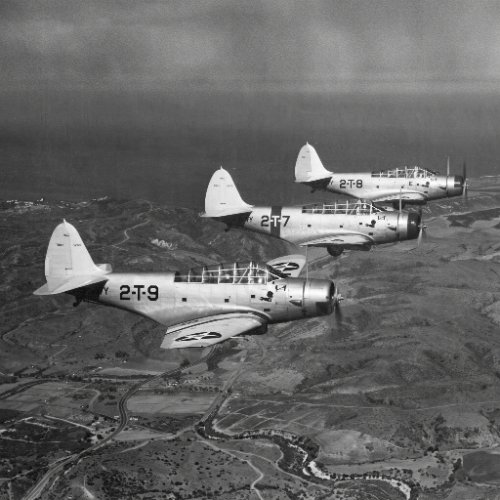
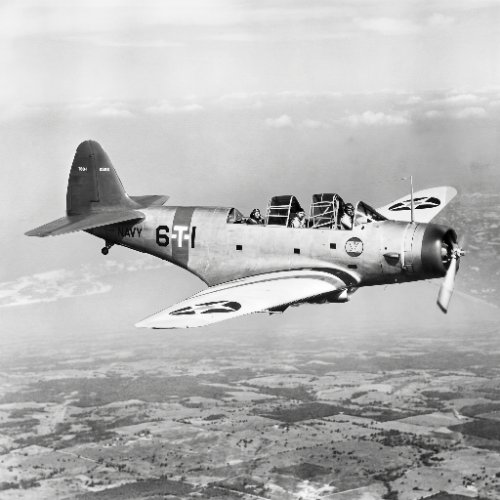
The Devastator officially entered service on 3 August 1937, equipping torpedo squadrons aboard major carriers, including the USS Lexington, the USS Saratoga, the USS Yorktown, the USS Enterprise, and the USS Hornet.
At the time, it was the most advanced aircraft in the Navy’s inventory.
Douglas XTBD-1
Design and Technical Characteristics
Airframe and Construction
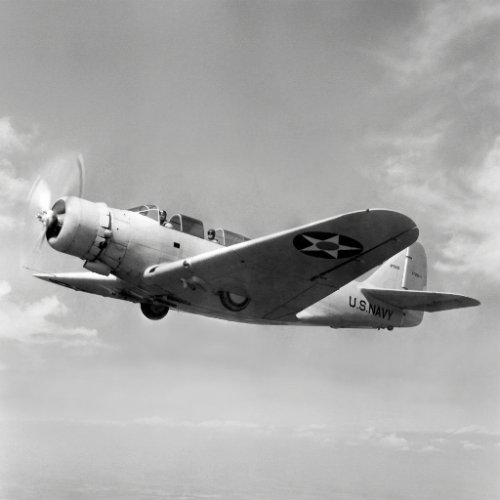
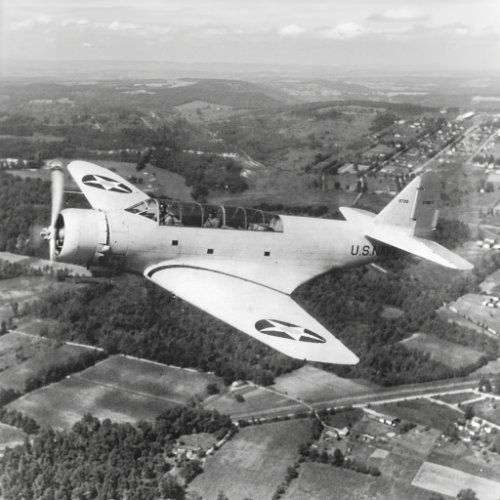
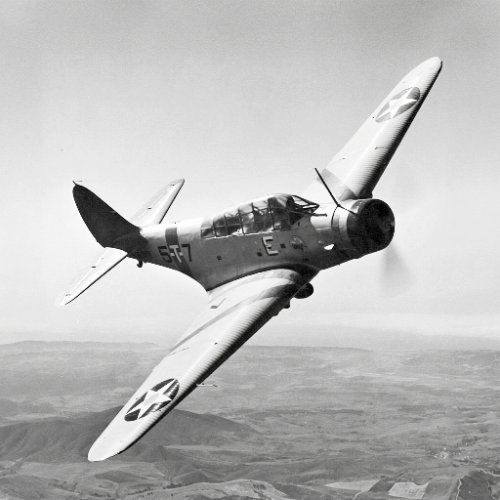
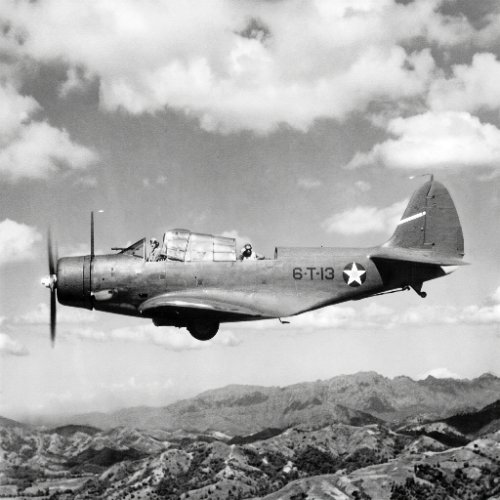
The TBD was the first all‑metal monoplane to serve aboard U.S. carriers and the first Navy aircraft with a fully enclosed cockpit.
Douglas XTBD-1
Its long “greenhouse” canopy housed a three‑man crew:
Pilot
Torpedo officer/navigator/bombardier
Rear gunner/radioman
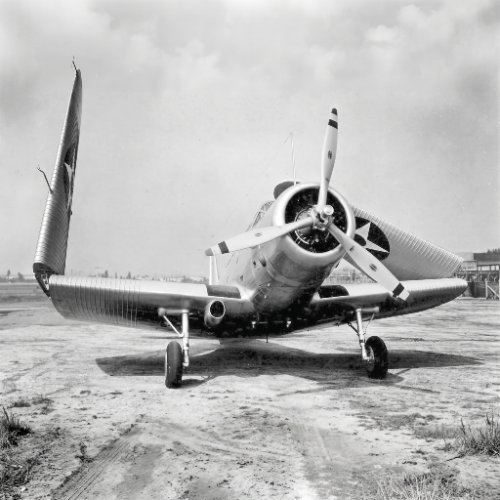
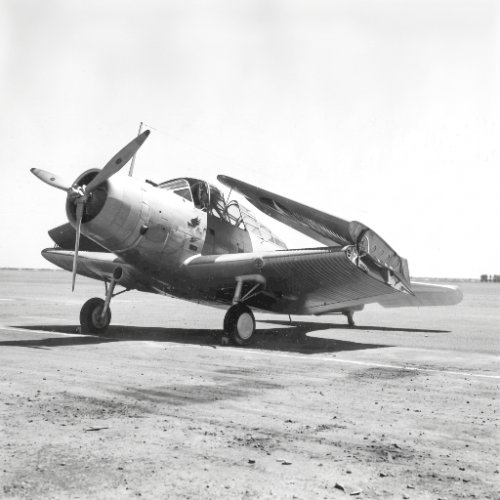
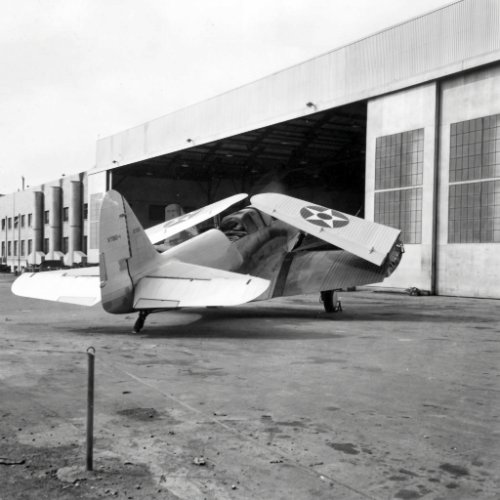
The aircraft also introduced hydraulically folding wings, a major innovation that improved carrier deck handling.
Douglas XTBD-1
Landing Gear
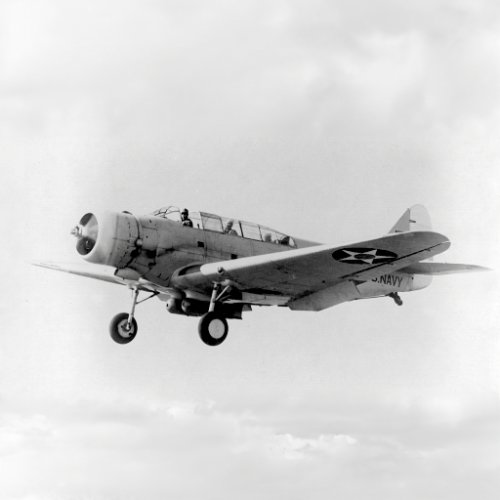
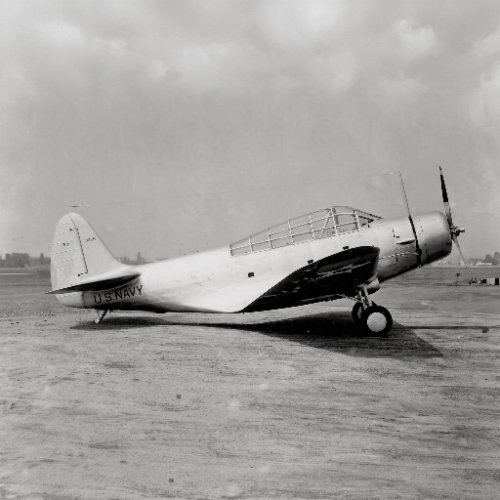
The landing gear was semi‑retractable, leaving the wheels protruding slightly below the wing even when retracted.
This design was intended to reduce damage during wheels‑up landings.
Douglas TBD-1
Powerplant
The Devastator was powered by a Pratt & Whitney R‑1830‑64 Twin Wasp, a 14‑cylinder air‑cooled radial engine producing 900 horsepower.
It drove a three‑bladed Hamilton Standard variable‑pitch propeller.
Douglas TBD-1
Performance
Maximum speed: ~206 mph
Range: ~435 miles
Service ceiling: ~19,685 ft
Wingspan: 50 ft
Length: 35 ft
Height: 15 ft 1 in
These numbers placed the TBD at the cutting edge of mid‑1930s naval aviation—but by 1941, they were dangerously inadequate.
Douglas TBD-1
Armament
The Devastator carried:
One forward‑firing .30 or .50 calibre machine gun
One or two .30 calibre rear guns
Douglas TBD-1
Internal bomb bay capable of:
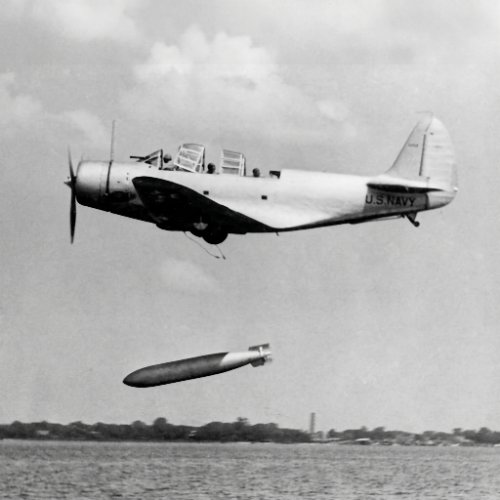
One 1,200‑lb Mark 13 torpedo, or
Up to 2,000 lb of bombs
Douglas TBD-1
Operational Roles
The TBD was designed as a dual‑role aircraft—torpedo bomber and level bomber—reflecting the Navy’s desire for flexibility in early carrier operations.
Douglas TBD-1
Operational History
Pre‑War Service
Before the U.S. entered WWII, Devastators participated in fleet exercises and early Pacific operations, including raids on the Gilbert and Marshall Islands and actions around New Guinea.
These missions revealed the aircraft’s limitations but did not yet expose the catastrophic mismatch between its capabilities and modern enemy defences.
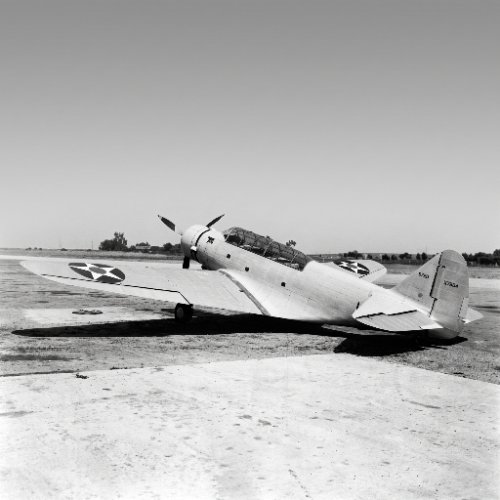
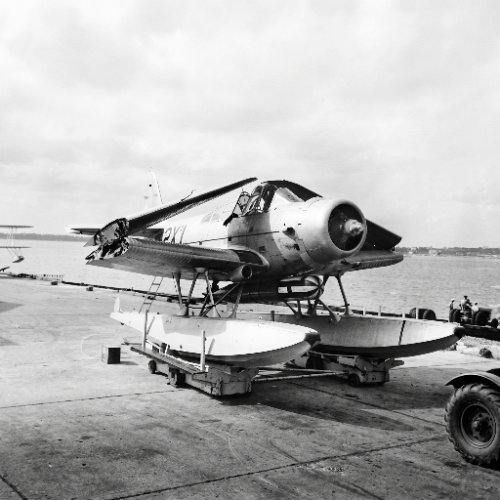
Douglas TBD-1A
Battle of the Coral Sea (May 1942)
The Devastator’s high point came during the Battle of the Coral Sea, where TBDs from USS Yorktown and USS Lexington helped sink the Japanese light carrier Shōhō.
Their performance was considered adequate, though losses were already mounting.
Douglas TBD-1A
Battle of Midway (June 1942)
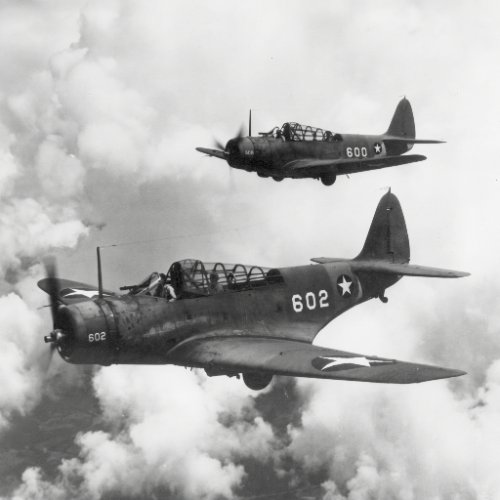
Midway sealed the Devastator’s fate.
On 4 June 1942, 41 Devastators were launched from Hornet, Enterprise, and Yorktown.
Zero torpedo hits were achieved.
Only six aircraft returned.
The failure was not solely the aircraft’s fault.
The Mark 13 torpedo was plagued by defects—running too deep, failing to detonate, or breaking apart on impact.
Combined with the TBD’s slow speed, poor manoeuvrability, and lack of self‑sealing fuel tanks, the aircraft was essentially defenceless against modern Japanese fighters and anti‑aircraft fire.
Douglas TBD-1
Withdrawal and Replacement
After Midway, the Devastator was immediately withdrawn from frontline service and replaced by the Grumman TBF Avenger, a far more capable torpedo bomber.
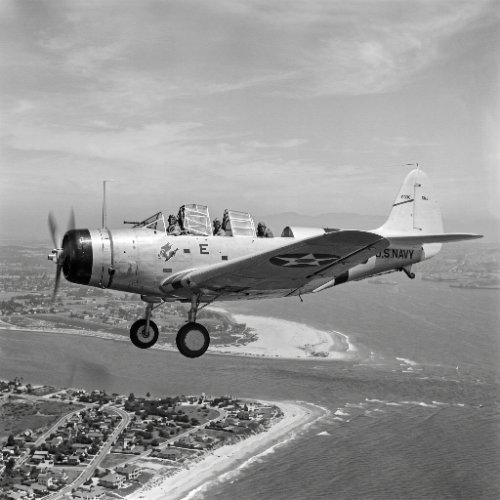
Remaining TBDs were relegated to training roles until their final retirement in 1944.
Douglas TBD-1
Variants
XTBD‑1
Prototype version
Featured an early flat canopy design
Served as the basis for the production TBD‑1
TBD‑1
Main production model
128 units built
Equipped all U.S. Navy torpedo squadrons before Midway
TBD‑1A
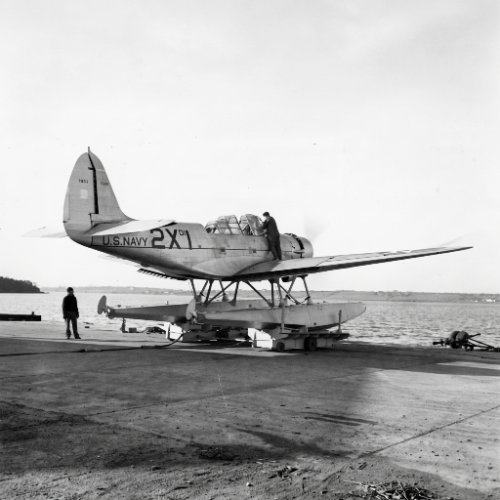
Experimental floatplane variant
Only one built; not adopted for service
Douglas TBD-1
Assessment and Legacy
Technological Significance
The Devastator marked a turning point in U.S. naval aviation:
First all‑metal monoplane torpedo bomber
First enclosed cockpit
First hydraulically folding wings
First modern carrier‑based strike aircraft in U.S. service
It demonstrated the Navy’s transition from biplanes to modern monoplane designs and influenced subsequent aircraft such as the Douglas SBD Dauntless (developed from the Northrop BT‑1, a competitor in the same 1934 contest).
Douglas TBD-1
Operational Lessons
The TBD’s catastrophic losses at Midway underscored several truths:
Aircraft design was evolving faster than procurement cycles.
Slow, unarmoured strike aircraft were no longer viable in contested airspace.
These lessons shaped U.S. carrier doctrine for the remainder of the war.
Douglas TBD-1
Final Evaluation
Although remembered for its failures, the Devastator was a critical transitional aircraft.
It bridged the gap between interwar experimentation and the high‑performance carrier warfare of 1943–1945.
Its shortcomings were as much a reflection of rapid technological change as of its own design limitations.
Douglas TBD-1
Conclusion
The Douglas TBD Devastator entered service as a revolutionary aircraft and exited as a symbol of obsolescence.
Its brief combat career—culminating in the tragedy of Midway—illustrates the unforgiving pace of wartime innovation.
Yet its pioneering features and role in early Pacific battles ensure its place in aviation history as a foundational step in the evolution of U.S. Navy carrier aviation.