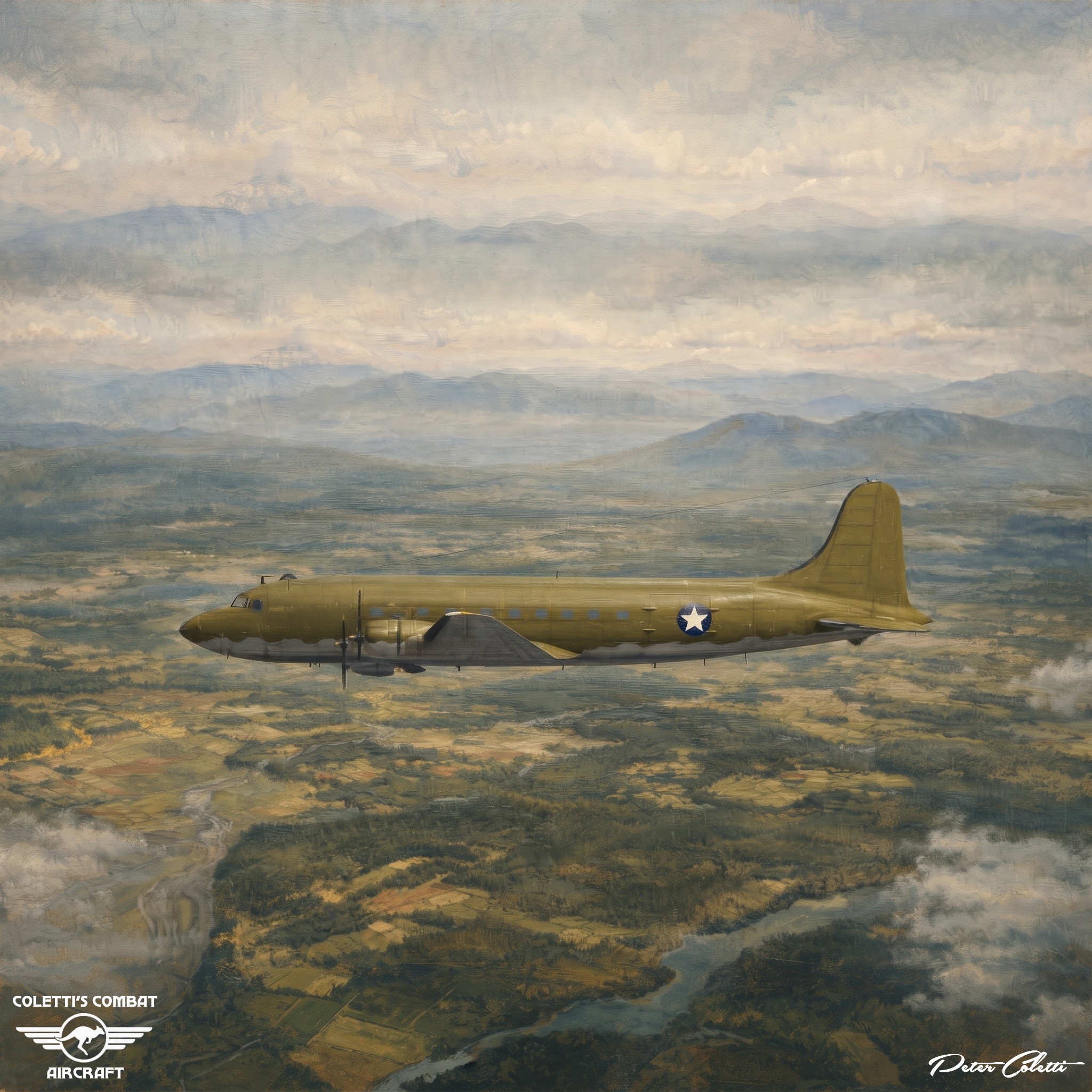
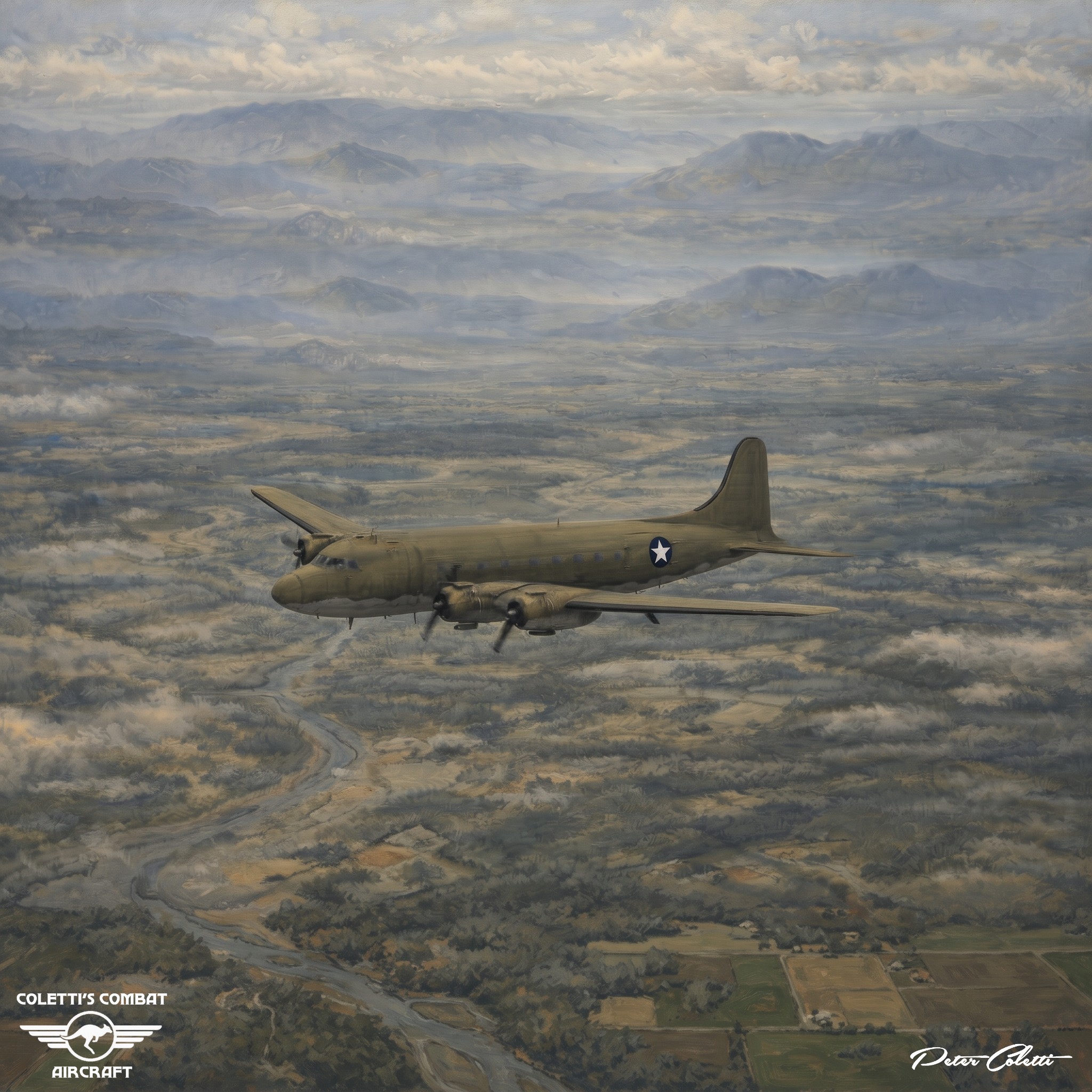
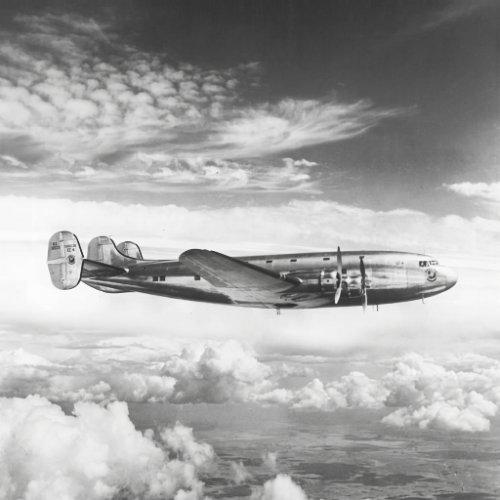
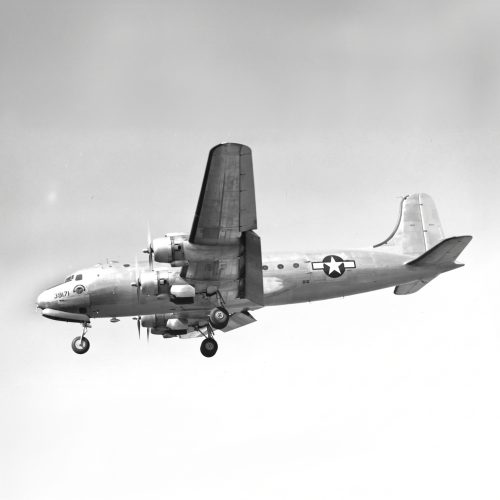
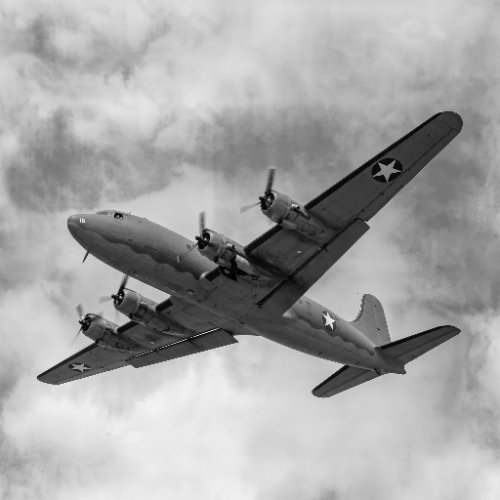
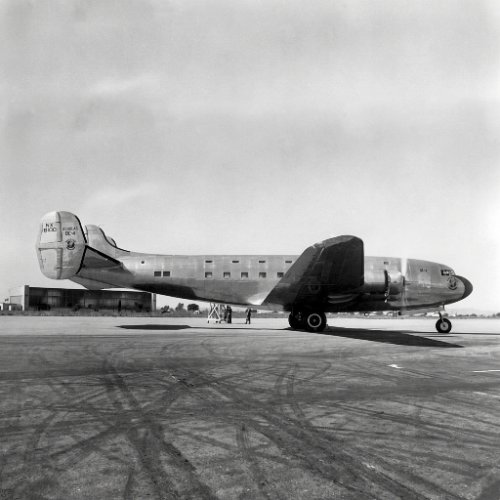
The Douglas DC‑4 traces its lineage to an ambitious but ultimately unsuccessful predecessor: the DC‑4E, a large, 52‑seat experimental airliner that first flew in 1935.
Airlines rejected the DC‑4E as too heavy, complex, and uneconomical, prompting Douglas to redesign the aircraft into a simpler, smaller, more reliable four‑engine transport.
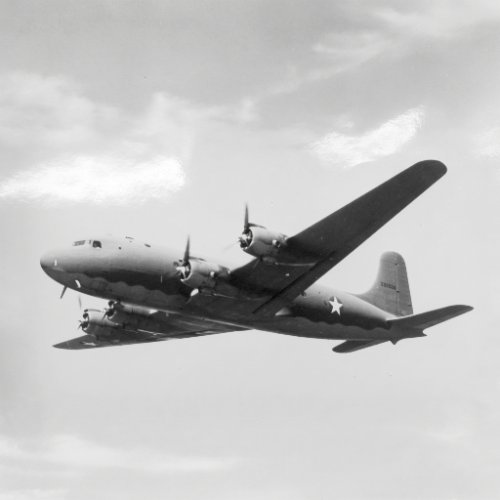
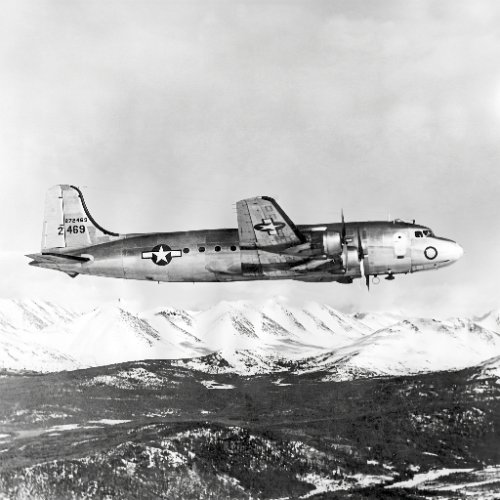
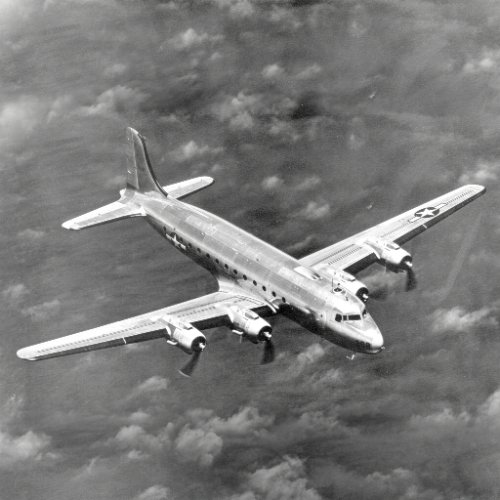
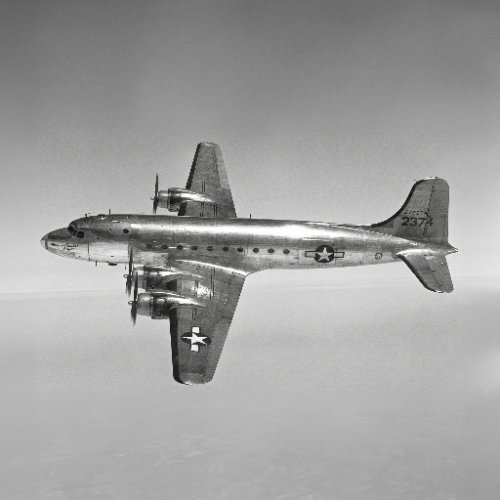
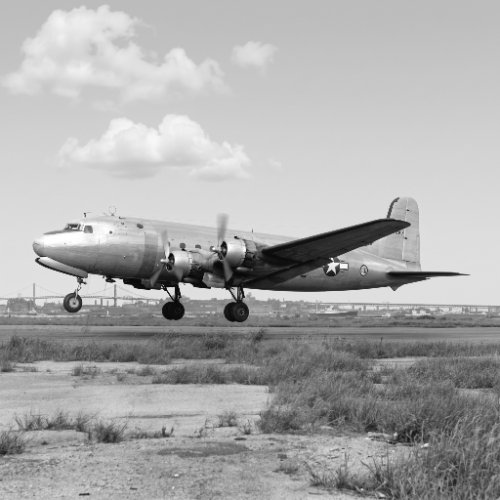
Douglas C-54E
This redesign produced the DC‑4A, which retained the DC‑4E’s tricycle landing gear and unpressurised cabin but adopted a single vertical tail and Pratt & Whitney R‑2000 Twin Wasp engines.
The production DC‑4 first flew on 14 February 1942, but the outbreak of World War II meant that all early airframes were diverted to military service as C‑54 Skymasters.
The U.S. Army Air Forces took over airline orders in late 1941, prioritising long‑range transport capability for wartime logistics.
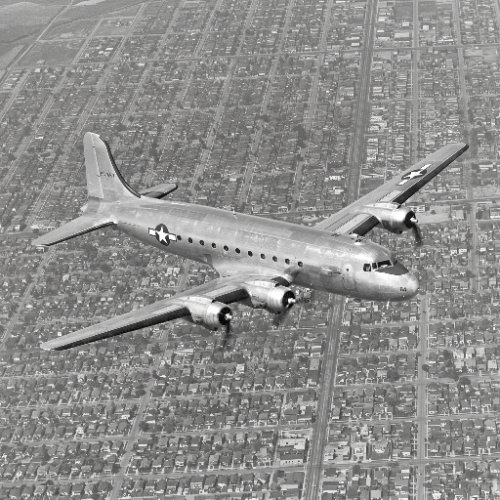
Douglas C-54
Design Characteristics
The DC‑4/C‑54 was a four‑engine, low‑wing, all‑metal monoplane designed for long‑range passenger and cargo transport.
Key design features included:
Airframe: Stressed‑skin aluminium construction with a high‑aspect‑ratio wing and tricycle landing gear, improving ground handling and passenger accessibility.
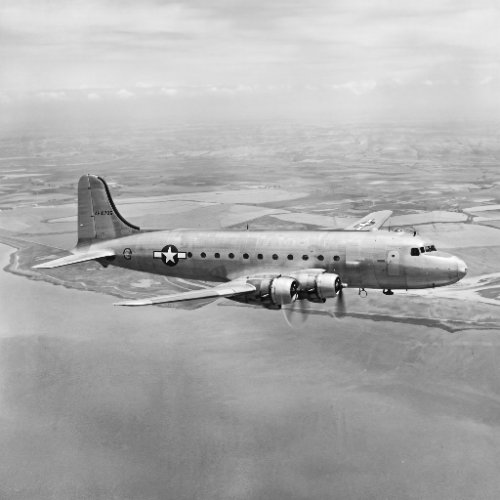
Douglas C-54B
Powerplant: Four Pratt & Whitney R‑2000 Twin Wasp 14‑cylinder radial engines, each producing 1,450 hp.
Cabin: Unpressurised fuselage accommodating 22–48 passengers in civilian configurations, with up to 86 seats in high‑density layouts.
Dimensions: wingspan 117 ft 3 in, length 93 ft 10 in, height 27 ft 6 in.
The tricycle landing gear—unusual for large transports of the era—gave pilots better forward visibility and simplified loading and unloading.
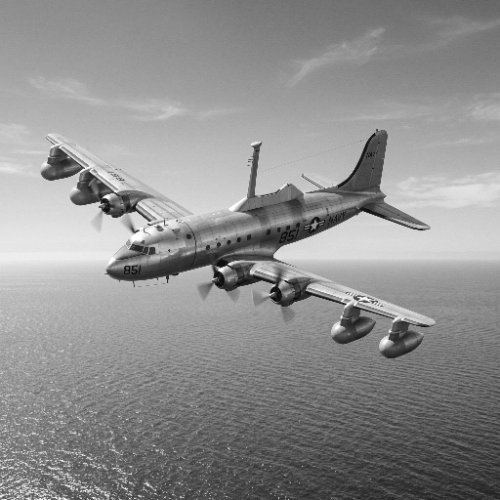
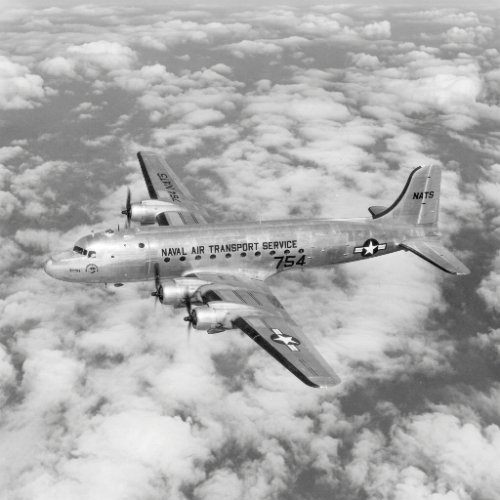
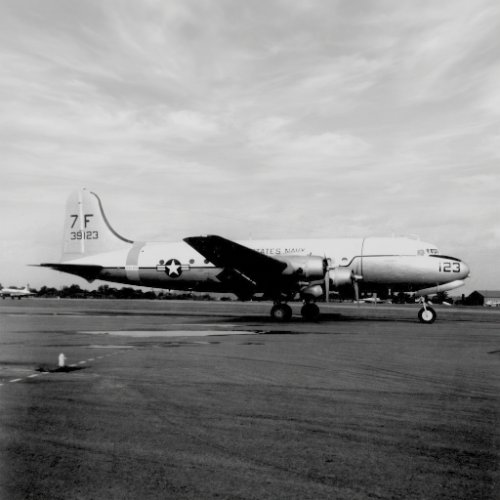
Douglas R5D
Performance
Typical performance figures for the DC‑4/C‑54 family:
Maximum speed: ~280 mph (450 km/h).
Cruise speed: ~227 mph (365 km/h).
Douglas R5D
Range: ~3,000 miles (4,800 km), extendable with auxiliary tanks.
Service ceiling: ~22,300 ft.
Maximum takeoff weight: ~73,000 lb.
These capabilities made the DC‑4 one of the most capable long‑range transports of the 1940s, well suited to transoceanic operations.
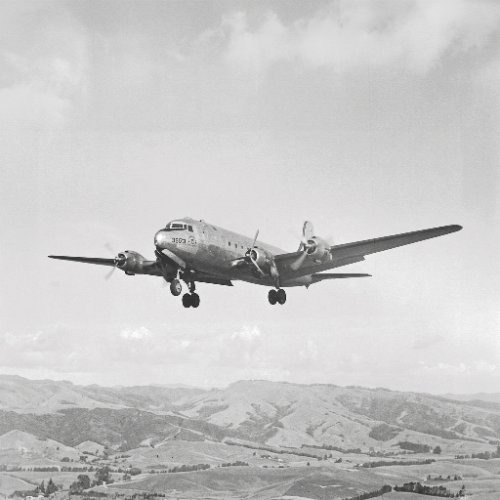
Douglas C-54D
World War II Context and Military Service
C‑54 Skymaster in WWII
The C‑54 entered service in late 1942 as a long‑range cargo and troop transport.
It quickly became a backbone of U.S. wartime logistics, moving personnel, equipment, and high‑priority cargo across both the Atlantic and Pacific theatres.
A total of 1,163 C‑54s were produced between 1942 and 1947.
Douglas C-54G
Early C‑54s carried auxiliary fuel tanks in the cabin, reducing seating to 26 but enabling extended range.
The C‑54A introduced a strengthened floor and a large cargo door with hoist and winch, making it suitable for heavy freight.
The aircraft played critical roles in wartime operations, including:
Transporting components of the atomic bombs to Tinian Island in 1945.
Evacuating wounded personnel from combat zones.
Douglas C-54B
Presidential Transport: VC‑54C “Sacred Cow”
A special hybrid variant, the VC‑54C, was built for President Franklin D. Roosevelt.
It combined the C‑54A fuselage with C‑54B wings and featured a wheelchair‑accessible elevator and a dedicated presidential suite.
Douglas R5D
Postwar Service: The Berlin Airlift
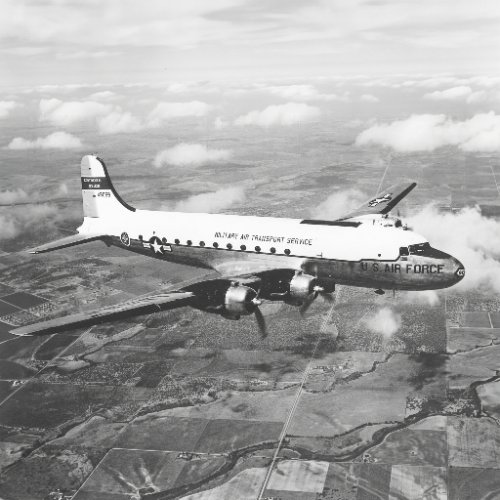
The C‑54 became iconic during the Berlin Airlift (1948–1949), where U.S. and Allied C‑54s (including Navy R5D and Coast Guard variants) delivered over 2.3 million tons of supplies to West Berlin during the Soviet blockade.
This operation cemented the aircraft’s reputation for reliability and endurance under extreme logistical demands.
Douglas DC-4S
Variants
Civilian Variants
DC‑4: Standard unpressurised airliner; 80 built.
Canadair North Star: Canadian development with Rolls‑Royce Merlin engines.
ATL‑98 Carvair: Postwar conversion with a bulbous nose and car‑loading capability.
Douglas C-54A
Military Variants
C‑54 (base model): Initial wartime transport with cabin fuel tanks.
C‑54B: Integral wing tanks, increased seating or stretcher capacity.
Douglas C-54A
C‑54C: Presidential hybrid maximising range.
C‑54D: More powerful R‑2000‑11 engines.
C‑54E: Four wing tanks, no cabin tanks, up to 44 passengers.
R5D: U.S. Navy designation.
Operational Legacy
After WWII, surplus C‑54s were converted for civilian use, enabling airlines worldwide to expand long‑range routes.
The DC‑4 became a mainstay of postwar commercial aviation, serving carriers such as United Airlines, American Airlines, Pan American, and Trans World Airlines.
The aircraft remained in service into the 1990s, with some examples still flying in cargo and firefighting roles today.
Douglas R5D
Significance
The DC‑4/C‑54 family represents a pivotal step in the evolution of long‑range air transport:
It was the first widely used four‑engine Douglas transport, bridging the gap between prewar airliners and postwar pressurised designs like the DC‑6 and DC‑7.
Its military service made it one of the most important transport aircraft of WWII.
Douglas C-54A
Its role in the Berlin Airlift demonstrated the strategic power of air logistics in the early Cold War.
Its rugged design ensured decades of postwar utility in both civil and military sectors.
The DC‑4/C‑54 stands today as one of the foundational aircraft of modern global aviation.