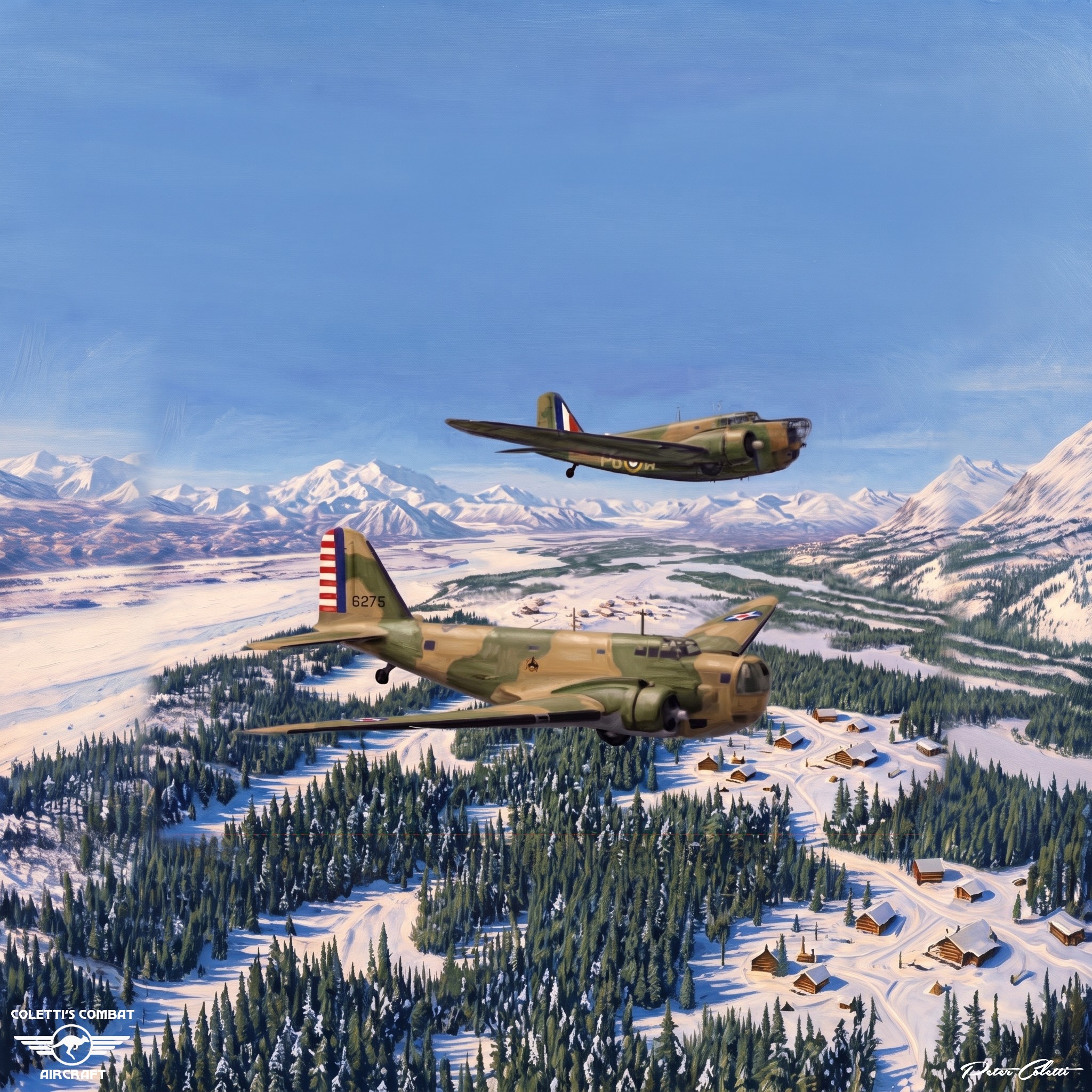
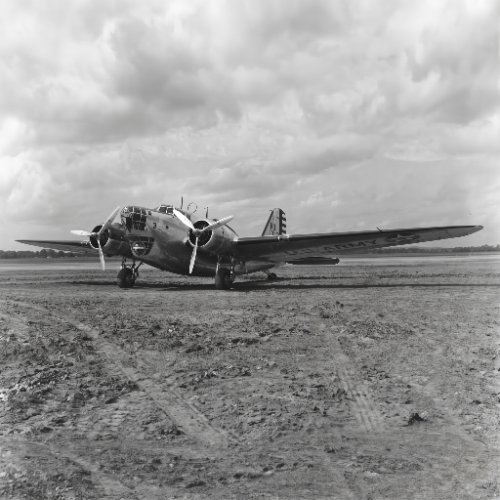
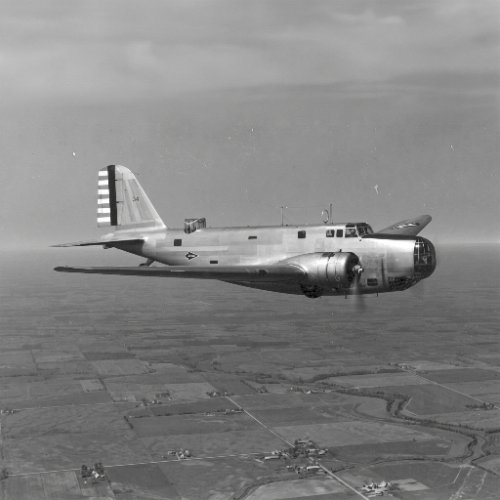
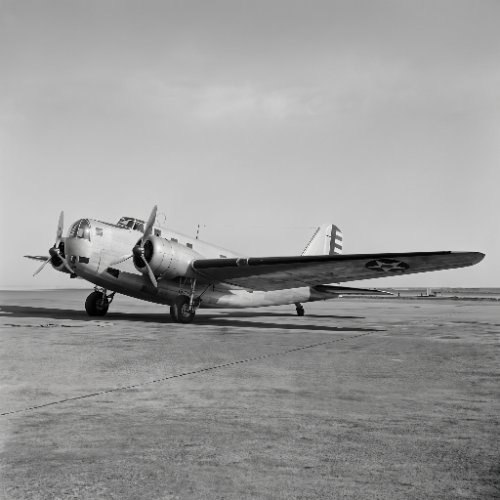
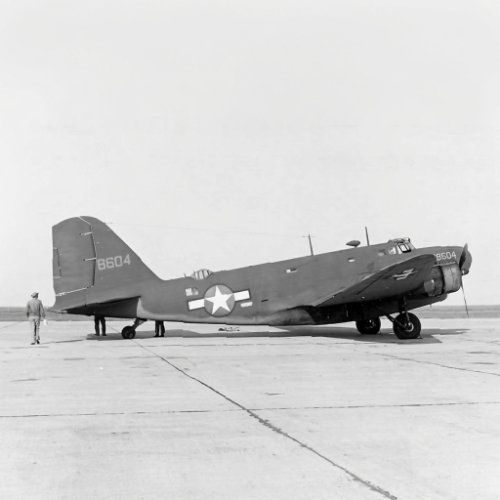
The Douglas B‑18 Bolo was a twin‑engined medium bomber derived from the Douglas DC‑2 airliner, built as a cost‑effective replacement for the Martin B‑10.
Entering service in the late 1930s, it became the numerically dominant long‑range bomber of the U.S. Army Air Corps just before World War II.
In Royal Canadian Air Force service, the type was known as the Digby Mk I, and it found a second life as a maritime reconnaissance and anti‑submarine aircraft.
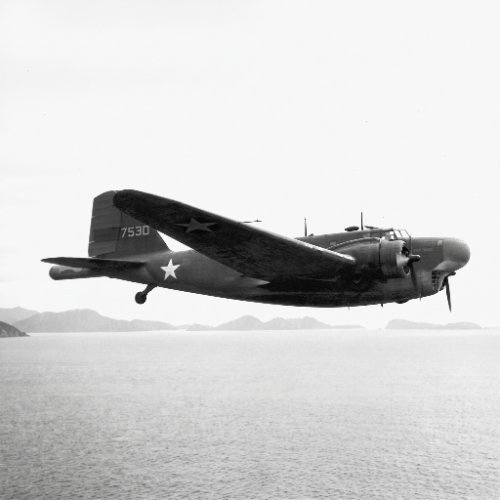
Douglas B-18B Bolo
Development and procurement
USAAC requirement and competition
In 1934, the U.S. Army Air Corps issued a requirement for a twin‑engine bomber with roughly double the bomb load and range of the Martin B‑10.
Douglas responded with the DB‑1, a militarised derivative of the DC‑2.
The DB‑1 competed at Wright Field in 1935 against the Boeing Model 299 (prototype of the B‑17 Flying Fortress) and the Martin 146.
Although the Boeing design was clearly superior in performance, its four‑engine configuration and higher unit cost—combined with the crash of the prototype—led the Army to favour the cheaper, simpler Douglas entry.
In the depths of the Great Depression, the DB‑1’s price of about $58,500 per aircraft compared to nearly $99,620 for the Model 299 was decisive, and the Douglas bomber was ordered into production in January 1936 as the B‑18.
Douglas B-18B Bolo
Production and evolution
The prototype DB‑1 first flew in April 1935, and production B‑18s followed from 1936 to about 1939.
Subsequent contracts in 1937 and 1938 added 177 and 40 aircraft, respectively, most of these being the improved B‑18A variant.
Total production was on the order of 350–370 airframes, depending on counting method.
Douglas also experimented with a DB‑2 prototype featuring a power‑operated nose turret, but this configuration did not enter standard production.
The B‑18 line would later evolve into the more advanced B‑23 Dragon, but the B‑18 itself remained a distinct, simpler design.
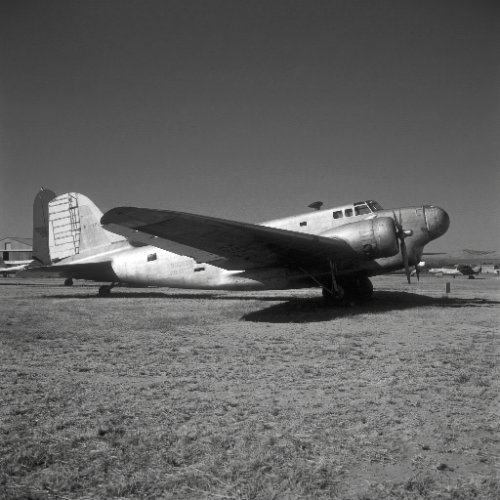
Douglas B-18A Bolo
Design and technical characteristics
Airframe and layout
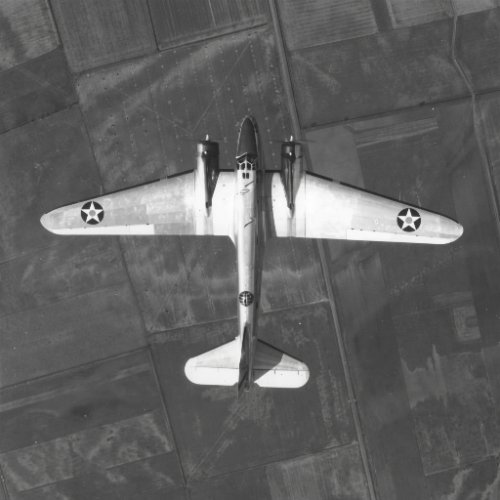
The B‑18 was an all‑metal, low‑wing monoplane with a conventional tail and a mid‑wing bomb bay.
While based on the DC‑2, the DB‑1/B‑18 design incorporated several structural changes:
Wingspan increased by about 4.5 ft over the DC‑2.
The fuselage was made narrower and deeper to accommodate an internal bomb bay.
The wing position was raised to mid‑wing to create space under the spars for bombs.
The aircraft typically carried a crew of five or six, including pilot, co‑pilot, bombardier/navigator, and gunners.
Powerplant and performance
Standard B‑18s used two Wright R‑1820 Cyclone radial engines, each producing around 1,000–1,050 hp, driving three‑bladed propellers.
The later B‑18A variant received more powerful engines of the same family.
Typical performance figures (varying slightly by source and variant) were:
Maximum speed: just over 200 mph (about 215–220 mph in best conditions)
Cruise speed: around 170–180 mph
Range: roughly 900–1,200 miles with a normal bomb load; up to about 2,200 miles is desired in the original specification
Service ceiling: around 23,000 ft
By 1940 standards, these figures were already marginal, especially compared to emerging four‑engine bombers and faster twin‑engine designs.
Armament and bomb load
The B‑18’s defensive armament was modest:
Three 0.30‑calibre machine guns in manually operated nose, dorsal, and ventral positions
Internal bomb bay capable of carrying up to about 4,400 lb (1,995 kg) of bombs
Early experiments with remote‑controlled turrets (including work by Preston Tucker’s firm) did not result in operational installations.
Overall, the B‑18’s defensive firepower and bomb load were considered inadequate by the early 1940s.
Douglas B-18A Bolo
Variants
B‑18
Baseline production bomber, derived directly from the DB‑1 prototype.
Standard nose with bombardier and nose gunner positions
Wright R‑1820 engines
Three manually operated gun positions
B‑18A
Improved bomber variant, produced in larger numbers than the original B‑18.
The wedge‑shaped nose with the bombardier’s position moved further forward over the nose gunner’s station.
More powerful Wright R‑1820 engines
Minor internal and equipment refinements
B‑18B (ASW conversion)
As the B‑18 became obsolete as a bomber, many B‑18A aircraft were converted to anti‑submarine warfare (ASW) roles and redesignated B‑18B.
Key modifications included:
Radar installed in a modified nose
Magnetic anomaly detector (MAD) equipment mounted in the tail
Adaptation for depth bombs and maritime patrol duties
Approximately 122 B‑18A airframes were converted to B‑18B standard, forming a significant part of early U.S. ASW capability.
Digby Mk I (RCAF)
In Royal Canadian Air Force service, the B‑18 was designated Digby Mk I.
These aircraft were broadly equivalent to B‑18/B‑18A bombers but were employed primarily in maritime reconnaissance and anti‑submarine patrol roles over the North Atlantic.
The Digby fleet became a backbone of Canadian coastal defence early in the war, flying long, low‑level patrols in harsh weather and contributing to the Allied campaign against German U‑boats.
Operational history and WWII context
Pre‑war bomber force
By 1940, the B‑18 had become the most numerous long‑range bomber in the USAAC inventory, even though it was already recognised as inferior to newer designs like the Boeing B‑17.
Its selection had been driven by cost and availability rather than performance, and it served as a stopgap medium bomber during a period of rapid expansion.
At the time of the attack on Pearl Harbour in December 1941, 33 B‑18s were stationed at Hickam Field in Hawaii and 12 at Clark Field in the Philippines; many were destroyed on the ground in the opening Japanese strikes, underscoring their vulnerability and the precarious state of U.S. air defences.
Douglas B-18A Bolo
Transition to secondary roles
By 1942, the B‑18 was clearly obsolete as a front‑line bomber:
Too slow to survive against modern fighters
Insufficient defensive armament
Limited bomb load compared to newer aircraft
Surviving B‑18s were progressively reassigned to:
Anti‑submarine patrols over the Atlantic, Caribbean, and Pacific coasts
Training duties for bomber crews and navigators
Transport and troop carrier roles, including some glider towing
The ASW‑configured B‑18B became particularly important in the early Battle of the Atlantic, before more capable aircraft and specialised patrol bombers arrived in sufficient numbers.
Douglas B-18A Bolo
Anti‑submarine successes
Despite its limitations, the B‑18 achieved notable successes in anti‑submarine warfare:
On 22 August 1942, a B‑18B was among the first USAAF aircraft credited with sinking a German U‑boat, U‑654, in the Caribbean.
On 2 October 1942, another B‑18B successfully attacked and sank U‑512, again in Caribbean waters, demonstrating the effectiveness of radar‑equipped medium bombers against surfaced submarines.
RCAF Digby Mk I aircraft likewise participated in U‑boat hunting, flying long‑range patrols from Canadian bases and contributing to the protection of North Atlantic convoys.
Global service and retirement
Beyond the USAAC/USAAF and RCAF, smaller numbers of B‑18s served with the Brazilian Air Force, where they remained in use into the mid‑1940s.
The type was officially retired from Brazilian service around 1946, marking the end of its operational career.
By that time, the B‑18 had been thoroughly superseded by more advanced bombers and patrol aircraft, but it had fulfilled an important transitional role—bridging the gap between early interwar bombers and the high‑performance designs that dominated the later war years.
Douglas B-18B Bolo
Legacy
The Douglas B‑18 Bolo and its Canadian Digby counterpart occupy a modest but meaningful place in aviation history.
Chosen primarily for economic reasons, the B‑18 was never a cutting‑edge bomber, yet it:
Provided the USAAC with a numerically significant long‑range bomber force in the late 1930s
Served as a training and workhorse platform during rapid wartime expansion
Played a crucial early role in anti‑submarine warfare, helping to pioneer radar‑equipped medium bombers and MAD‑equipped patrol aircraft.
In the broader narrative of WWII aviation, the B‑18/Digby stands as a classic example of an “interim” aircraft—technically outclassed but operationally indispensable during the critical early years of the conflict.