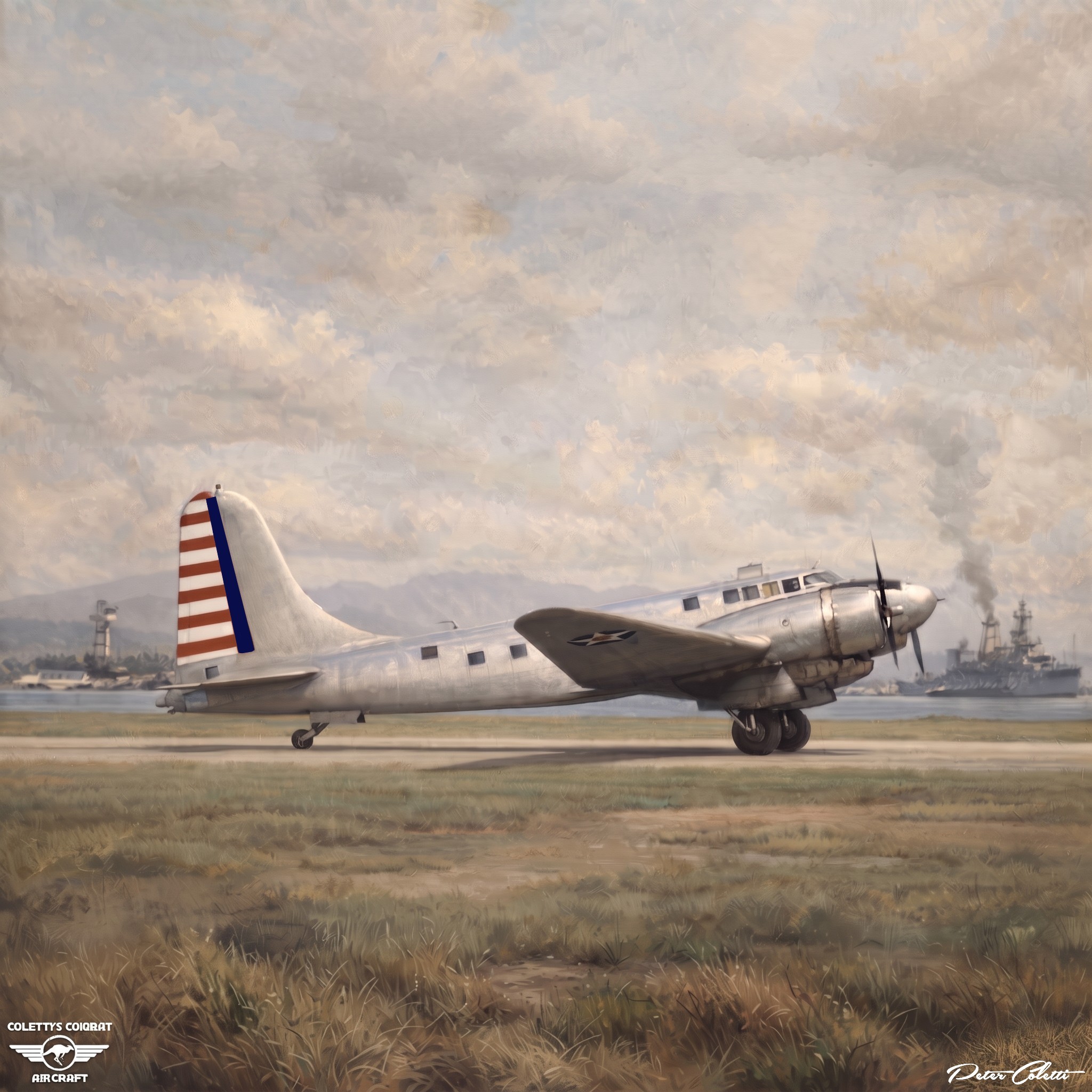
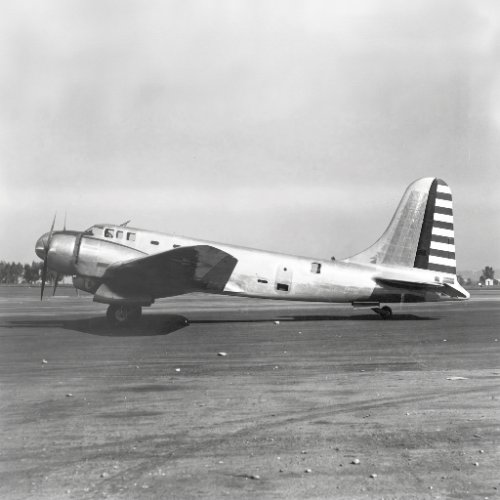
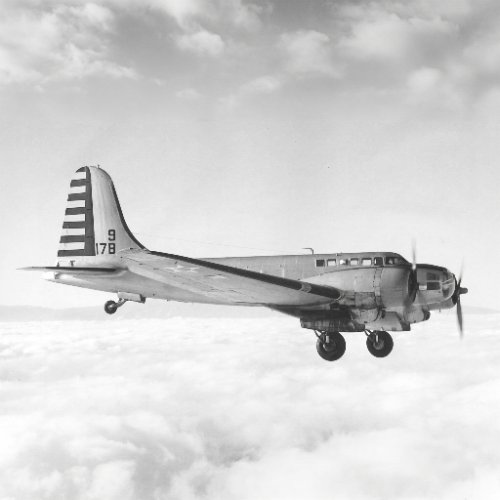
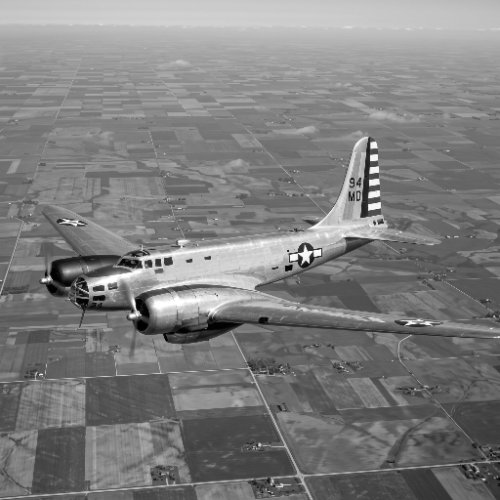
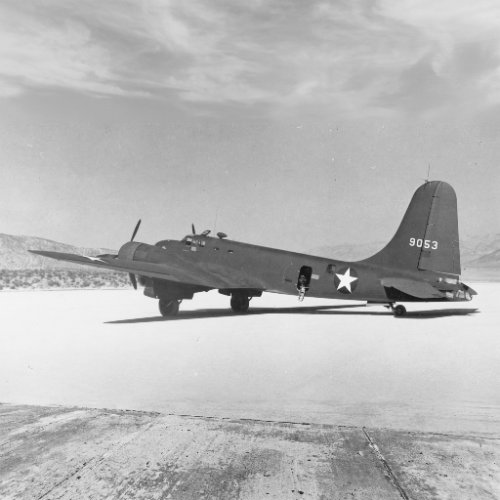
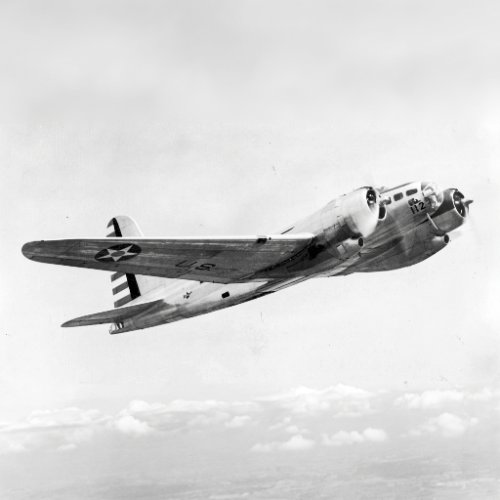
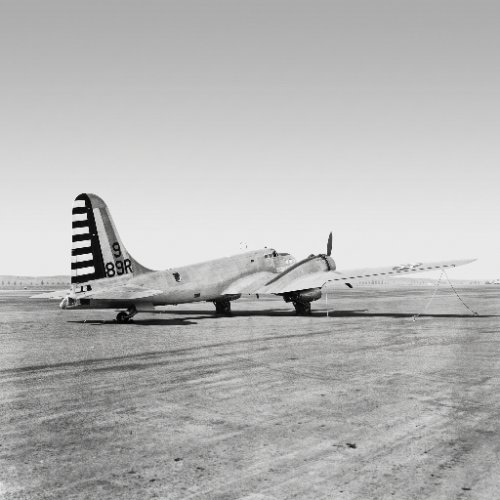
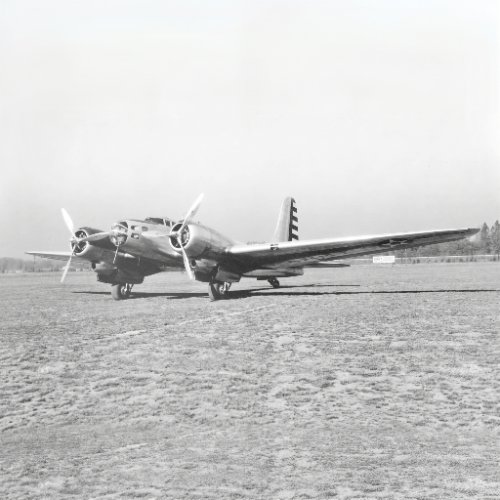
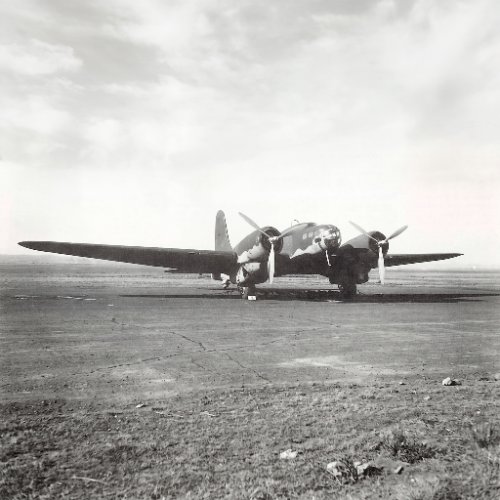
The Douglas B‑23 Dragon was a transitional American medium bomber developed on the eve of World War II.
Conceived as a successor to the Douglas B‑18 Bolo, it represented a significant step forward in speed, defensive armament, and aerodynamic refinement.
Although only 38 aircraft were produced and none saw overseas combat, the B‑23 played an important role in U.S. Army Air Corps training, coastal patrol, and later transport operations.
Development History
The origins can be traced back to the B-18 Bolo.
The B‑23 originated from the U.S. Army Air Corps’ dissatisfaction with the performance of the Douglas B‑18 Bolo, itself derived from the Douglas DC‑2 airliner.
By the mid‑1930s, the B‑18 was already becoming obsolete, prompting Douglas to propose a series of improvements.
These began as the XB‑22, essentially a B‑18 redesign powered by 1,600 hp Wright R‑2600 Twin Cyclone radial engines.
Contract Conversion and Redesign
The XB‑22’s promise led the USAAC to modify an existing contract for B‑18A bombers, converting the final 38 airframes into the new B‑23 configuration.
This redesign incorporated:
A larger wingspan, closely resembling the Douglas DC‑3’s wing planform
A fully retractable undercarriage
A redesigned fuselage with improved aerodynamics
Substantially enhanced defensive armament, including the first American glazed tail gun position on an operational bomber
First Flight and Production
The prototype B‑23 flew on 27 July 1939, and production ran from July 1939 through September 1940.
This placed the aircraft’s development just ahead of the outbreak of World War II in Europe.
Design and Technical Characteristics
Airframe and Layout
The B‑23 was a twin‑engine, low‑wing monoplane with a tapered fuselage and stepped cockpit.
Its design borrowed heavily from Douglas’s commercial airliner experience, particularly the DC‑3, resulting in a robust and aerodynamically efficient structure.
Key dimensions included:
Length: 58 ft 4 in
Wingspan: 92 ft
Empty weight: ~19,000 lb
Maximum takeoff weight: >30,000 lb
Powerplant
The aircraft was powered by two Wright R‑2600‑3 Twin Cyclone radial engines, each producing 1,600 hp, mounted in streamlined nacelles along the wing’s leading edge.
These drove three‑bladed propellers and provided a substantial performance improvement over the B‑18.
Performance
The B‑23’s performance placed it ahead of earlier U.S. medium bombers, though still behind the next generation (B‑25, B‑26):
Maximum speed: ~283–285 mph
Cruise speed: ~210 mph
Range: ~1,400 miles (ferry range up to 2,750 miles)
Service ceiling: ~31,600 ft
Climb: 10,000 ft in ~6.5 minutes
Crew and Internal Arrangement
The aircraft carried a crew of six, including pilot, co‑pilot, bombardier/navigator, radio operator, and gunners.
The nose was fully glazed for bombardier visibility, and the tail featured a unique prone‑position gun station.
Armament
The B‑23’s defensive armament was a major advancement:
Three .30‑calibre machine guns in nose and dorsal positions
One .50‑calibre machine gun in a glazed tail position—the first such installation on an American bomber
Bomb load: up to 2,000 lb in an internal bomb bay
This tail gun innovation influenced later bomber designs, including the B‑25 and B‑26.
Operational History
Pre‑War and Early WWII Service
Although the B‑23 was significantly better than the B‑18, it was quickly overshadowed by more modern medium bombers entering service in 1940–1941.
As a result, the B‑23 was never deployed in overseas combat.
Coastal Patrol
For a brief period early in WWII, B‑23s were assigned to West Coast patrol duties, monitoring for potential Japanese submarine activity.
Their range and speed made them suitable for this role, though they were soon replaced by more capable aircraft.
Training and Testbed Roles
The majority of B‑23s were relegated to training, navigation instruction, and systems testing.
Several aircraft served as experimental platforms:
One B‑23 was used by General Electric for turbosupercharger development
Another tested cabin pressurisation system, contributing to later high‑altitude bomber designs
Conversion to Transport
By mid‑1942, many B‑23s were converted into transports and redesignated UC‑67.
These aircraft were used for cargo, personnel movement, and even glider towing.
Twelve were converted specifically for transport duties.
Postwar Civilian Use
After WWII, surviving B‑23s were sold as surplus and became popular as executive transports and small airliners.
Their spacious fuselages and strong airframes made them ideal for conversion.
Notably, Howard Hughes used a converted B‑23 as a personal aircraft.
Variants
B‑23
The standard medium bomber version; 38 built.
Features included the redesigned fuselage, enlarged wings, and improved armament.
C‑67 / UC‑67
Transport conversions of the B‑23, with 12 aircraft modified for cargo and glider‑towing roles.
In 1943, these were redesignated UC‑67.
No other major variants were produced, though numerous aircraft underwent individualised civilian modifications after the war.
WWII Context and Legacy
Transitional Bomber
The B‑23 Dragon occupies a unique place in U.S. bomber development.
It was:
The last Douglas medium bomber before the company shifted focus to transports and heavy bombers
A bridge between pre‑war designs and the high‑performance medium bombers that defined WWII
A test platform for technologies that later appeared in frontline aircraft
Obsolescence
Despite its improvements, the B‑23 was quickly outclassed by:
North American B‑25 Mitchell & the Martin B‑26 Marauder
These aircraft offered superior speed, payload, and combat survivability, leading to the B‑23’s limited production and non‑combat status.
Survival
A surprisingly large number of B‑23s survived into the postwar era due to their civilian conversions.
Many remain preserved in museums or private collections.
Conclusion
The Douglas B‑23 Dragon was an important evolutionary step in American bomber design.
Although overshadowed by more advanced aircraft and never used in combat, it introduced key innovations—especially the tail gun position—and served reliably in training, patrol, and transport roles.
Its postwar civilian career further extended its legacy, making it one of the more enduring aircraft of its generation despite its small production run.