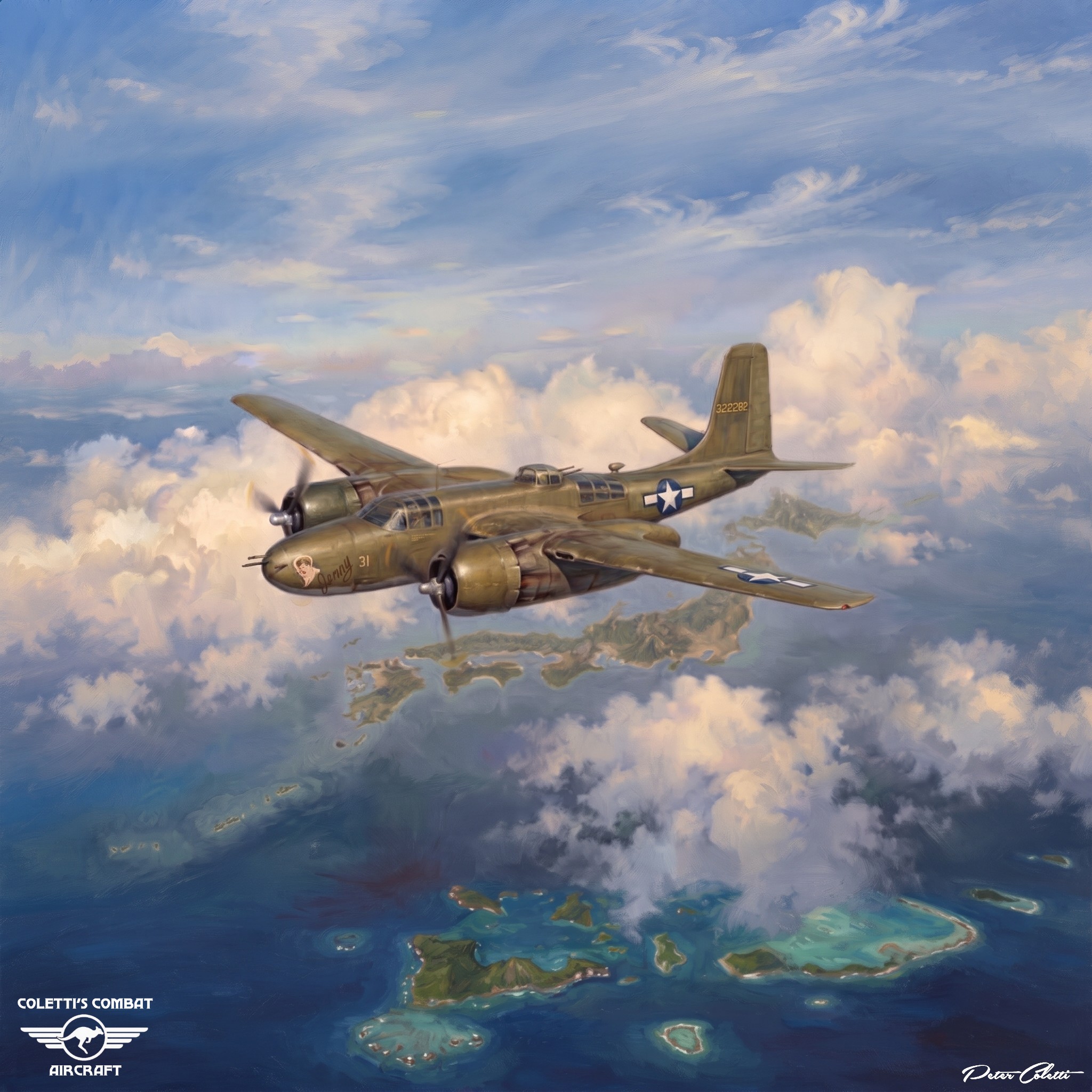
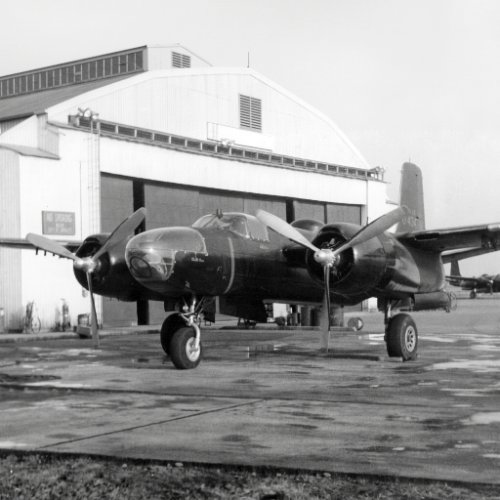
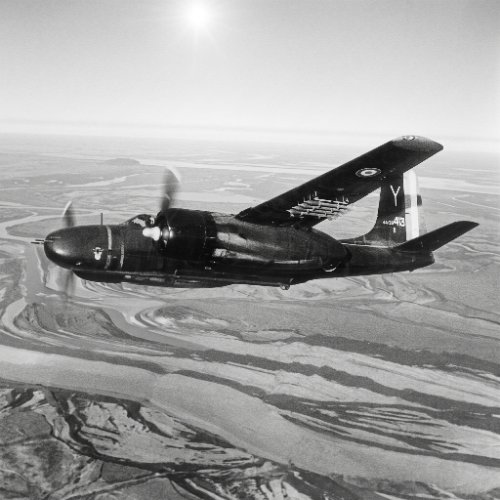
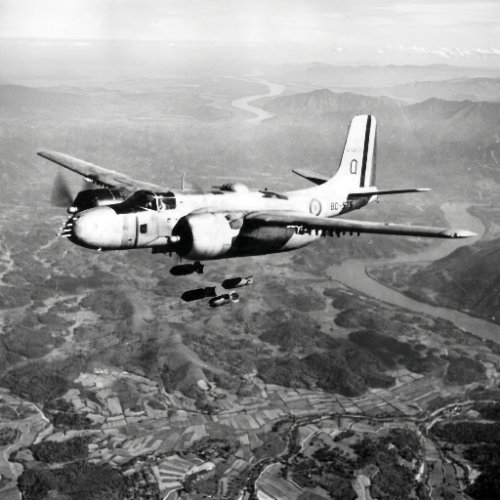
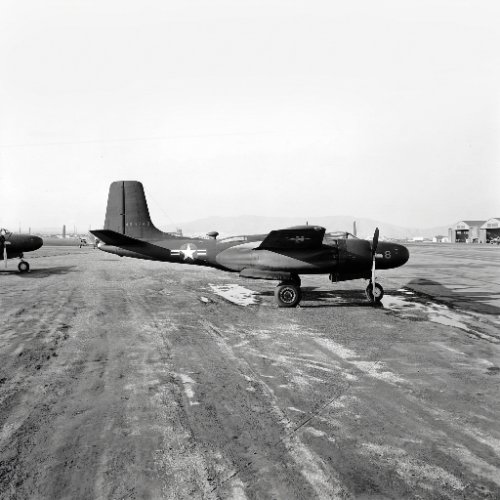
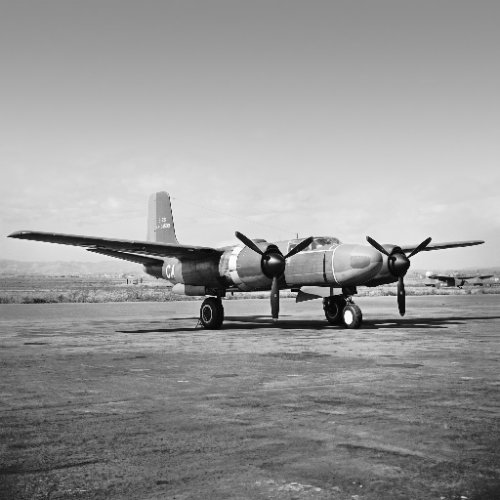
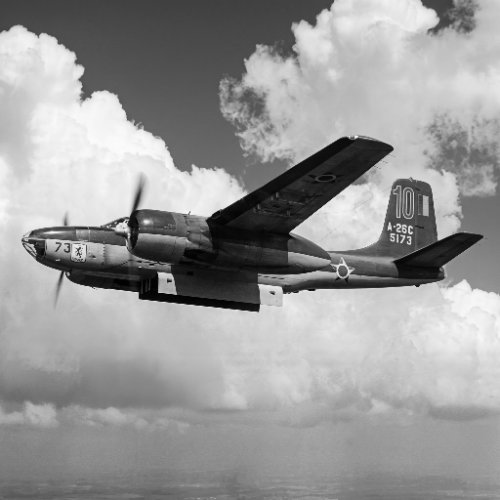
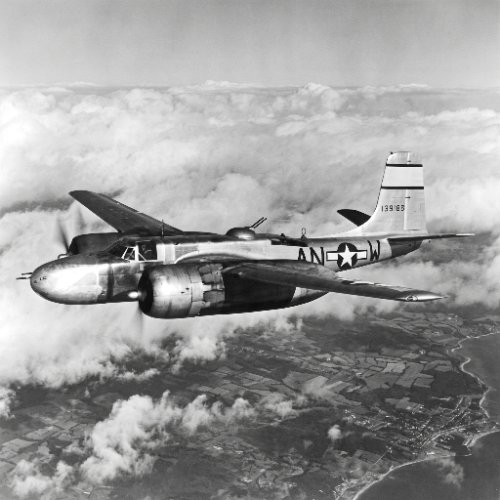
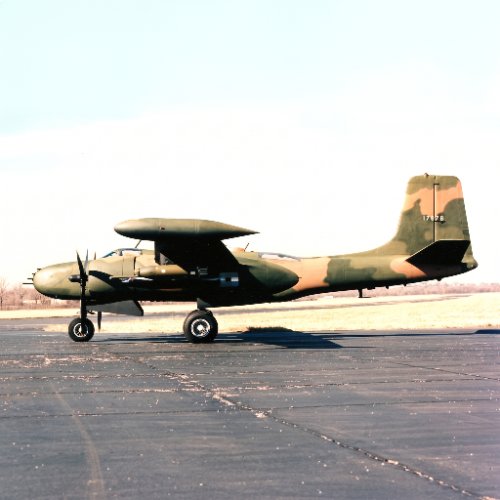
The Douglas A‑26 Invader was conceived as a fast, hard‑hitting successor to the Douglas A‑20 Havoc, intended to give the United States Army Air Forces a more capable light attack bomber during World War II.
Douglas A-26C Invader
Design work began in 1940, driven by the requirement for a twin‑engine aircraft that could deliver greater speed, heavier armament, and a larger bomb load than its predecessor.
The project was led by Ed Heinemann, with contributions from Robert Donovan and Ted R. Smith, and featured aerodynamic innovations such as the NACA 65‑215 laminar‑flow wing developed by A.M.O. Smith.
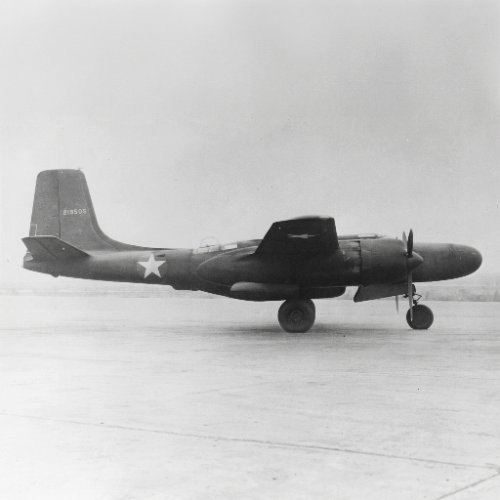
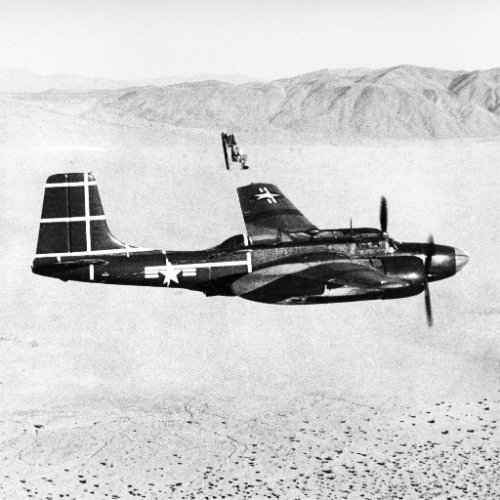
Douglas XA-26 Invader
Development and Prototyping
The prototype, designated XA‑26, took flight on 10 July 1942 at Mines Field, California, piloted by Benny Howard.
Early testing confirmed excellent speed and handling but also revealed several issues.
Engine cooling problems required redesigned cowlings and removal of the original propeller spinners, while the nose landing gear proved structurally weak and had to be strengthened.
Douglas A-26C Invader
A second prototype, the XA‑26B, explored heavy forward‑firing armament options, including machine guns, autocannons, and even an experimental 75 mm cannon, though the latter never entered operational use.
The Invader’s design philosophy emphasised a single‑pilot cockpit, eliminating the need for a co‑pilot and allowing a slimmer fuselage.
This approach, combined with its powerful Pratt & Whitney R‑2800 Double Wasp radial engines, gave the aircraft a notably clean and fast profile.
Tests showed the airframe to be sound and capable of high performance, though production progressed slowly due to Douglas’s commitments to other wartime aircraft.
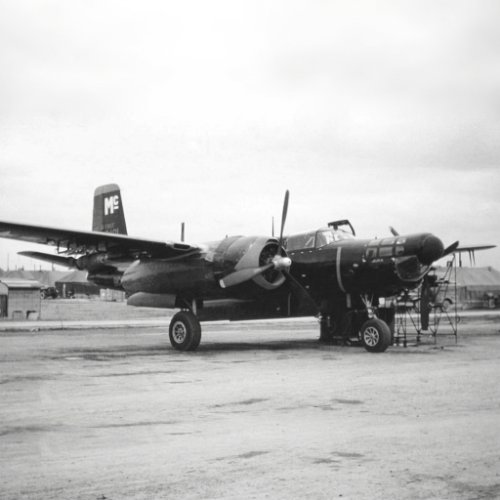
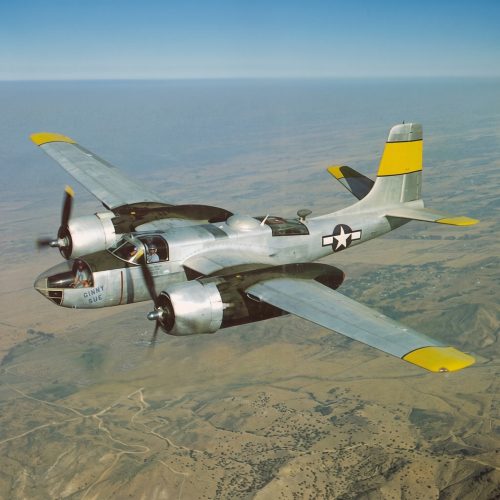
Douglas RB-26C Invader
Airframe and Technical Characteristics
The A‑26 was built around a laminar‑flow wing, a relatively advanced feature for the era, improving efficiency and speed.
Its twin R‑2800 engines provided the power needed for both high‑speed attack runs and medium‑altitude bombing.
The aircraft could carry a substantial bomb load internally and externally, and its modular nose design allowed it to be configured either for precision bombing or heavy strafing.
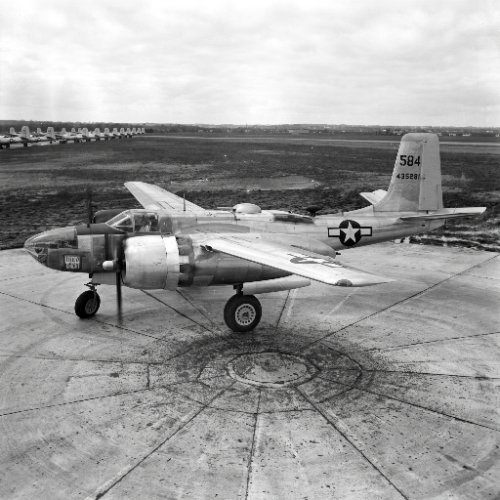
Douglas A-26B Invader
Two primary nose configurations defined the early production models:
A‑26B “gun‑nose”: Equipped with six, later eight, fixed. 50‑calibre machine guns, with additional guns installed in the wings after about 1,570 aircraft had been produced.
Some configurations allowed up to 14 forward‑firing 50‑calibre guns, making the Invader one of the most heavily armed attack aircraft of WWII.
A‑26C “glass‑nose”: Featured a bombardier’s station with a Norden bombsight for medium‑altitude precision bombing.
Douglas A-26B Invader
Early versions included two fixed forward guns, later removed as wing and underwing gun installations proved more effective.
The aircraft’s top speed reached roughly 570 km/h, a figure that placed it among the fastest American twin‑engine bombers of the war.
Its combination of speed, firepower, and bomb capacity made it versatile across a wide range of missions.
Douglas A-26B Invader
Operational Introduction and WWII Service
Although designed early in the war, the A‑26 entered combat relatively late.
Its first operational missions took place in 1944, with the aircraft serving in both the European and Pacific theatres.
In Europe, A‑26Bs and A‑26Cs flew with the Ninth Air Force, conducting low‑level strafing attacks, medium‑altitude bombing, and armed reconnaissance.
In the Pacific, the Invader’s speed and heavy armament made it effective against dispersed Japanese targets and in support of ground operations.
By the end of the war, it was widely regarded as one of the best light bombers in U.S. service.
Douglas XA-26 Invader
Postwar Redesignation and Continued Service
In 1948, after the retirement of the unrelated Martin B‑26 Marauder, the U.S. Air Force reassigned the designation B‑26 to the Invader.
This change caused long‑lasting confusion, as the two aircraft shared no developmental lineage.
Under its new designation, the B‑26 became a mainstay of night interdiction during the Korean War, attacking supply routes, rail lines, and convoys under cover of darkness.
Douglas A-26C Invader
Its ruggedness and firepower made it ideal for these solitary, hazardous missions.
The Invader’s career extended further into the Vietnam era, where ageing WWII airframes were initially deployed under Project Farm Gate.
Wing‑fatigue issues eventually grounded many aircraft, but a heavily rebuilt variant—the On Mark B‑26K Counter‑Invader—returned to service.
Operating from Thailand under the call sign “Nimrod”, these aircraft became feared for their effectiveness against trucks along the Ho Chi Minh Trail until their retirement in 1969.
International and Civilian Use
Beyond U.S. service, the A‑26/B‑26 flew for the French Air Force in Indochina and Algeria and even appeared in CIA operations such as the Bay of Pigs invasion in 1961.
Its longevity was remarkable: some airframes continued flying into the 1970s as civilian fire bombers or executive transports, though wing‑spar fatigue eventually forced many to be retired.
The last military operator, the Colombian Air Force, retired its Invaders in 1980.
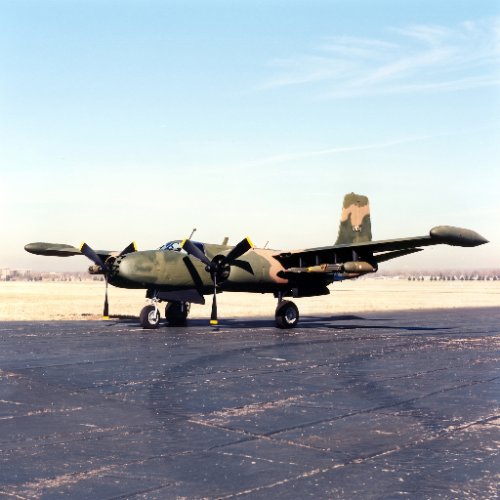
Douglas A-26F Counter-Invader
Variants Overview
Key variants included:
XA‑26 / XA‑26B prototypes – Testbeds for bombardier and gun‑nose configurations.
A‑26B – Gun‑nose attack version with up to 14 forward‑firing guns.
A‑26C – Glass‑nose bomber version with Norden bombsight.
Douglas A-26C Invader
B‑26 (post‑1948) – Redesignated Invader used in Korea and early Vietnam.
B‑26K Counter‑Invader – Heavily rebuilt attack variant for counter‑insurgency operations.
On Mark Executive / Marketeer / Marksman – Civilian conversions for transport and business aviation.
Douglas RB-26C Invader
Summary
The Douglas A‑26 Invader was one of the most versatile and durable American combat aircraft of the mid‑20th century.
Designed for speed, firepower, and adaptability, it entered WWII late but quickly proved itself in both European and Pacific operations.
Its postwar redesignation as the B‑26 led to a second life in Korea and Vietnam, while international and civilian operators extended its service into the 1980s.
With more than 2,500 aircraft built, the Invader remains notable for having fought in three major American wars, a rare distinction among piston‑engine combat aircraft.