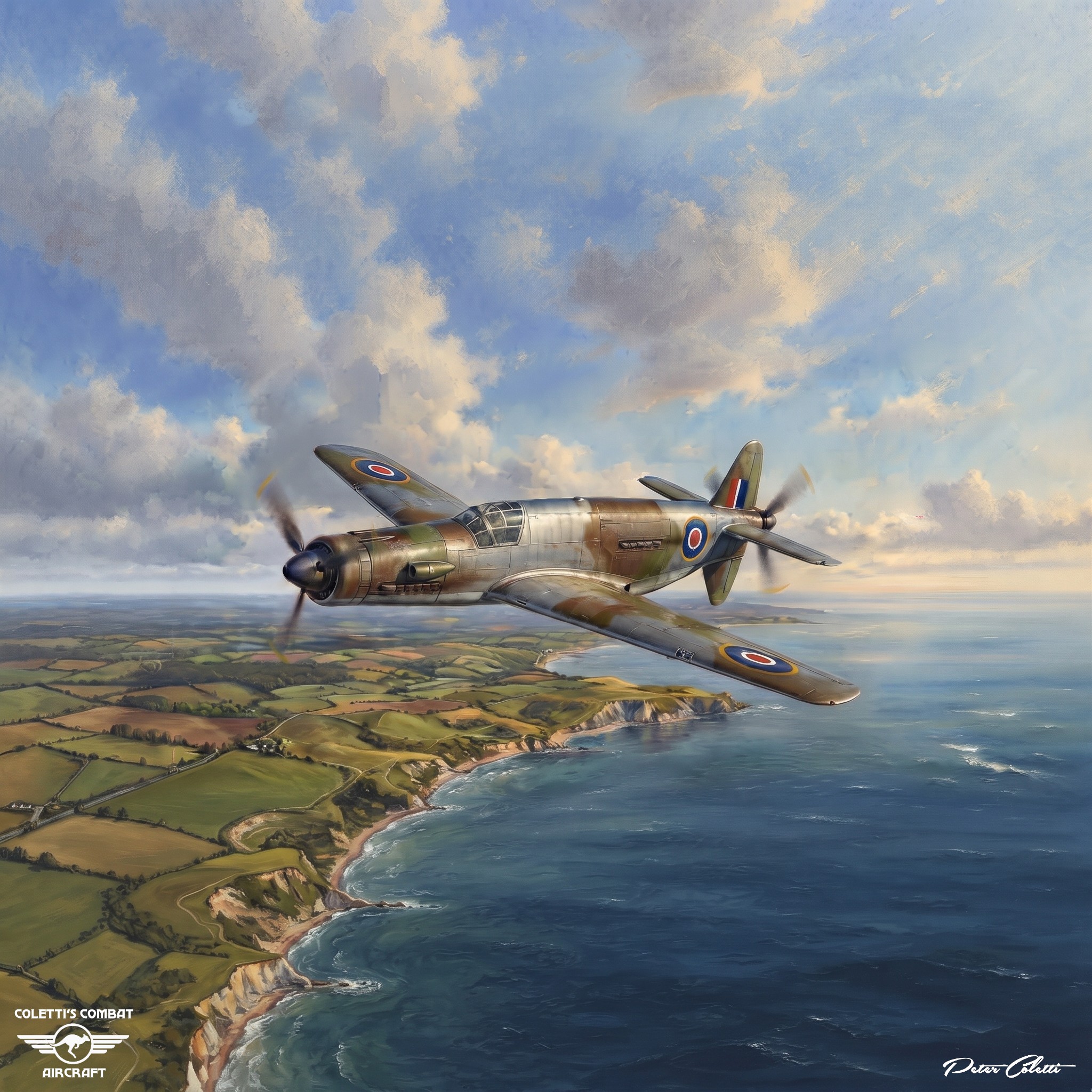
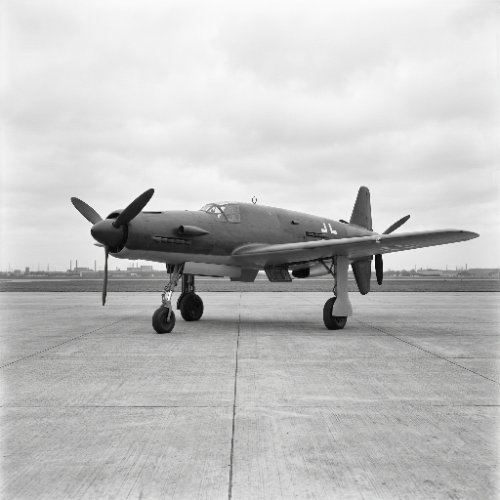
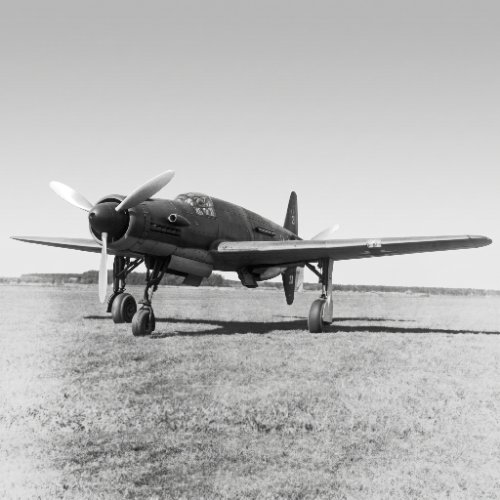
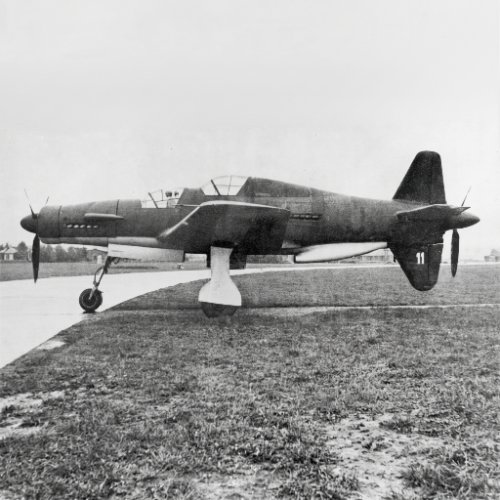
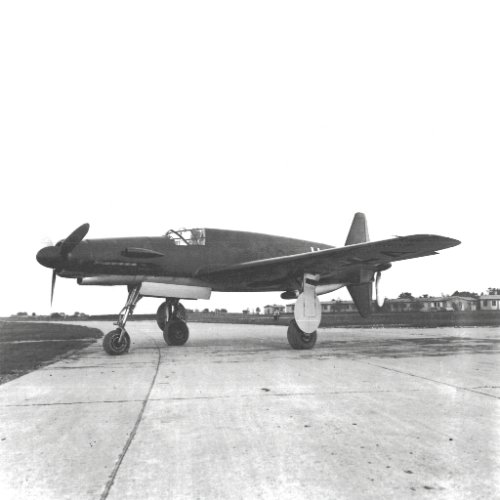
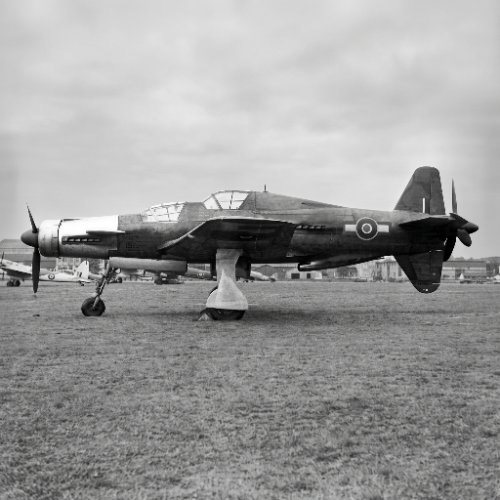
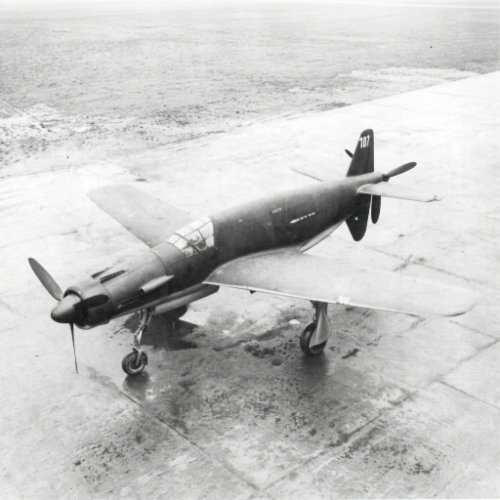
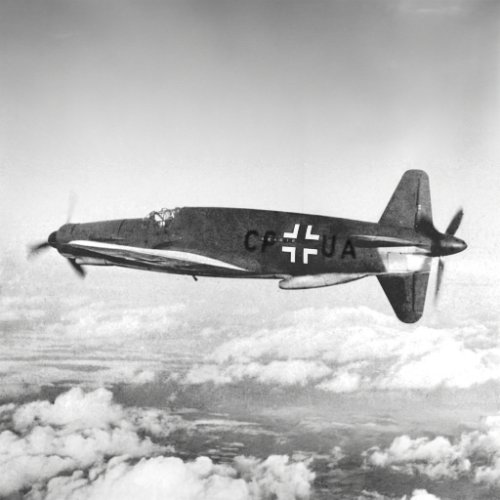
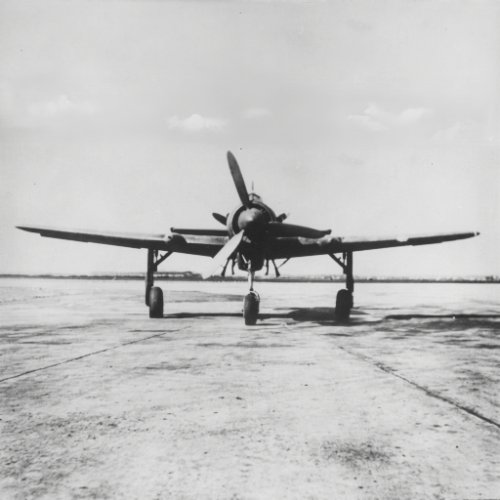
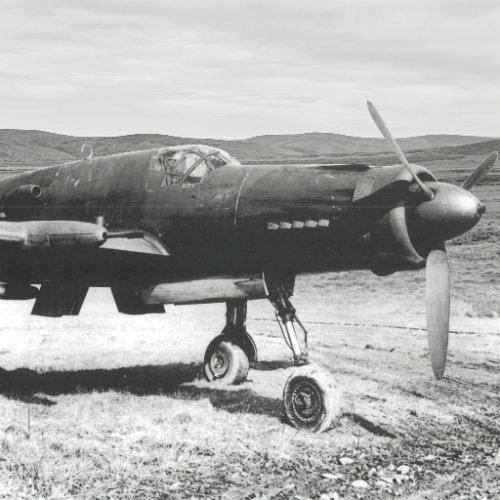
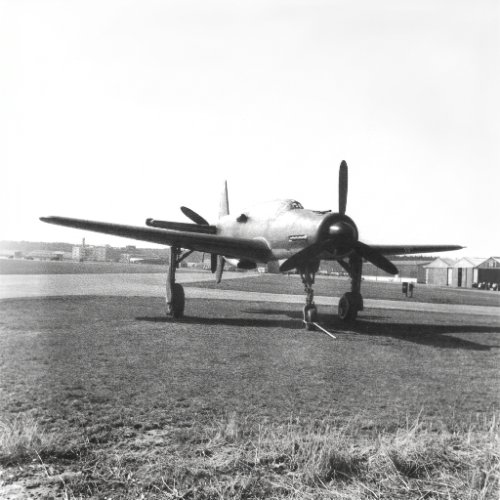
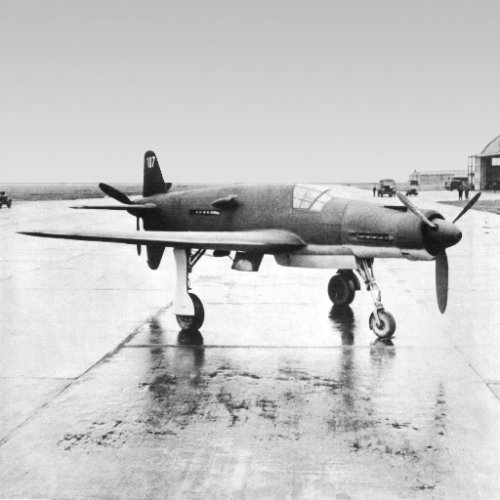
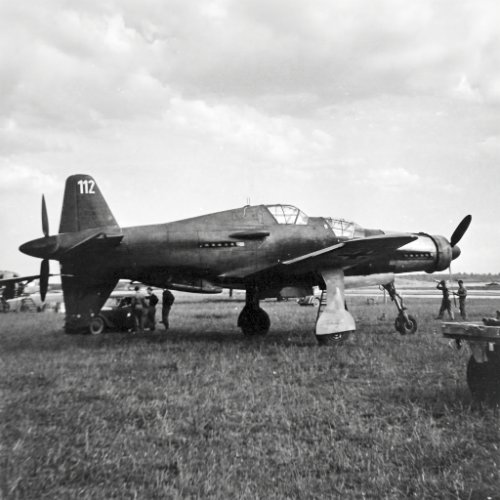
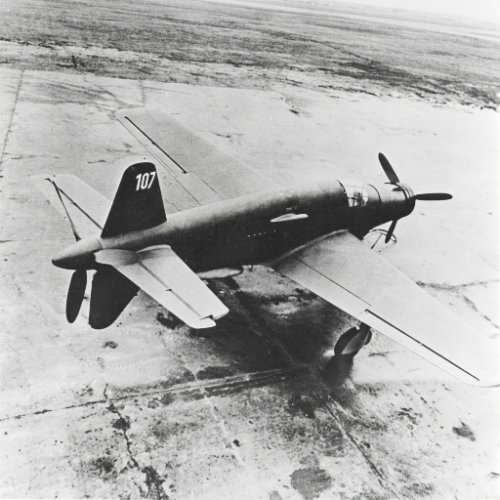
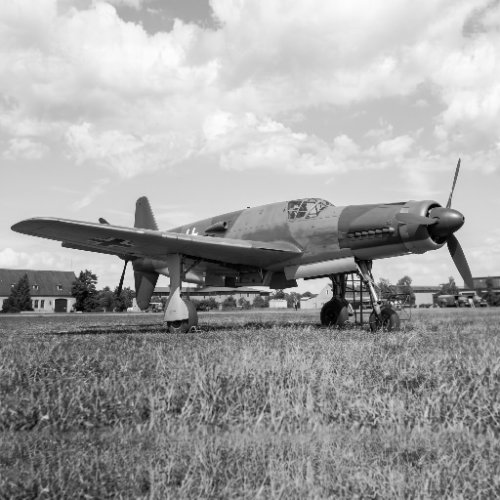
The Dornier Do 335 Pfeil (“Arrow”) was Nazi Germany’s fastest piston‑engined aircraft of the Second World War, reaching speeds of roughly 765–800 km/h (475–497 mph) thanks to its unique push‑pull twin‑engine configuration.
Designed as a high‑speed bomber and later developed into a heavy fighter and interceptor, it represented one of the most advanced late‑war Luftwaffe designs.
Despite its exceptional performance, production delays and the collapsing German war economy meant that only about 37–40 aircraft were built, and the type never saw combat.
Origins and Development
Early Conceptual Roots The Do 335’s unusual configuration originated decades earlier.
Designer Claude Dornier had experimented with tandem push‑pull engines in his WWI and interwar flying boats, including the Do J Wal and Do X, where the arrangement reduced drag and improved handling.
By 1937, Dornier patented a high‑speed bomber concept using this layout, later developed into the P.59 project.
In 1940, he commissioned a small test aircraft based on the Dornier Do 17 to validate the long driveshaft needed to power a rear pusher propeller.
From Schnellbomber to Heavy Fighter
Initially conceived as a Schnellbomber (fast bomber), the design evolved as Luftwaffe priorities shifted under increasing Allied bombing pressure.
By 1939–1943, the concept was re‑cast as a high‑speed interceptor and heavy fighter, culminating in the Do 335 V1 prototype, which first flew on 26 October 1943.
Prototyping and Production
Development continued through multiple prototypes and a pre‑production run:
V‑series prototypes (V1 onward) tested handling, armament, and engine reliability.
A‑0 pre‑production aircraft (10 built in 1944).
A‑1 production model began manufacture in early 1945 at Oberpfaffenhofen.
Total production reached approximately 37–40 aircraft, far below planned numbers due to engine shortages, bombing disruptions, and late‑war chaos.
Design and Engineering
Push‑Pull Twin‑Engine Configuration
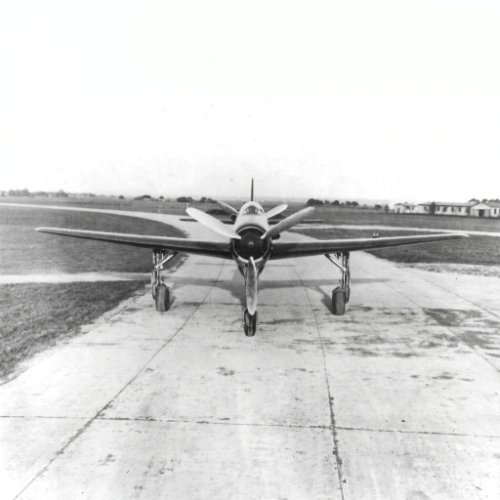
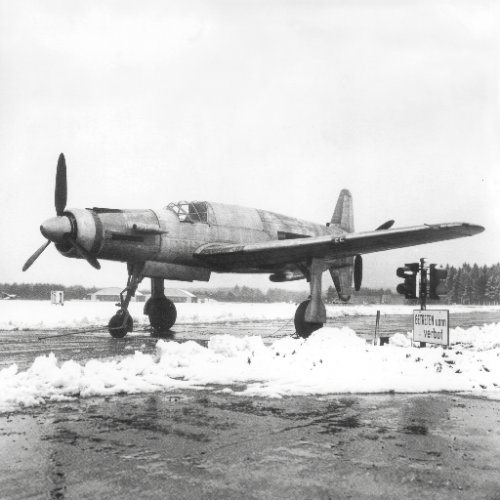
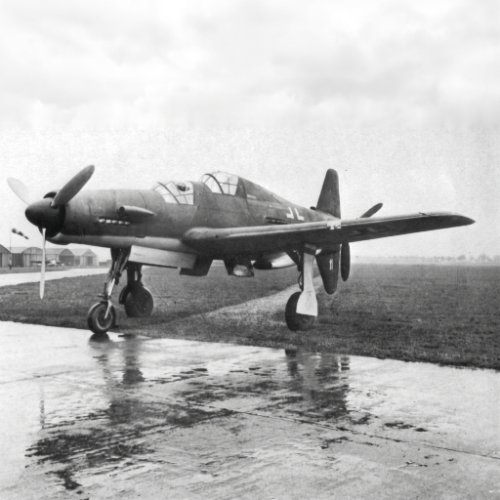
The Do 335’s defining feature was its inline twin‑engine arrangement:
Front engine: Daimler‑Benz DB 603A inverted V‑12 driving a tractor propeller.
Rear engine: Another DB 603A driving a pusher propeller via a long driveshaft.
This configuration offered several advantages:
Reduced drag compared to wing‑mounted twin engines.
No asymmetric thrust during single‑engine operation.
Higher roll rate due to centreline mass concentration.
Exceptional speed, surpassing all Allied piston fighters and exceeded only by early jets.
Airframe and Layout
The Do 335 was a low‑wing monoplane with a streamlined fuselage and cruciform tail:
Length: 13.85 m
Wingspan: 13.8 m
Height: 4.55 m
Empty weight: ~7,400 kg
Max takeoff weight: >10,000 kg
The cruciform tail included a ventral fin to protect the rear propeller during takeoff rotation.
Landing Gear
A retractable tricycle landing gear—unusual for German fighters—was used to provide clearance for the large rear propeller and improve ground handling.
Pilot Safety and Ejection System
Because the rear propeller posed a lethal hazard during bailout, the Do 335 incorporated one of the world’s earliest ejection seat systems:
Explosive bolts jettisoned the rear propeller and dorsal fin.
Twin canopy jettison levers allowed the pilot to clear the cockpit before ejection.
Performance
With both engines operating, the Do 335 achieved:
Top speed: ~765 km/h (475 mph) to ~800 km/h (497 mph) depending on variant.
Rate of climb: ~1,750 ft/min.
Service ceiling: ~11,400 m (37,400 ft).
Range: ~1,200 km (746 mi).
Even on one engine, the aircraft could maintain ~350 mph, a testament to its aerodynamic efficiency.
Armament and Equipment
Standard Fighter Armament
The typical Do 335 A‑1 carried:
1 × 30 mm MK 103 cannon firing through the propeller hub.
2 × 20 mm MG 151/20 cannons in the forward fuselage.
Ordnance Options
The internal weapons bay could carry:
Up to 1,000 kg of bombs.
Rockets or additional cannon pods for ground‑attack roles.
Variants
Prototype Series (V‑models)
Used for aerodynamic testing, armament trials, and engine reliability evaluation.
A‑Series (Production / Pre‑production)
Do 335 A‑0: Pre‑production evaluation aircraft (10 built).
Do 335 A‑1: Main single‑seat fighter version; limited production in 1945.
Do 335 A‑12: Two‑seat trainer variant.
B‑Series (Projected)
Planned improvements included:
Heavy fighter variants with increased armament.
Night fighter versions with radar.
Two‑seat destroyer and reconnaissance models.
Most B‑series aircraft remained incomplete when Allied forces captured Dornier facilities.
Operational History and WWII Context
Late‑War Deployment
The Do 335 entered Luftwaffe service in March 1945, but only in small numbers and primarily for training and evaluation.
The aircraft’s introduction came too late to influence the war:
No confirmed combat missions were recorded.
A few reconnaissance flights may have occurred, but documentation is sparse.
Strategic Context
By 1944–45:
Allied bombing crippled German industry.
Jet fighters (Me 262, He 162) were prioritized.
DB 603 engine shortages slowed production.
Transportation networks were collapsing.
Thus, despite its extraordinary performance, the Do 335 became another example of advanced German technology arriving too late to matter.
Allied Capture and Evaluation
Several Do 335s were seized by Allied forces:
One was shipped to the U.S. aboard HMS Reaper in 1945 and tested at Freeman Field, Indiana, confirming its excellent speed and handling but noting poor rearward visibility and engine reliability issues.
Surviving Aircraft
Only one complete Do 335 survives today:
Do 335 A‑0, Werknummer 102, restored and displayed at the Smithsonian National Air and Space Museum’s Udvar‑Hazy Center.
It stands as a rare example of late‑war German engineering ambition.
Conclusion
The Dornier Do 335 Pfeil remains one of the most technically fascinating aircraft of WWII.
Its push‑pull configuration, high speed, advanced safety systems, and multi‑role potential made it a standout design among late‑war piston fighters.
Yet its operational impact was negligible due to its extremely late introduction and Germany’s deteriorating industrial capacity.
Today, the lone surviving example serves as a testament to the innovative—but ultimately unrealized—potential of the Luftwaffe’s final generation of piston‑powered aircraft.