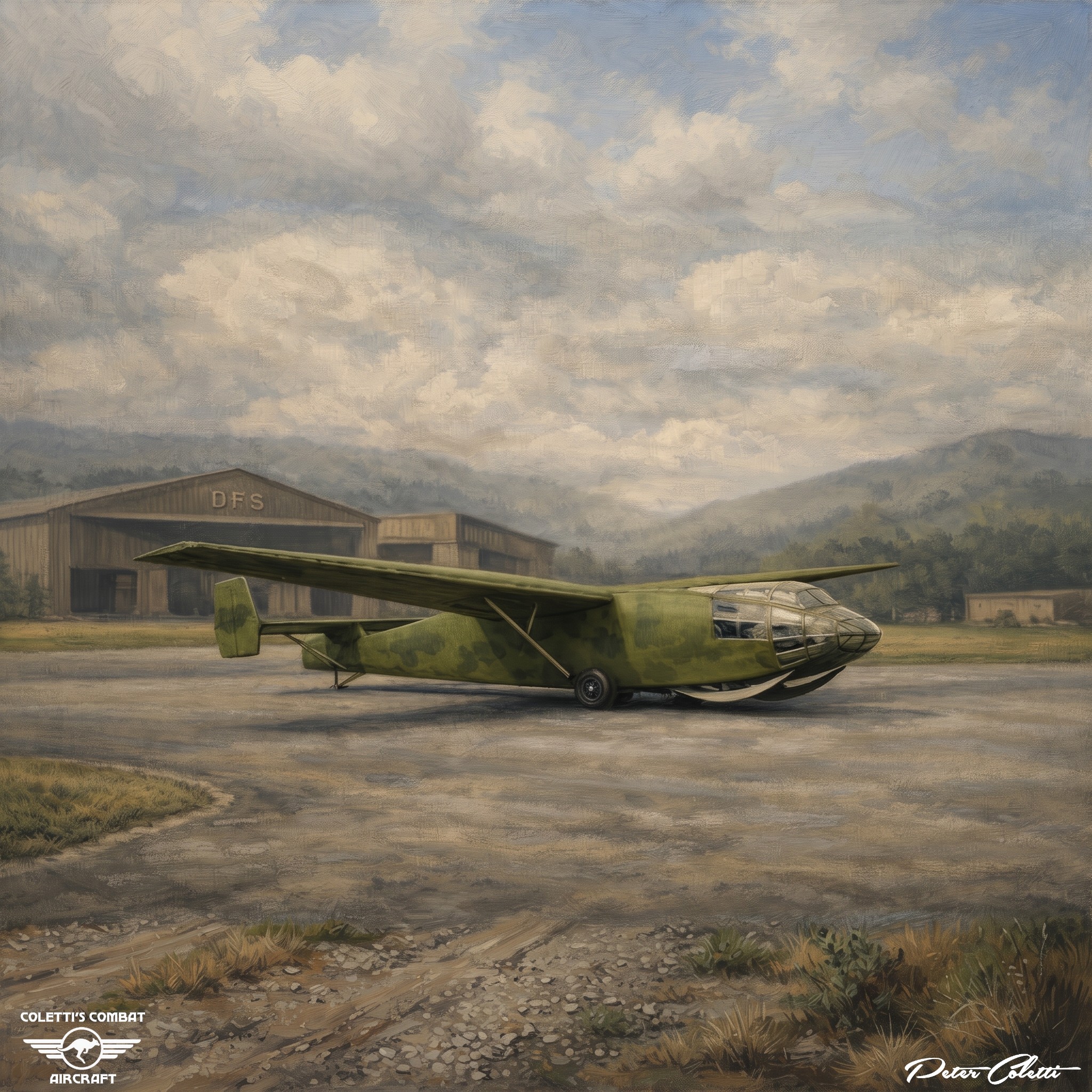
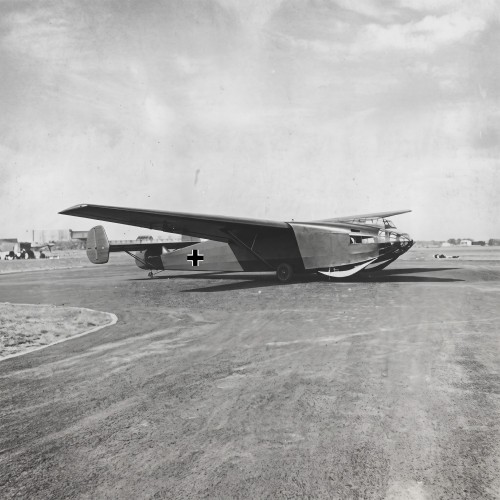
The DFS 331 was a large German transport glider prototype developed during World War II by the Deutsche Forschungsanstalt für Segelflug (DFS) in cooperation with Gotha Waggonfabrik.
Conceived as a successor to the successful DFS 230 assault glider, it was intended to carry significantly heavier loads—troops, light vehicles, and anti‑aircraft guns—into contested areas.
Only one or two prototypes were completed, and the type never entered production, ultimately losing out to the Gotha Go 242.
Development History
Origins and Requirements
The Luftwaffe’s airborne operations in 1940—particularly the use of the DFS 230 in the Battle of France and the assault on Fort Eben‑Emael—demonstrated the value of glider‑borne troops.
However, the DFS 230’s limited payload (nine troops or ~1,200 kg) prompted the Reichsluftfahrtministerium (RLM) to request a larger, more capable transport glider.
DFS and Gotha were invited to propose designs meeting new specifications for heavier troop and cargo delivery.
Design Work and Construction
Hans Jacobs, DFS’s leading glider designer, created the DFS 331 as a Großraumlastensegler (large‑capacity transport glider).
Due to DFS’s workload, construction was assigned to Gotha’s Erfurt repair works.
The RLM ordered three prototypes on 1 September 1940, with completion expected by November.
At least two were finished.
Flight Testing
The first prototype, DFS 331 V1, was completed in late September 1940 and made its maiden flight on 30 September 1940, towed by a Junkers Ju 52 and piloted by Hanna Reitsch.
Testing continued through January 1941, totalling around 100 flights.
Evaluations found the aircraft stable and easy to handle.
In comparative trials, the DFS 331 outperformed the rival Gotha Go 242 in flight characteristics but had inferior payload capacity.
This shortcoming led the RLM to cancel further development on 24 March 1941.
Design and Technical Characteristics
General Configuration
The DFS 331 was a high‑wing, strut‑braced glider built using mixed construction techniques:
Wings: wooden structure
Fuselage: extremely wide, built from steel tubing covered with fabric and plywood
Tail: twin‑fin arrangement
Landing gear: jettisonable two‑wheel take-off gear; landing on retractable skids
Access: two side doors on the port side
Cargo loading: the rear fuselage is hinged upward behind the wing trailing edge for loading bulky equipment
Cockpit and Crew
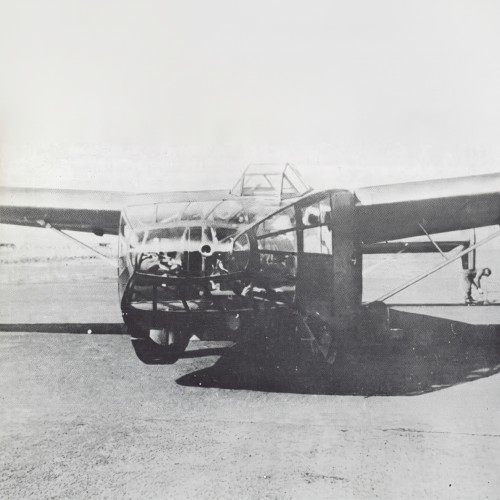
The cockpit was fully glazed, providing excellent visibility.
The pilot’s position was offset to the left, improving forward and downward sightlines during landing approaches.
The crew consisted of one or two depending on configuration.
Capacity
The wide fuselage allowed:
20 troops,
or
~2,300 kg (5,071 lb) of cargo, including light Flak guns or small vehicles.
Some accounts note potential capacity for up to 30 soldiers, reflecting internal DFS estimates rather than official RLM figures.
Armament
Defensive armament consisted of two MG 15 machine guns.
Performance
Flight Characteristics
Testing showed the DFS 331 to be stable and pleasant to fly.
Its glide ratio was:
17.5–18:1, depending on loading.
Speeds
Maximum speed: 330 km/h
Towing speed: 270–330 km/h (depending on source and towing aircraft)
Weights
Empty weight: 2,270 kg
Maximum take-off weight: 4,770 kg
Dimensions
Wingspan: 23.0 m
Length: 15.81 m
Height: 3.55 m
Wing area: 60 m²
Variants
Only prototypes were built:
DFS 331 V1: first and primary test aircraft
DFS 331 V2/V3: at least one additional airframe completed; details sparse
No operational or production variants were developed.
Operational Context in WWII
Role in German Airborne Strategy
The DFS 331 emerged during a period when Germany sought larger gliders to support airborne operations similar to those in Belgium, the Netherlands, and Crete.
The RLM favoured the Gotha Go 242, which offered better loading efficiency and greater cargo capacity.
As a result, the DFS 331 remained experimental and never saw operational service.
Legacy
The aircraft illustrates the intense competition within the German aviation industry and the shifting priorities of the Luftwaffe.
Although innovative, the DFS 331 was ultimately sidelined by practical wartime requirements and resource constraints.
Summary
The DFS 331 was an ambitious attempt to expand Germany’s airborne transport capabilities during WWII.
Designed by Hans Jacobs as a large, versatile glider capable of carrying troops and heavy equipment, it demonstrated excellent handling but insufficient payload capacity.
Its cancellation in favour of the Gotha Go 242 left it as a notable but little‑known example of German wartime glider experimentation—an aircraft that flew well but arrived at the wrong moment in the Luftwaffe’s evolving logistical doctrine.