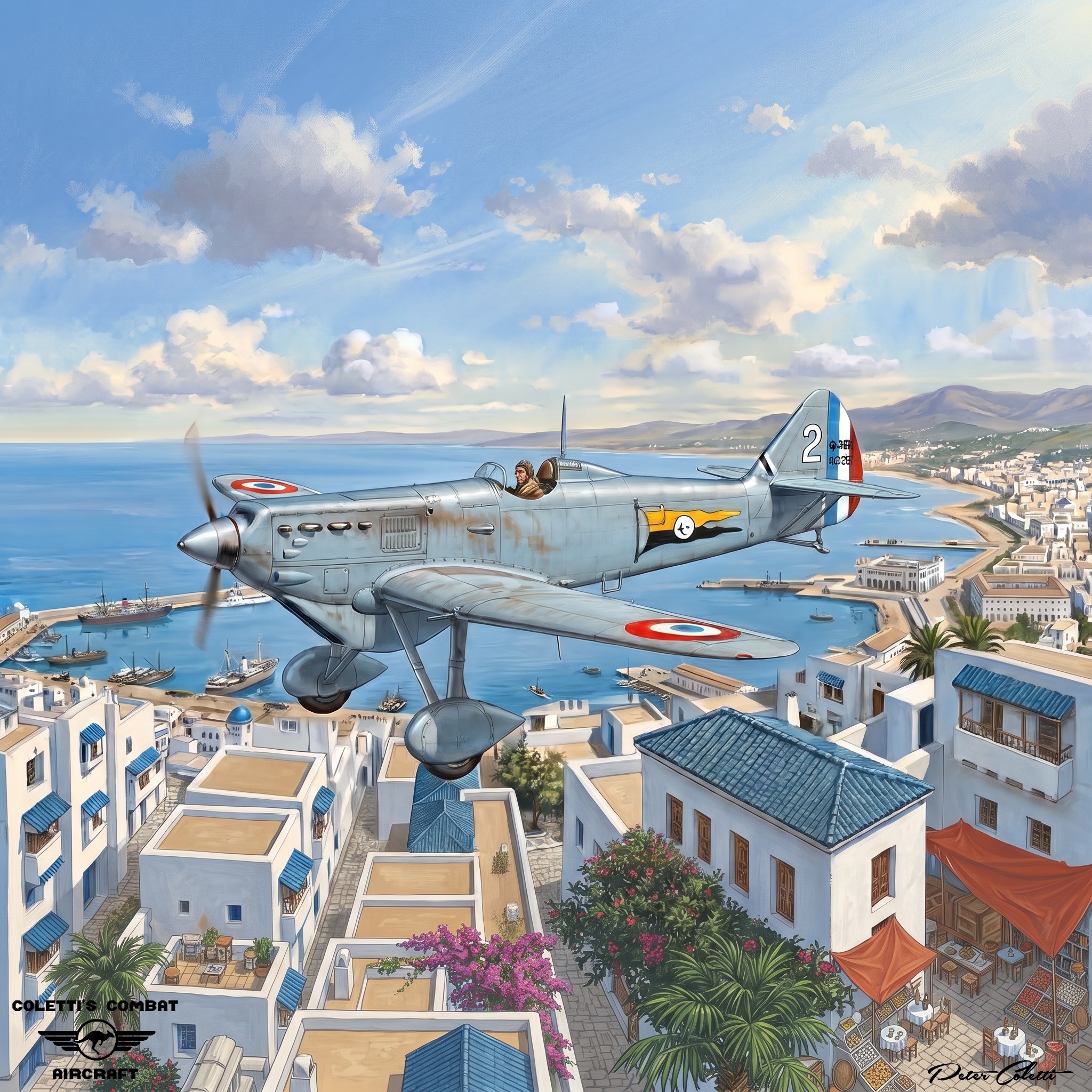
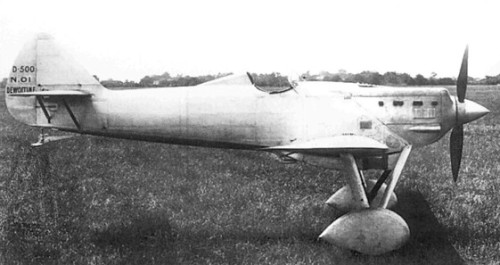
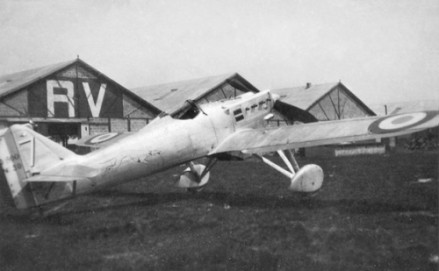
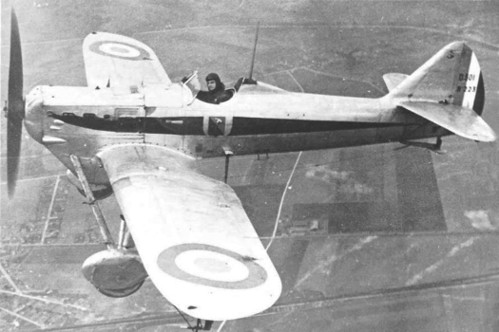
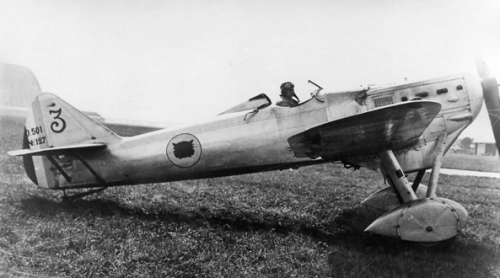
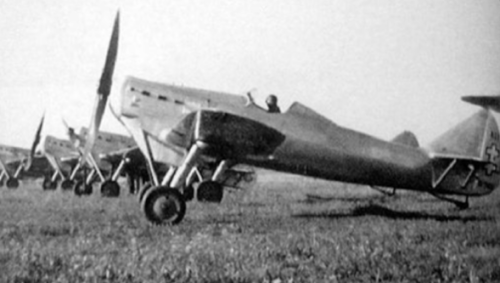
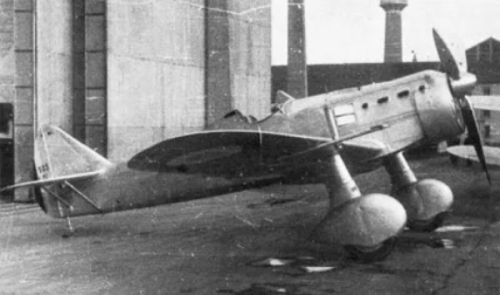
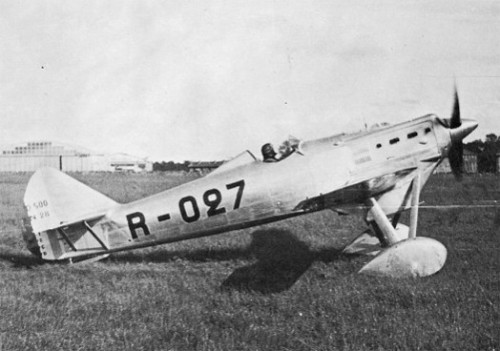
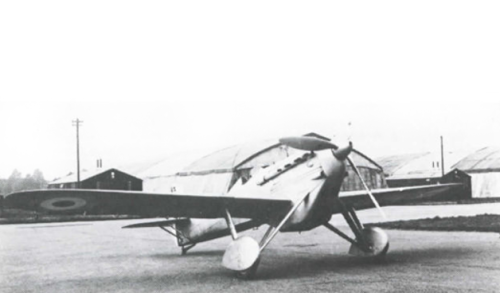
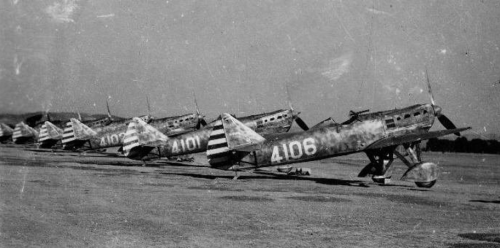
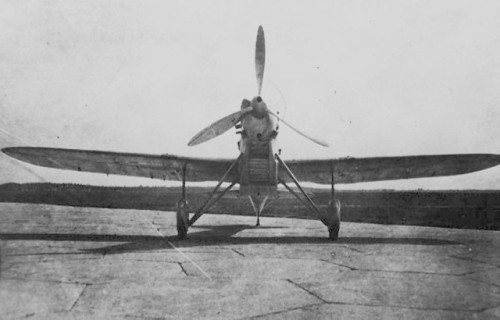
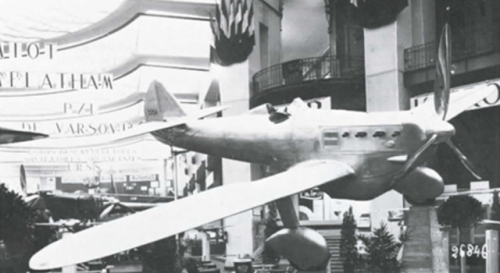
The Dewoitine D.500 series—comprising the D.500, D.501, and D.510—was a family of French monoplane fighters introduced in the mid-1930s.
Though advanced for their time, by the outbreak of World War II they were largely obsolete.
France
Initial Deployment
The Armée de l’Air received 100 D.500s and 133 D.501s, with 30 D.501s also supplied to the French Navy’s shore-based units.
Role in WWII
At the start of the war in 1939, small numbers were still in service with regional defence squadrons (Escadrilles Régionales de Chasse).
However, they were quickly relegated to training and second-line duties due to their outdated design—open cockpits, fixed undercarriages, and limited armament.
End of Service
Most were withdrawn from frontline use before the fall of France in June 1940, though some D.510s remained active during the Battle of France.
Export and Foreign Use
China
24 aircraft (mostly D.510s) were exported to the Republic of China.
At least 18 saw combat against Japanese forces during the Second Sino-Japanese War.
Spain
A few aircraft were covertly supplied to the Spanish Republican Air Force during the Spanish Civil War (1936–1939), preceding WWII.
Lithuania & Saudi Arabia
Small numbers were sold to Lithuania and Saudi Arabia, though their wartime use was minimal or undocumented.
The Variants
D.500.01
First prototype of the series.
D.500
Initial production model powered by a Hispano-Suiza 12Xbrs engine rated at 515 kW (691 hp).
Armed with either two 7.7 mm Vickers machine guns or two 7.5 mm Darne guns in the nose, with optional wing-mounted Darnes.
A total of 101 units were built.
D.500V
Export version of the D.500 for Venezuela.
Three aircraft delivered.
D.501
Re-powered with a Hispano-Suiza 12Xcrs.
Featured a 20 mm Hispano-Suiza S7 cannon firing through the propeller hub and two wing-mounted machine guns.
157 units produced.
D.501L
Export version of the D.501 for Lithuania.
Fourteen aircraft delivered.
D.503
A modified prototype derived from the D.511, fitted with a 12Xcrs engine and circular nose radiator.
Retained D.501 armament.
First flown on 15 April 1935 but showed inferior performance compared to the D.500.
Briefly flown by René Fonck.
D.510
Final major variant with a more powerful Hispano-Suiza 12Ycrs engine rated at 640 kW (860 hp).
Armed with a 20 mm Hispano cannon and two 7.5 mm MAC 1934 machine guns in the wings.
First flight on 14 August 1934.
120 units built.
D.510A
Single evaluation aircraft supplied to Britain.
D.510C
Export version for China.
Twenty-four aircraft delivered
D.510R
Evaluation aircraft supplied to the Soviet Union.
One built.
D.510T
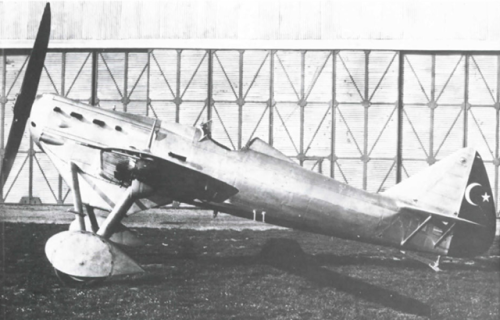
Export version for Turkey.
Twelve were built, but deliveries were halted due to the embargo.
D.511
Prototype combining the D.500 fuselage and tail with smaller wings, a cantilever undercarriage, and a 12Ycrs engine.
Built in 1934 but never flown; later converted into the D.503.
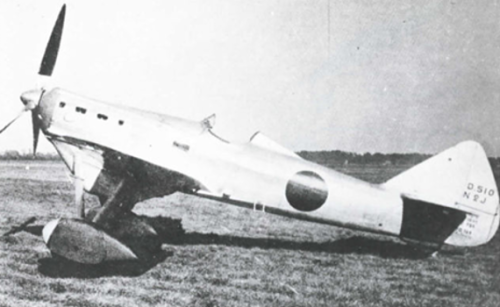
D.510J / AXD1
Japanese short designation for the D.510J supplied to the Imperial Japanese Navy Air Service in 1935.
Dewoitine Navy Type D Carrier Fighter
Long-form designation used by the IJNAS for the D.510J.