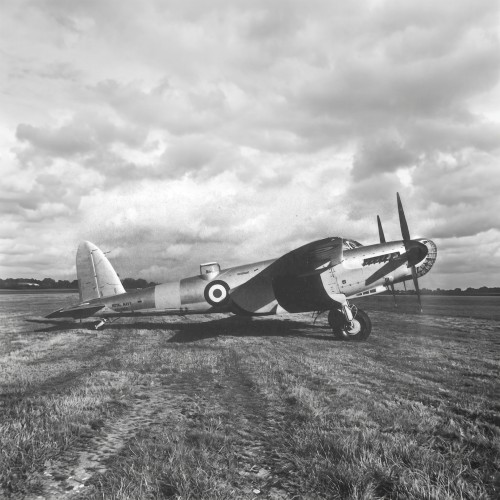
In the late 1930s, British bomber doctrine favoured large, turret‑armed aircraft bristling with defensive guns.
Geoffrey de Havilland and his team proposed almost the opposite: a small, twin‑engined bomber built largely of wood, carrying no defensive armament at all and relying on speed and altitude as its protection.
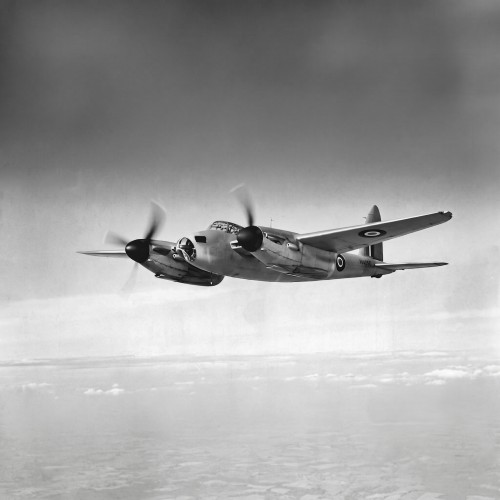
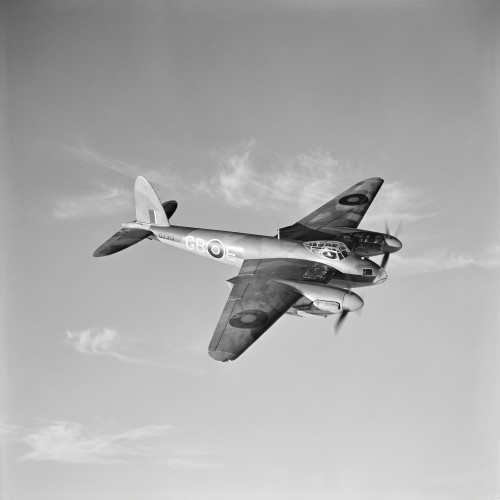
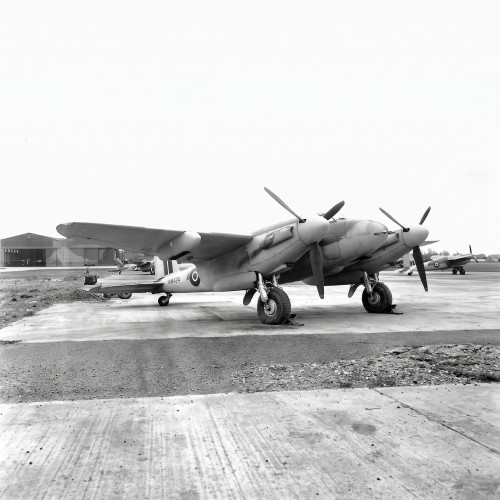
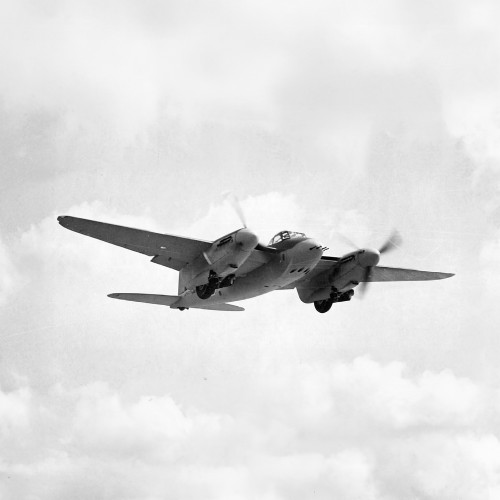
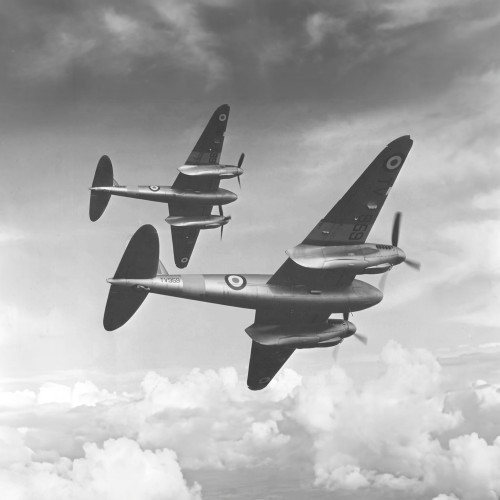
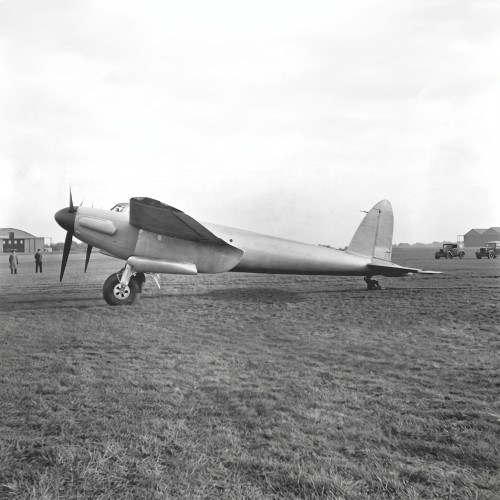
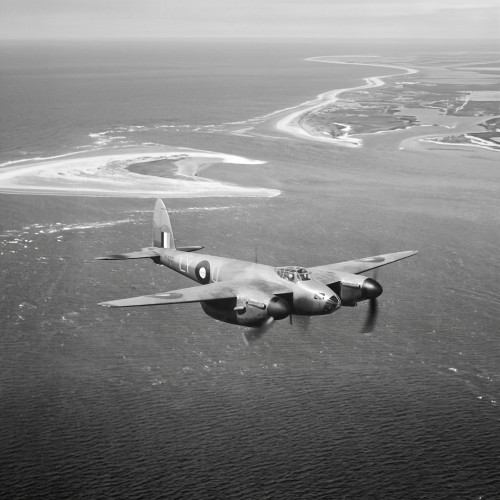
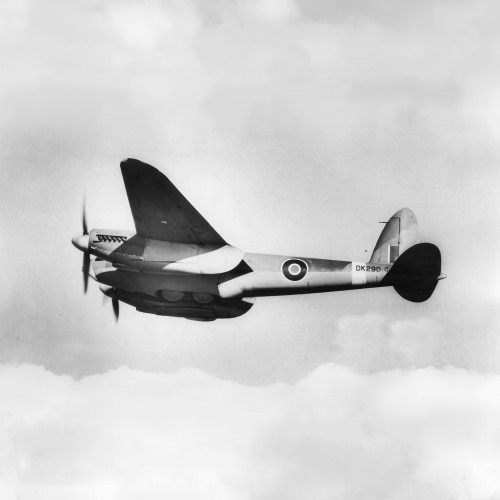
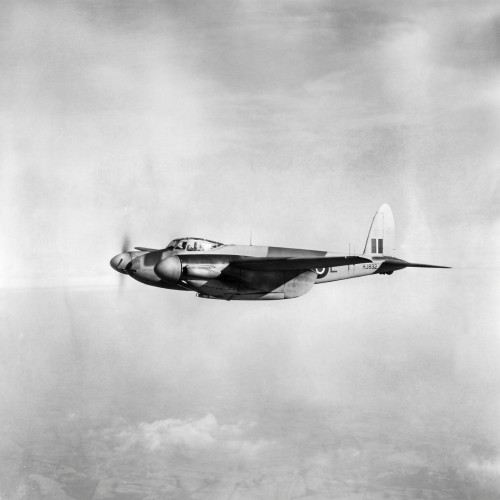
DH Mosquito 2nd Prototype
This idea grew from experience with earlier high‑speed wooden aircraft:
DH.88 Comet: a twin‑engined racer that won the 1934 MacRobertson London–Melbourne air race, proving the potential of streamlined wooden structures.
DH.91 Albatross: a wooden airliner using a composite plywood–balsa construction, cruising faster than many contemporary airliners and demonstrating the practicality of wooden monocoque techniques.
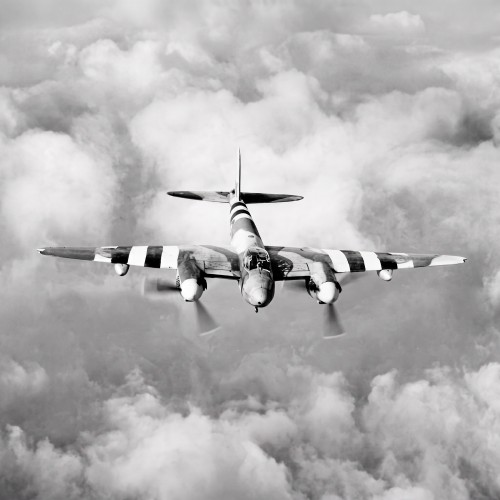
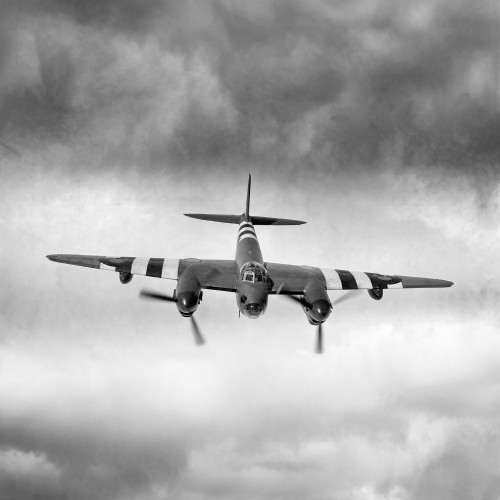
DH Mosquito FB. Mk.XVIII
De Havilland initially struggled to convince the Air Ministry, which preferred conventional metal bombers.
Work continued as a semi‑private venture, with the design refined into a compact, twin‑Merlin aircraft with an internal bomb bay and a smooth, low‑drag fuselage.
The prototype W4050 first flew from Hatfield on 25 November 1940, piloted by Geoffrey de Havilland Jr.
It immediately demonstrated exceptional performance—faster than contemporary Spitfires in level flight—and validated the “fast, unarmed bomber” concept.
Design and construction
Airframe and materials
The Mosquito’s most distinctive feature was its predominantly wooden airframe, earning it the nicknames “Wooden Wonder” and “Mossie”.
Fuselage: Two half‑shells of plywood–balsa–plywood sandwich, moulded over concrete or wooden forms, then glued together to form a smooth monocoque.
Wings: One‑piece wooden wings with stressed‑skin plywood covering, integral with the centre section for strength and aerodynamic cleanliness.
Tail unit: Wooden fin and tailplane, fabric‑covered control surfaces.
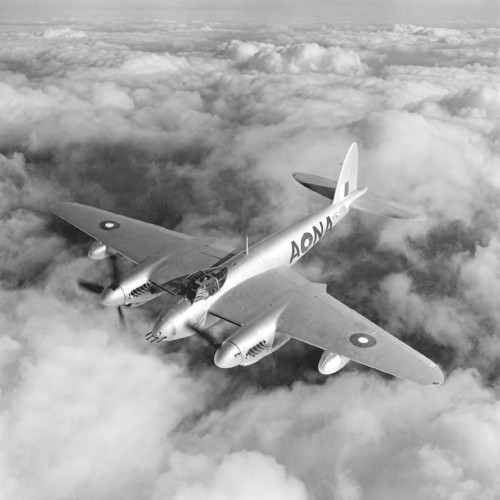
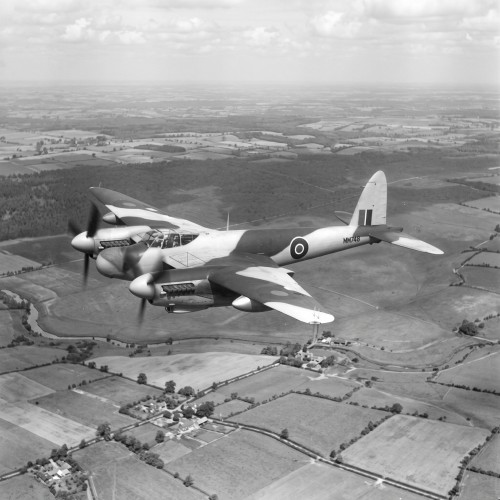
DH Mosquito B. Mk.IV
This construction:
Saved strategic metals such as aluminium.
Allowed production to be dispersed to furniture makers, piano manufacturers, and coachbuilders with woodworking expertise.
Produced a light, strong, and aerodynamically clean airframe that could exploit the full power of its engines.
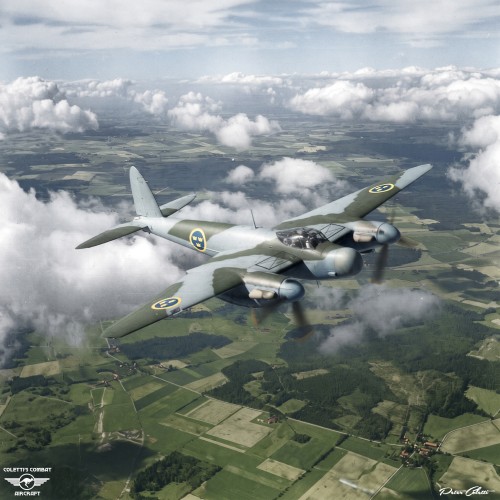
DH Mosquito FB. Mk.XVIII
Powerplant and layout
Engines: Two Rolls‑Royce Merlin liquid‑cooled V‑12s (various marks, typically around 1,460–1,710 hp each depending on variant).
Crew: Two—pilot and navigator—seated side‑by‑side in a glazed nose or cockpit, depending on variant.
Undercarriage: Retractable, hydraulically operated main gear retracting into the engine nacelles; tailwheel (or, in some later marks, a strengthened tail unit for carrier operations).
The internal bomb bay and clean external lines minimised drag, while the twin Merlins gave fighter‑like performance.
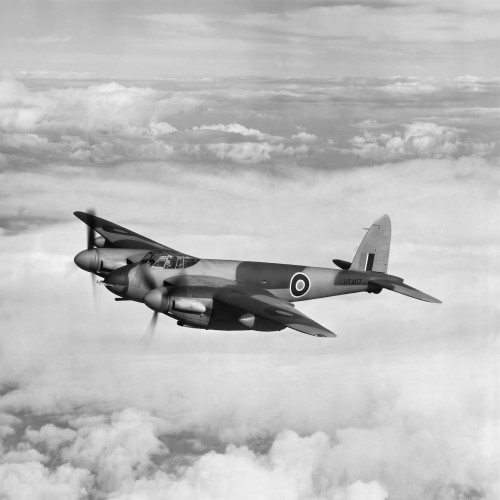
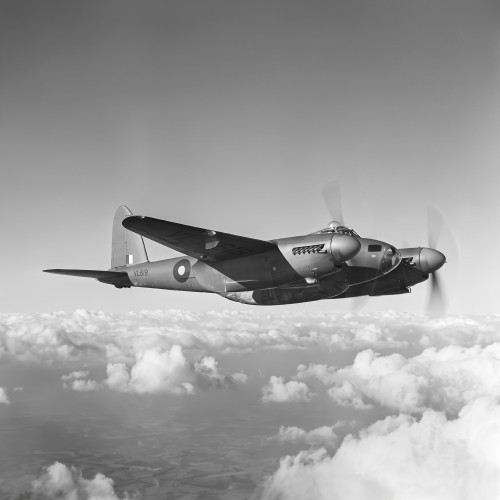
DH Mosquito F Mk.2
Performance and general characteristics
(typical bomber mark, B Mk IV)
Exact figures vary by mark, but representative data for an early bomber version (B Mk IV) are:
Crew: 2
Length: ~12.4 m (40 ft 6 in)
Wingspan: ~16.5 m (54 ft 2 in)
Height: ~6.3 m (20 ft 7 in)
Empty weight: ~6,500–6,800 kg
Maximum take‑off weight: ~10,000–10,400 kg
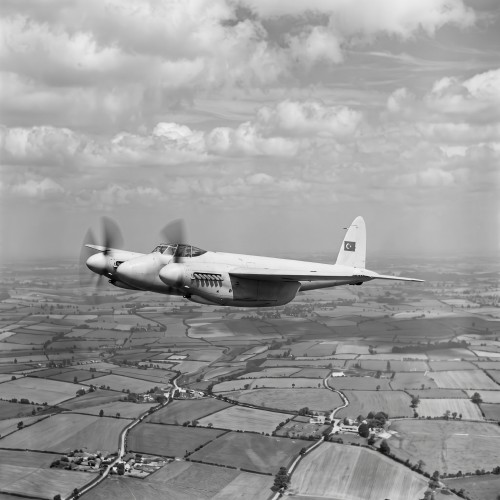
DH Mosquito T.Mk.III
Performance
Maximum speed: Around 380–400 mph (610–645 km/h), depending on mark and altitude—among the fastest operational aircraft in the world in 1941–43.
Cruise speed: ~300 mph (480 km/h).
Range: ~1,500–2,000 km, depending on load and mark.
Service ceiling: ~30,000–37,000 ft.
Rate of climb: Comparable to contemporary fighters, varying with mark and load.
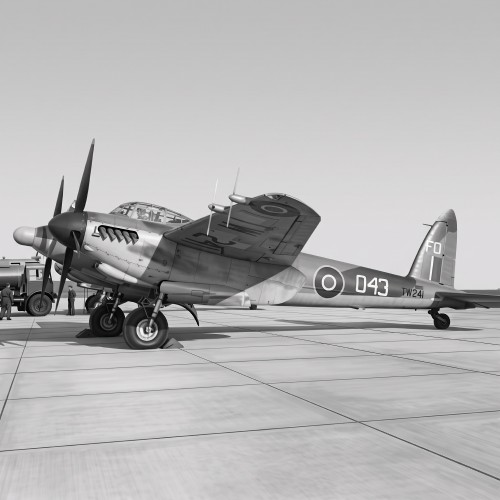
DH Mosquito FB Mk.6
Armament (typical roles)
Bomber versions: Up to 4 × 500 lb bombs internally, later up to 4,000 lb “Cookie” in some marks.
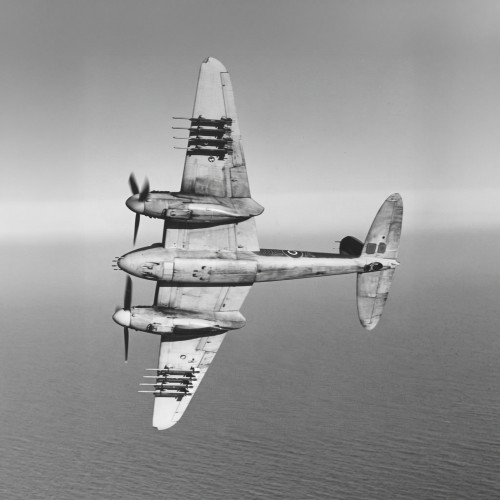
Fighter‑bomber versions: 4 × 20 mm cannon + 4 × .303 or .50 machine guns in the nose, plus bombs or rockets under the wings.
Special variants: 57 mm Molins gun (Tsetse), torpedoes, mines, or specialised reconnaissance cameras.
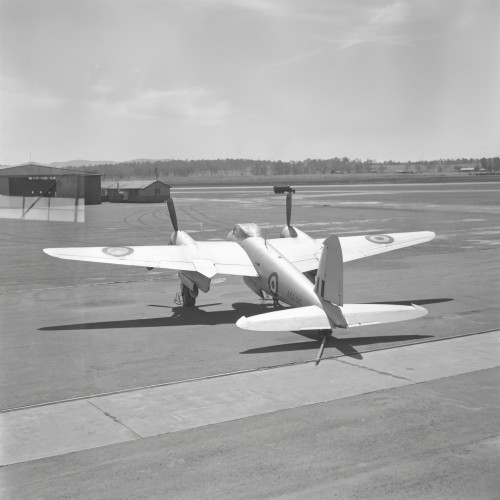
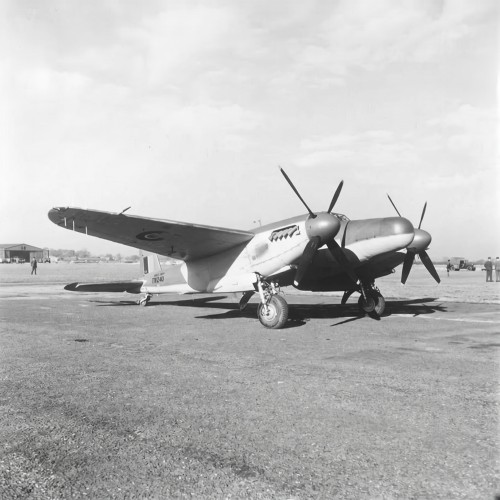
DH Mosquito T.Mk.III Prototype
Development into a multirole aircraft
Originally conceived as an unarmed fast bomber, the Mosquito rapidly evolved into one of the most versatile aircraft of WWII.
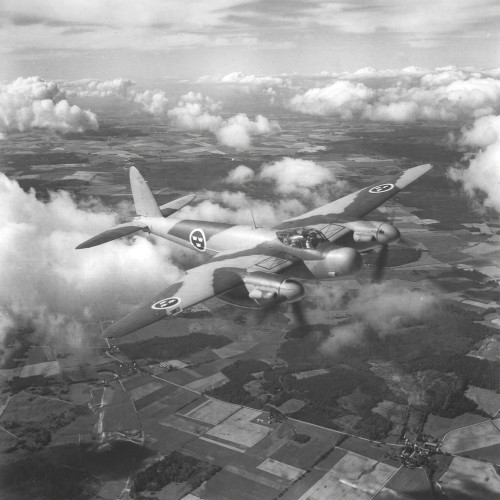
DH Mosquito FB Mk.42
Bomber and pathfinder
Day and night bomber: Used for low‑ and medium‑altitude precision strikes and high‑altitude night bombing.
Pathfinder: Equipped with advanced navigation aids such as Oboe and H2S radar, Mosquitos marked targets for heavy bomber streams, especially in the Battle of the Ruhr and subsequent campaigns.
Light Night Striking Force: Conducted repeated, accurate raids with low loss rates, harassing German cities and industrial targets. Fighter, intruder, and night fighter
Night fighter: Fitted with airborne interception radar, Mosquitos hunted enemy bombers and intruders over Britain and later escorted bomber streams.
Intruder: Low‑level night operations over enemy airfields, attacking aircraft on the ground and disrupting operations.
Day fighter‑bomber: Conducted low‑level raids, including famous precision attacks on Gestapo headquarters and other high‑value targets.
DH Mosquito PR Mk.34
Maritime strike and special roles
Coastal Command and anti‑shipping: Armed with rockets, bombs, or the 57 mm gun, Mosquitos attacked shipping, U‑boats, and coastal installations.
Photo‑reconnaissance: High‑altitude, long‑range PR Mosquitos ranged deep into enemy territory, bringing back critical imagery for Allied planners.
Fast transport: A small number were used by BOAC to carry high‑value cargo and personnel through hostile airspace.
DH Mosquito PR Mk.1
Production and global service
Numbers and manufacturing
Between 1940 and 1950, approximately 7,781 mosquitos were built.
DH Mosquito FB. Mk.XVIII
Production took place in:
United Kingdom: Main De Havilland plants and numerous subcontractors, including furniture and piano makers.
Canada: Canadian‑built Mosquitos for RCAF and RAF use.
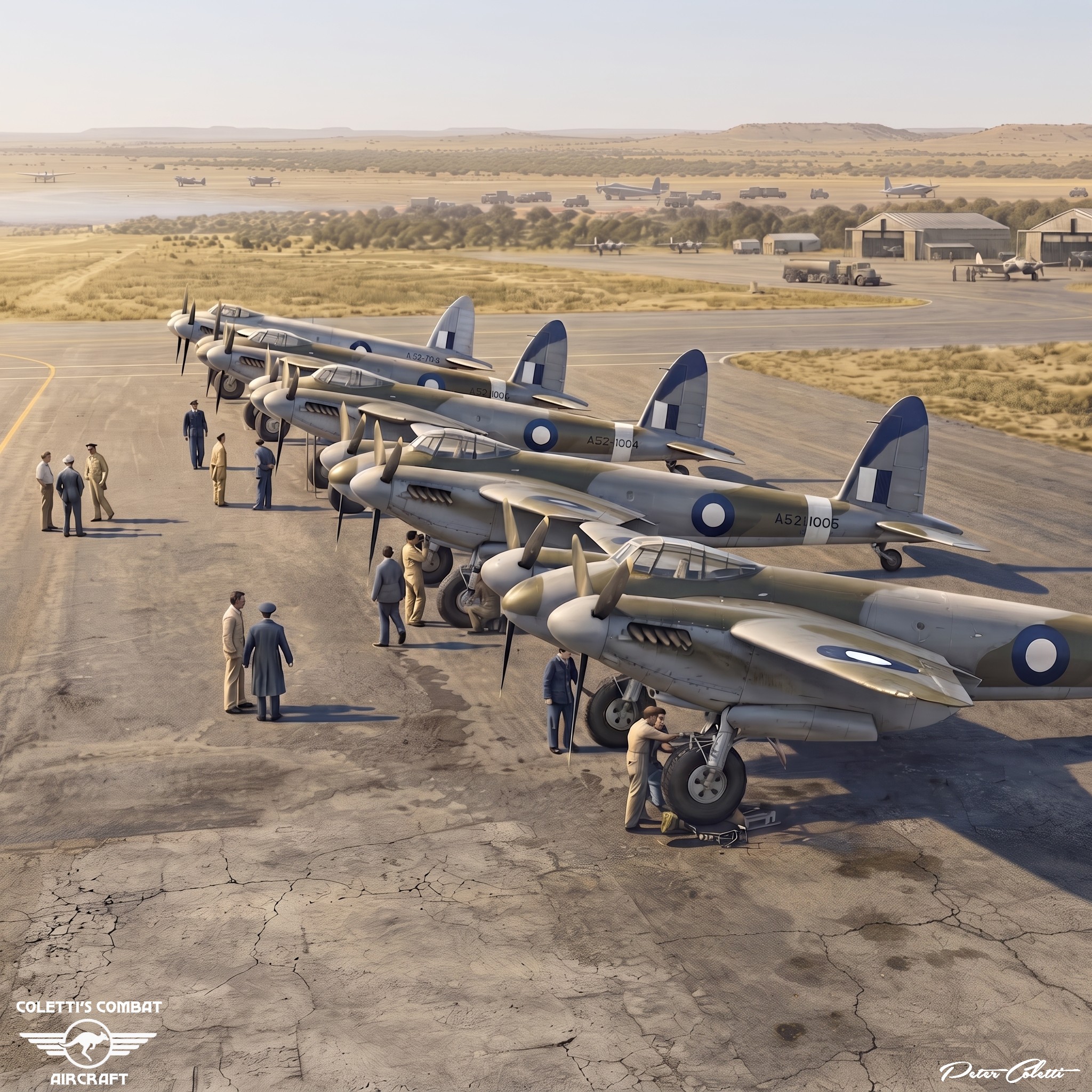
Australia: Local production for RAAF operations in the Pacific and South-east Asia.
DH Mosquito NF.30
Operators
Primary wartime operators included:
Royal Air Force (RAF)
Royal Canadian Air Force (RCAF)
Royal Australian Air Force (RAAF)
United States Army Air Forces (USAAF) (limited use)
Post‑war, Mosquitos remained in service into the early 1950s, gradually replaced by jet aircraft such as the English Electric Canberra.
The last RAF Mosquitos were retired in 1963.
DH Mosquito FB Mk.42
WWII operational context and notable missions
The Mosquito’s impact on WWII was disproportionate to its size and numbers, thanks to its speed, versatility, and relatively low loss rates.
Strikes on Gestapo headquarters and other security installations in occupied Europe.
Berlin broadcasting station raid (30 January 1943): Mosquitos disrupted a major Nazi anniversary broadcast while Hermann Göring was speaking, symbolically undermining German propaganda.
Pathfinder and Light Night Striking Force: Critical to improving bombing accuracy and sustaining pressure on German industry.
DH Mosquito B Mk.4 Highball
Mediterranean and Italian theatres
Mosquitos operated in bomber, fighter‑bomber, and reconnaissance roles, supporting Allied operations in Italy and the Mediterranean, including attacks on ports, railways, and coastal targets.
DH Mosquito TR.33 Prototype
Pacific and South-east Asia
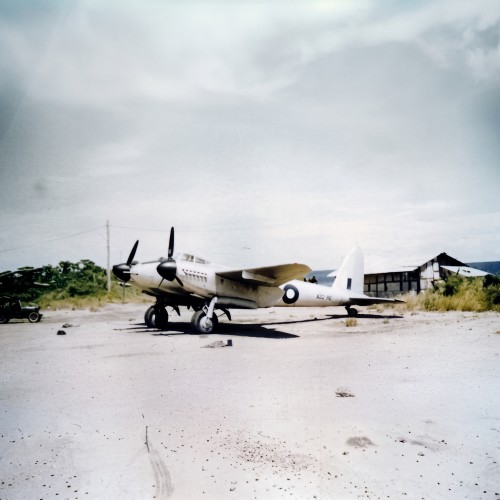
RAAF and RAF Mosquitos flew in the South-east Asian theatre, including operations from bases in the Moluccas and Borneo, conducting strikes and reconnaissance against Japanese forces.
DH Mosquito TR.33
Major variants (overview)
The Mosquito family encompassed dozens of marks.
Broad categories include:
DH Mosquito NF. Mk.II
Bomber (B series)
B Mk IV: Early fast bomber, internal bomb load up to 2,000 lb.
Later bombers mark capable of carrying larger loads, including 4,000 lb “Cookies”.
DH Mosquito T.Mk.III
Fighter and fighter‑bomber (F/FB series)
FB Mk VI: One of the most numerous, combining heavy nose armament with bombs or rockets.
Used extensively for low‑level strikes and intruder missions.
DH Mosquito PR Mk.16
Night fighter (NF series)
Equipped with AI radar, serving as long‑range night fighters and bomber escorts.
Photo‑reconnaissance (PR series)
High‑altitude, long‑range aircraft with cameras in the fuselage, minimal armament.
DH Mosquito NF. Mk.XIX
Maritime strike and special (e.g., “Tsetse”)
Variants with 57 mm cannon, rockets, or torpedoes for anti‑shipping roles.
Each variant adapted the same basic airframe to a different mission, illustrating the Mosquito’s extraordinary flexibility.
DH Mosquito TT.39
Legacy
The De Havilland Mosquito stands as one of the most successful and innovative aircraft of the Second World War:
It proved that speed and agility could substitute for heavy defensive armament.
Its wooden construction demonstrated that non‑metal airframes could be front‑line combat aircraft, freeing strategic materials and enabling dispersed production.
Its multirole capability—bomber, fighter, night fighter, pathfinder, intruder, maritime strike, reconnaissance, and transport—made it indispensable across multiple theatres.
By the time it left service, the Mosquito had flown some of the war’s most daring missions, contributed decisively to the Allied bombing offensive, and helped shape post‑war thinking about fast, versatile combat aircraft.