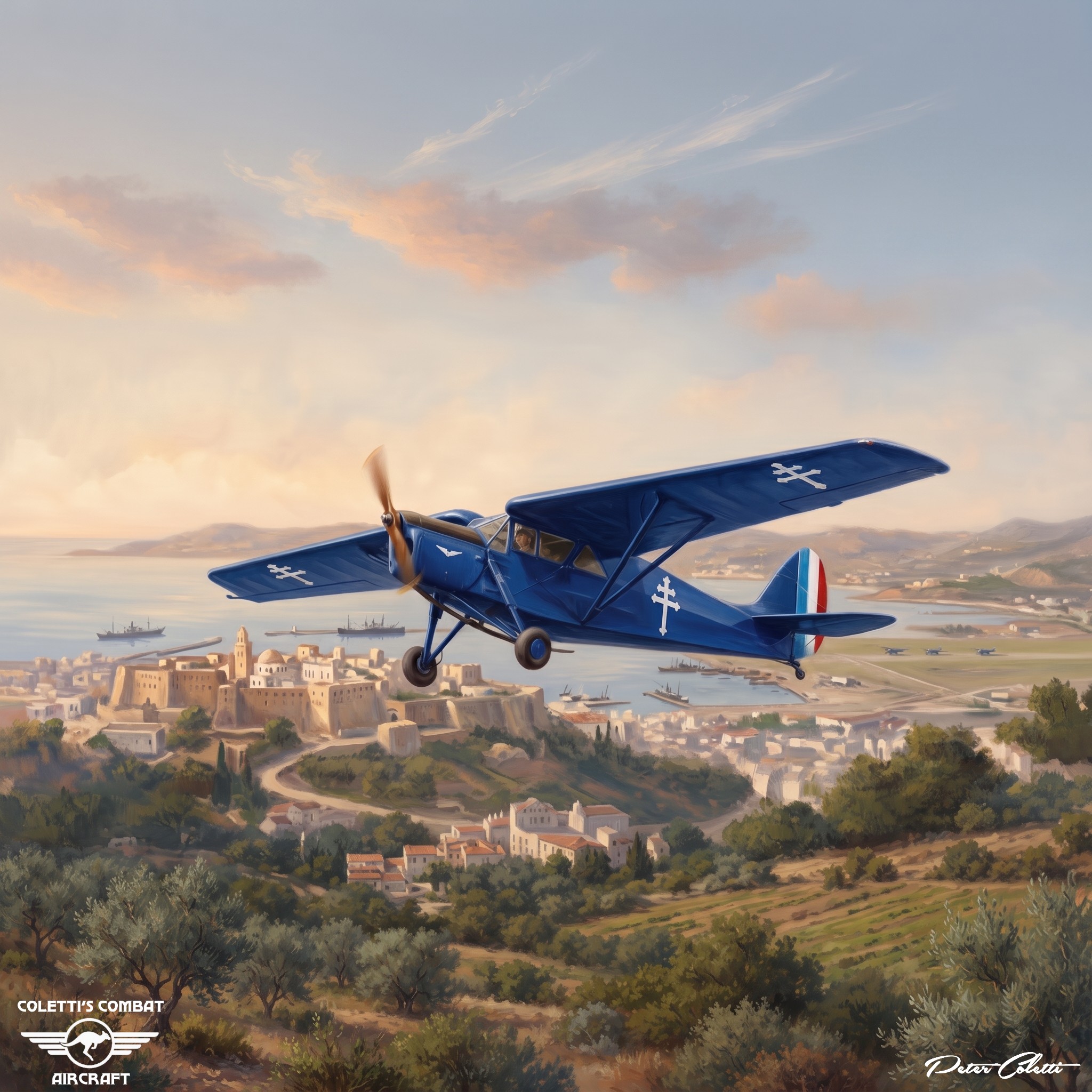
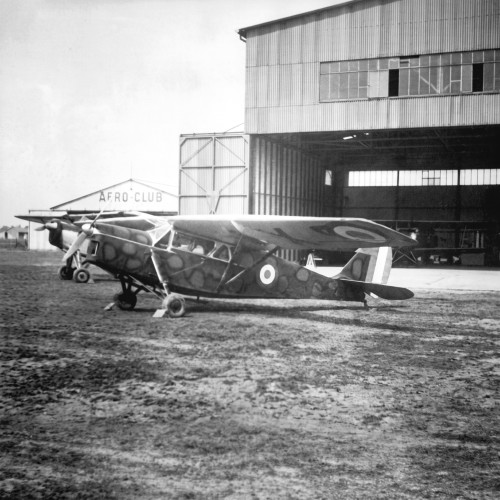
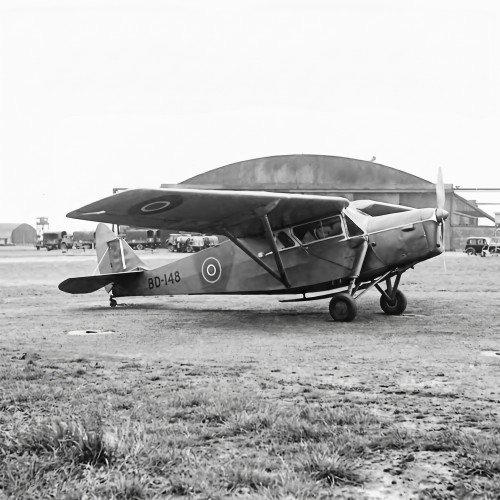
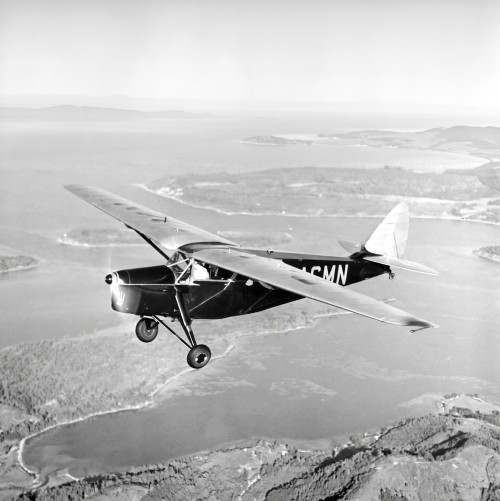
The De Havilland DH.85 Leopard Moth was conceived in the early 1930s as a refined successor to the successful DH.80 Puss Moth.
The Puss Moth had proven the appeal of a comfortable, enclosed high‑wing touring monoplane, but De Havilland saw an opportunity to improve performance, range, and payload without changing the basic concept.
The key design decision was to replace the Puss Moth’s steel‑tube fuselage with an all‑plywood monocoque structure, drawing on experience from earlier wooden aircraft and anticipating techniques later used on the Mosquito.
This lighter fuselage allowed the Leopard Moth to offer better speed and range on the same engine power.
The prototype first flew from Stag Lane Aerodrome on 27 May 1933, piloted by Geoffrey de Havilland.
Just weeks later, it demonstrated its capabilities by winning the 1933 King’s Cup Air Race at an average speed of about 139.5 mph (224.5 km/h), a major publicity success that immediately established the type’s reputation as a fast, efficient touring aircraft.
Production ran from 1933 to 1936 at Stag Lane and later Hatfield, with a total of around 133 aircraft built.
Of these, 71 went to owners in the British Isles, 10 to Australia, and others to France, Germany, India, South Africa, Switzerland, and additional markets.
Design and construction
General configuration
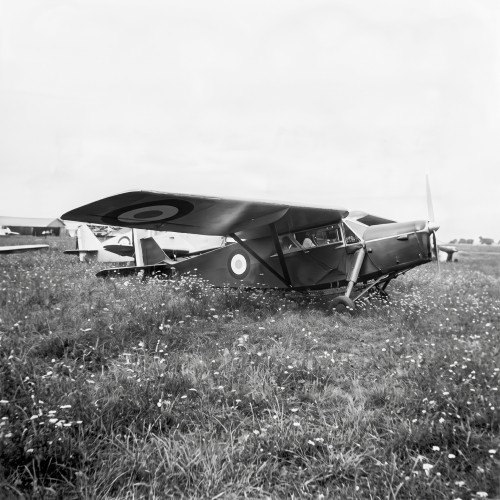
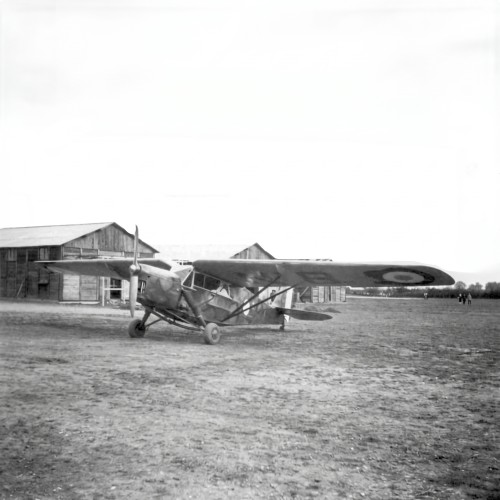
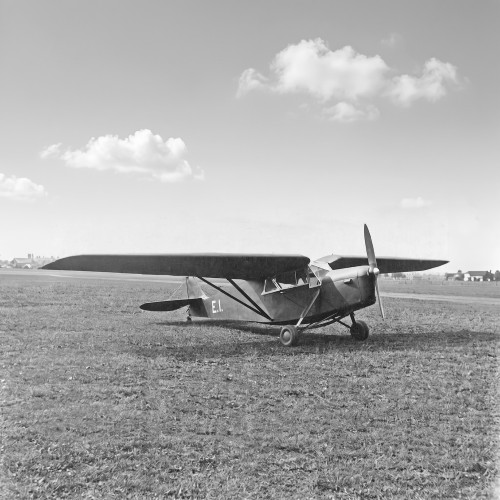
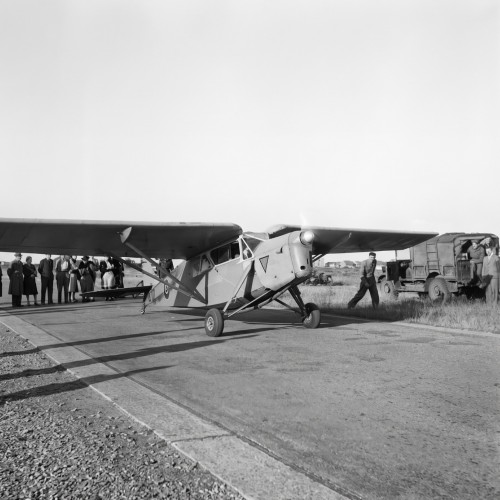
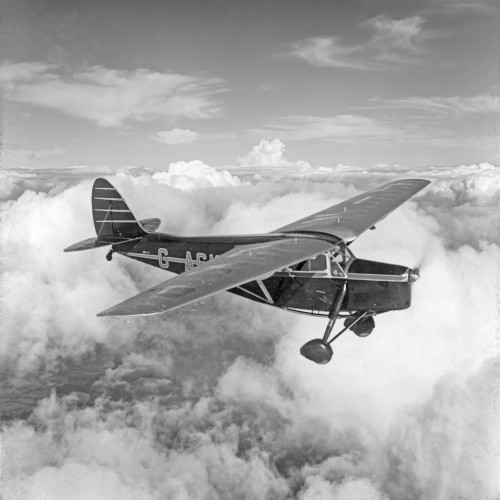
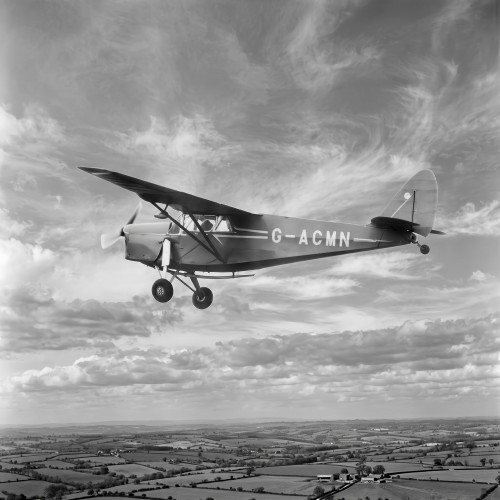
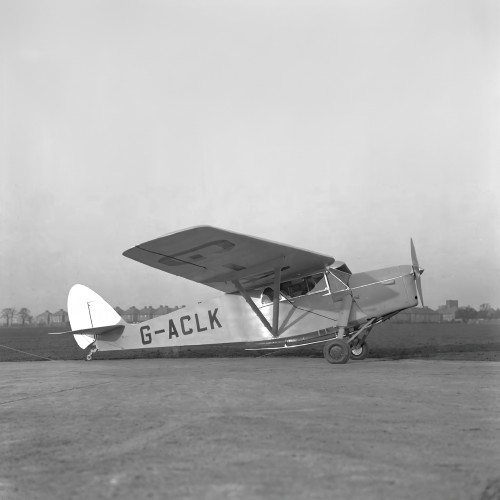
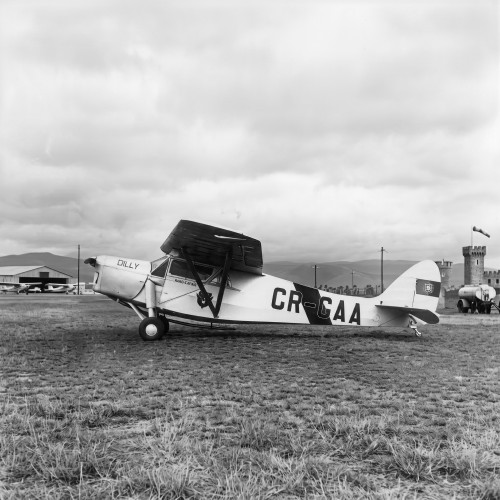
The Leopard Moth is a three‑seat, high‑wing cabin monoplane designed primarily for private touring and light commercial work.
It retains the basic layout of the Puss Moth—high wing, enclosed cabin, single engine—but incorporates significant structural and aerodynamic refinements.
Fuselage and structure
Fuselage: All‑wood, plywood‑skinned monocoque, replacing the earlier steel‑tube frame.
Wing: Tapered, wooden, fabric‑covered wing with folding capability for compact hangarage; braced by struts to the lower fuselage.
Tail unit: Conventional tailplane and fin, with fabric‑covered control surfaces.
The plywood fuselage reduced empty weight and improved aerodynamic cleanliness, contributing directly to higher cruise speed and longer range compared with the Puss Moth.
Cabin layout
The cabin is arranged with the pilot seated centrally in the front, giving excellent forward visibility, and two passengers seated side‑by‑side behind.
This configuration balances weight distribution and comfort, making the aircraft suitable for touring, charter, and light commercial work.
Undercarriage
The Leopard Moth has a fixed, spatted main undercarriage with a tailwheel.
The spats reduce drag and give the aircraft a streamlined appearance, while the fixed gear keeps maintenance simple and robust for operations from grass airfields.
Powerplant
The standard engine is the De Havilland Gipsy Major, a four‑cylinder inverted inline air‑cooled engine rated at about 130 hp (97 kW).
This reliable powerplant, widely used across the Moth family, gives the Leopard Moth strong climb performance and a relatively high cruise speed for its class.
Performance and technical specifications
Figures vary slightly by source, but typical DH.85 Leopard Moth data are:
Crew / seats: 1 pilot + 2 passengers
Wingspan: 11.43 m (37 ft 6 in)
Length: 7.47 m (24 ft 6 in)
Height: 2.67 m (8 ft 9 in)
Wing area: ~19.1 m² (206 sq ft)
Empty weight: ~624–637 kg (1,375–1,404 lb)
Loaded / max take‑off weight: ~1,009–1,024 kg (2,225–2,224 lb)
Engine: 1 × De Havilland Gipsy Major, 130 hp
Performance
Maximum speed: ~220–225 km/h (137–140 mph) at sea level
Cruise speed: ~191–200 km/h (119–124 mph)
Stall speed: ~80 km/h (50 mph)
Initial rate of climb: ~625 ft/min (190 m/min)
Service ceiling: ~4,420–6,553 m (14,500–21,500 ft)
Maximum ceiling: ~5,273 m (17,300 ft)
Range: ~650 km (404 mi) with 20 Imp gal fuel
Up to ~1,138–1,150 km (707–715 mi) with larger fuel capacity
These figures made the Leopard Moth one of the more capable light touring aircraft of its era, combining respectable speed with long‑range capability and short‑field performance.
Variants and notable modifications
Standard DH.85 Leopard Moth
The main production version, powered by the 130 hp Gipsy Major, with folding wings and a three‑seat cabin.
Most of the 133 aircraft built were of this type.
DH.85A (Gipsy Six prototype)
The prototype Leopard Moth (construction number 7000, later G‑ACHD) was retained by De Havilland as a company aircraft and test bed.
In 1935 it was fitted with a 200 hp Gipsy Six six‑cylinder engine driving a constant‑speed propeller, becoming known as the DH.85A.
Although performance was improved, this variant remained experimental and did not enter series production; the aircraft ultimately ended its life as an engine test bed.
No major structural sub‑variants beyond engine and equipment changes were produced; the Leopard Moth’s role and market niche were well defined, and De Havilland soon moved on to newer designs.
Operational history and WWII context
Civil use in the 1930s
The Leopard Moth was marketed as a high‑performance touring and private‑owner aircraft, appealing to wealthy individuals, flying clubs, and small operators.
Its combination of speed, range, and comfort made it suitable for long‑distance flights and air racing.
Notable civil highlights include:
King’s Cup Race 1933: The prototype’s victory at an average speed of 139.5 mph showcased the type’s performance.
Long‑distance flights: Examples flew demanding routes such as Marseilles–Madagascar and Lisbon–Dili, demonstrating reliability and endurance.
Australian operations: Ten aircraft were exported to Australia; one was delivered to Nancy Bird Walton, the pioneering female commercial air operator, who used the type for outback flying and charter work.
Exports to Europe, India, South Africa, and elsewhere broadened its footprint as a capable light touring aircraft.
WWII impressment and military service
With the outbreak of the Second World War, many civil aircraft in Britain and the Empire were impressed into military service.
Around 44 Leopard Moths were taken up by British forces, with additional examples in other territories.
Military roles were primarily:
Communications and liaison: Carrying personnel, despatches, and light cargo between airfields and headquarters.
General duties: Utility tasks where a small, economical aircraft was useful.
Operators included:
Royal Air Force and Royal Navy (impressed civil machines in Britain)
Various colonial and allied air arms, such as the South African Air Force, the Royal Indian Air Force, and others, often operated single or small numbers of aircraft.
In Australia, many Leopard Moths continued in essential civilian roles rather than being impressed, supporting remote communities and commercial operations during the war.
Post‑war fate
After WWII, surviving Leopard Moths largely returned to private ownership.
The combination of wooden construction and hard wartime use meant that relatively few survived long‑term, but a small number remained airworthy decades later.
As of the early 21st century, several examples are still flying, particularly in the UK and Australia, maintained by enthusiasts and museums as representatives of the classic De Havilland Moth lineage.
Significance and legacy
The De Havilland Leopard Moth occupies an important place in the evolution of the Moth family:
It demonstrated how advanced wooden monocoque construction could significantly improve performance and range in a light aircraft.
It bridged the gap between earlier steel‑tube cabin monoplanes and later, more sophisticated wooden designs.
Its success in racing, long‑distance touring, and commercial operations reinforced De Havilland’s reputation for efficient, pilot‑friendly aircraft.
In WWII, while not a front‑line combat type, the Leopard Moth contributed quietly as a communications and liaison aircraft, and in civilian hands it helped sustain vital transport links.
Today, surviving examples are valued as elegant, high‑performance representatives of 1930s private aviation and as a key step in the broader story of De Havilland’s wooden aircraft.