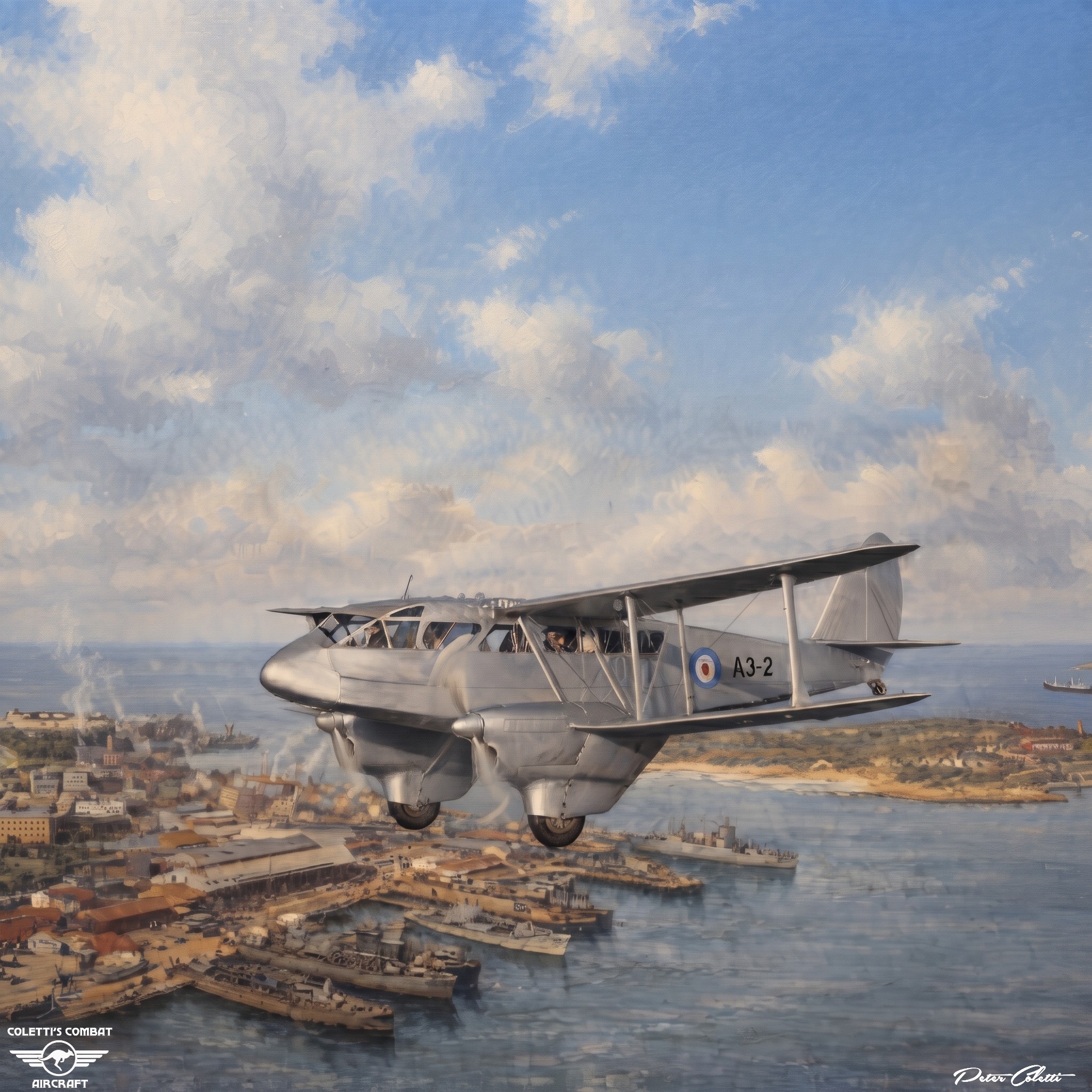
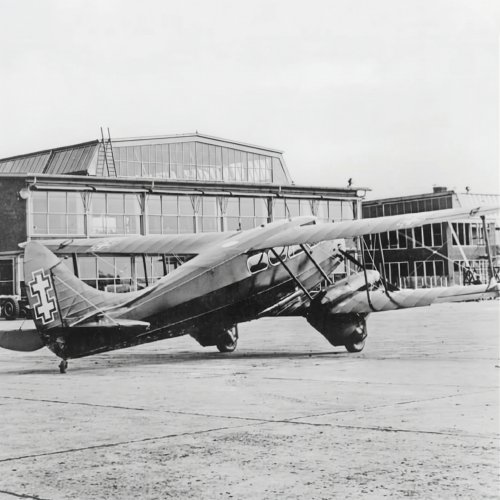
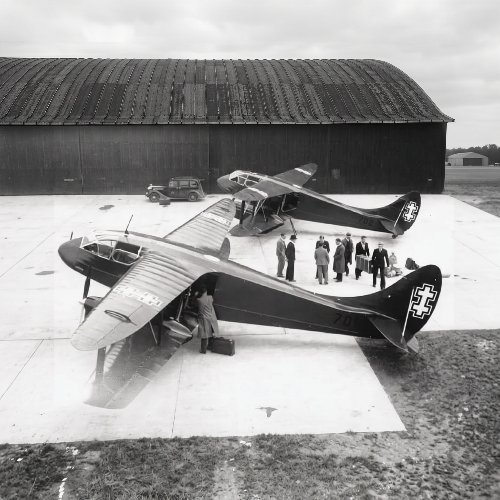
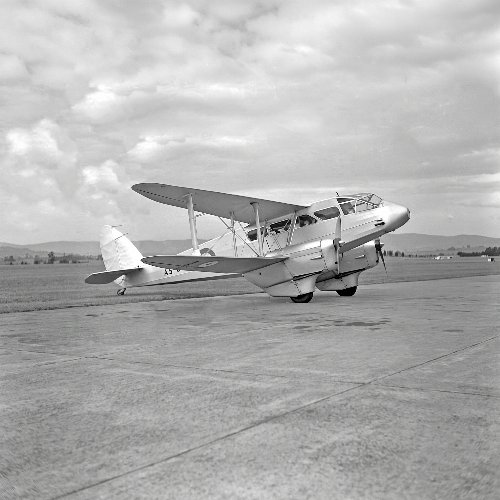
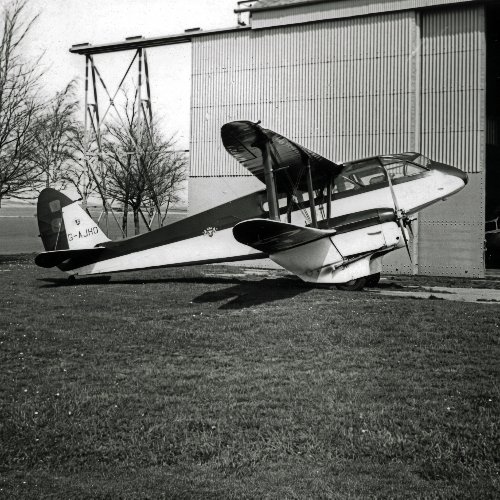
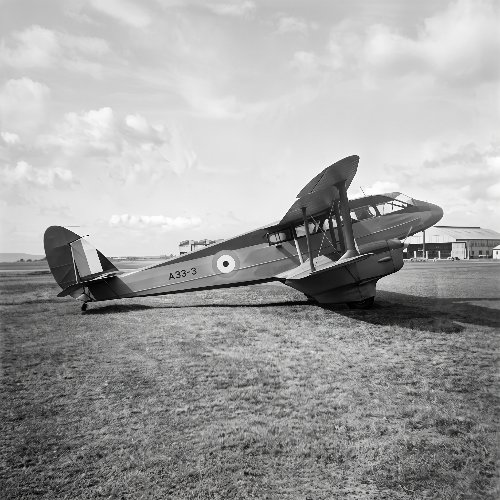
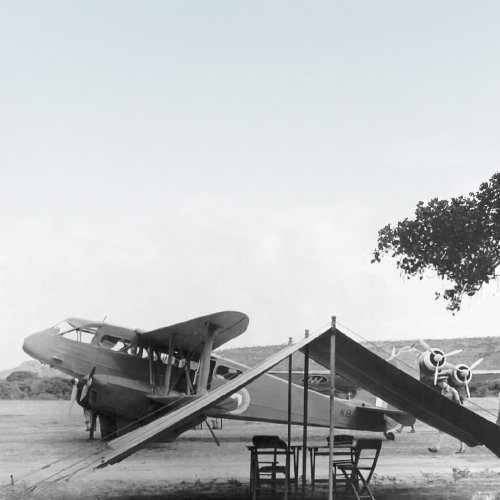
The De Havilland DH.89 Dragon Rapide emerged in the mid‑1930s as a direct response to the growing demand for reliable, economical short‑haul air transport.
De Havilland had already achieved success with the DH.84 Dragon, a lightweight twin‑engine biplane that proved popular with small airlines and charter operators.
However, by 1933–34, operators wanted an aircraft with improved performance, greater comfort, and more refined aerodynamics.
De Havilland’s design team, led by the company’s founder Sir Geoffrey de Havilland, set out to create a successor that retained the Dragon’s simplicity while incorporating lessons learned from the sleek DH.88 Comet racer.
The result was the DH.89 Dragon Rapide, first flown on 17 April 1934.
It combined the proven wooden construction of earlier De Havilland designs with aerodynamic refinements inspired by the Comet, including tapered wings, streamlined engine nacelles, and a more elegant fuselage.
The Rapide was intended to be inexpensive to operate, easy to maintain, and capable of serving both scheduled airline routes and private charter roles.
Its balance of performance, economy, and reliability made it one of the most successful British short‑haul aircraft of the decade.
Design and Construction
The Dragon Rapide was a twin‑engine, eight‑seat biplane built almost entirely of wood, a hallmark of De Havilland’s design philosophy during the era.
The fuselage consisted of a plywood‑skinned wooden frame, providing a lightweight yet strong structure.
The wings were fabric‑covered wooden assemblies with two bays and interplane struts, giving the aircraft its characteristic biplane appearance.
Key design features included:
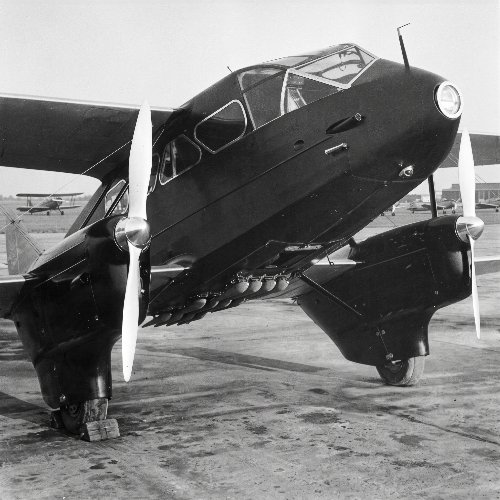
Engines: Two de Havilland Gipsy Six inverted inline engines, each producing around 200 hp.
These engines were reliable, air‑cooled, and relatively easy to service.
Landing Gear: A fixed, tailwheel undercarriage with spatted main wheels to reduce drag.
Cabin: A comfortable, enclosed cabin with seating for six to eight passengers, depending on configuration.
Large windows provided excellent visibility.
Cockpit: A two‑person cockpit, though the aircraft could be flown by a single pilot if required.
Aerodynamics: Streamlined engine nacelles and a tapered wing planform improved efficiency compared to the earlier Dragon.
The Rapide’s wooden construction made it inexpensive to build and repair, especially for operators in remote regions.
Although not fast by later standards, its handling qualities were widely praised.
Pilots appreciated its stability, forgiving nature, and ability to operate from short, unimproved airstrips.
Performance Characteristics
The DH.89 offered modest but dependable performance suitable for regional airline work:
Maximum speed: Approximately 157 mph (253 km/h)
Cruise speed: Around 130 mph (209 km/h)
Range: Roughly 570 miles (917 km)
Service ceiling: About 19,000 ft (5,800 m)
Take-off distance: Short-field capability made it ideal for rural or island operations.
The Rapide was not designed for speed; instead, it excelled in economy and practicality.
Its twin‑engine configuration provided redundancy, enhancing safety on over‑water or mountainous routes.
Operators valued its ability to carry a useful load while consuming relatively little fuel.
Civilian Use and Global Adoption
Upon entering service, the Dragon Rapide quickly became a favourite of small airlines across Britain and Europe.
It operated on routes for companies such as Railway Air Services, Scottish Airways, and numerous continental carriers.
Its reliability made it ideal for scheduled services, air taxi operations, and sightseeing flights.
The aircraft also found success outside Europe.
In Canada, Australia, New Zealand, and South America, the Rapide served remote communities, often flying into rugged or isolated airfields.
Its wooden structure allowed repairs to be made with basic tools and materials, a major advantage in regions lacking advanced aviation infrastructure.
Private owners, including wealthy individuals and business firms, also purchased Rapides for personal transport.
Its comfortable cabin and elegant appearance made it a popular executive aircraft of the era.
Military Use and World War II Context
The outbreak of World War II dramatically expanded the Rapide’s role.
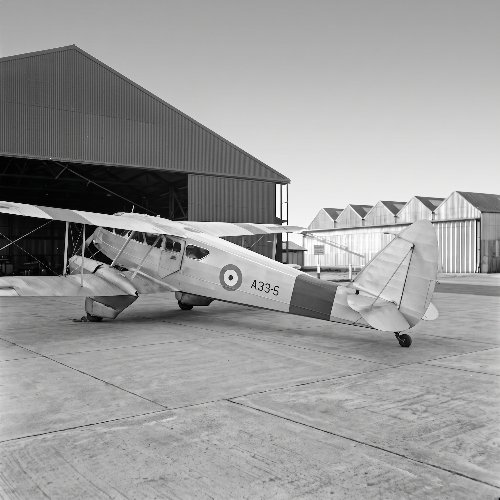
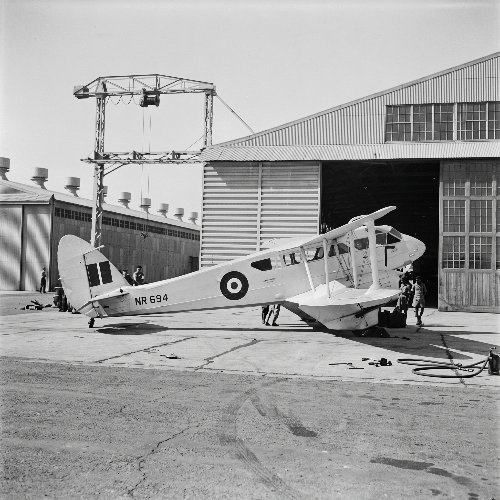
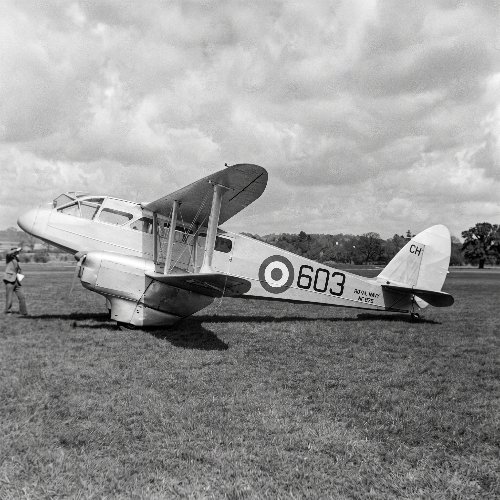
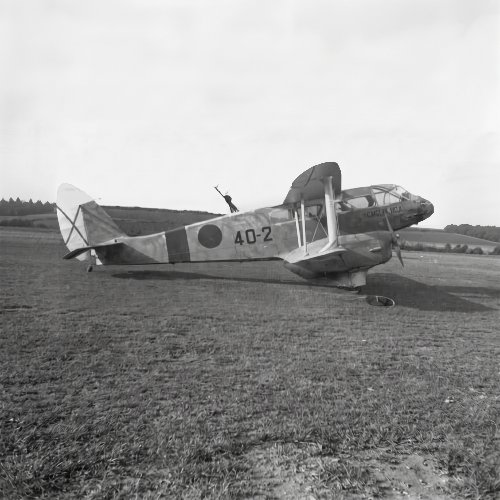
The British military designated the aircraft DH.89B Dominie, using it extensively for communications, navigation training, and light transport duties.
More than 500 Dominies were built during the war, far exceeding pre‑war civilian production.
Key wartime roles included:
Navigation training: The Dominie served as a platform for training navigators, radio operators, and wireless telegraphy personnel.
Communications flights: It transported officers, despatches, and small cargo between airfields.
Medical evacuation: Some aircraft were adapted for casualty transport.
Coastal and anti‑submarine support: Though not a combat aircraft, the Dominie occasionally assisted in patrol and liaison duties.
The Dominie’s reliability and ease of maintenance made it invaluable during wartime, especially for training units that required large numbers of dependable aircraft.
Its wooden construction also conserved strategic materials such as aluminium.
Variants
Several variants of the DH.89 were produced:
DH.89 (Standard Rapide): The initial civilian version with Gipsy Six engines and standard cabin layout.
DH.89A: Improved version with refined aerodynamics, better cabin ventilation, and minor structural enhancements.
DH.89B Dominie: Military variant with reinforced structure, additional equipment, and modified interiors for training or transport.
Special conversions: Some aircraft were adapted for aerial photography, air ambulance duties, or luxury executive transport.
Postwar Service and Legacy
After WWII, many surplus Dominies returned to civilian life.
They were purchased by small airlines, charter companies, and private owners.
Throughout the late 1940s and 1950s, Rapides continued to operate on regional routes, especially in Britain and Europe, where they filled a niche between small single‑engine aircraft and larger modern airliners.
By the 1960s, most Rapides had been retired due to age, the availability of more modern aircraft, and the challenges of maintaining wooden airframes.
However, a number survived into the modern era as heritage aircraft.
Today, several Dragon Rapides remain airworthy, often flying at airshows or offering nostalgic sightseeing flights.
Their graceful lines, gentle handling, and historical significance make them beloved icons of early commercial aviation.
Significance
The De Havilland Dragon Rapide stands as one of the most successful light transport aircraft of the 1930s and 1940s.
Its combination of simplicity, reliability, and elegance ensured widespread adoption in both civilian and military roles.
The aircraft bridged the gap between pioneering interwar aviation and the more sophisticated designs that followed, leaving a lasting legacy as a symbol of practical, accessible air travel.