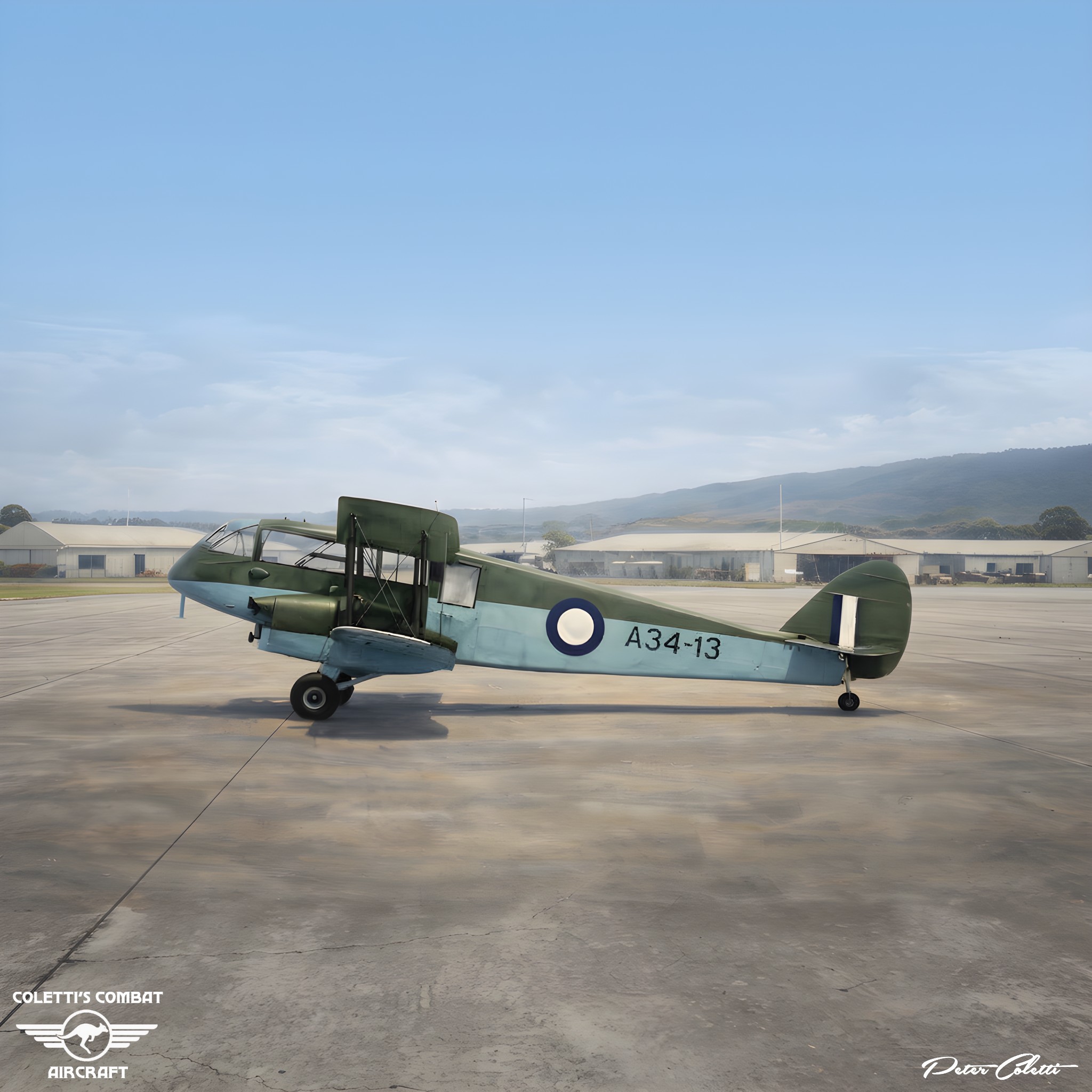
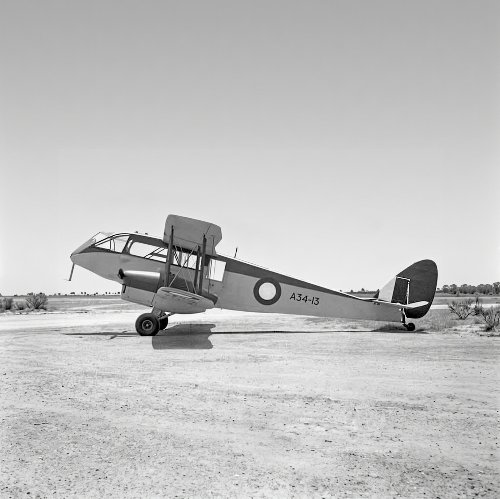
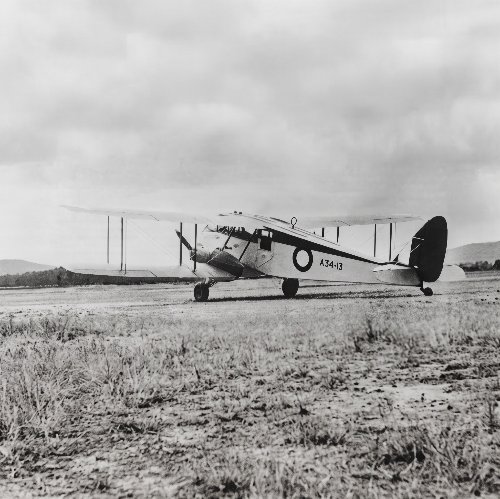
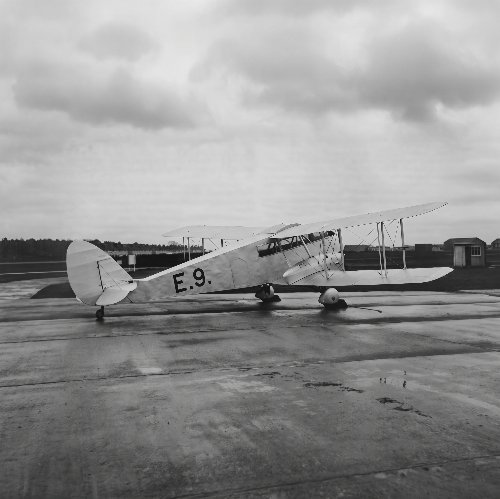
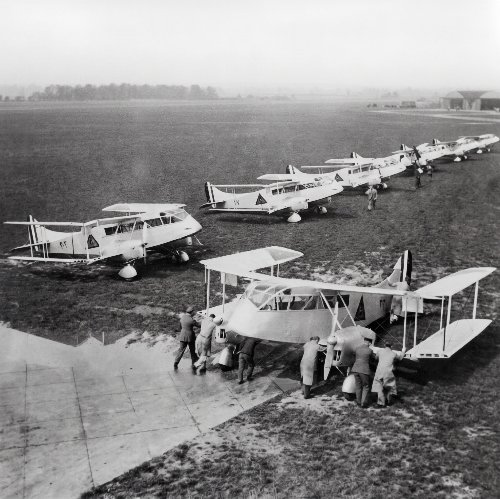
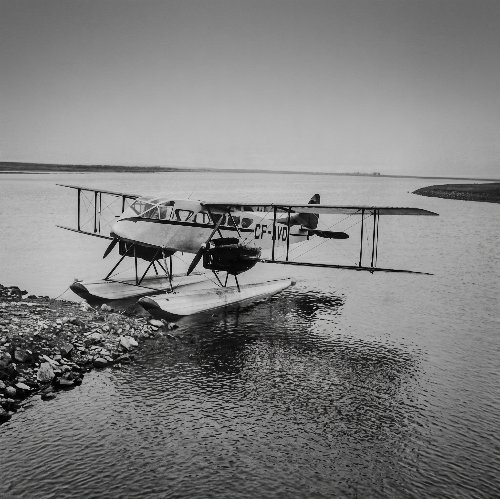
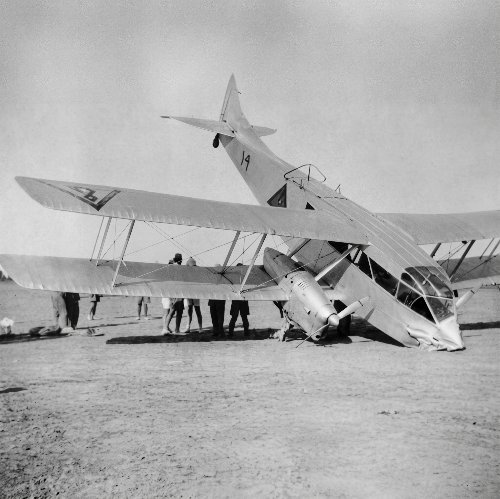
The de Havilland DH.84 Dragon was a twin‑engine biplane airliner introduced in 1933 that became one of the most influential light transports of the interwar period.
Its story spans commercial innovation, long‑distance record attempts, military adaptation, and widespread wartime service.
Development Origins and Design Philosophy
The Dragon emerged directly from the success of the single‑engine DH.83 Fox Moth.
Hillman’s Airways—seeking a larger, twin‑engine aircraft for reliable cross‑Channel service—requested a scaled‑up derivative with more seats and greater safety.
De Havilland’s design team, led by Arthur E. Hagg, responded with a simple, lightweight twin‑engine biplane that reused proven components from earlier Moth‑series aircraft.
Key developmental motivations included:
Twin‑engine reliability for over‑water routes previously flown by single‑engine aircraft.
Low operating cost, achieved through lightweight construction and modest fuel consumption.
Ease of production, using plywood box‑section fuselage construction and fabric‑covered wings.
Compact storage, enabled by foldable wing panels outboard of the engines.
The prototype (G‑ACAN) first flew on 12 November 1932 at Stag Lane Aerodrome, entering commercial service in April 1933.
Structural and Technical Characteristics
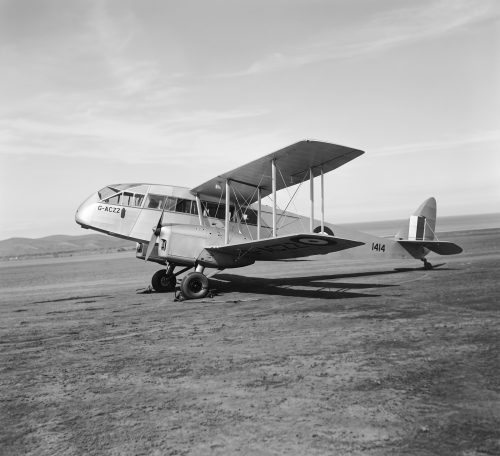
The DH.84 Dragon was a two‑bay biplane with a high‑aspect‑ratio wing and a plywood‑covered fuselage.
Its simplicity was central to its appeal.
Dimensions and Structure
Length: 34 ft 6 in (10.52 m)
Wingspan: 47 ft 4 in (14.43 m)
Height: 10 ft 1 in (3.07 m)
Wing area: 34.93 m² (376 sq ft)
Powerplant
Engines: Two de Havilland Gipsy Major I inline inverted air‑cooled engines.
Power: 130 hp (97 kW) each
Performance
Max speed: ~134 mph (216 km/h)
Cruise speed: ~109–114 mph (175–183 km/h)
Range: 364–460 miles depending on load
Ceiling: 14,500 ft (4,420 m)
Fuel consumption: ~13 gallons per hour (59 L/h)
Capacity
Passengers: Typically, 6 (up to 8 in some configurations)
Baggage allowance: 45 lb (20 kg) per passenger
Crew: Single pilot in a separate cockpit
The aircraft’s low weight and modest power gave it excellent short‑field performance, making it suitable for rural and undeveloped airstrips worldwide.
Operational Use and Commercial Impact
The Dragon quickly became a global short‑haul workhorse.
Early Commercial Service
Hillman’s Airways operated the first four aircraft, inaugurating London–Paris service in April 1933.
The aircraft’s efficiency—only 13 gallons per hour—made it ideal for European routes.
Aer Lingus adopted the type for its early Dublin–Britain services, helping establish Ireland’s first scheduled air routes.
Worldwide Adoption
Operators included:
Aer Lingus
Canadian Airways
Numerous British and Commonwealth regional carriers
Royal Australian Air Force (later)
Royal New Zealand Air Force (later)
Its reliability and low cost made it popular for mail routes, feeder airline services, and remote community connections.
Record Flights and Special Variants
The Dragon became famous for several long‑distance attempts:
Seafarer (G‑ACCV)
A specially modified long‑range Dragon built for Amy Johnson and Jim Mollison’s 1933 transatlantic record attempt.
Departed Pendine Sands, Wales, and arrived in Bridgeport, Connecticut, in 39 hours, crashing on landing.
Seafarer II (G‑ACJM)
A second attempt was made from Canada, but excessive take-off weight prevented departure.
The aircraft was later sold and renamed Trail of the Caribou, flying non‑stop from Canada to Britain in 30 hours 50 minutes (1934).
Military‑armed variants
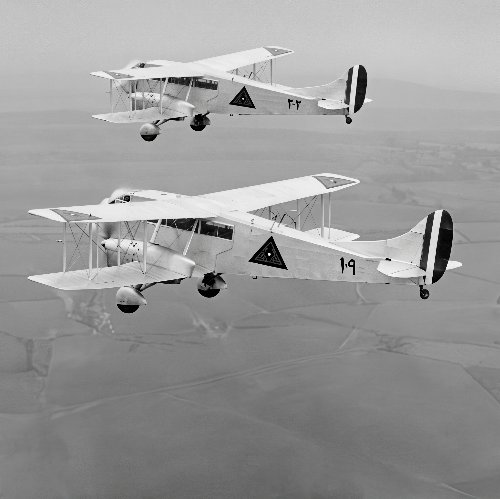
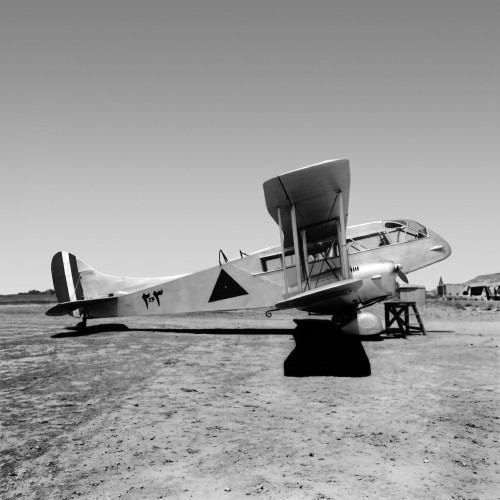
Several dragons were built for the Iraqi Air Force, equipped with:
Racks for sixteen 9 kg bombs
Nose and dorsal machine‑gun positions
Additional armed versions were supplied to Denmark and Portugal.
PROTOTYPE
Variants and Evolution
Dragon I
First production version
62 built before improvements introduced
Standard 6‑passenger configuration
Dragon 2
Introduced from the 63rd aircraft onward (late 1933).
Improvements included:
Individually framed cabin windows
Faired undercarriage struts
These changes increased:
Top speed by 5 mph
Payload by 250 lb
Range by 85 miles
Production Totals
115 built in the UK
87 built in Australia (1942–43)
Total: 202 aircraft
Australian production was driven by wartime needs and the availability of locally manufactured Gipsy Major engines.
The Dragon in World War II
Although obsolete as a frontline aircraft by 1939, the Dragon found extensive secondary uses:
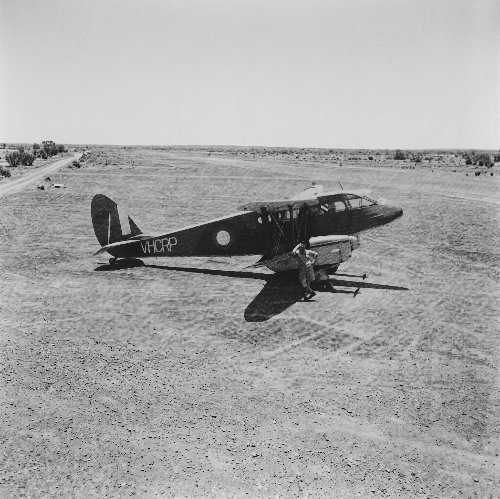
Royal Australian Air Force
Primary role: Navigation trainer
Chosen over the newer Dragon Rapide because its engines were already in local production.
Other wartime roles
Air ambulance
Target towing
Communications and liaison transport
Training aircraft for Commonwealth forces
Some civilian Dragons were impressed into military service, while others continued operating in remote regions where their short‑field capability remained valuable.
Postwar Legacy
After WWII, surviving Dragons continued in civilian service—especially in Australia, New Zealand, and Canada—performing bush flying, charter work, and regional transport into the 1950s.
Their longevity reflected the robustness of their simple design and the reliability of the Gipsy Major engines.
The Dragon also directly inspired the DH.89 Dragon Rapide, a faster, more refined successor that became one of the most successful light transports of the 1930s–40s.
Summary
The de Havilland DH.84 Dragon was a landmark aircraft in early commercial aviation.
Its combination of simplicity, efficiency, and twin‑engine reliability made it a transformative short‑haul airliner.
It served airlines across Europe and the Commonwealth, set long‑distance records, and played meaningful roles during WWII.
With more than 200 built and decades of service, the Dragon stands as one of the most important light transports of its era—bridging the gap between small single‑engine aircraft and the more capable twin‑engine airliners that followed.