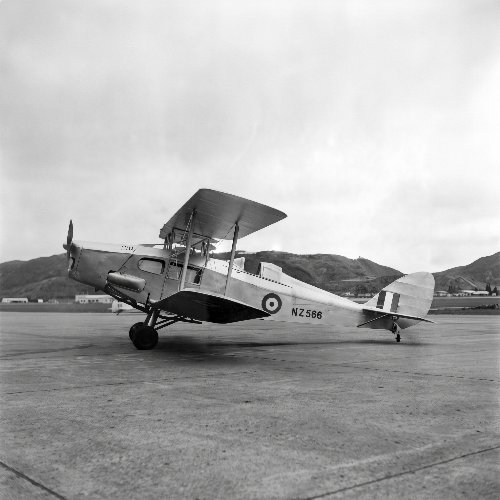
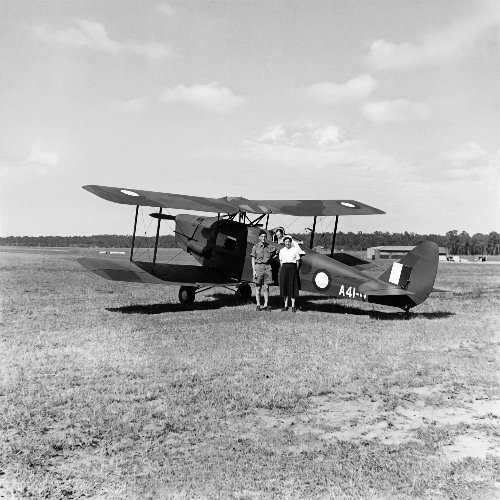
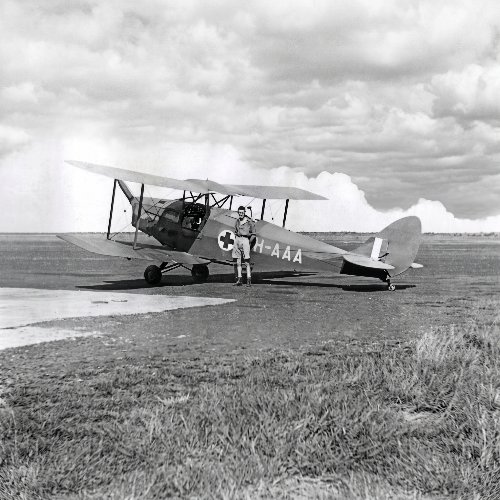
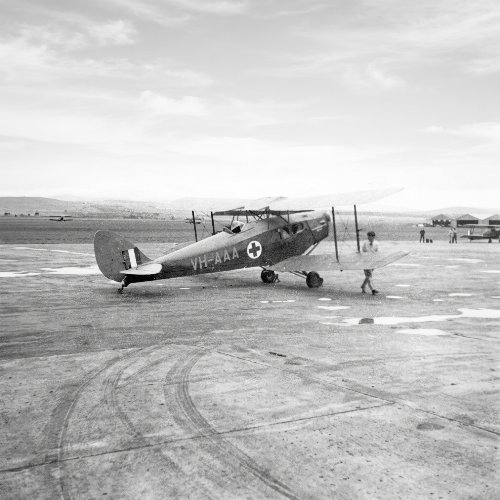
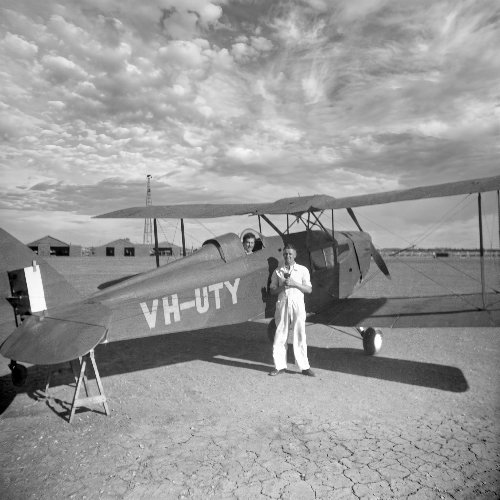
The De Havilland DH.83 Fox Moth was a 1930s British light passenger biplane designed to deliver economical short‑range air transport using proven components from the DH.82 Tiger Moth.
First flown on 29 January 1932, it became one of the earliest aircraft to operate profitably in commercial service without subsidies.
Origins and Development (1931–1932)
The Fox Moth originated in late 1931, conceived by De Havilland designer A.E. Hagg as a low‑cost aircraft capable of carrying three to four passengers on short feeder routes.
The design philosophy was simple: reuse as many Tiger Moth components as possible to reduce cost and accelerate production.
This included the wings, tailplane, fin, rudder, undercarriage, and Gipsy engine family.
The prototype, G‑ABUO, featured:
A plywood‑covered fuselage over ash longerons forward and Sitka spruce aft.
A raised open cockpit for the pilot behind a small enclosed passenger cabin.
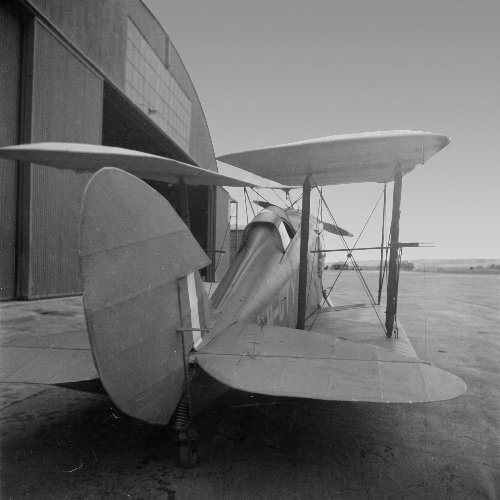
Folding wings for easy hangar storage.
A central cut‑out in the instrument panel to allow pilot‑passenger communication.
After its first flight, the prototype was shipped to Canada, where trials on floats and skis demonstrated excellent performance in rugged northern conditions.
This success led to early Canadian assembly even before full production began.
Design Characteristics
Airframe
Configuration: Single‑engine biplane with mixed wood construction.
Fuselage: Plywood‑skinned box structure; enclosed forward cabin for 3–4 passengers.
Cockpit: Open or semi‑enclosed (depending on variant), positioned behind the cabin.
Wings: Tiger Moth wings with folding capability (except Canadian DH.83C).
Landing Gear: Fixed tailwheel; Canadian versions strengthened for skis/floats.
Powerplant
Prototype: 120 hp Gipsy III.
British production: 130 hp Gipsy IIIA.
Canadian DH.83C: 145 hp Gipsy Major 1C.
Speed Model: Supercharged Gipsy Six for higher cruise speeds.
Performance (typical British Fox Moth)
Max speed: 113 mph (182 km/h)
Cruise speed: 96 mph (154 km/h)
Range: 360 miles (579 km)
Ceiling: 12,700 ft (3,871 m)
Rate of climb: 492 ft/min (150 m/min)
Wingspan: 30 ft 10 in (9.4 m)
Length: 25 ft 9 in (7.85 m)
Empty weight: 1,100 lb (499 kg)
Loaded weight: 2,070 lb (939 kg)
These characteristics made the Fox Moth faster than the Tiger Moth despite its bulkier fuselage—an aerodynamic achievement noted by De Havilland Canada.
Operational History (1932–1945)
Commercial Use
The Fox Moth became the first unsubsidised aircraft to earn a profit in airline service and is used extensively for:
Joyrides and short feeder flights in the UK.
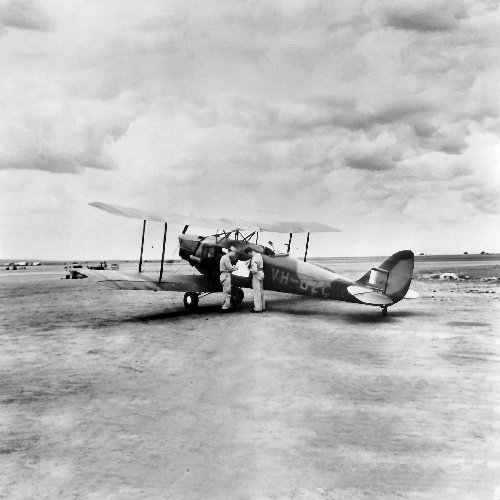
Regional airline routes in Australia, India, and Canada.
Air taxi and charter operations worldwide.
Notable operators:
Australian National Airways: The first aircraft, VH‑UQM “Miss Currie”, inaugurated the Launceston–Flinders Island route in 1932.
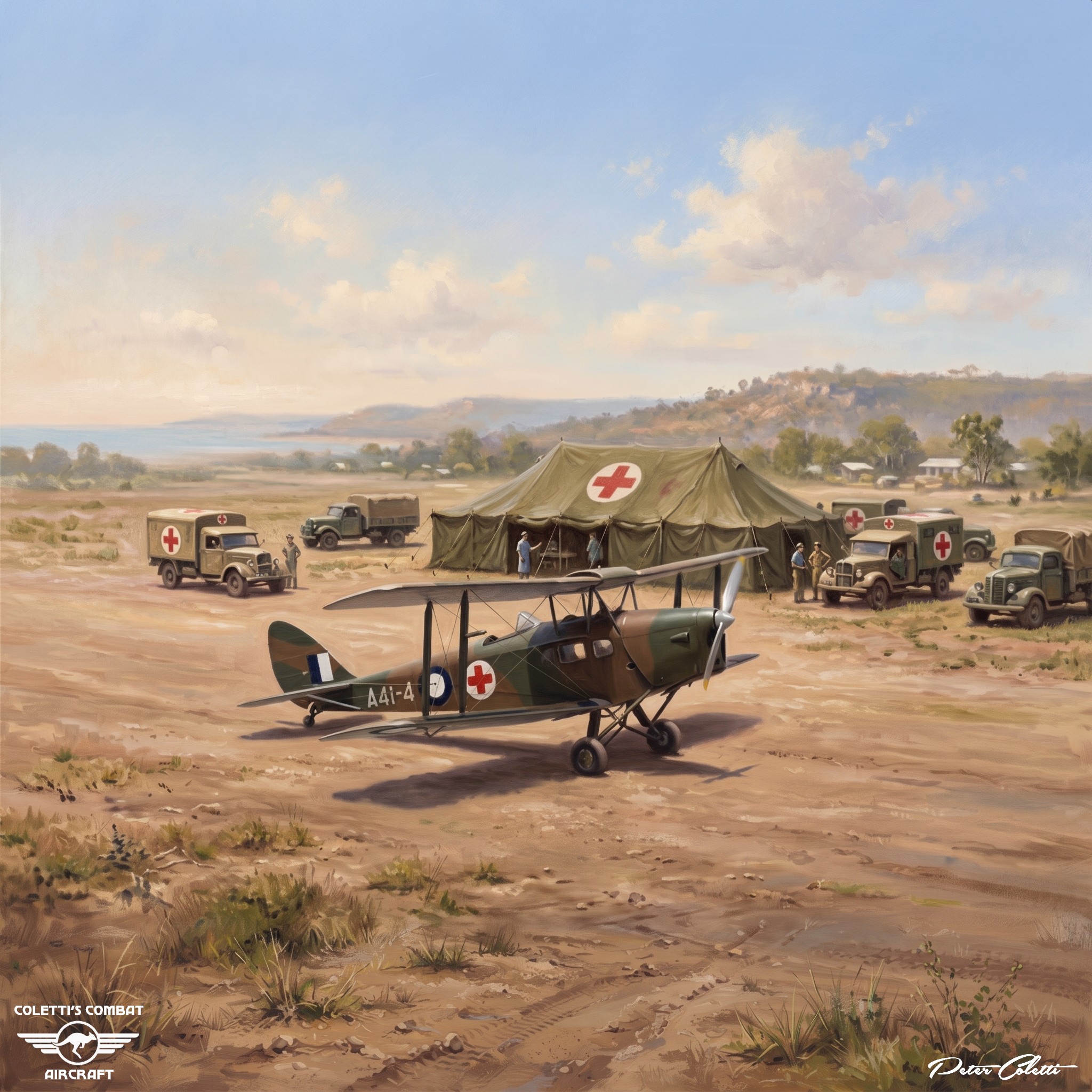
Qantas Flying Doctor Service: Replaced older DH.50s on remote medical routes.
TATA Airlines (India): Used for regional passenger and mail flights.
Long‑Distance and Special Missions
1934 Transatlantic Survey Flight: John Grierson flew a float‑equipped Fox Moth (G‑ACRK) from Britain to New York via Iceland and Greenland, demonstrating reliability over long distances.
Mount Everest Expedition (1933): A Fox Moth supported the British expedition.
Antarctic Survey Work: Another example was used for polar survey operations.
World War II Context and Military Use
Although designed as a civilian aircraft, the Fox Moth was impressed into military service during WWII by several air forces for liaison, communication, and training roles:
Royal Australian Air Force: Four aircraft impressed as communications trainers.
Royal Canadian Air Force: Used for bush operations and training.
Royal New Zealand Air Force
Fleet Air Arm (Royal Navy)
Spanish Republican Air Force
South African Air Force
Its light weight, reliability, and ability to operate from rough fields made it useful for non‑combat duties, especially in Commonwealth nations with large remote territories.
Variants
DH.83 Fox Moth (UK Production)
Years: 1932–1937
Quantity: 98 built
Engine: Typically, 130 hp Gipsy IIIA
Features: Folding wings, standard cockpit, three‑seat cabin.
DH.83C Fox Moth (Canadian Production, 1945–1948)
Quantity: 53 built
Engine: 145 hp Gipsy Major 1C
Changes: Enlarged cockpit and windscreen
Wider canopy
Large ambulance door for stretcher loading
Strengthened undercarriage for skis/floats
No folding wings
Role: Bush plane, medical evacuation, northern transport.
Speed Model
Engine: Supercharged Gipsy Six
Purpose: Higher cruise speed for faster charter operations.
Gasuden KR‑1 (Japan)
Quantity: 7 unlicensed copies
Role: Postwar light utility aircraft.
Postwar Legacy
After WWII, surviving fox moths continued in:
Bush flying (especially Canada and New Zealand)
Medical evacuation
Agricultural work
Private ownership and airshows
Museum preservation, including replicas such as CF‑BNP at the Royal Aviation Museum of Western Canada.
The Fox Moth’s combination of simplicity, reliability, and low operating cost ensured a long service life well beyond its 1930s origins.
Summary
The De Havilland Fox Moth stands as a landmark in early commercial aviation—a light, economical biplane that proved profitable, versatile, and durable.
Its clever reuse of Tiger Moth components, combined with a practical passenger cabin and robust performance, made it a favourite for airlines, bush pilots, and even military forces.
From joyrides over British seaside towns to medical flights in the Australian outback and bush operations in Canada’s north, the Fox Moth carved out a unique niche in aviation history.