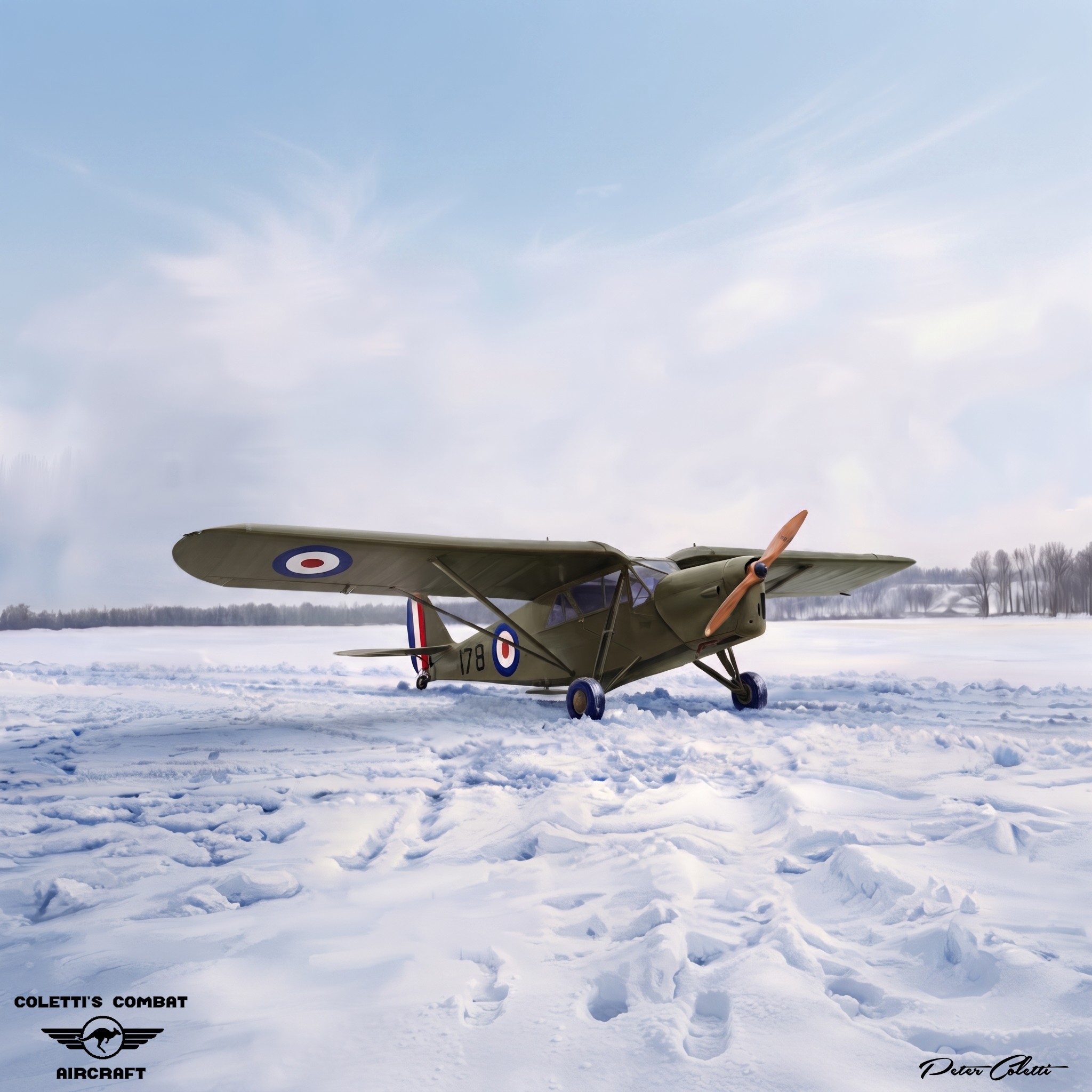
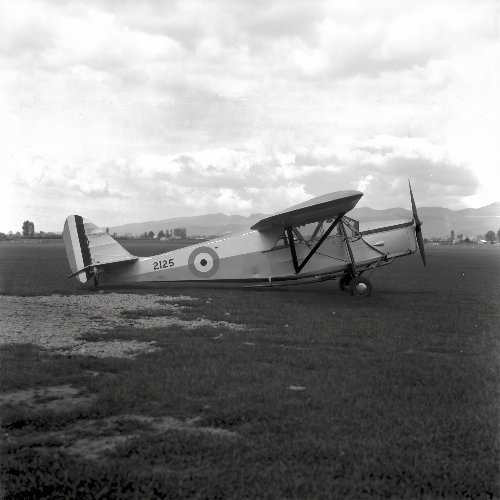
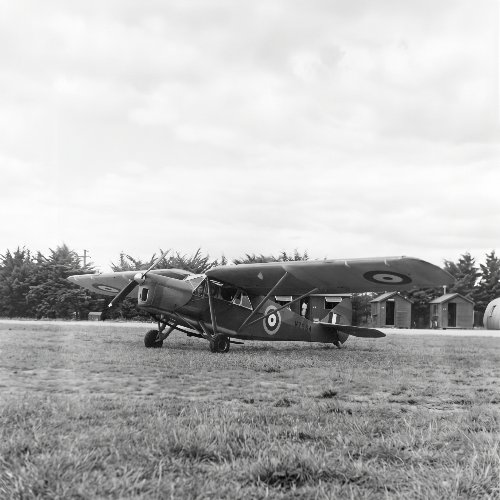
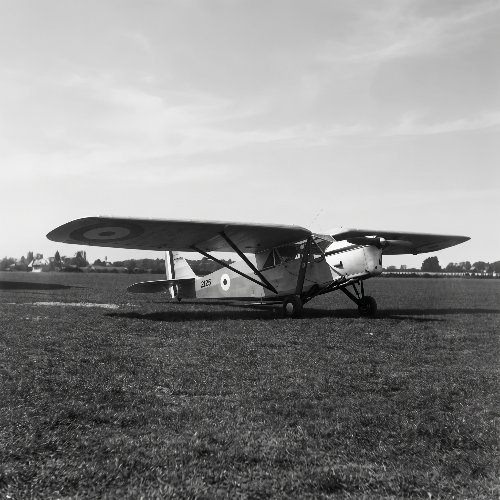
The de Havilland DH.80 / DH.80A Puss Moth emerged at the end of the 1920s as one of Britain’s most advanced private touring aircraft, representing a decisive shift from open‑cockpit biplanes to fast, comfortable enclosed‑cabin monoplanes.
Designed for the rapidly expanding private‑flying movement in the United Kingdom, the Puss Moth was intended to give civilian pilots an aircraft with airline‑like comfort and unprecedented performance for its class.
Origins and Development (1928–1930)
The Puss Moth began as the DH.80 prototype, first flown on 9 September 1929 at Stag Lane Aerodrome by Geoffrey de Havilland.
The prototype featured a flat‑sided wooden fuselage and an inverted de Havilland Gipsy III inline engine, chosen to improve forward visibility by eliminating protruding cylinder heads.
Although the prototype demonstrated excellent performance, de Havilland engineers quickly determined that a fabric‑covered steel‑tube fuselage would be more practical and durable.
This redesign produced the DH.80A Puss Moth, which entered production in March 1930.
Production was brisk: 259 aircraft were built in England, with an additional 25 manufactured by de Havilland Aircraft of Canada, for a total of 284 aircraft between 1929 and 1933.
Design Characteristics
Airframe and Structure
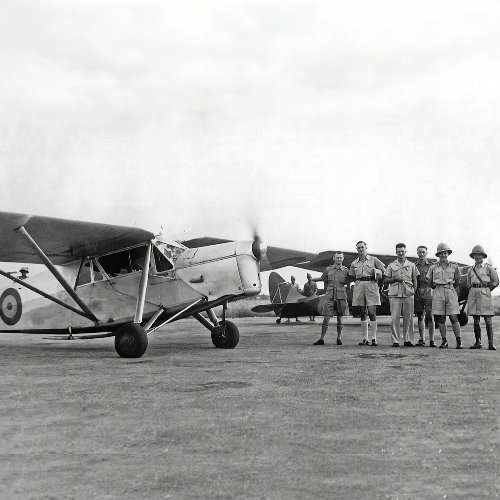
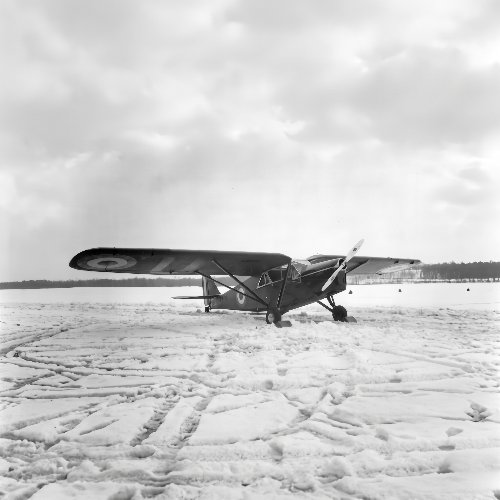
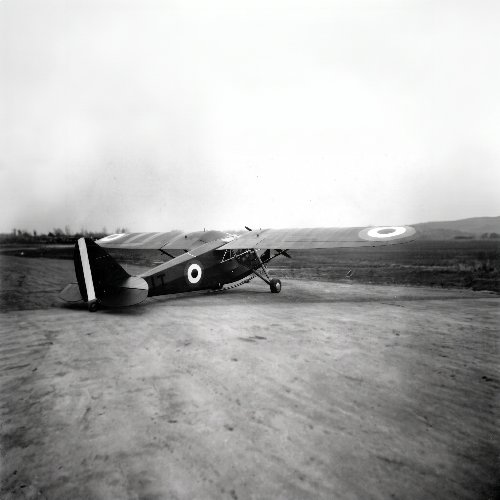
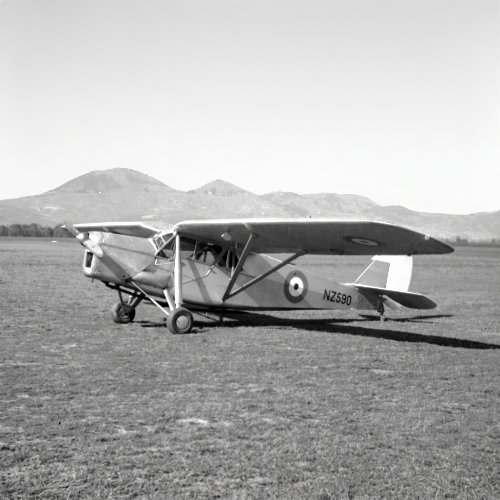
The Puss Moth was a high‑wing, strut‑braced monoplane with folding wings to reduce hangar space—an important feature for private owners.
Key structural features included:
Fabric‑covered steel‑tube fuselage (DH.80A) replacing the prototype’s wooden fuselage.
Two‑piece fabric‑covered wings with V‑struts and folding capability.
Long diagonal landing‑gear struts that could rotate 90 degrees to act as airbrakes, steepening landing approaches—an innovative feature for the era.
Cabin and Seating
The enclosed cabin seated two or three occupants, with staggered seating allowing a third passenger’s legs to fit besides the forward seat.
This enclosed comfort was a major selling point, making the Puss Moth far more pleasant for long‑distance flying than earlier open‑cockpit Moths.
Powerplant
The aircraft was powered by:
120 hp Gipsy II
or
130 hp Gipsy Major (most production aircraft)
The Gipsy Major provided slightly better performance and became the standard engine.
Performance
The Puss Moth was one of the fastest private aircraft of its era, capable of:
Max speed: ~124–128 mph (200–206 km/h)
Cruise speed: ~108 mph (174 km/h)
Range: 300–440 miles (standard), up to 700 miles with optional tanks
Ceiling: 17,500 ft (5,334 m)
These figures made the Puss Moth 25 mph faster than its open‑cockpit predecessors, enabling long‑distance flights previously impractical for private pilots.
Operational History and Record Flights
The Puss Moth quickly became a favourite among private owners and long‑distance record‑breaking pilots.
It was used for charter work, mail carrying, and personal touring.
Notable aviators included:
HJ “Bert” Hinkler
CJ Melrose
The Master of Sempill
Jim and Amy Mollison (Amy Johnson)
Their flights spanned trans‑Atlantic crossings and routes to South Africa, India, Japan, and Brazil, demonstrating the aircraft’s reliability and range.
Technical Problems and Structural Failures
Despite its success, the Puss Moth suffered several early catastrophic accidents due to wing flutter, particularly in turbulent conditions.
The most famous was the fatal crash of Bert Hinkler in the Alps on 7 January 1933.
Other failures occurred in:
Australia (1930)
South Africa (multiple incidents)
Investigations traced the issue to instability in the wing’s centre section.
The solution was:
A jury strut connecting the front wing strut to the rear wing root
A larger rudder for improved control
These modifications eliminated the flutter problem and restored confidence in the type.
Variants
Although the Puss Moth did not have numerous formal variants, two major forms existed:
DH.80 (Prototype)
Wooden fuselage
Gipsy III engine
Two‑seat configuration
Served as the basis for the production model
DH.80A (Production Model)
Steel‑tube fuselage
Gipsy II or Gipsy Major engine
Staggered seating for three
Structural improvements after flutter incidents
284 built (UK + Canada)
The Puss Moth was eventually replaced by the DH.85 Leopard Moth, which used a lighter plywood fuselage and offered better performance on the same engine.
World War II Context
By the outbreak of World War II, the Puss Moth was already out of production but remained in widespread private and commercial use.
Many surviving aircraft were impressed into wartime service for:
Communications and liaison duties
Training and utility roles
Although not a frontline aircraft, its reliability and enclosed cabin made it useful for non‑combat tasks.
Its folding wings and ease of maintenance were advantageous for small military units and auxiliary services.
The type’s pre‑war popularity meant that numerous examples were available for wartime requisition, though exact numbers varied by country.
The aircraft’s performance was modest by wartime standards, but it filled a niche similar to other light liaison aircraft of the period.
Legacy
The Puss Moth is remembered as:
De Havilland’s first monoplane to achieve large‑scale production success
A pioneering high‑performance touring aircraft that transformed private aviation
A platform for numerous record‑setting flights
A design that influenced later de Havilland monoplanes, including the Leopard Moth and the iconic Tiger Moth’s cabin‑monoplane successors
Today, only a handful survive, including G‑AAZP, G‑ABLS, and G‑FAVC, which remain airworthy.