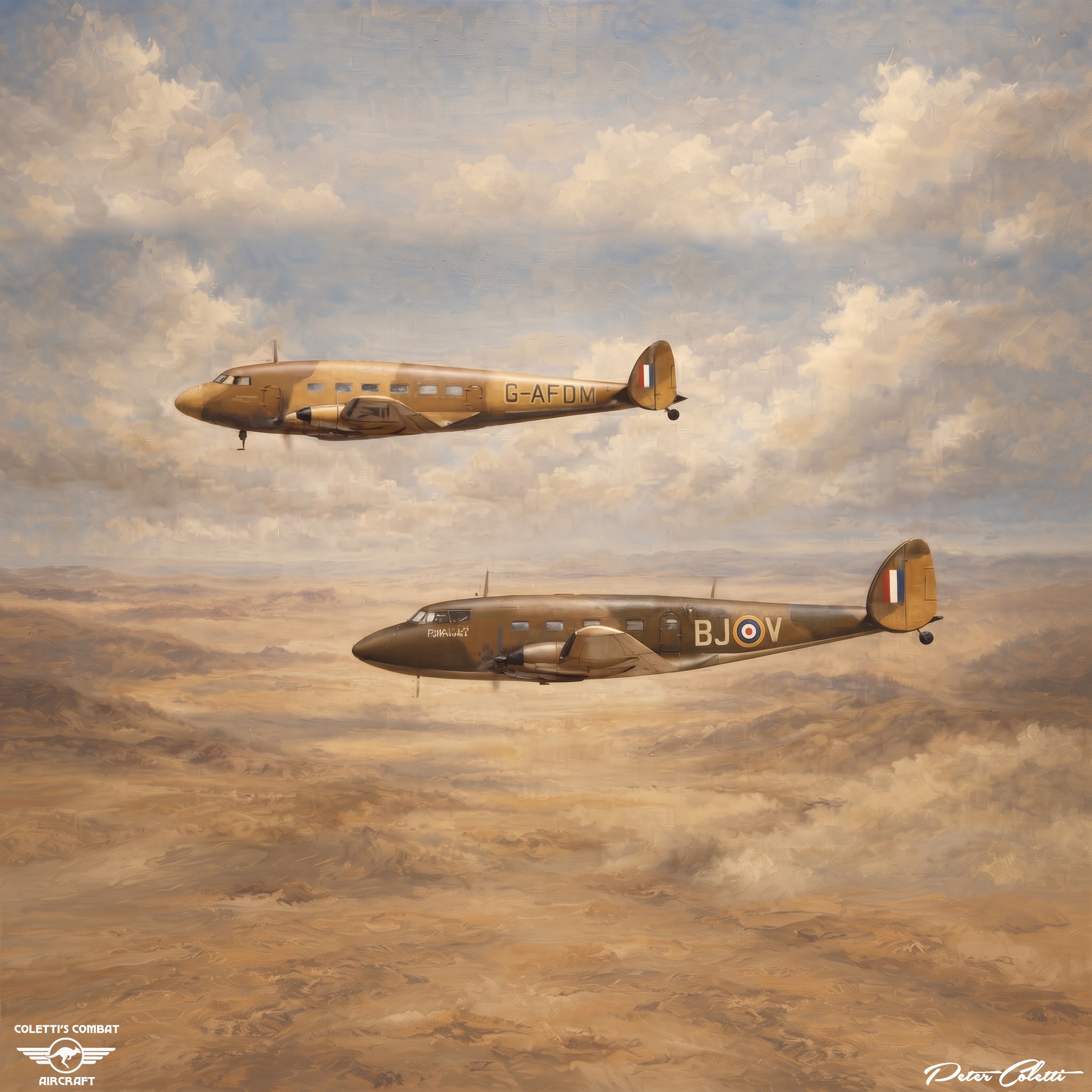
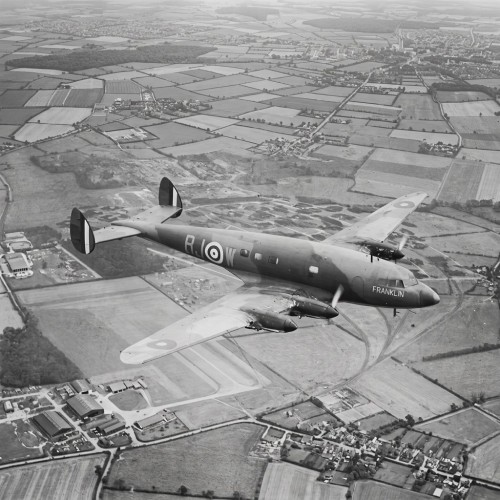
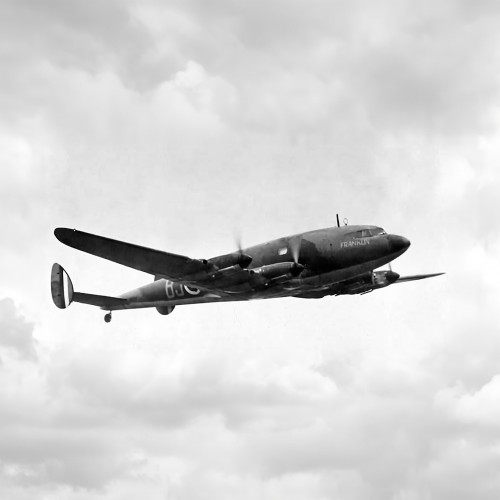
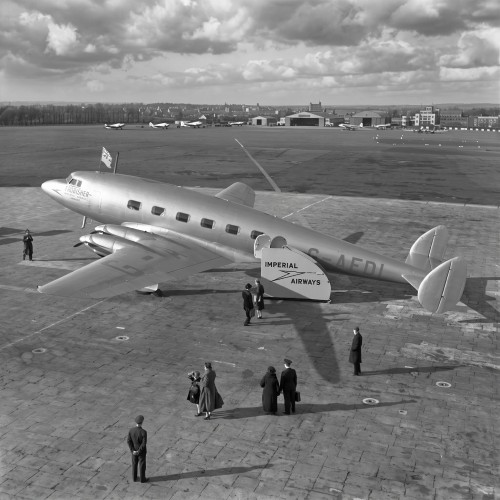
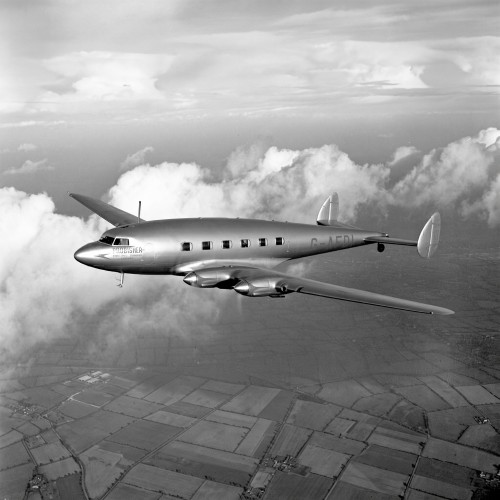
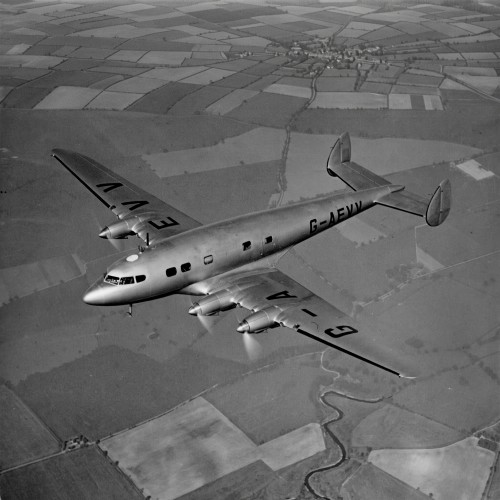
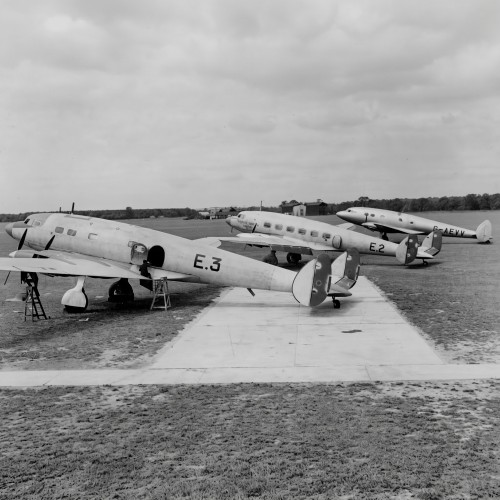
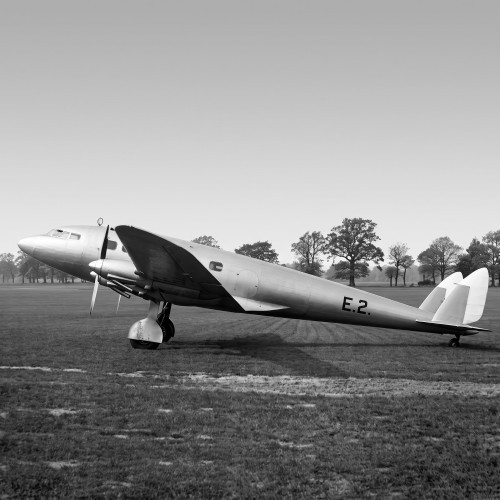
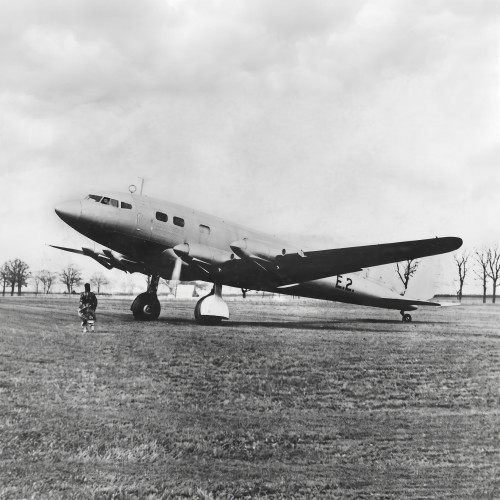
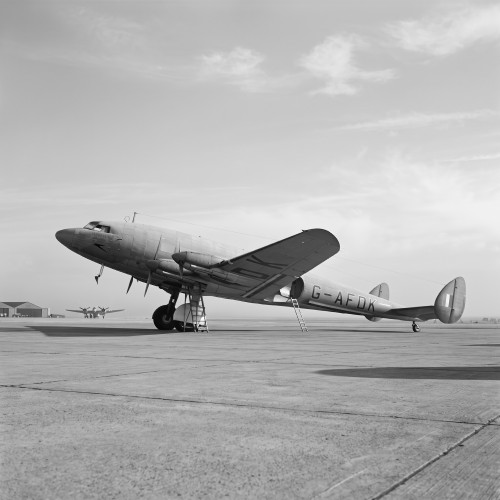
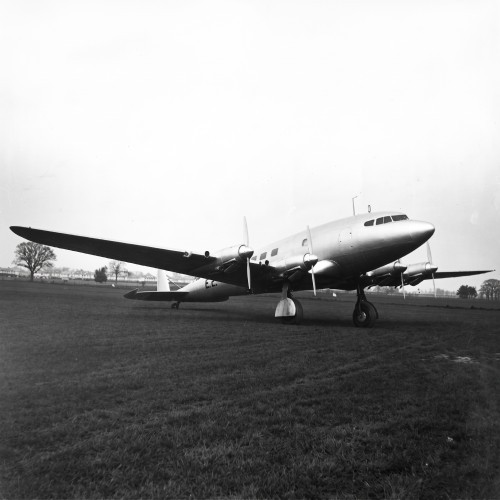
The de Havilland DH.91 Albatross was a sleek, four‑engined British transport aircraft developed in the late 1930s for long‑range mail and passenger service.
Only seven aircraft were built—two prototypes and five production airliners—before the type’s short career was overtaken by the demands and losses of the Second World War.
Development History
The Albatross originated from Air Ministry Specification 36/35, issued in the mid‑1930s for a transatlantic mailplane capable of carrying 1,000 lb of cargo over 2,500 miles at 210 mph against a 40‑mph headwind.
The design was led by A. E. Hagg at de Havilland beginning in 1936.
The aircraft was notable for its plywood–balsa–plywood sandwich monocoque fuselage, a pioneering lightweight structure that later became famous in the de Havilland Mosquito.
This construction method provided strength with low weight and excellent aerodynamic smoothness.
Another innovation was the streamlined engine nacelles, made possible by a new cooling system for the air‑cooled engines, allowing unusually clean aerodynamic lines for a multi‑engine aircraft of the era.
Prototype Testing
The first prototype flew on 20 May 1937.
Early testing revealed issues:
The second prototype broke in two during overload trials, exposing structural weaknesses in the rear fuselage.
It was repaired with reinforcements.
The first prototype suffered a wheels‑up landing due to landing‑gear retraction problems.
Initial tail design with mid‑span fins proved unstable; redesigned endplate fins were adopted.
Despite these setbacks, both prototypes were eventually delivered to Imperial Airways for experimental long‑range mail service.
Design and Technical Characteristics
Structure
Fuselage: Wooden monocoque using cedar ply and balsa laminations.
Wing: One‑piece low‑set monoplane wing, aerodynamically clean and similar in concept to the earlier DH Comet racer.
Tail: Twin endplate fins after redesign.
Landing Gear: Electrically retractable main units.
Powerplant
Four de Havilland Gipsy Twelve inverted‑V 12‑cylinder air‑cooled engines, each producing 525 hp.
These engines were created by combining two Gipsy Six engines.
Crew and Cabin
Crew: 4 (two pilots, radioman, steward).
Passenger Capacity: Up to 22 passengers in production aircraft.
Cabin comfort was limited: narrow entry door, cramped rear fuselage, noisy interior, and generally uncomfortable ride.
Dimensions
Wingspan: 105 ft
Length: 71 ft 6 in
Height: 22 ft 3 in
Performance
Maximum speed: 225 mph
Cruise speed: 210 mph
Range: 1,040 miles
Service ceiling: 17,900–18,000 ft
These figures made the Albatross one of the fastest and most aerodynamically refined British commercial aircraft of the pre‑war era.
Variants
DH.91 Prototypes (Mailplanes)
Two aircraft built for long‑range mail service.
Fewer cabin windows, split flaps, and an internal arrangement optimised for cargo.
Longer range than passenger versions.
DH.91 Production Aircraft (Passenger Airliners)
Five aircraft built between October 1938 and June 1939.
Added cabin windows, slotted flaps replacing split flaps, and seating for 22 passengers.
Imperial Airways named all aircraft beginning with the letter F, leading to the collective nickname “Frobisher class”.
Operational History
Pre‑War Service
The passenger Albatrosses entered service in October 1938.
They operated routes from Croydon to Paris, Brussels, and Zurich and, in 1939, set several inter‑city speed records, including a 48‑minute London–Brussels flight.
The prototypes, meanwhile, served as long‑range mail carriers.
World War II
At the outbreak of war in September 1939, all seven aircraft were moved to Whitchurch Airport, Bristol, operating routes to Shannon and Lisbon.
RAF Service
The two mailplane prototypes, valued for their range, were impressed into No. 271 Squadron RAF in September 1940 for courier flights between Prestwick (UK) and Reykjavík (Iceland).
Both were destroyed in landing accidents at Reykjavík within nine months.
Losses During the War
Of the five-passenger aircraft:
One destroyed after a forced landing at Pucklechurch (October 1940).
One lost in a German air raid (December 1940).
One crashed near Shannon (July 1943).
By late 1943, only two remained, but both were scrapped due to lack of spare parts.
Context and Legacy
The DH.91 Albatross was an advanced aircraft whose innovations directly influenced wartime designs—especially the Mosquito’s wooden monocoque structure.
However, its operational life was cut short by:
The small production run (only seven aircraft).
Structural fragility and maintenance challenges.
Wartime losses and the inability to produce spare parts.
Despite its brief career, the Albatross remains an important transitional aircraft in de Havilland’s evolution from racing planes to high‑performance wartime designs.