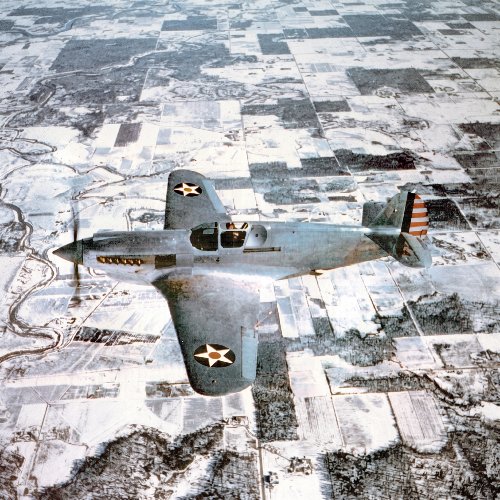
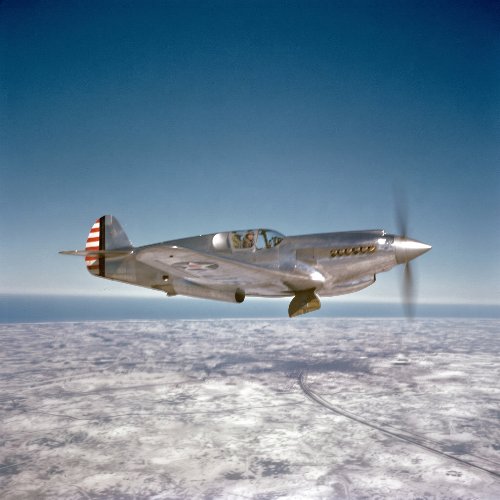
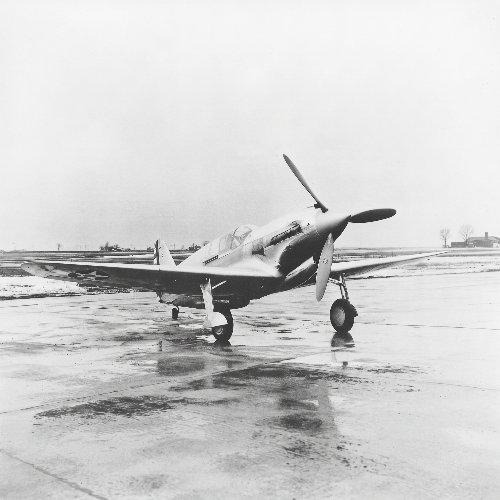
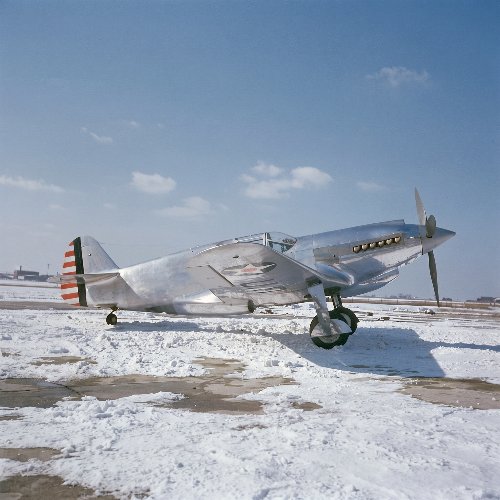
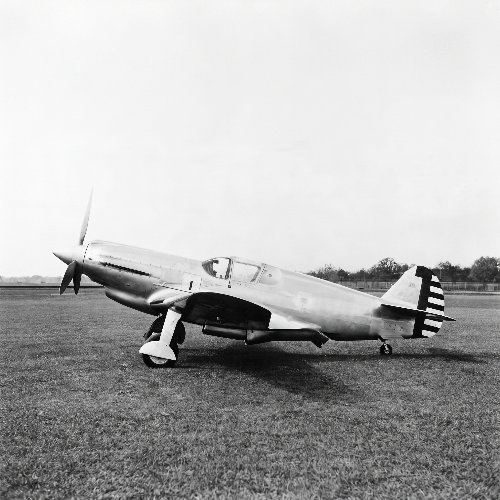
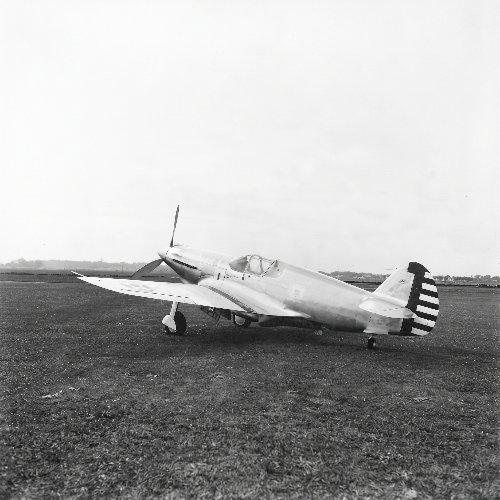
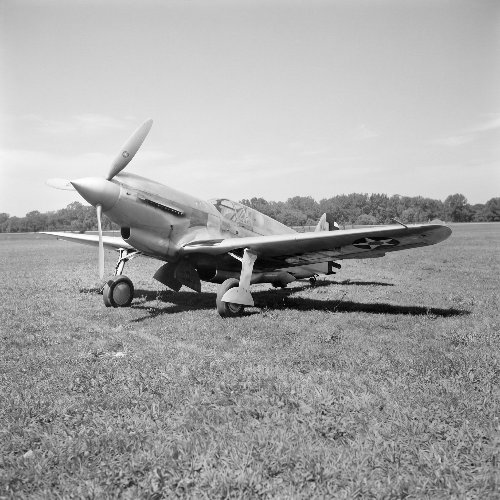
The Curtiss XP‑46 was conceived at the end of the 1930s as Curtiss‑Wright’s intended successor to the P‑40 series, reflecting the U.S. Army Air Corps’ desire for a more modern, competitive fighter for the early 1940s.
Its story is one of ambition constrained by timing, technical limitations, and the rapid pace of global aeronautical innovation.
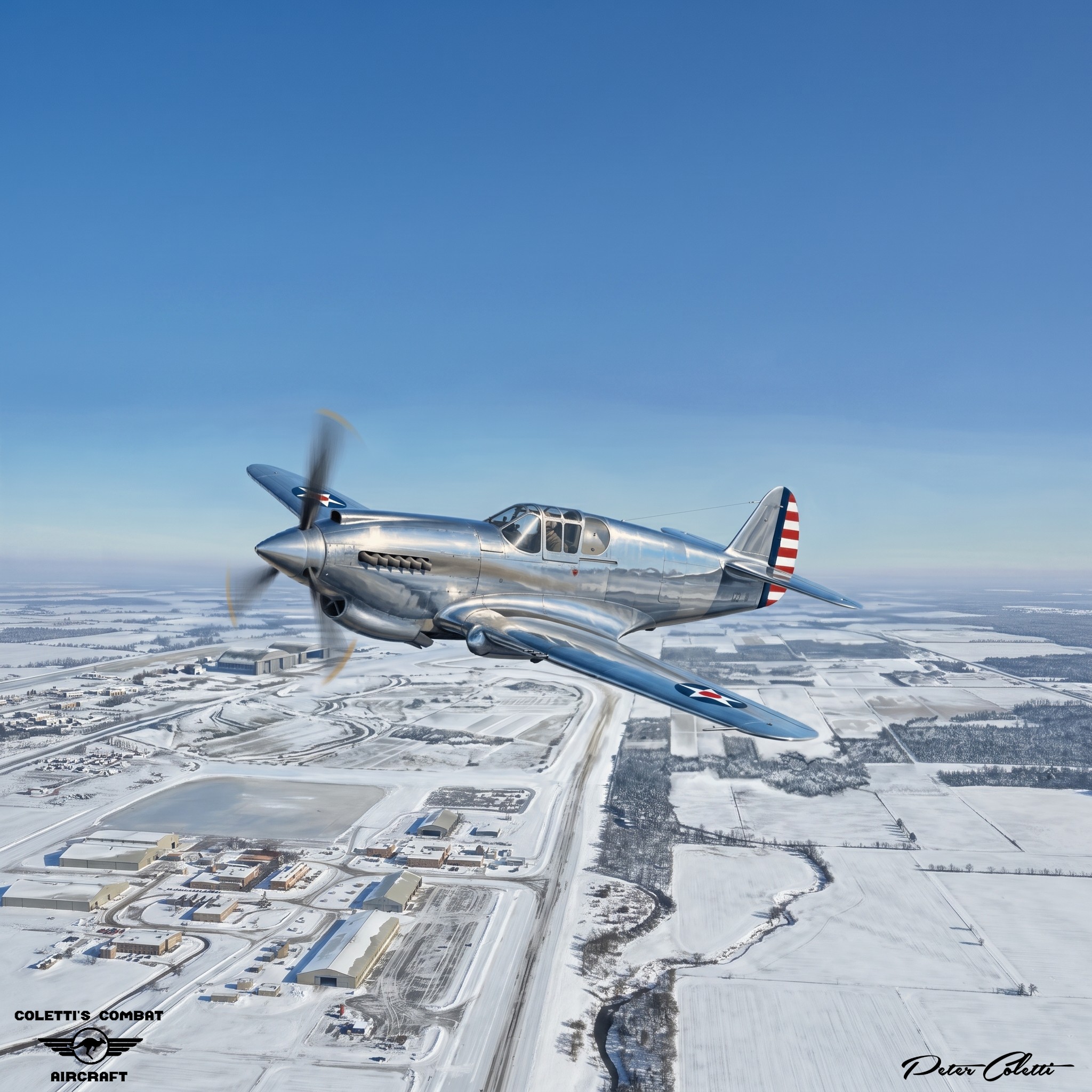
Curtiss XP-46
Origins and Development Programme
In January 1939, after the prototype P‑40 performed well at the Fifth Pursuit Plane Competition, the Air Corps began exploring replacements that could enter service by 1941.
Curtiss engineers—fresh from studying contemporary European fighters—proposed a new design incorporating the best features they had observed abroad.
The Air Corps formalised this into Circular Proposal No. 39‑770, under which several manufacturers submitted designs.
Curtiss’s entry, designated XP‑46, placed third behind Seversky and Bell but was still recommended for development due to perceived potential.
Curtiss XP-46
Authority to negotiate prototype purchases was granted on 13 September 1939, and two aircraft were ordered:
XP‑46 and XP‑46A.
The XP‑46A was to be delivered without armament to accelerate testing.
Both prototypes were intended to serve as the “third‑generation Hawk fighter”, filling a role in the Air Corps’ experimental pipeline for a possible 1941 procurement of 195 aircraft.
However, as development progressed, enthusiasm waned.
Curtiss struggled with equipment accessibility and maintenance concerns, and the Air Corps increasingly favoured upgrading the existing P‑40 line rather than introducing a new airframe that would disrupt production.
By July 1940, the USAAC formally asked Curtiss to prioritise an improved P‑40 using the XP‑46’s intended engine, effectively sidelining the XP‑46 before it ever flew.
Curtiss XP-46
Design Philosophy and Airframe Characteristics
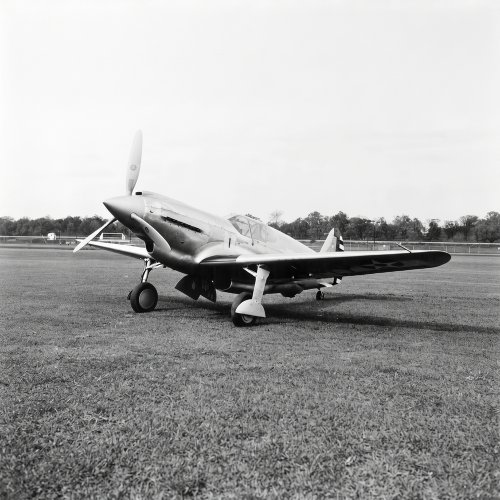
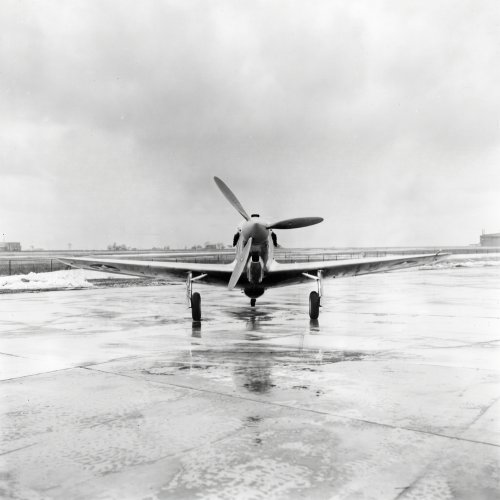
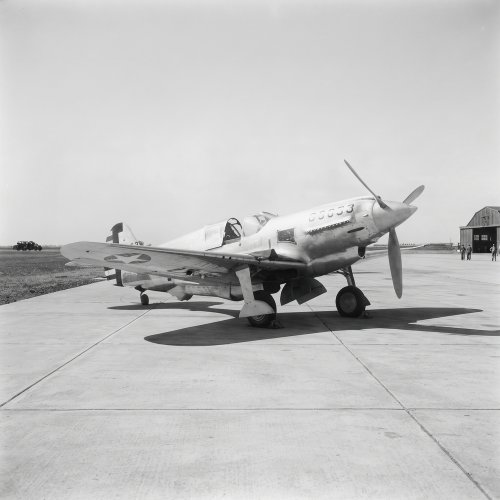
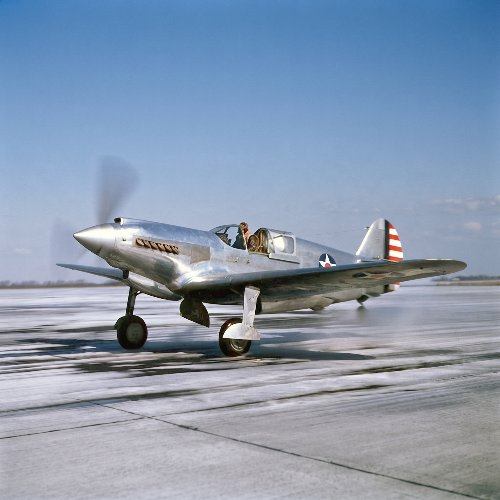
The XP‑46 was designed as a single‑engine, low‑wing monoplane, smaller than the P‑40, with a wide‑track, inward‑retracting landing gear folding forward into wells ahead of the main spar—an arrangement intended to improve stability and ground handling.
The steerable tailwheel was fully retractable.
The wings used a low‑drag NACA 23015 airfoil at the root, tapering to NACA 23009 at the tip, and incorporated automatic leading‑edge slots inspired by the Messerschmitt Bf 109 to improve low‑speed aileron control.
Wing construction followed Curtiss’s typical method of two main panels bolted at the fuselage centreline with detachable tips.
The cockpit differed significantly between the two prototypes.
Pilots described the XP‑46 cockpit as cramped and uncomfortable, even calling it a “sweatbox”, while the XP‑46A featured a revised layout.
Curtiss XP-46
Powerplant and Systems
Both prototypes used the Allison V‑1710‑39, a liquid‑cooled V‑12 rated at 1,150 hp, driving a three‑bladed Curtiss Electric controllable‑pitch propeller.
This engine was also slated for the upgraded P‑40D, which ultimately outperformed the XP‑46 despite sharing the same powerplant.
The USAAC later added requirements for self‑sealing fuel tanks and 65 lb (29 kg) of armour, which increased weight and further degraded performance.
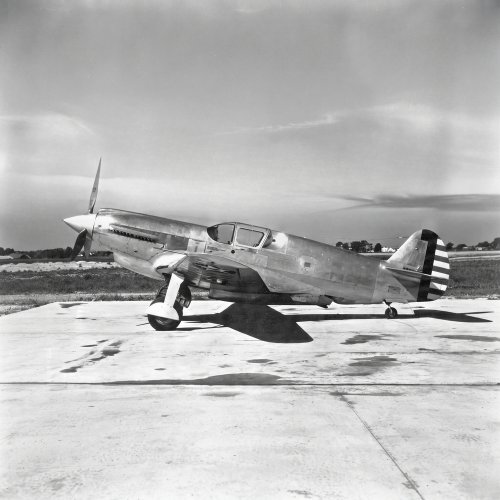
Curtiss XP-46A
Armament (Planned)
Although neither prototype ever carried weapons, the intended armament was substantial for a pre‑war U.S. fighter:
Two .50‑cal synchronised machine guns in the forward fuselage
Eight .30‑cal wing‑mounted machine guns
This heavy battery reflected the Air Corps’ desire to match European fighters’ firepower.
Curtiss XP-46A
Flight Testing and Performance
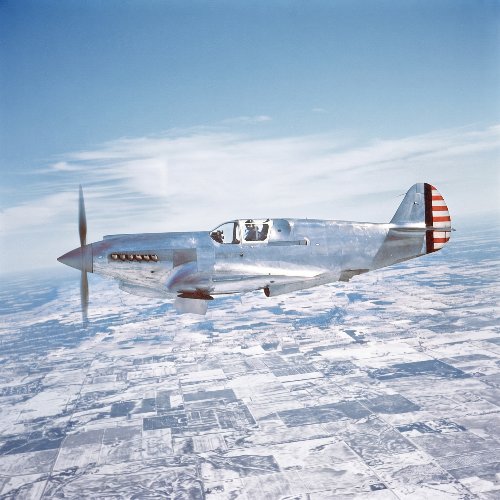
The XP‑46A made its first flight on 15 February 1941, and both prototypes were under evaluation by the time of the attack on Pearl Harbour.
Performance was immediately disappointing.
Despite its modernised airframe, the XP‑46 was slower‑responding than the P‑40 and failed to approach the hoped‑for 400 mph top speed.
In fact, its maximum speed was only 355 mph (571 km/h)—essentially identical to the P‑40D, which was already in production.
Curtiss XP-46A
Other key performance metrics included:
Service ceiling: ~28,000 ft (8,534 m)
Rate of climb: ~2,000 ft/min (610 m/min)
Range: only 325 miles (523 km)—a major operational limitation.
The aircraft was also heavier and costlier than the P‑40D and lacked meaningful growth potential.
By the time testing concluded, it was clear the XP‑46 offered no improvement over the existing Warhawk series.
Curtiss XP-46A
Variants
XP‑46
Full armament planned
Cramped cockpit
Same Allison V‑1710‑39 engine
Intended as the baseline production model
Curtiss XP-46A
XP‑46A
Delivered without armament to accelerate testing
Revised cockpit layout
First to fly (15 February 1941)
No further variants were developed, and only two prototypes were ever built.
Curtiss XP-46A
Cancellation and Legacy
The XP‑46 programme was officially cancelled after trials showed it was inferior to the P‑40D, offering no justification for production or for disrupting the existing manufacturing line.
The British Purchasing Commission had initially ordered the aircraft as the P‑46 “Kittyhawk” but cancelled the order once the USAAC shifted priorities; the “Kittyhawk” name was later applied to upgraded P‑40 models instead.
A persistent myth claims the XP‑46 directly influenced the North American NA‑73X, prototype of the P‑51 Mustang.
In reality, North American had already made significant progress on its design, though it did purchase aerodynamic data on the P‑40 and XP‑46 from Curtiss for $56,000.
This data may have informed certain radiator/oil‑cooler configuration choices, but the Mustang was not derived from the XP‑46.
WWII Context and Significance
The XP‑46’s failure must be understood in the context of rapid wartime technological acceleration.
By the time it flew in early 1941, fighters such as the Bf 109F, Spitfire Mk V, and even the improved P‑40D had already surpassed its capabilities.
The U.S. needed fighters with higher speed, greater range, and better climb performance—requirements the XP‑46 could not meet.
Thus, the XP‑46 became a transitional design: a stepping stone that helped Curtiss refine ideas but ultimately demonstrated the limits of incremental evolution.
Curtiss’s inability to produce a competitive successor to the P‑40 contributed to its decline as a fighter manufacturer, leaving the Warhawk as its final successful combat aircraft.