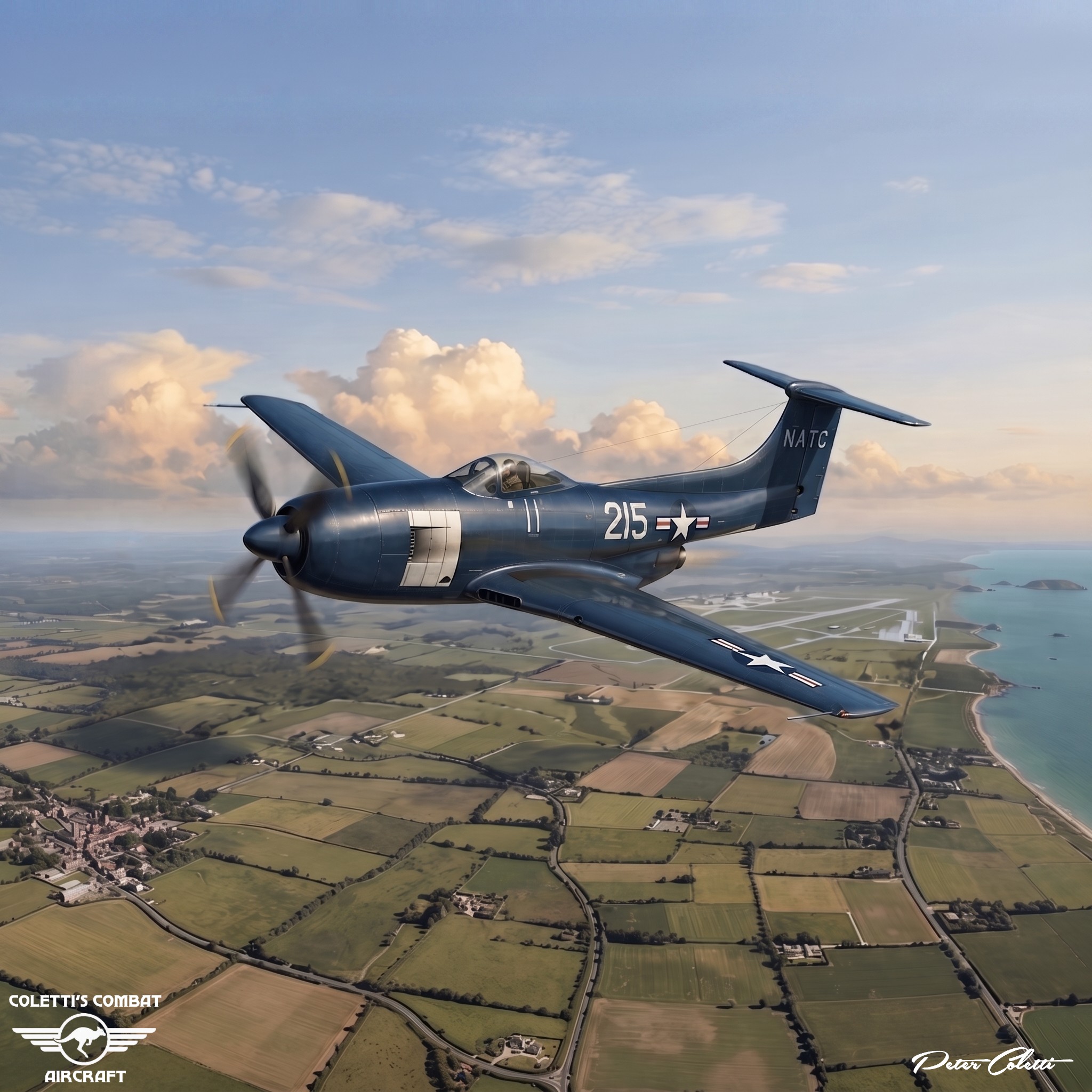
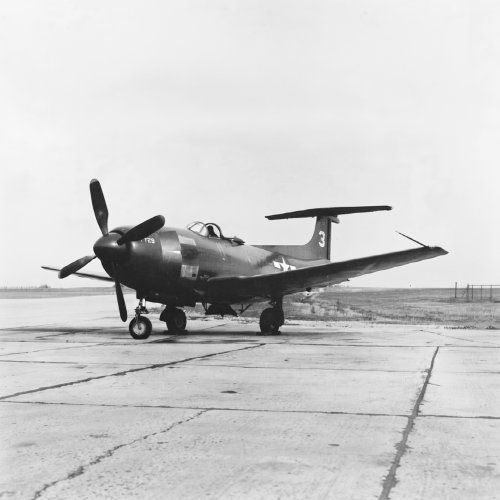
The Curtiss XF15C emerged from a very specific moment in late‑war U.S. naval aviation thinking.
By 1943, the U.S. Navy recognised that early turbojet engines suffered from slow throttle response, a dangerous limitation for carrier operations—particularly during go‑arounds, where a jet might not spool up quickly enough to avoid stalling off the deck’s edge.
At the same time, jets consumed fuel rapidly, reducing range.
The Navy’s proposed solution was a mixed‑propulsion fighter: a conventional piston engine for reliable takeoff, landing, and cruising, paired with a turbojet for high‑speed combat.
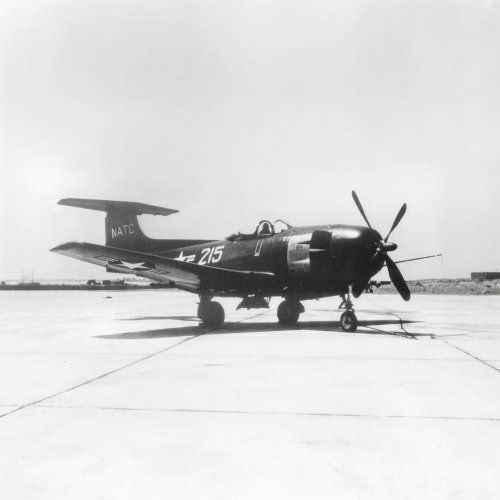
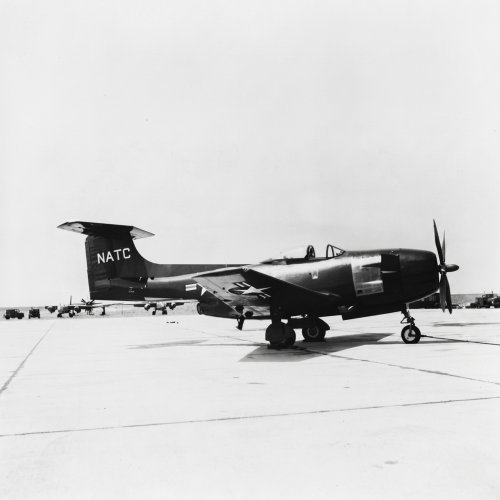
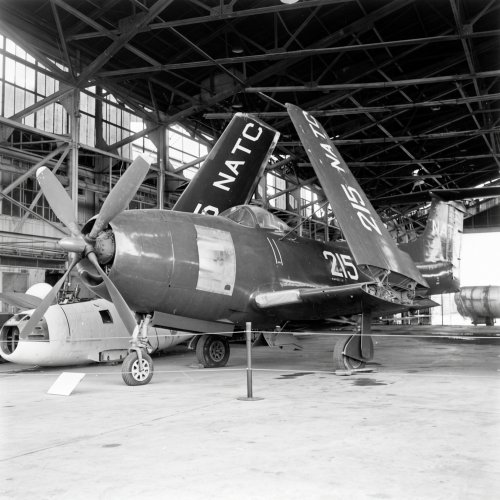
Curtiss XF15C-1 Naval Air Technical Centre
This concept led to two programmes:
The smaller Ryan FR‑1 Fireball for escort carriers.
The larger, long‑range Curtiss XF15C, intended for the new Midway‑class fleet carriers.
Curtiss had been struggling with its XF14C high‑altitude fighter programme, which relied on engines that were failing or being redirected to the B‑29 programme.
By late 1943, Curtiss pivoted to the Navy’s mixed‑power requirement and submitted a proposal in December.
The Navy accepted it, transferring resources from the XF14C and awarding a contract on 7 April 1944 for three prototypes of the new F15C.
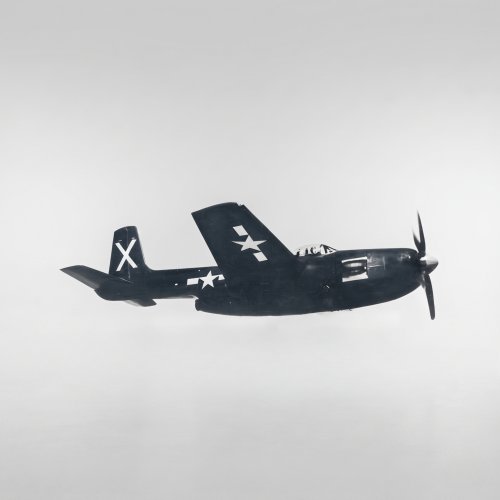
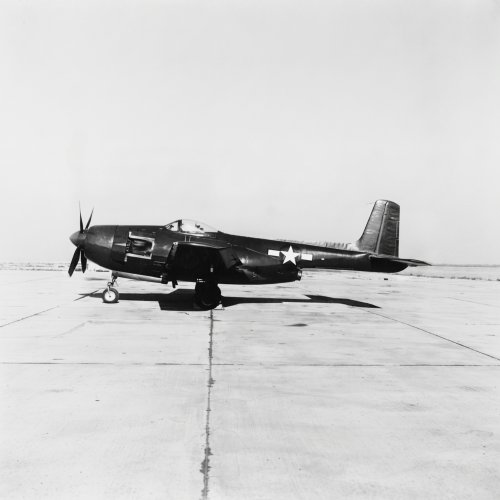
Curtiss XF15C-1 ‘X’
Design Philosophy and Airframe Architecture
The XF15C was conceived as a single‑seat, low‑wing, carrier‑based fighter with tricycle landing gear, making it one of the earliest U.S. Navy fighters to adopt this configuration.
Allis‑Chalmers J36 turbojet, 2,700 lbf thrust, a U.S.-built derivative of the de Havilland Goblin.
Both engines used the same fuel type, simplifying logistics.
Air for the jet was ducted through wing‑root intakes, which required thicker wings to accommodate both ducts and retractable landing gear.
Curtiss XF15C-1 Naval Air Technical Centre
Aerodynamics and Structure
Laminar‑flow wing similar to the Fireball’s.
Two‑spar folding wings for carrier storage.
A bubble canopy is positioned just ahead of the wing’s leading edge for excellent visibility.
Self‑sealing fuel tanks: 165 and 211 U.S. gallons.
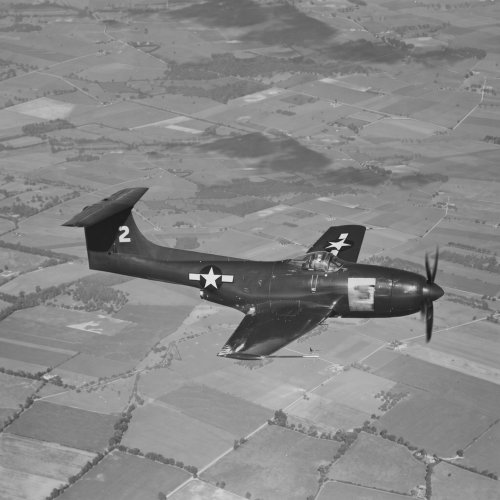
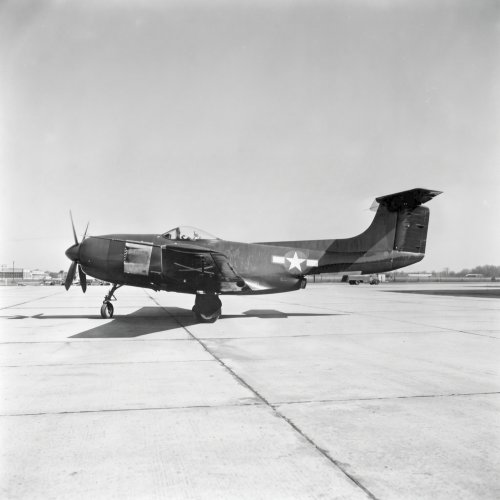
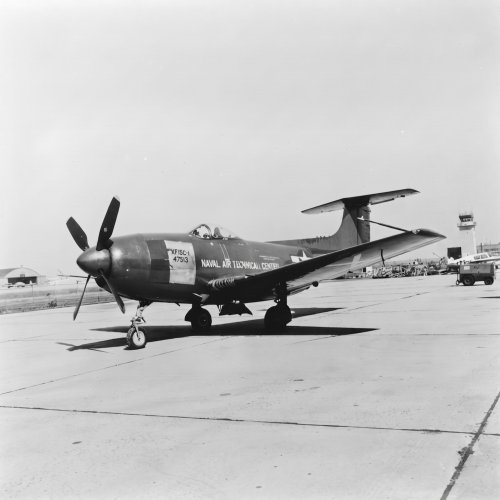
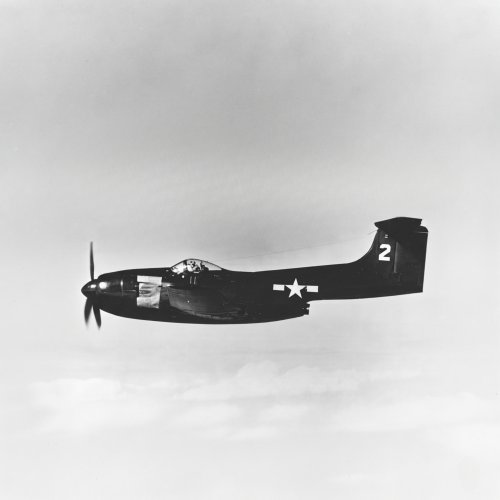
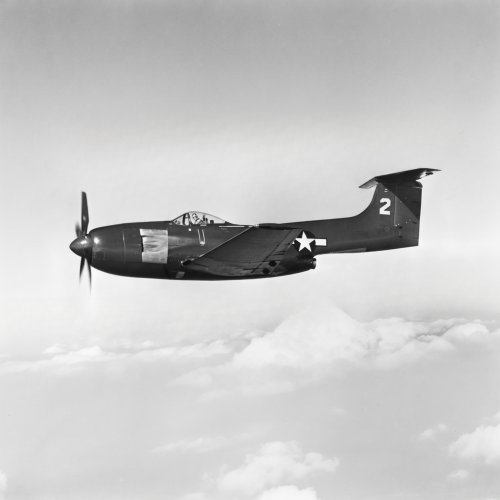
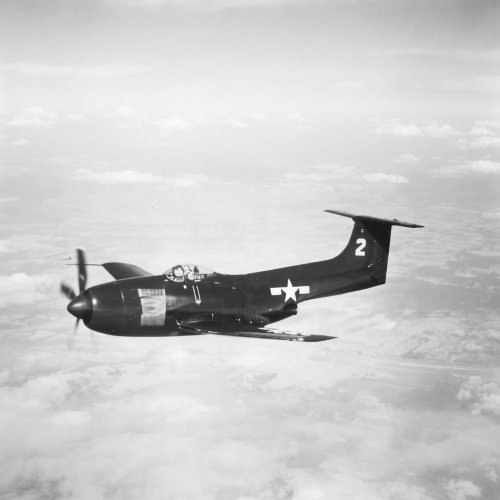
Curtiss XF15C-1 ‘2’
Dimensions and Weights (prototype)
Length: 44 ft 0 in
Wingspan: 48 ft 0 in
Empty weight: 12,648 lb
Gross weight: 16,630 lb
Curtiss XF15C-1 ‘X’
Armament and Combat Role
The XF15C was designed as a heavy naval fighter with:
Four wing‑mounted 20 mm cannons, each with 200 rounds.
Some sources also list an intended mixed armament of four 20 mm cannons plus four .50‑cal machine guns, though this appears to reflect early design studies rather than final prototype configuration.
Its mission profile envisioned:
Piston engine for takeoff, landing, and long‑range cruise.
Jet engine for combat dash, interception, and high‑speed escape.
Curtiss claimed the aircraft would reach 485 mph and climb at 4,890 ft/min, outperforming contemporary fighters.
Curtiss XF15C-1 ‘X’
Flight Testing and Performance
First Flights
27 February 1945: The first prototype flew without the jet installed.
3 May 1945: First mixed‑power flight with both engines.
Curtiss XF15C-1 ‘2’
Accident
On 8 May 1945, the first prototype crashed during the landing approach.
Subsequent Prototypes
The second prototype first flew on 9 July 1945.
The third prototype followed shortly thereafter.
Curtiss XF15C-1 ‘2’
Measured Performance
With both engines operating:
Maximum speed: 469 mph at 25,300 ft
Range: 1,385 miles
Service ceiling: 41,800 ft
Rate of climb: 5,020 ft/min
These figures placed the XF15C among the fastest U.S. Navy fighters of its time—at least on paper.
Curtiss XF15C-1 ‘2’
Technical Challenges and Programme Termination
Despite promising performance, the XF15C suffered from:
Landing gear issues
Engine cooling problems
General complexity of mixed‑propulsion systems
More importantly, jet engine technology improved rapidly in 1945–46.
The Navy’s concerns about throttle lag diminished as newer turbojets became more responsive.
By October 1946, the Navy concluded that mixed‑power fighters were no longer necessary and cancelled the XF15C programme after only three prototypes.
Curtiss XF15C-1 Naval Air Technical Centre
Variants
Only three prototypes were built:
XF15C‑1 Prototype 1 – first to fly; crashed May 1945.
XF15C‑1 Prototype 2 – flew in July 1945; used for mixed‑power trials.
XF15C‑1 Prototype 3 – final airframe; later scrapped or stored.
No production variants or naval squadron deployments occurred.
Curtiss XF15C-1 ‘X’
Place in Aviation History
The Curtiss XF15C represents a transitional moment between piston‑engine dominance and the jet age.
It was:
A technological bridge between WWII fighters and postwar jets.
A response to early jet limitations that quickly became obsolete.
One of the last major fighter projects undertaken by Curtiss before the company exited aircraft manufacturing.
Although it never entered service, the XF15C remains an important example of wartime innovation and the Navy’s willingness to experiment with hybrid propulsion during a period of rapid technological change.