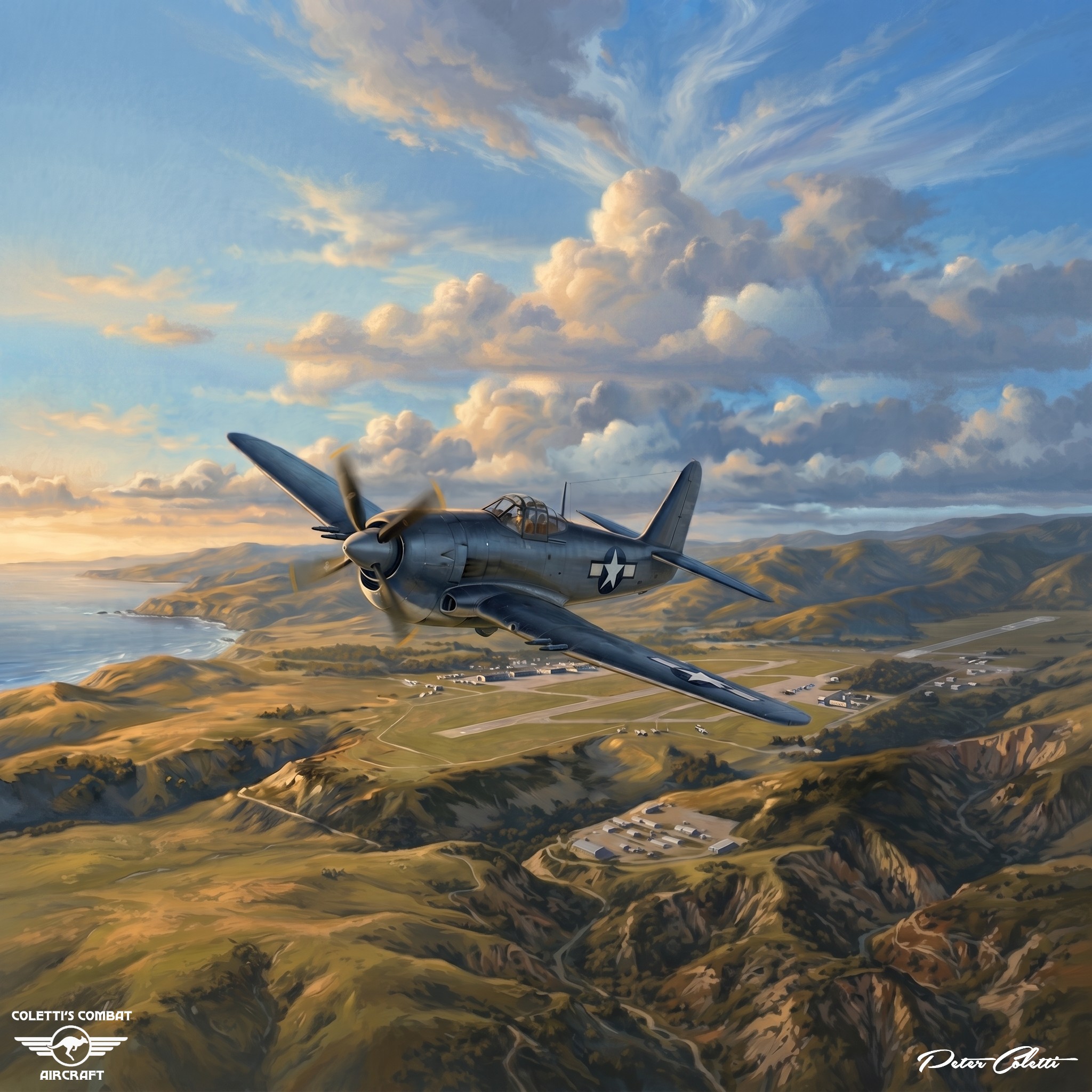
The Curtiss XF14C was a late‑World War II American naval fighter prototype developed by the Curtiss‑Wright Corporation for the U.S. Navy.
Conceived as a high‑altitude interceptor capable of operating from aircraft carriers, it represented one of the Navy’s most ambitious piston‑engine fighter requirements.
Although only one prototype was completed and flown, the XF14C illustrates the transitional period in naval aviation when piston‑engine technology was reaching its limits and jet propulsion was beginning to dominate future planning.
Strategic Background and Programme Origins
In 1941, the U.S. Navy initiated several advanced fighter programmes to ensure air superiority in the Pacific.
The rapid evolution of Japanese aircraft, combined with concerns about potential high‑altitude bomber threats, led the Navy to explore fighters with greater climb performance, higher ceilings, and heavier armament than existing carrier aircraft.
Curtiss, already well known for the P‑40 Warhawk but losing ground to Grumman in naval contracts, sought to reassert itself by proposing a powerful, modern carrier fighter.
The Navy’s requirement was unusual: it specified a liquid‑cooled engine, breaking from the Navy’s traditional preference for air‑cooled radials.
This decision was driven by the belief that liquid‑cooled engines could deliver superior high‑altitude performance.
The Navy ordered the XF14C alongside the Grumman F6F Hellcat and F7F Tigercat prototypes.
While the Grumman designs advanced rapidly, the XF14C became entangled in engine development problems that ultimately shaped its fate.
Development History
XF14C‑1: The Liquid‑Cooled Hyper‑Engine Prototype
The original XF14C‑1 was designed around the Lycoming XH‑2470, a 24‑cylinder, liquid‑cooled, vertical‑H engine.
This engine was part of the U.S. “hyper engine” programme, intended to produce extremely high power at altitude.
Curtiss designed a large, all‑metal, low‑wing monoplane with folding wings, a retractable tailwheel, and heavy armament.
However, the XH‑2470 suffered chronic delays, reliability issues, and disappointing test results.
By late 1943, the Navy concluded that the engine would not meet operational requirements.
The XF14C‑1 was cancelled before completion.
XF14C‑2: Redesign Around a Radial Engine
To salvage the project, Curtiss redesigned the aircraft around the Wright XR‑3350‑16 Duplex‑Cyclone, an 18‑cylinder air‑cooled radial engine producing approximately 2,300 horsepower.
This redesign required substantial changes to the forward fuselage, cooling system, and propeller configuration.
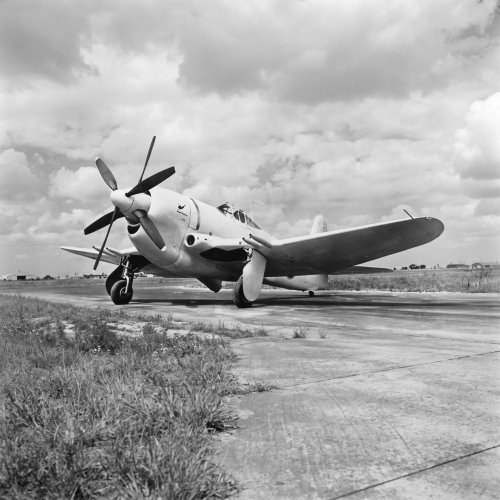
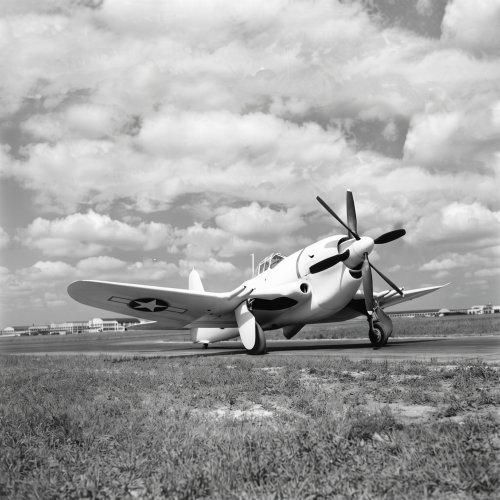
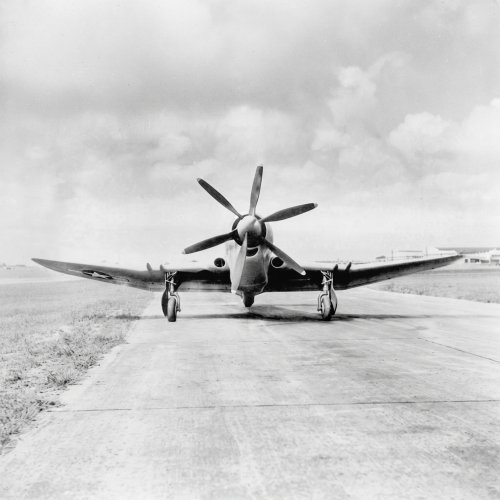
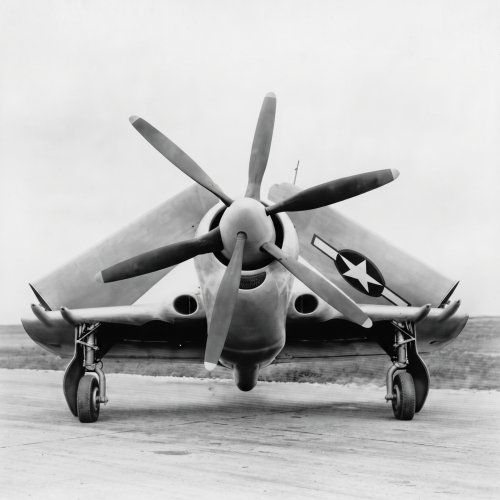
The XF14C‑2 used contra‑rotating propellers to absorb the engine’s power and eliminate torque effects during carrier operations. The airframe retained its folding wings, heavy armament, and interceptor role.
The XF14C‑2 first flew in July 1944.
By this time, the Hellcat and Corsair were already dominating the Pacific, and the Navy’s interest in new piston‑engine fighters was waning.
XF14C‑3: Proposed Pressurised Variant
A third version, the XF14C‑3, was proposed with a pressurised cockpit for extreme‑altitude interception.
It remained a paper concept and was never built.
Airframe and Structural Design
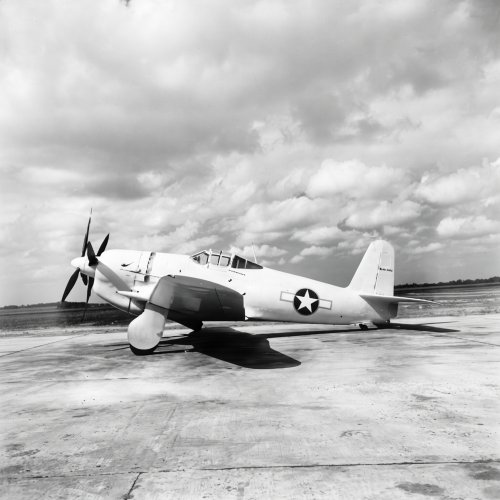
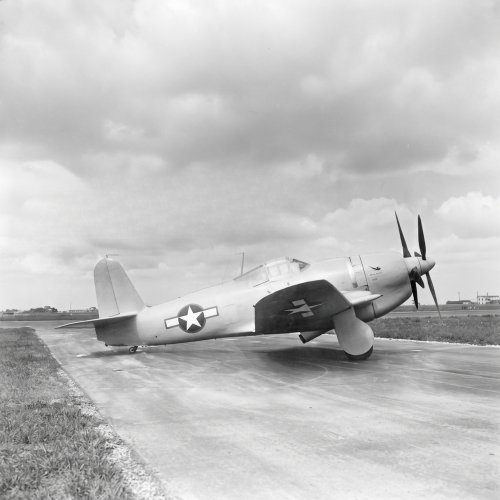
The XF14C‑2 was a large, robust carrier fighter with a deep fuselage and straight, low‑mounted wings.
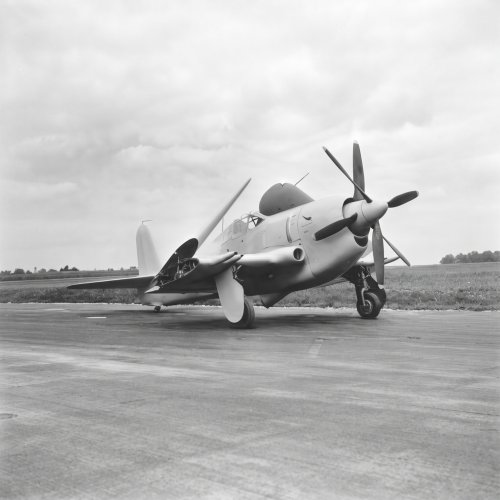
The wings incorporated folding outer panels for carrier storage, with flaps and ailerons distributed across both fixed and folding sections.
The landing gear was wide‑track and retracted into the wings, while the tailwheel retracted fully into the fuselage.
The cockpit sat high on the fuselage beneath a sliding canopy.
Although visibility was adequate, pilots noted that the aircraft’s bulky forward fuselage limited downward sightlines.
The fuselage was shaped to accommodate the large radial engine, turbo‑supercharger ducting, and associated cooling systems.
This resulted in a somewhat heavy and bulky appearance compared to sleeker fighters like the Corsair.
Propulsion
The Wright XR‑3350‑16 was one of the most powerful radial engines available to the Navy.
It featured two rows of nine cylinders, air cooling, and a turbo‑supercharger for high‑altitude performance.
The use of contra‑rotating propellers was intended to improve stability, reduce torque roll, and increase efficiency at high power settings.
Although the engine offered impressive theoretical performance, the XF14C‑2 never achieved the expected gains in testing.
Performance
Performance figures for the XF14C‑2 prototype include:
Maximum speed: approximately 418 mph at 32,000 feet
Cruise speed: approximately 172 mph
Range: approximately 1,530 miles
Service ceiling: approximately 39,800 feet
Rate of climb: approximately 2,700 feet per minute
Engine power: approximately 2,300 horsepower
These numbers placed the XF14C‑2 among the faster carrier fighters of its era, but its real‑world performance did not surpass existing operational aircraft enough to justify production.
Armament
The XF14C‑2 was designed to carry four 20 mm cannons mounted in the wings.
Earlier concepts had included six .50‑calibre machine guns, but the Navy increasingly favoured cannon armament for high‑altitude interception roles.
The cannons were positioned inboard of the wing fold, allowing the outer panels to remain free of armament.
Operational Evaluation and Cancellation
By the time the XF14C‑2 flew, the Navy’s strategic needs had changed.
The anticipated threat of high‑altitude Japanese bombers never materialised, and existing fighters such as the Hellcat and Corsair were performing exceptionally well in combat.
Jet aircraft were beginning to enter testing, further reducing interest in new piston‑engine designs.
The XF14C‑2’s performance, while respectable, did not exceed that of operational fighters by a margin sufficient to justify production.
Its development had been slow, its engine options problematic, and its role increasingly irrelevant.
The programme was cancelled in 1945, and only one prototype was ever completed.
Variants
XF14C‑1: Original liquid‑cooled version using the Lycoming XH‑2470.
Cancelled before completion.
XF14C‑2: Radial‑engine redesign using the Wright XR‑3350‑16.
Only the version is completed and flown.
XF14C‑3: Proposed pressurised high‑altitude variant. Never built.
Legacy
The Curtiss XF14C was Curtiss‑Wright’s final attempt to produce a competitive Navy fighter.
It highlights the challenges of late‑war aircraft development, when technological transitions and shifting strategic priorities made many ambitious designs obsolete before completion.