The XP‑55 Ascender emerged from the United States Army Air Corps’ R‑40C proposal, issued 27 November 1939, which explicitly encouraged unconventional fighter designs with improved performance, armament, and pilot visibility compared to existing fighters.
This competition also produced the Vultee XP‑54 and Northrop XP‑56, making the XP‑55 one of three radical pusher‑configuration fighters pursued under the same programme.
Curtiss‑Wright’s response was designated CW‑24, later XP‑55, and was intended to use the ambitious Pratt & Whitney X‑1800 24‑cylinder H‑engine, a sleeve‑valve powerplant promising 1,800 hp.
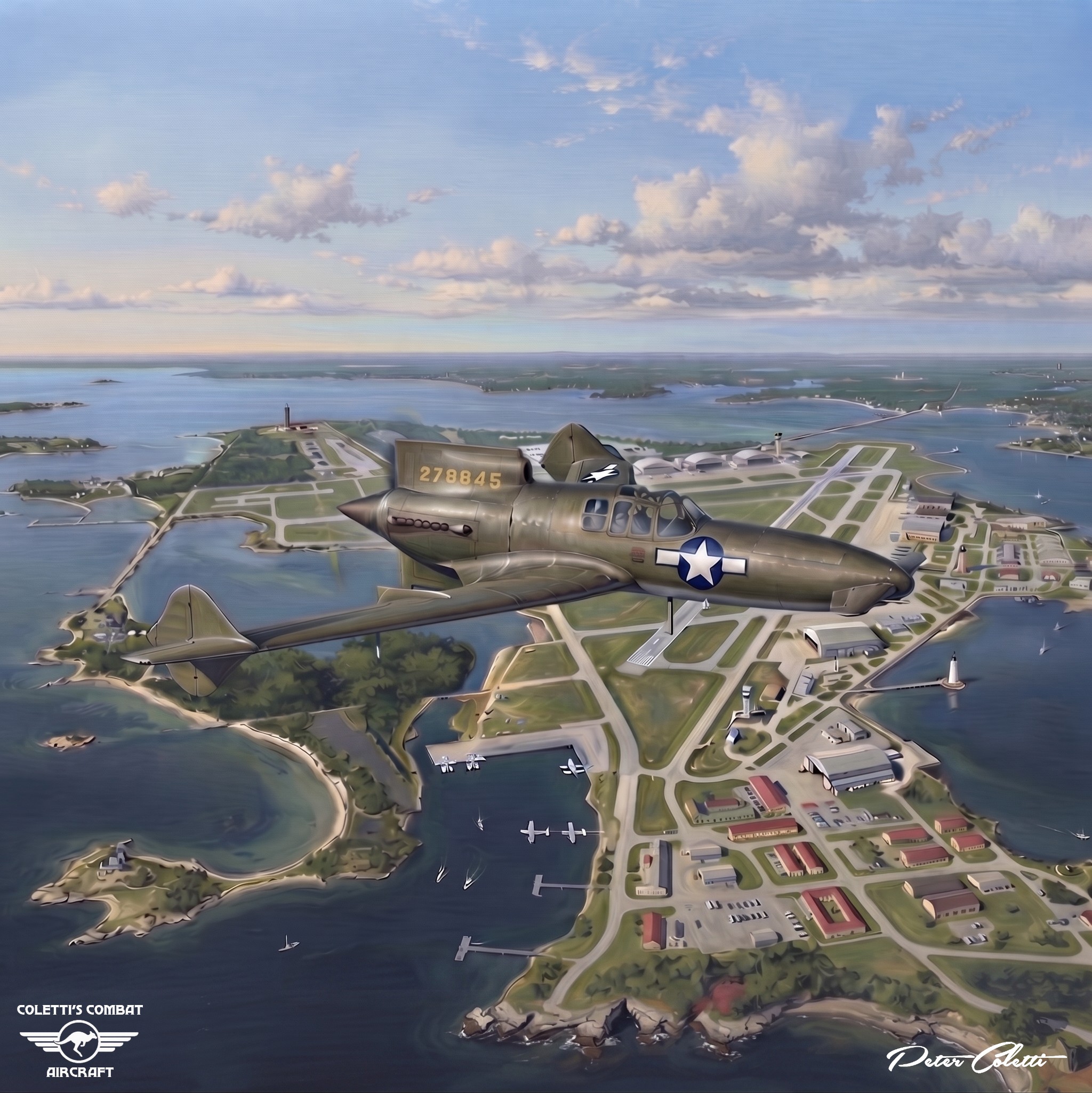
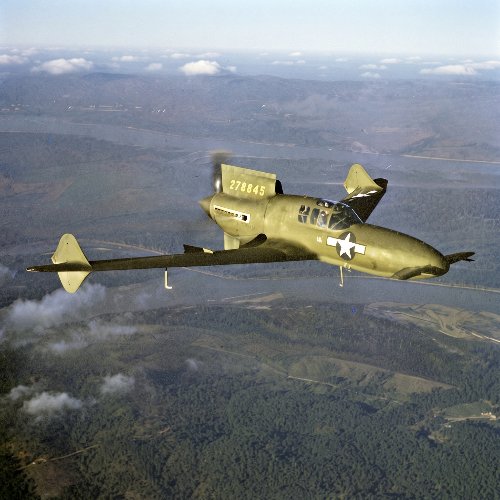
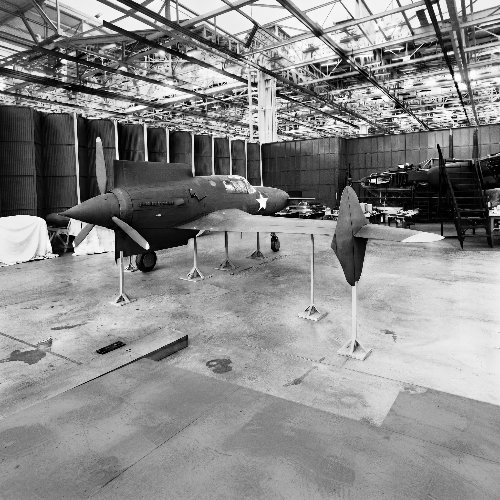
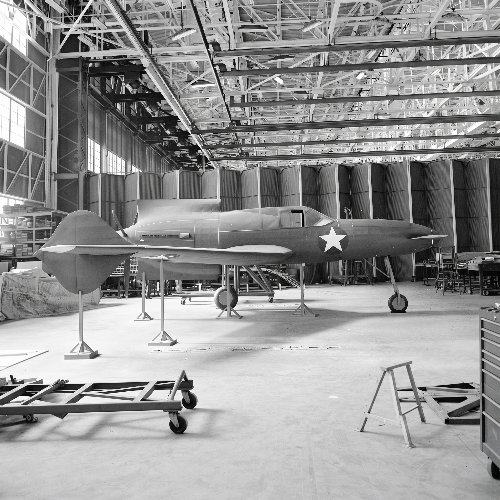
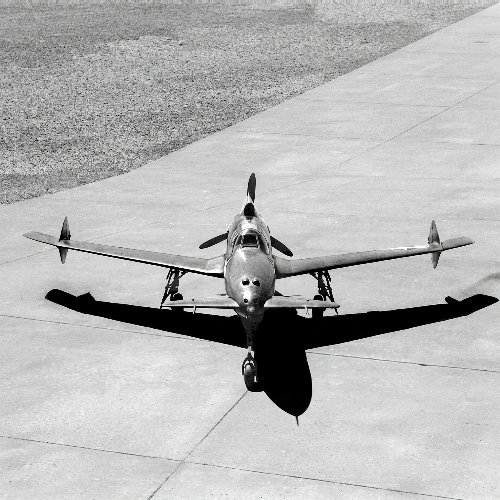
The R‑40C programme’s openness to unconventional layouts allowed Curtiss to propose a canard‑type aircraft with a rear‑mounted pusher engine, swept wings, and twin vertical fins—an arrangement so unusual that the aircraft was later nicknamed the “Ass‑ender”.
Wind‑Tunnel Work and the CW‑24B Flying Testbed (1940–1942)
On 22 June 1940, Curtiss received a contract for preliminary engineering data and a powered wind‑tunnel model.
Wind‑tunnel testing from November 1940 to January 1941 left the USAAC dissatisfied, prompting Curtiss to build a full‑scale flying mock-up, the CW‑24B, at its St. Louis division.
Foreplane: Not a true canard—a free‑floating elevator surface with no fixed stabiliser.
Purpose: Validate stability and control of the radical layout.
The CW‑24B first flew in December 1941, then completed 169 flights at Muroc Dry Lake between November 1941 and May 1942.
Tests revealed serious stability problems, partly mitigated by moving the vertical fins outward on the swept wings.
Afterwards, the aircraft was sent to NACA Langley for further wind‑tunnel evaluation.
XP‑55 Prototype Contract and Redesign (1942–1943)
On 10 July 1942, the USAAF ordered three XP‑55 prototypes, serials 42‑78845 to 42‑78847.
Engine Change
The intended Pratt & Whitney X‑1800 was delayed and ultimately cancelled.
Curtiss switched to the 1,000 hp Allison V‑1710‑F16 inline engine, later revised to the 1,275 hp V‑1710‑95 during mock‑up review.
This change required redesign of the airframe and cooling system.
Armament Evolution
Initial plans:
Two 20 mm Hispano cannons
Two .50‑cal machine guns
Final configuration:
Four .50‑cal machine guns in the nose, enabled by the rear‑mounted engine.
Safety Innovation
A propeller‑jettison system was installed to allow safe pilot bailout without striking the rear propeller.
Design Features and Configuration
Airframe Layout
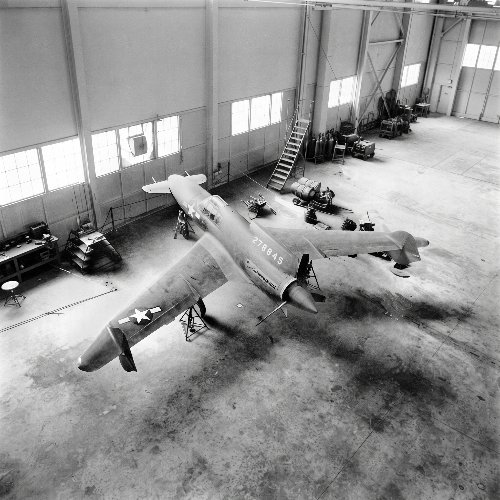
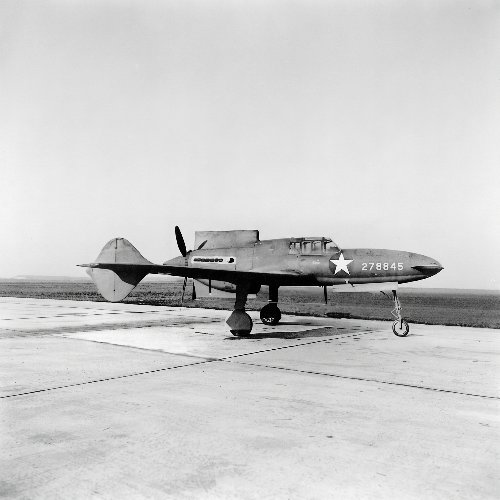
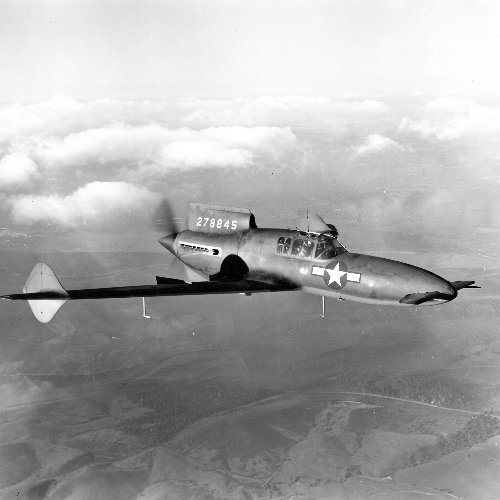
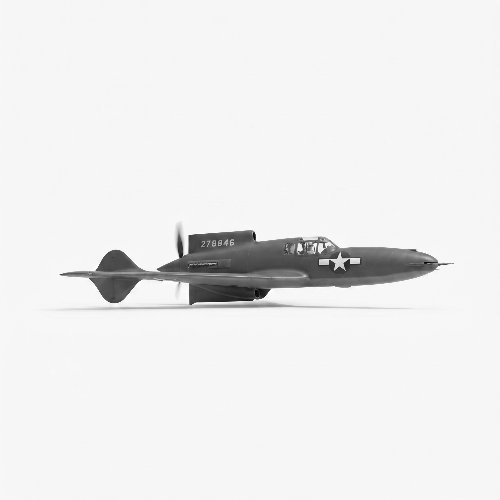
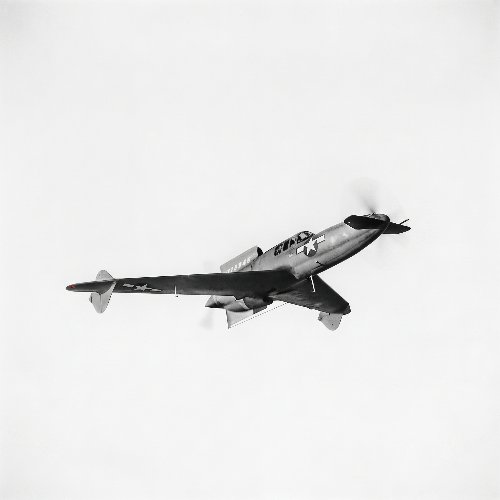
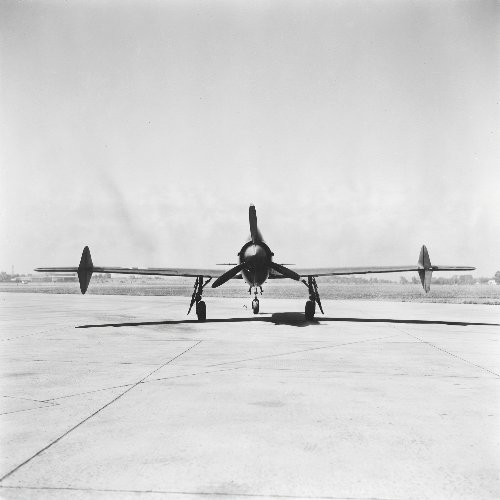
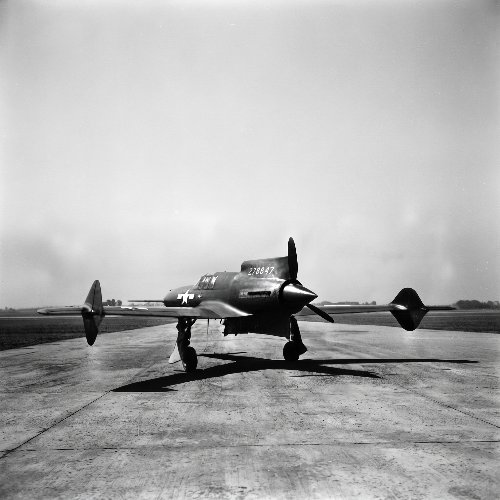
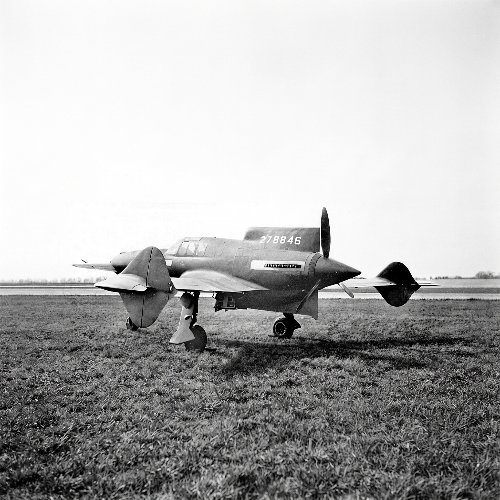
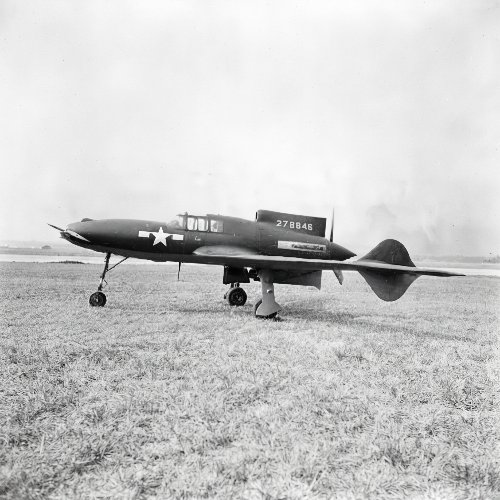
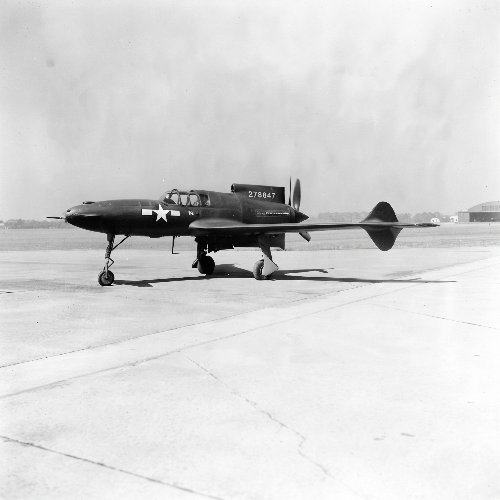
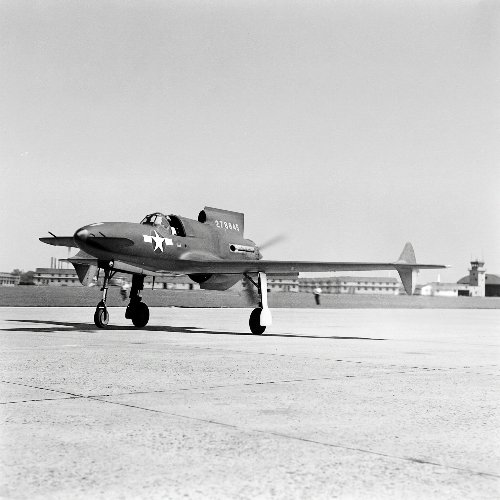
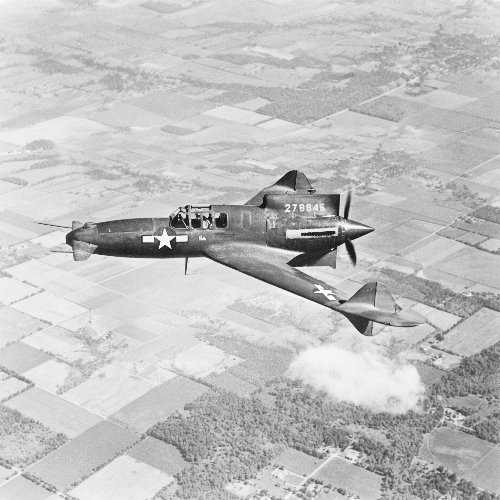
The XP‑55 was essentially a flying wing with a small fuselage, featuring:
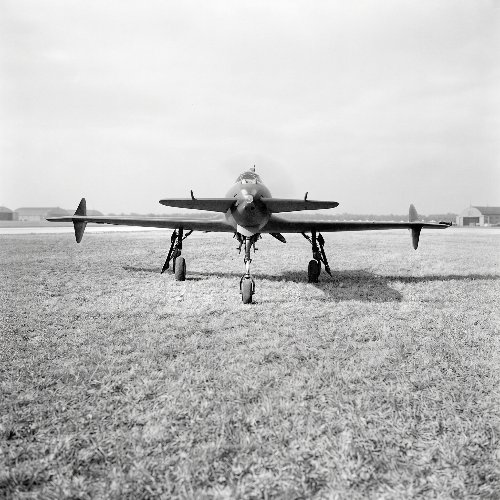
Forward elevator surface (free‑floating foreplane) with ±68° travel (down limited to 17° for take-off).
Highly swept wings with minimal vertical surfaces.
Twin vertical fins at the wing tips.
Rear‑mounted pusher propeller driven by the Allison V‑1710.
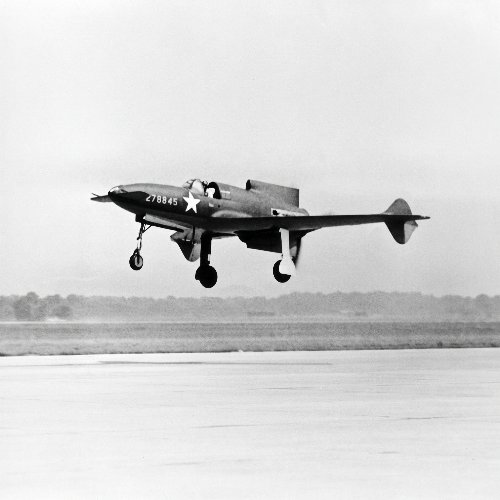
Tricycle landing gear, the first ever on a Curtiss fighter.
Pilot Considerations
The cockpit entry was awkward, requiring a telescoping ladder stored behind the seat.
The pusher layout provided excellent forward visibility.
Flight Testing and Performance (1943–1945)
The first XP‑55 prototype flew on 19 July 1943.
Take-off and Stability Issues
Testing revealed that the aircraft required excessive speed during take-off before the nose elevator became effective.
General stability remained problematic throughout the programme, despite modifications.
Prototype Losses and Incidents
First prototype – 15 November 1943
Lost during spin tests at St Louis.
The pilot parachuted to safety.
Second prototype – first flight 9 January 1944
Continued testing at St Louis.
Third prototype – first flight 25 April 1944
Sent to Eglin Field for armament trials.
Final Demonstration Tragedy (27 May 1945)
At a Wright Field airshow and bond rally with 100,000 spectators, the third XP‑55 crashed during a demonstration roll.
Pilot Captain William C. Glascow was fatally injured, and a nearby motorist was also killed.
Programme Termination and WWII Context
By 1944–45, the XP‑55’s unconventional layout had failed to deliver competitive performance.
Testing showed it was inferior to conventional fighters, and the arrival of operational jet aircraft rendered the pusher‑canard concept obsolete.
The programme was cancelled at the flight‑test stage after only three prototypes were built.
Strategic Materials Note
The XP‑55 used non‑strategic materials, which briefly made it attractive during wartime shortages, but its aerodynamic shortcomings outweighed this advantage.
Jet Variant Proposal
Curtiss considered a jet‑powered derivative, the CW‑24C, but it never progressed beyond the concept stage.
Technical Summary
Configuration
Type: Experimental fighter
Layout: Canard‑type foreplane, swept wings, twin wingtip fins
Engine: Allison V‑1710 (various subtypes)
Propeller: Three‑bladed pusher (single rotation)
Landing Gear: Tricycle
Armament: Four .50‑cal machine guns (final configuration)
Performance (general test observations)
Required a long take-off run due to delayed elevator authority.
Persistent stability issues in pitch and yaw.
Spin recovery difficulties (led to first prototype loss).
Forward visibility is excellent due to the pusher layout.
Legacy and Assessment
The XP‑55 Ascender stands as one of the most visually and conceptually radical American fighters of WWII.
Although unsuccessful, it contributed valuable data on canard control, pusher propulsion, and swept‑wing stability, informing later aerodynamic research.
Its failure also illustrated the limits of unconventional configurations when compared to rapidly advancing conventional piston fighters and the emerging jet age.